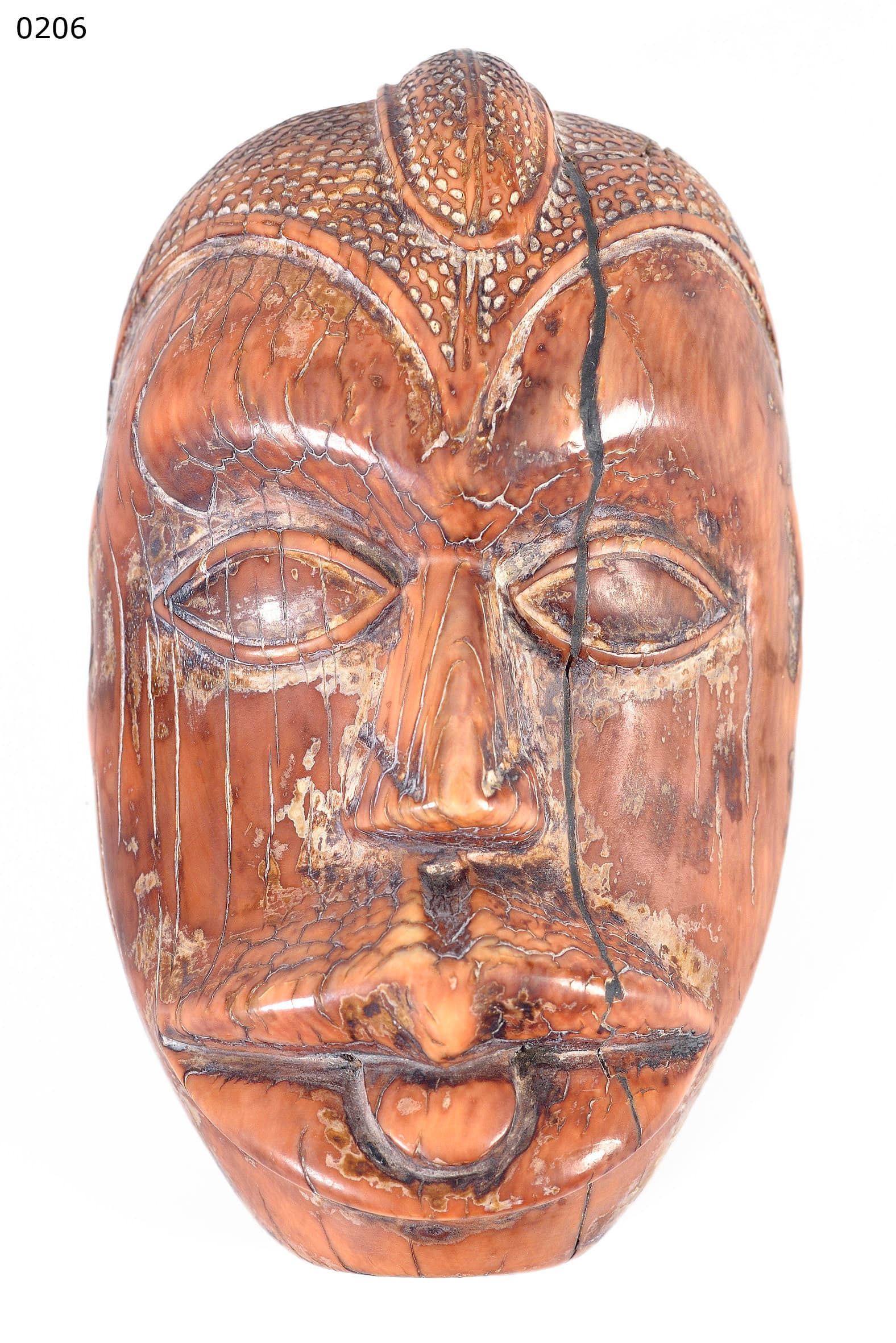
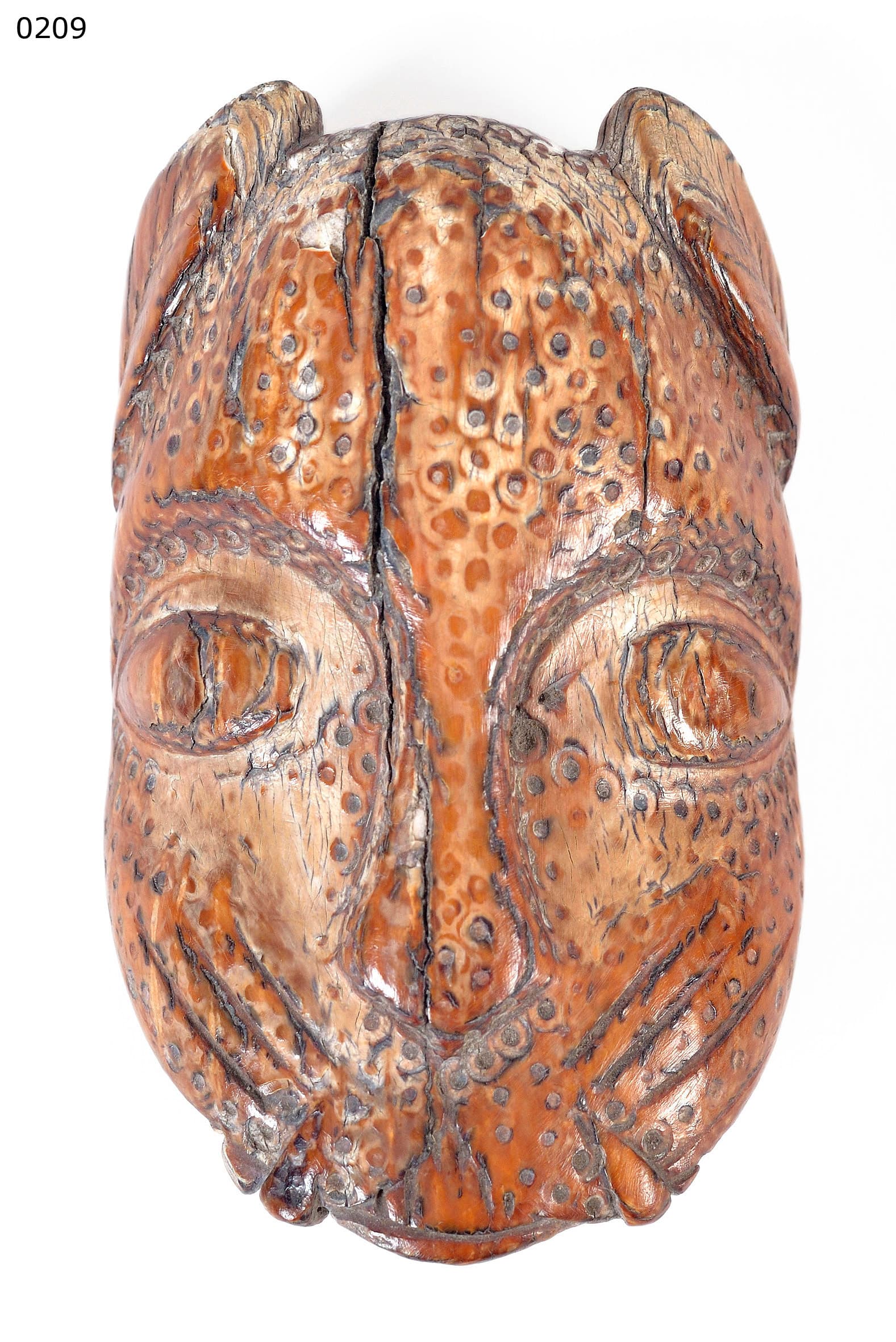
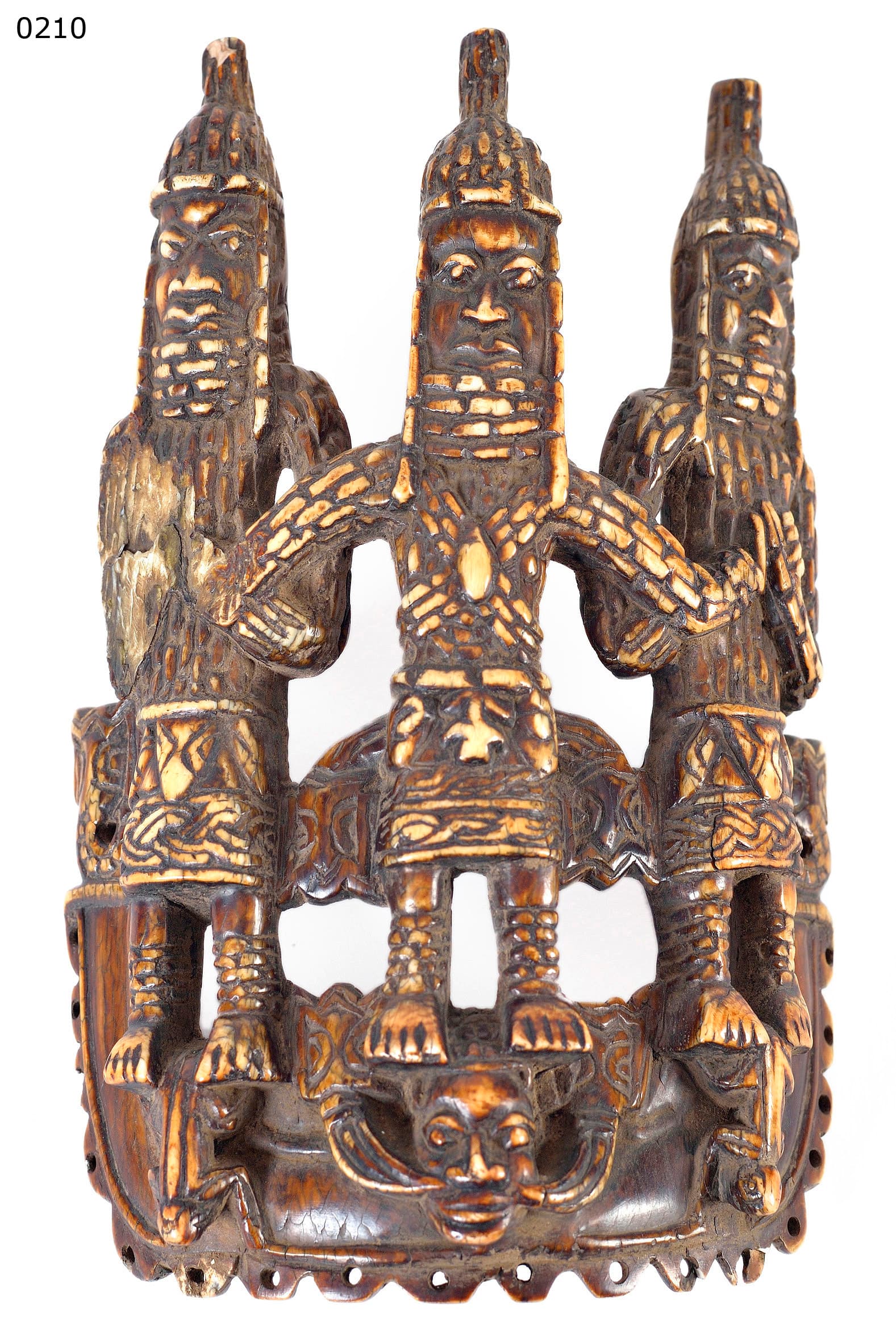
This cast-bronze figure depicts a stylized, seated leopard with bared teeth, alert upright ears, and a body covered in overlapping concentric circles denoting its spots. The heavy metal has a dark, earthy patina with oxidized, matte-green recesses.
1. Aesthetic style and regional traits
The Kingdom of Benin (Edo) is globally celebrated for its lost-wax (cire perdue) bronze castings. This leopard figure balances royal naturalism with geometric stylization. The menacing, toothy grin and alert posture capture the feline form, while the uniform, punched circles representing its spots are consistent with the chasing work associated with the royal bronze-casting guilds (Igun Eronmwon) working within the Oba's palace walls.
2. Ritual function and religious meaning
In Benin cosmology, the leopard (ekpen) is traditionally regarded as the "King of the Forest," mirroring the Oba, who is the King of the City. The Oba maintained a monopoly over the image of the leopard, and live leopards were kept at the palace to display his mastery over nature. Bronze leopards like this were strictly royal prerogatives, placed directly on the ancestral altars of past kings to protect the spiritual gateway, honor the deceased monarch, and project authority to visiting dignitaries.
3. Physical patina and age
Compatible with a dating to the late Benin period (18th/19th century), the bronze shows wear consistent with age. The piece possesses a deep, earthy, olive-brown oxidation compatible with prolonged exposure to humidity and altar soot. The core material within the hollow cast is consistent with traditional earthen casting matrices.
Summary
An emblem of Edo divine kingship, this bronze altar leopard reflects traditional royal casting techniques. Its presence and deeply oxidized patina make it a classic representation of the authority associated with the Oba of Benin.
Written with AI assistance from the collection appraisal, object photography and our own research; editorially reviewed. Mistakes are possible — corrections are welcome. How we work →