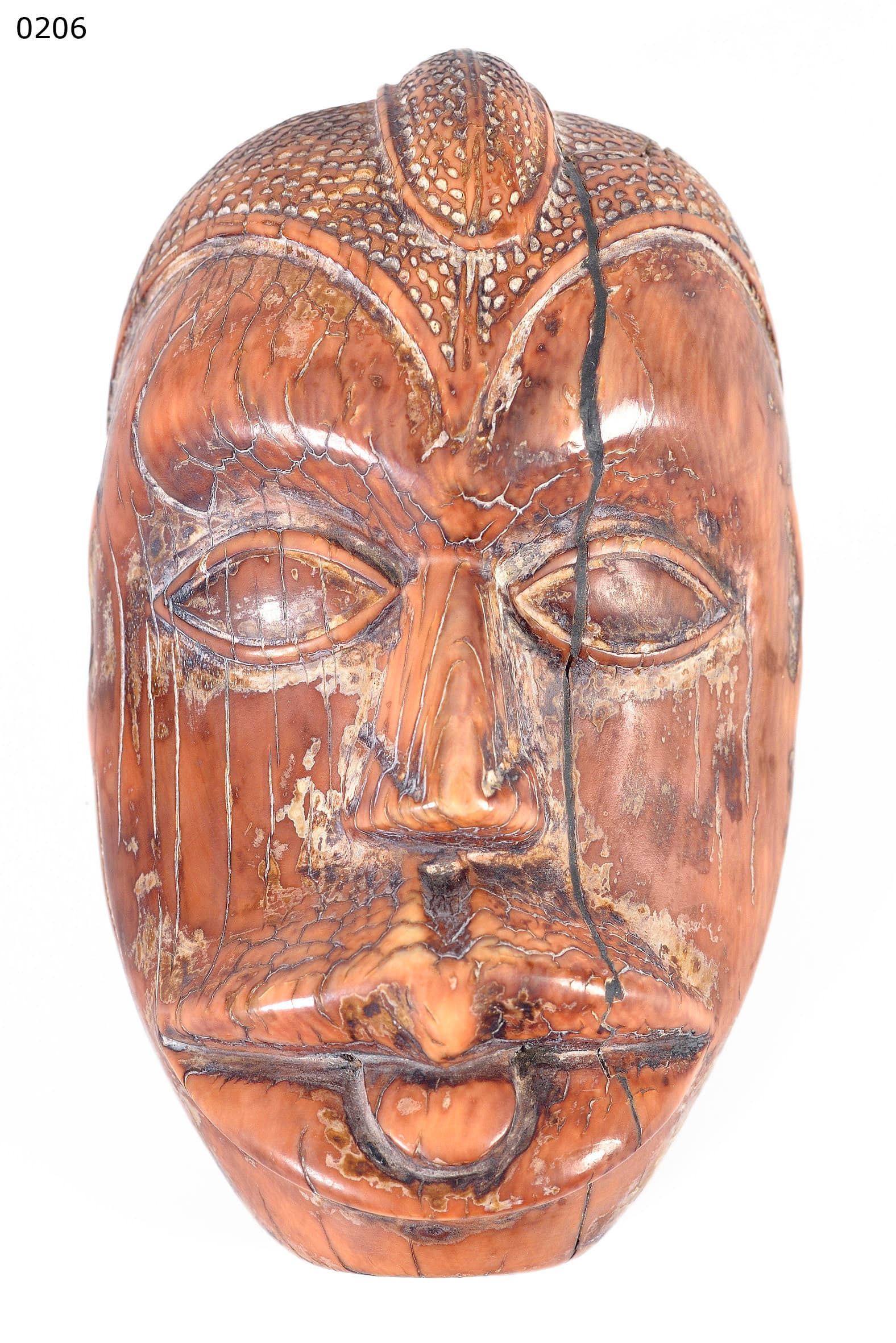
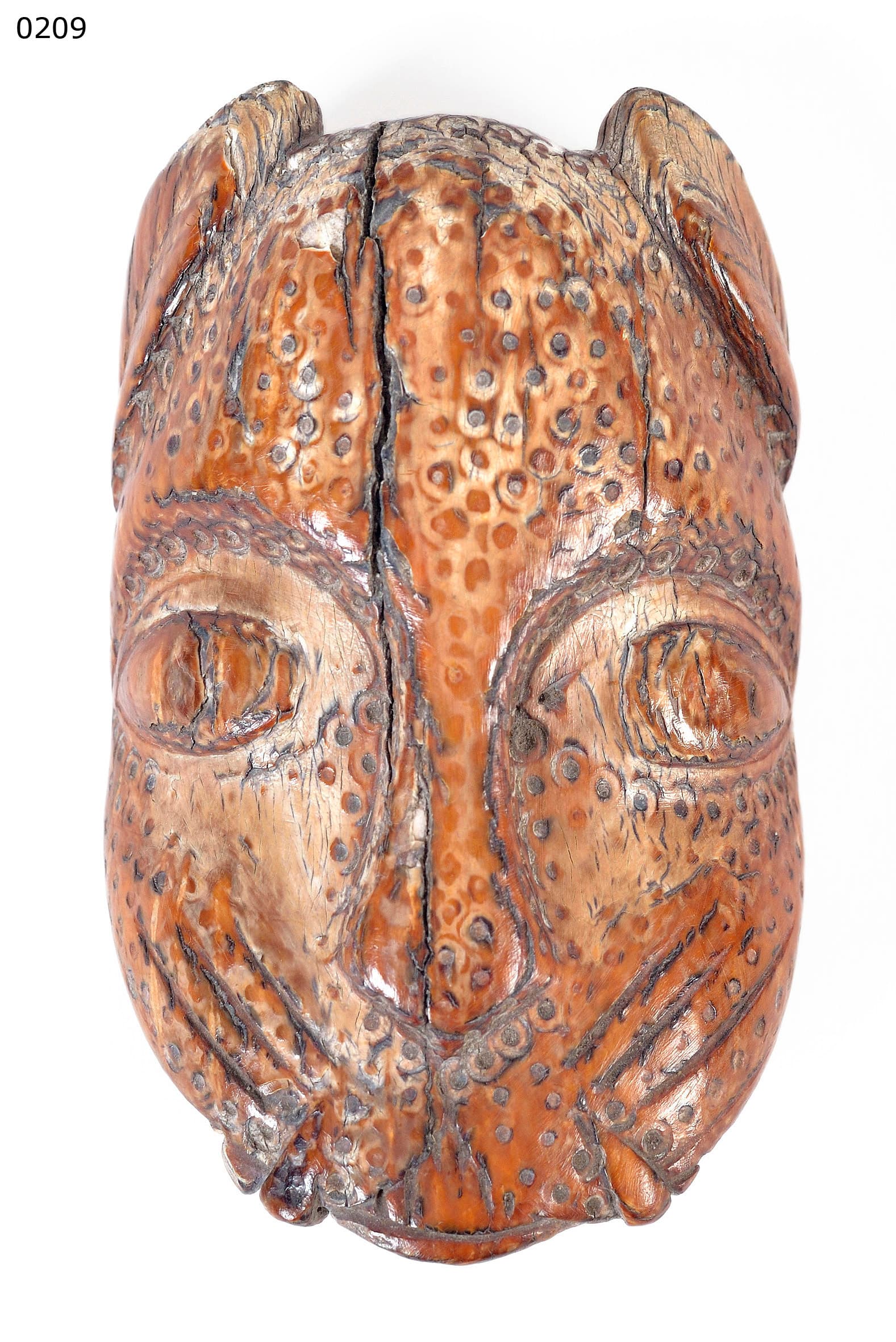
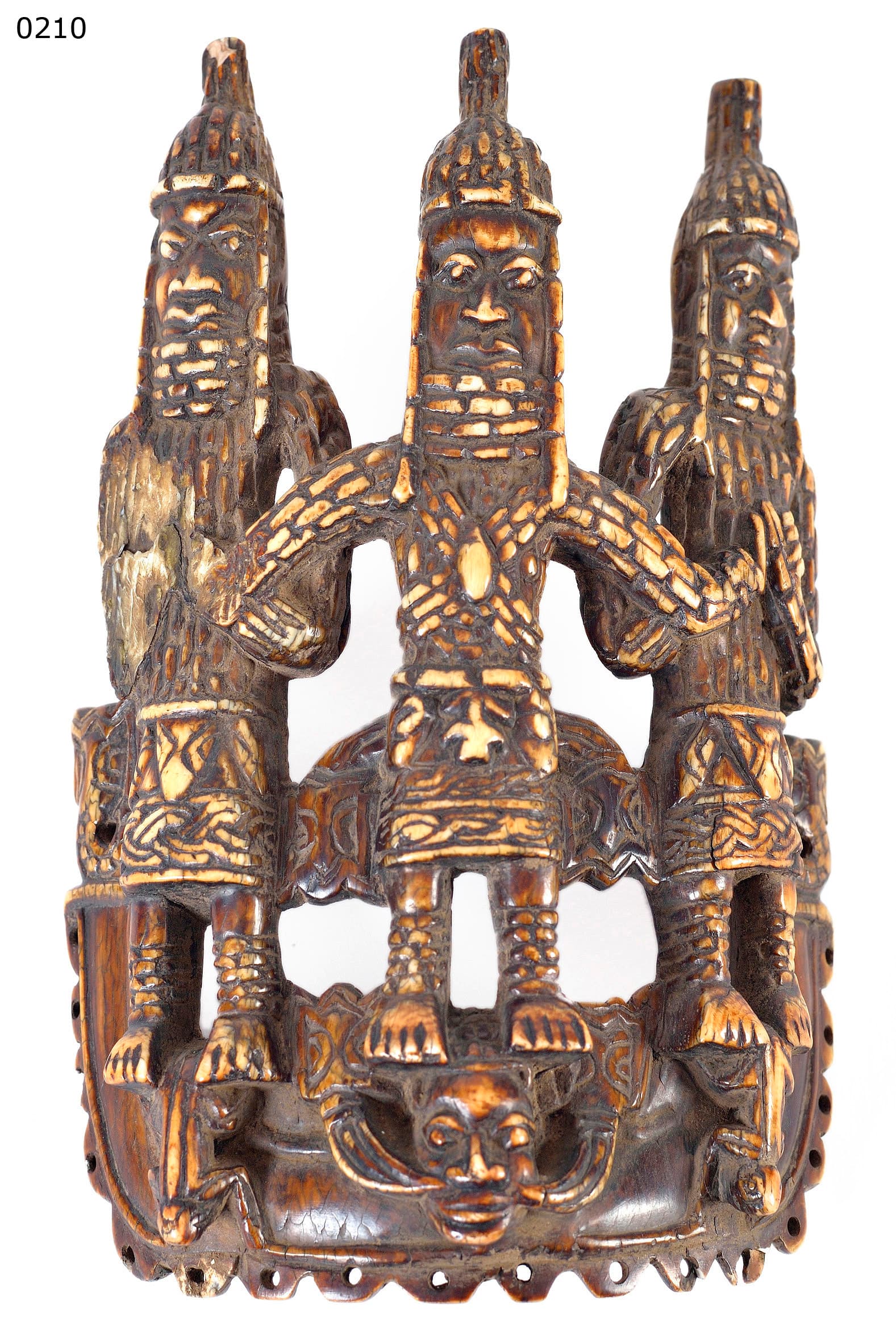
This intricate cast-bronze pendant mask depicts an idealized human face topped with an openwork, semi-circular tiara featuring stylized mudfish and alternating motifs. The metal exhibits a dark, earthy brown oxidation with traces of green malachite in the deepest recesses.
1. Aesthetic style and regional traits
Originating from the royal Igun Eronmwon (bronze-casting guilds) of the Edo people in the Kingdom of Benin, this piece exemplifies the highly controlled, courtly style of lost-wax casting. The face is an idealized portrait, characterized by a broad nose, full lips, and heavy, hooded eyelids. The openwork flange above the head incorporates the mudfish, a creature that can survive on land and in water, mirroring the Oba's dual divine and earthly nature, as well as his absolute dominion over all realms.
2. Ritual function and secret society context
This object is an ornamental hip mask (uhunmwun ekhue), an exclusive prerogative of the Oba (King) and his highest-ranking chiefs. Worn tied to the left hip over a wrapper during major state ceremonies, such as the Igue festival (which renews the king's spiritual powers), the mask served as both an amulet of protection and a flashing, metallic symbol of immense wealth and royal authority. It literally armored the king in the visages of his ancestors and protective deities.
3. Physical patina and age indicators
Attributed to the late Benin period (18th/19th century), the bronze displays a heavy metallurgical aging profile consistent with this period. It lacks the shiny, artificial green acid patinas seen on modern reproductions. Instead, it has a dense, dark-olive and chocolate-brown oxidation layer, showing smooth, polished wear on the tip of the nose and the chin compatible with friction against heavy ceremonial garments.
Summary
As a classic emblem of the Benin Kingdom's royal court, this bronze hip mask is a notable example of political and spiritual iconography. Its refined lost-wax casting and deep, handling-worn patina make it a significant artifact of West African divine kingship.
Written with AI assistance from the collection appraisal, object photography and our own research; editorially reviewed. Mistakes are possible — corrections are welcome. How we work →