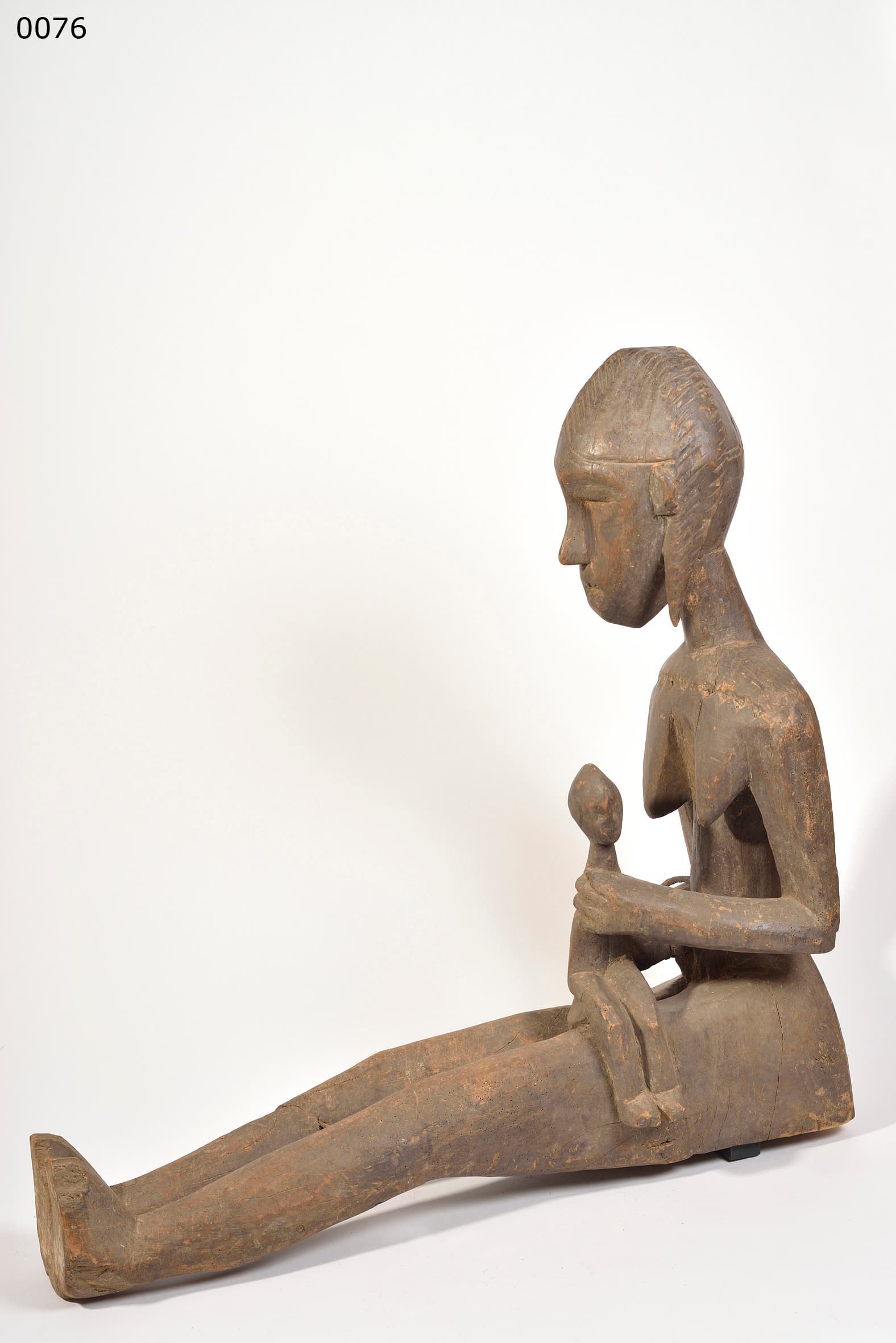
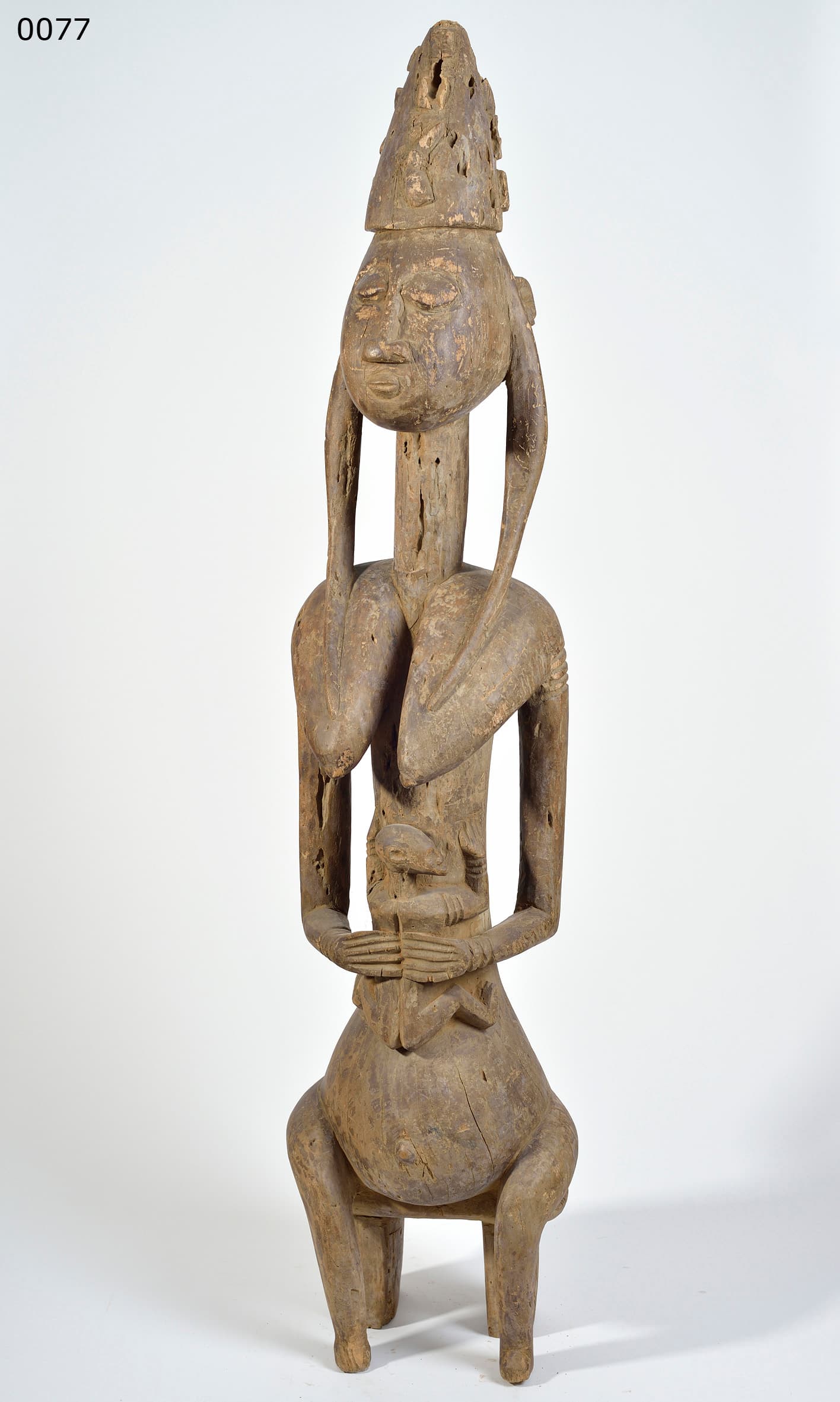
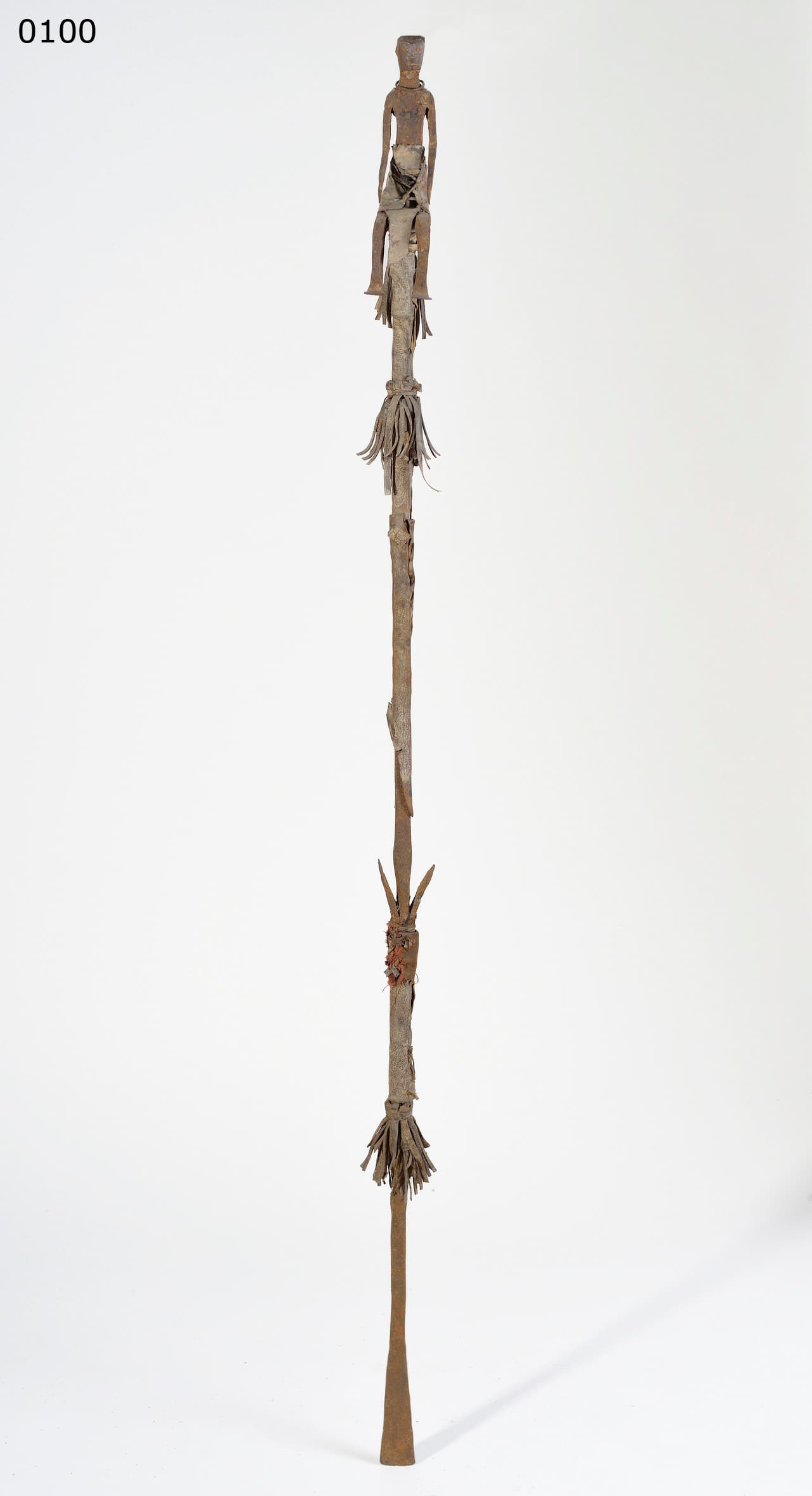
This towering wooden sculpture depicts an elongated rider sitting rigidly atop a highly stylized, blocky horse with a prominent, conical mane or headdress. The entire surface is covered in a thick, deeply oxidized, and friable crust of sacrificial earth and organic matter.
1. Aesthetic style and regional traits
This monumental equestrian figure is a superb expression of Bamana (and broader Malian) sculptural ideals, prioritizing structural monumentality over naturalistic detail. The horse is rendered as a severe, unyielding armature, while the rider is radically elongated, creating a soaring vertical axis. The conical headdress of the rider mirrors the stylized ears and mane of the horse, unifying the two entities into a single, cohesive architectural column that dominates the visual space.
2. Ritual function and secret society context
In Bamana cosmology, the horse is a symbol of supreme military and political power, often associated with mythic founding heroes or the elite leaders of the Jo or Komo secret societies. Such massive statues were not meant for public display; they were housed in specialized, dark sanctuary huts. They served as altars and physical anchors for powerful ancestral spirits. The rider represents the ideal male leader — stoic, vigilant, and possessing the esoteric knowledge required to command both the physical and spiritual realms.
3. Physical patina and surface history
The surface of this piece shows wear consistent with decades of profound, hidden ritual activity. The wood is completely obscured by a thick, layered patina of applied mud, millet porridge, and sacrificial blood. This dense encrustation (basi or nyama accumulation) is highly friable and deeply oxidized, suggesting that the statue stood in a traditional Bamana shrine house, receiving continuous ritual feeding to activate and maintain its spiritual power, likely during the early 20th century.
Summary
This Bamana equestrian figure is a monumental synthesis of Sahelian military prestige and animist power. Its towering, abstracted architecture and profound, layered sacrificial crust make it a significant example of Malian altar sculpture.
Written with AI assistance from the collection appraisal, object photography and our own research; editorially reviewed. Mistakes are possible — corrections are welcome. How we work →