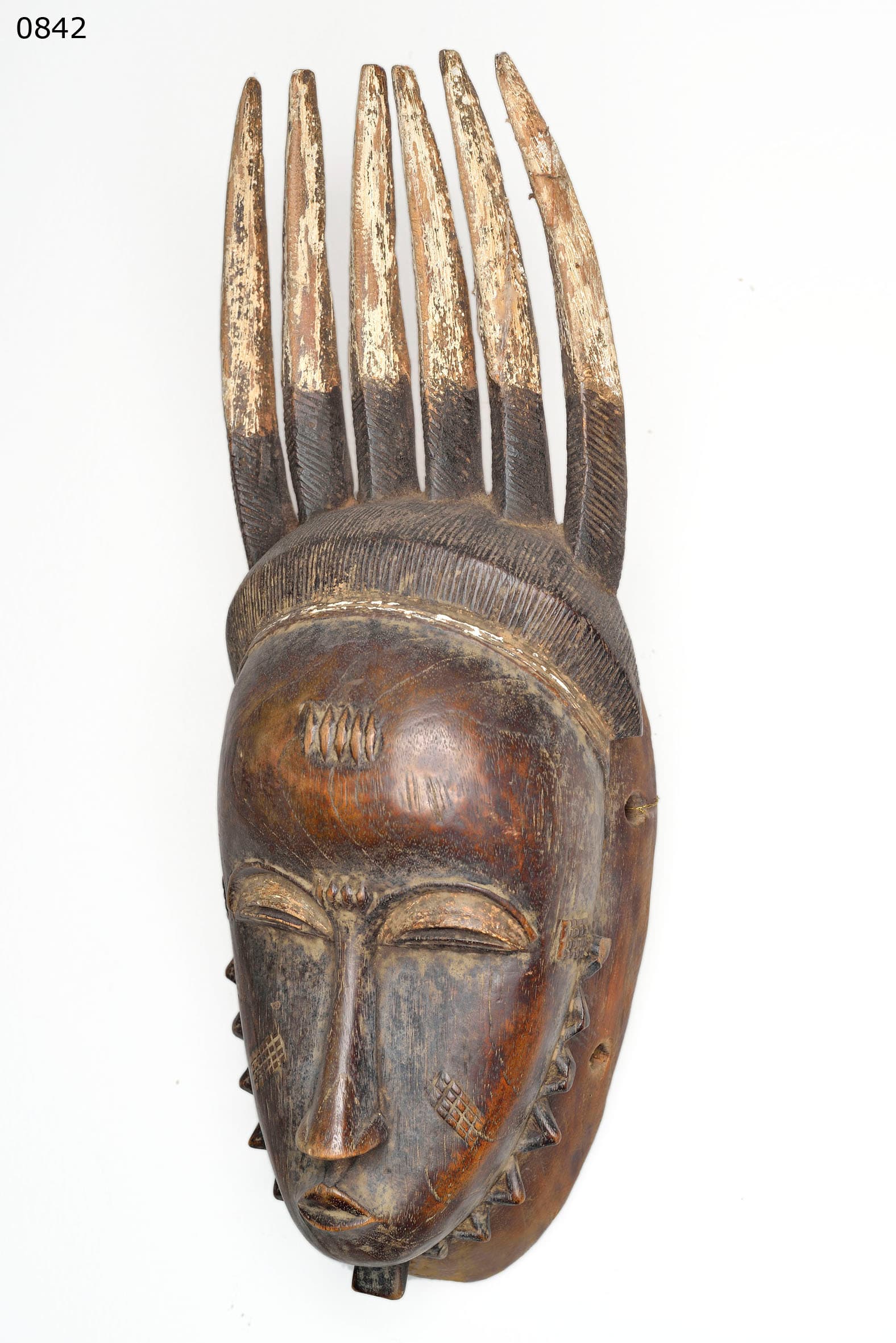
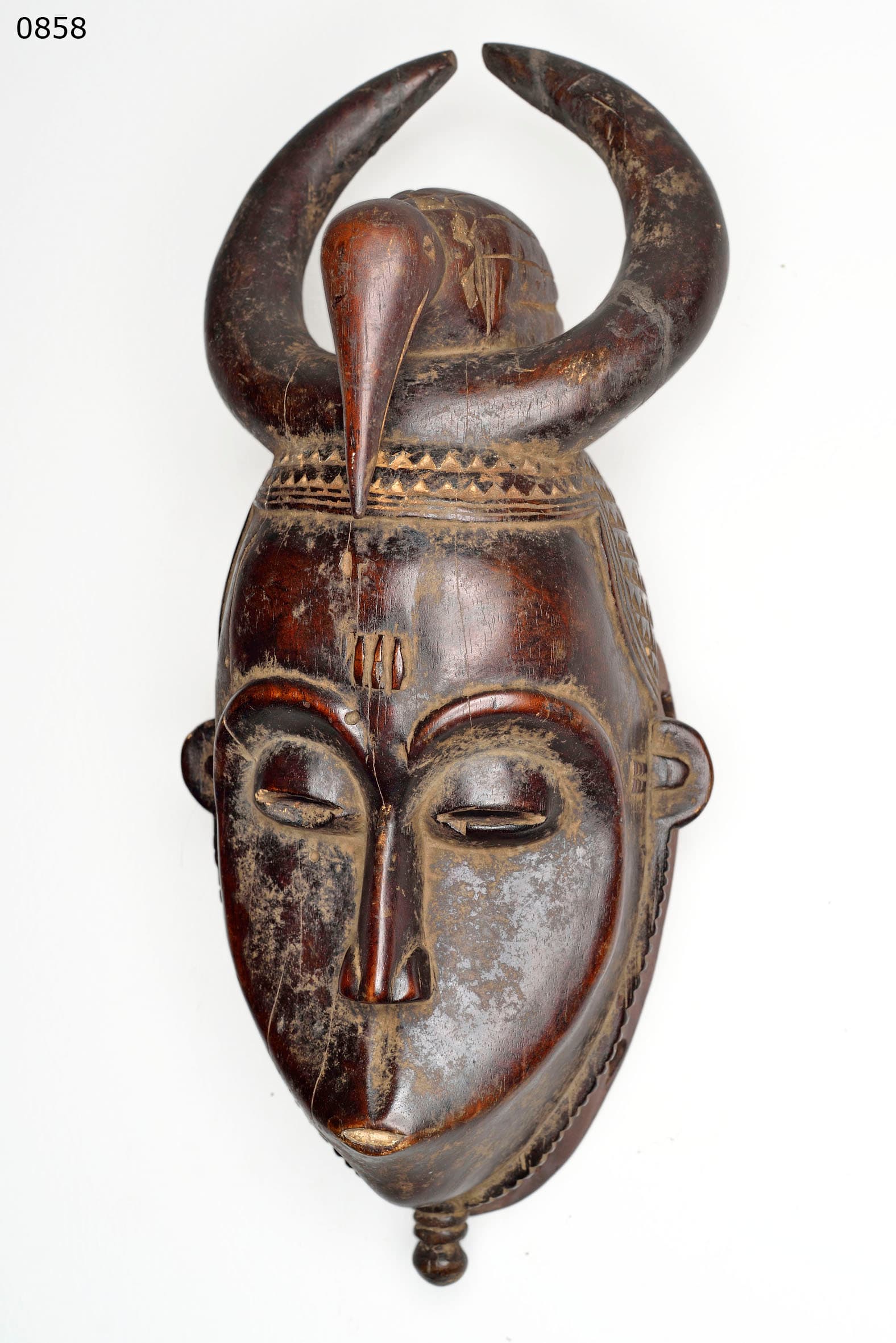
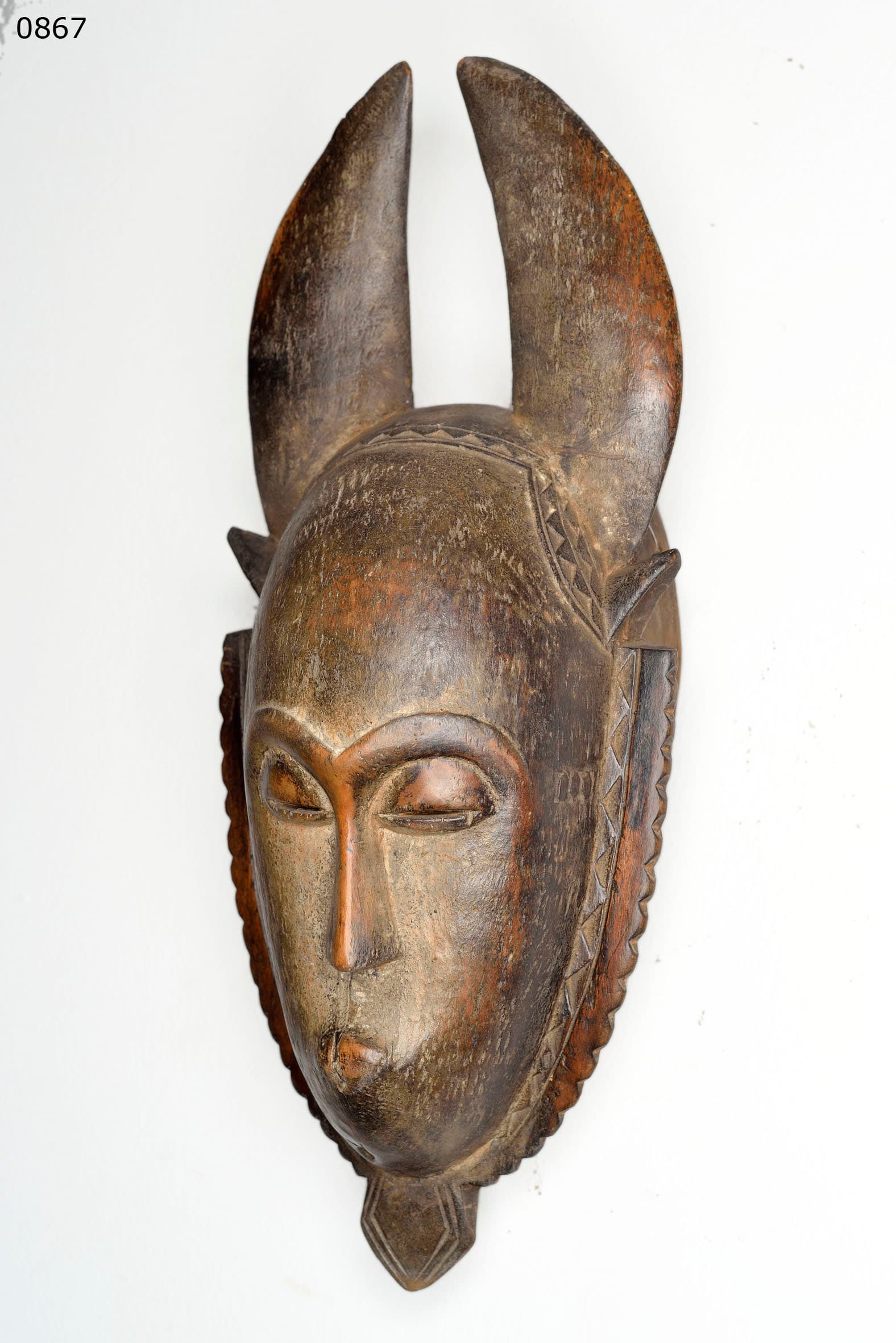
This cast-brass mask portrays an idealized human face with delicate, slit eyes and a prominent nose, bordered by a zig-zag flange and topped with an elaborate crest featuring two elongated birds. The heavy metal exhibits a dark, varied oxidation with smooth, golden highlights on the raised surfaces.
1. Aesthetic style and regional traits
The Yaure (or Yaoure), geographically and stylistically situated near the Baule and Guro, are known for their refined masking traditions. This brass casting adapts the classic wooden Jeh or Lomane mask style into high-prestige metalwork. The zig-zag rim is a regional hallmark representing the path of the sun or light rays. The serene, balanced facial proportions project ideal human beauty, while the graceful birds (likely hornbills) perched atop the crest symbolize spiritual connection and ancestral omniscience.
2. Ritual function and secret society context
Given its considerable weight, this brass mask was likely not worn over the face during vigorous dances. Instead, it functioned as a high-status prestige object, a passport mask, or an altar display utilized during the Yu purification ceremonies. Traditionally displayed at the funerals of chiefs or during peace-making summits, the flashing, enduring nature of the brass visually announced the wealth of the lineage and the perceived beauty of the spirit world.
3. Physical patina and age indicators
The surface of the brass offers a record consistent with traditional handling. The deep recesses of the coiffure, the zig-zag rim, and the birds are packed with a thick, unpolished, dark-brown oxidation. Conversely, the tip of the nose, the lips, and the prominent crests show a buttery, golden friction polish. This selective wear is consistent with decades of touching, dusting, and anointing by the mask's custodians, supporting an attribution to the early-to-mid 20th century.
Summary
This Yaure brass mask is a notable execution of Ivory Coast lost-wax casting, blending human serenity with animal symbolism. Its detailed execution and friction patina make it a compelling symbol of West African aristocratic prestige.
Written with AI assistance from the collection appraisal, object photography and our own research; editorially reviewed. Mistakes are possible — corrections are welcome. How we work →