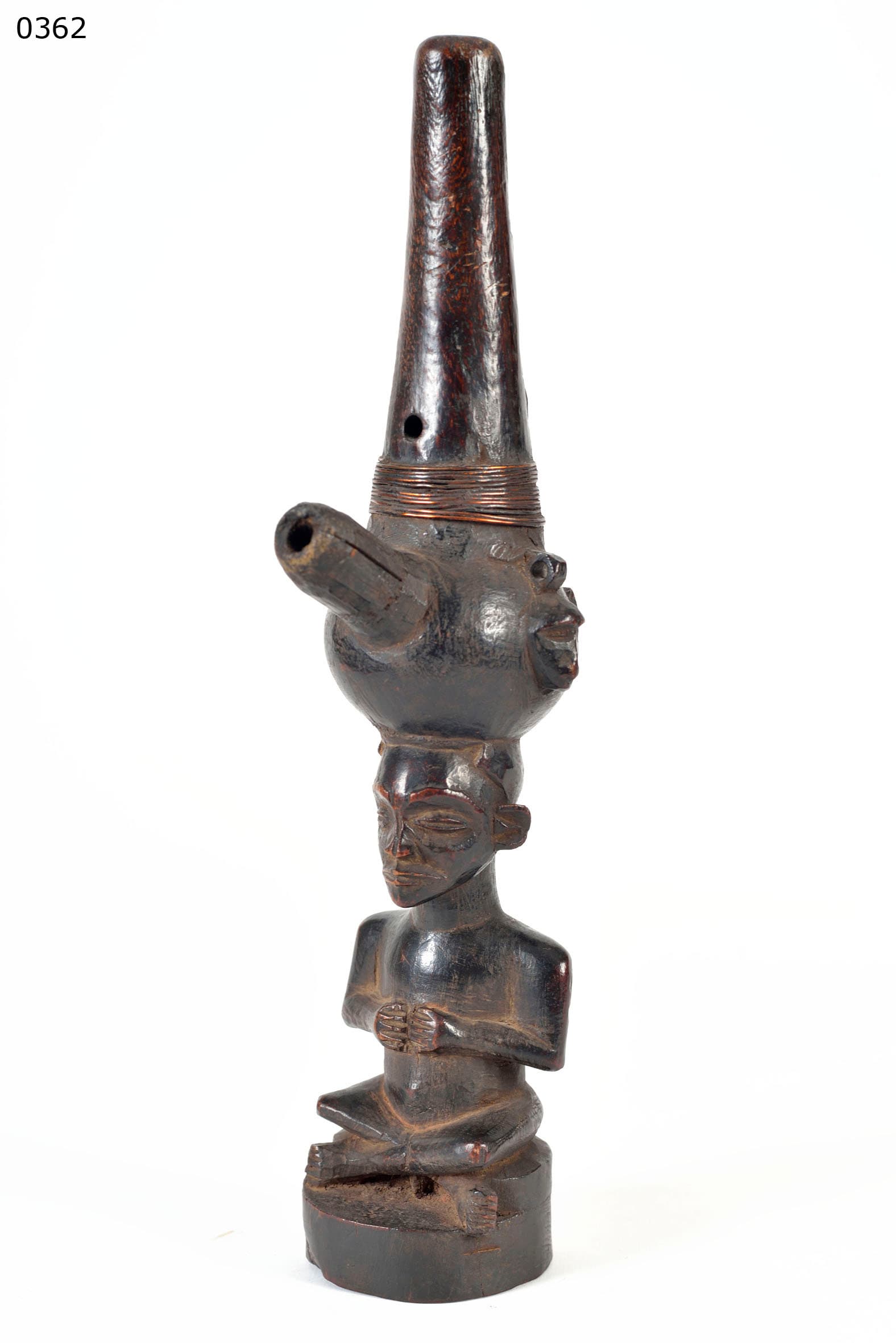
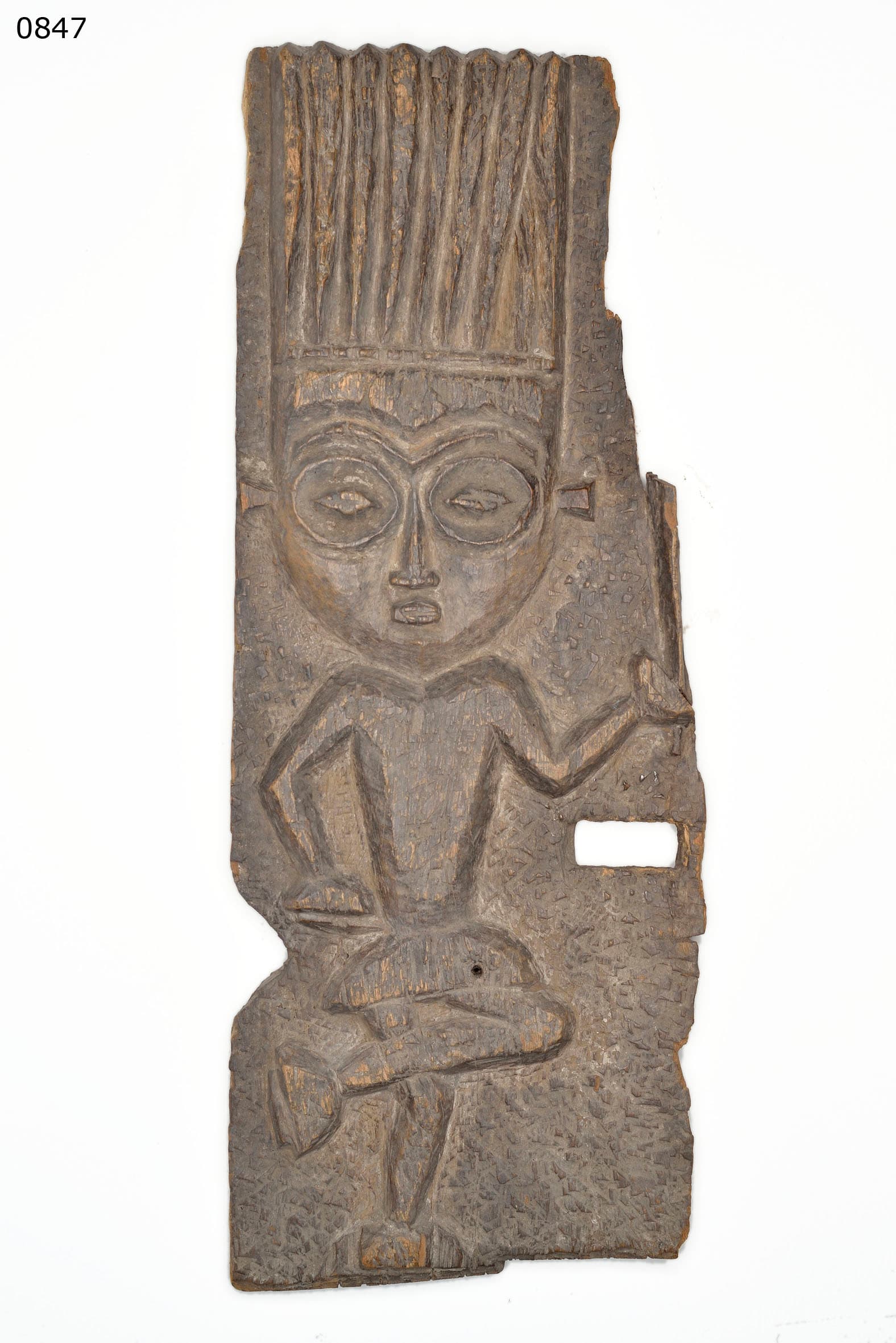
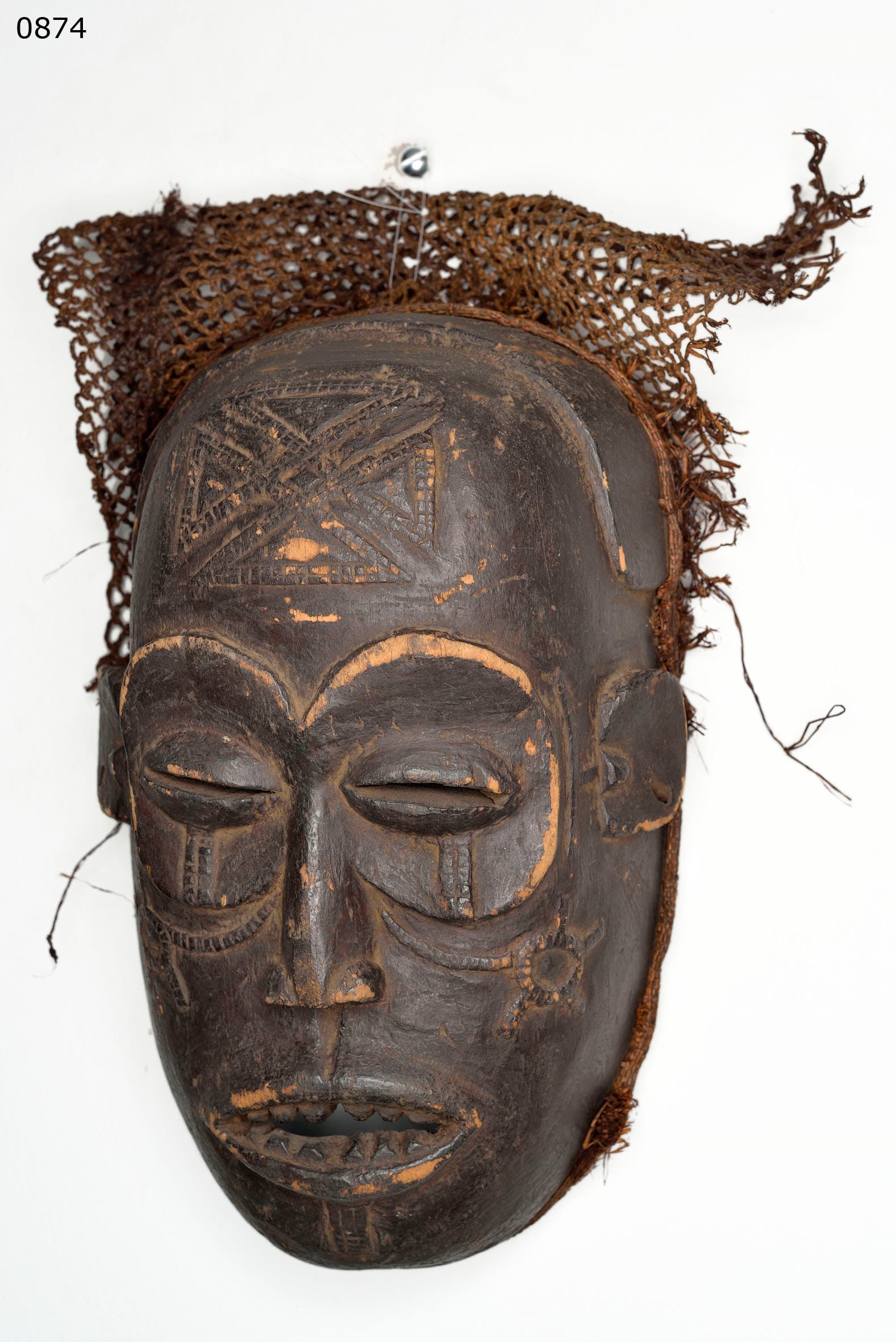
This wooden figure stands with flexed, slightly bent knees and hands joined across the abdomen, featuring an oversized head with a traditional, sweeping coiffure and prominent coffee-bean eyes. The dry, oxidized wood exhibits a dark, weathered surface with an encrusted appearance.
1. Aesthetic style and regional traits
The Chokwe people of Angola are known for an artistic canon that emphasizes muscular power, regal authority, and dynamic tension. This statue is consistent with those traits through its flexed, athletic stance, which has been interpreted as representing a warrior poised for action. The massively oversized head is adorned with the sweeping, intricate lines of the mutwe wa kayanda (the traditional woven prestige headdress of the aristocracy), suggesting an identification of the figure as an elite male or a high-ranking chief.
2. Ritual function and secret society context
This sculpture is associated with representations of a Mwanangana (a deified royal chief or founding ancestor). Placed within the communal lineage shrine (hamba), such figures traditionally served as a physical conduit between the living community and the spirits of the dead. In this tradition, elders would offer prayers and sacrifices to secure the ancestor's blessings for fertility, hunting prowess, and success in warfare. The hands resting on the abdomen are understood to highlight the stomach as the center of life, digestion, and lineage continuity.
3. Physical patina and age indicators
The physical state of this statue is compatible with use in a shrine context. The dense wood shows desiccation, resulting in a lightweight, oxidized core with cracking consistent with natural aging. The surface features an accumulation of material, possibly including palm oil and dust, which has softened the carving marks of the face and headdress, suggesting ritual anointing that may be compatible with use during the first half of the 20th century.
Summary
Reflecting elements of Angolan royal aesthetics, this Chokwe ancestor statue projects physical tension and authority. Its traditional aristocratic headdress and weathered patina are characteristic of objects associated with lineage veneration.
Written with AI assistance from the collection appraisal, object photography and our own research; editorially reviewed. Mistakes are possible — corrections are welcome. How we work →