This iconic wooden figure features a massive, flat, disc-shaped head with delicate facial features, a heavily ringed neck, horizontal cross-like arms, and a columnar torso adorned with colorful glass trade beads at the base. The dense wood possesses a deep, lustrous, black friction patina.
1. Aesthetic style and regional traits
This is the universally recognized Akua'ba (fertility doll) of the Asante (Ashanti) kingdom of Ghana. The aesthetic is rigidly codified to represent a traditional ideal of Akan beauty. The flat, circular head mirrors the shape of the full moon and the ideal of a broad, high forehead. The deeply incised rings around the neck denote rolls of fat, symbolizing aristocratic wealth, health, and a well-nourished body. The cross-like, horizontal arms and columnar torso reduce the body to pure geometry, elevating the head as the center of spiritual gravity.
2. Ritual function and secret society context
According to Asante oral tradition, a barren woman named Akua was instructed by a priest to commission a wooden child (Akua'ba) and treat it as a living infant. After carrying, bathing, and feeding the wooden doll, she miraculously gave birth to a beautiful daughter. Following this legend, women struggling to conceive wear these dolls tucked into the back of their waist-wrappers. The doll is traditionally believed to not only aid conception but also help ensure that the resulting child will be born with the highly prized, idealized physical features carved into the wood.
3. Physical patina and surface characteristics
The age and traditional use of an Akua'ba are often indicated by its patina, which is well-developed on this piece. It does not possess the dull, artificial shoe-polish finish of modern reproductions. Instead, the wood has a buttery, glassy black sheen — a friction patina consistent with traditional use. This is associated with continuous, daily rubbing against the mother's skin and clothing, combined with the frequent application of protective shea butter. The antique glass beads at the base are tightly bound and age-darkened, consistent with an early 20th-century origin.
Summary
This Asante Akua'ba is a classic symbol of West African maternal devotion and idealized beauty. Its balanced, geometric proportions and rich, handling-worn friction patina make it a highly expressive example of this sculptural tradition.
Written with AI assistance from the collection appraisal, object photography and our own research; editorially reviewed. Mistakes are possible — corrections are welcome. How we work →

ceremonial staff of an official speaker
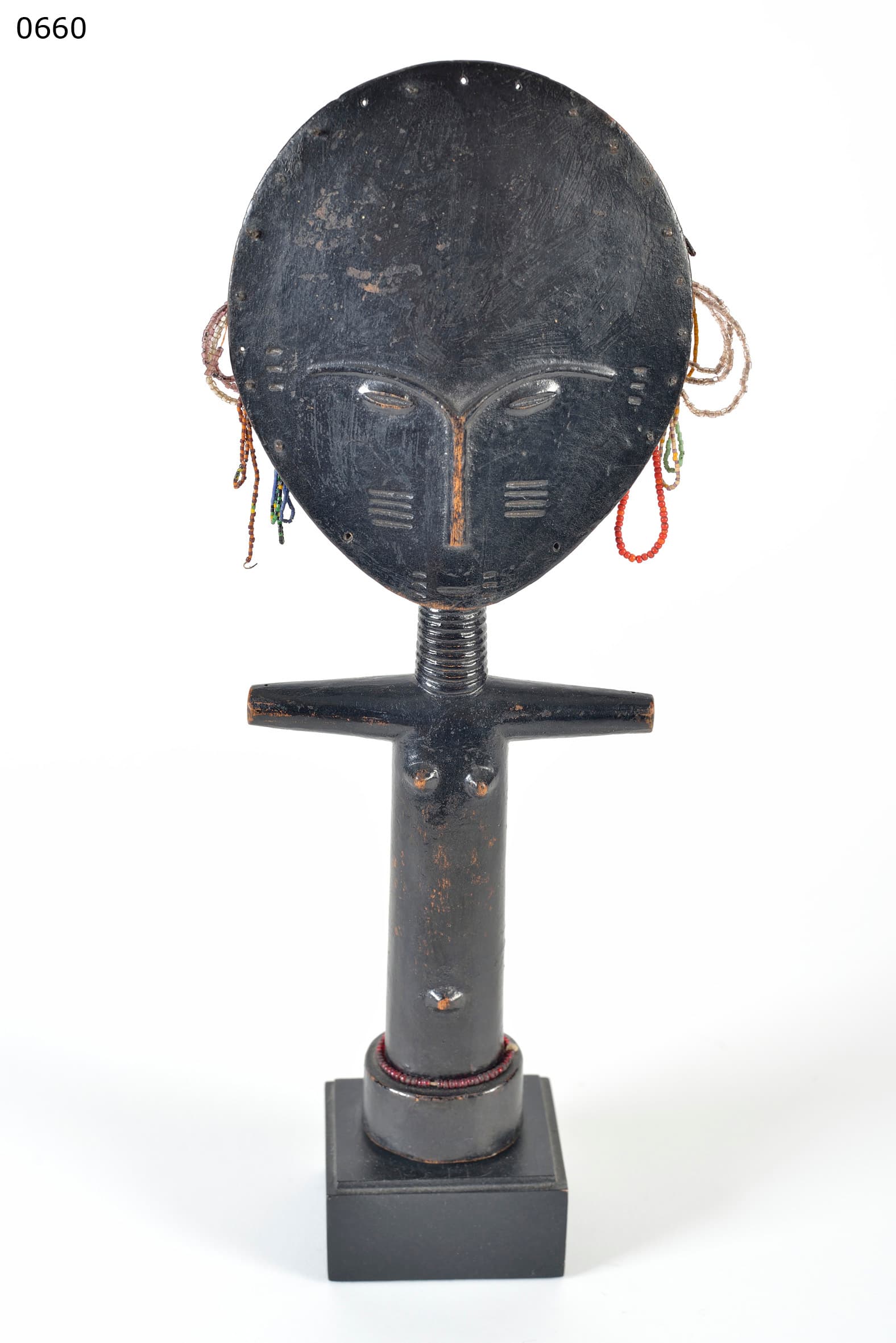
Akua-ba fertility doll (Asante disc-head variant)
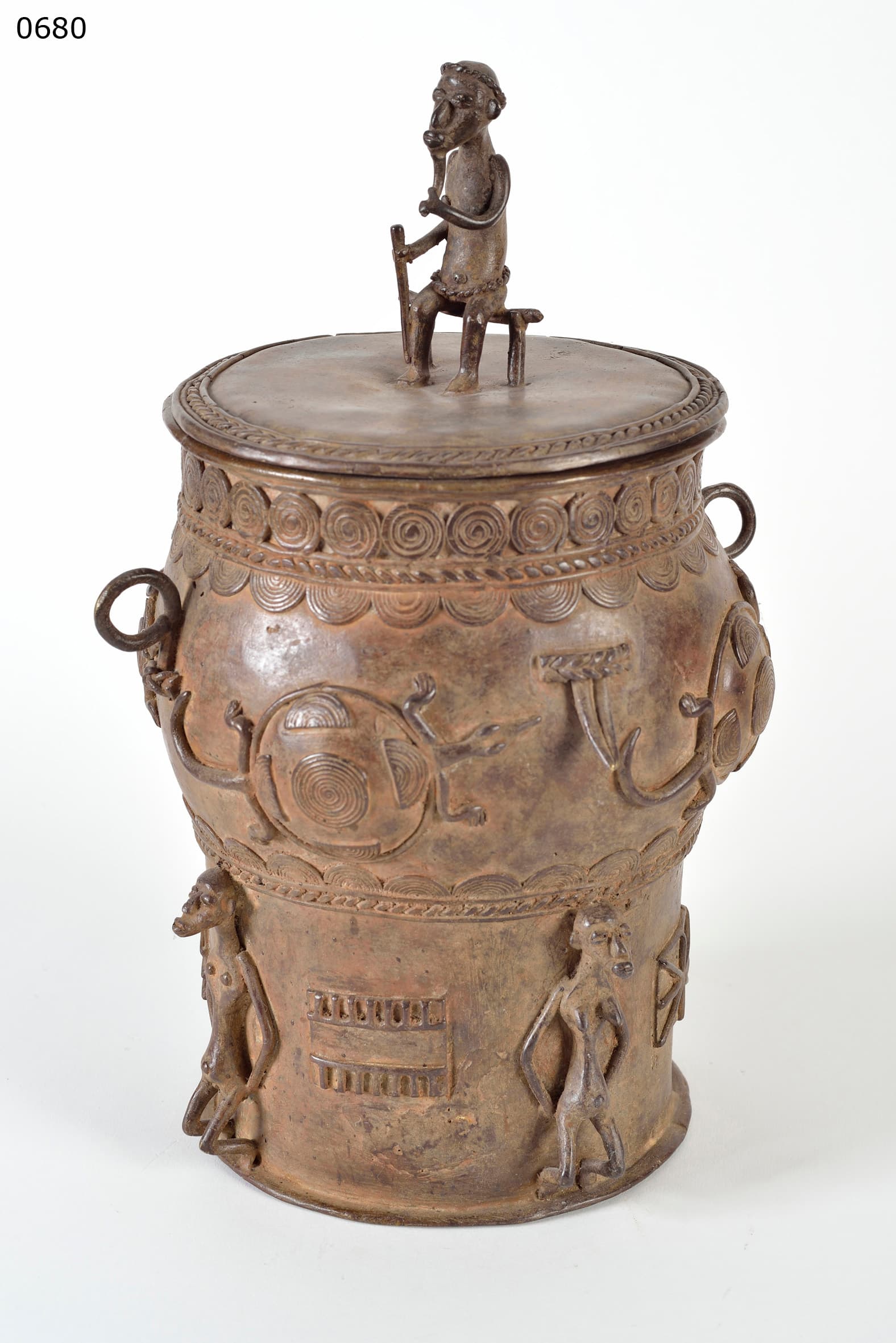
KUDUO cult vessel
