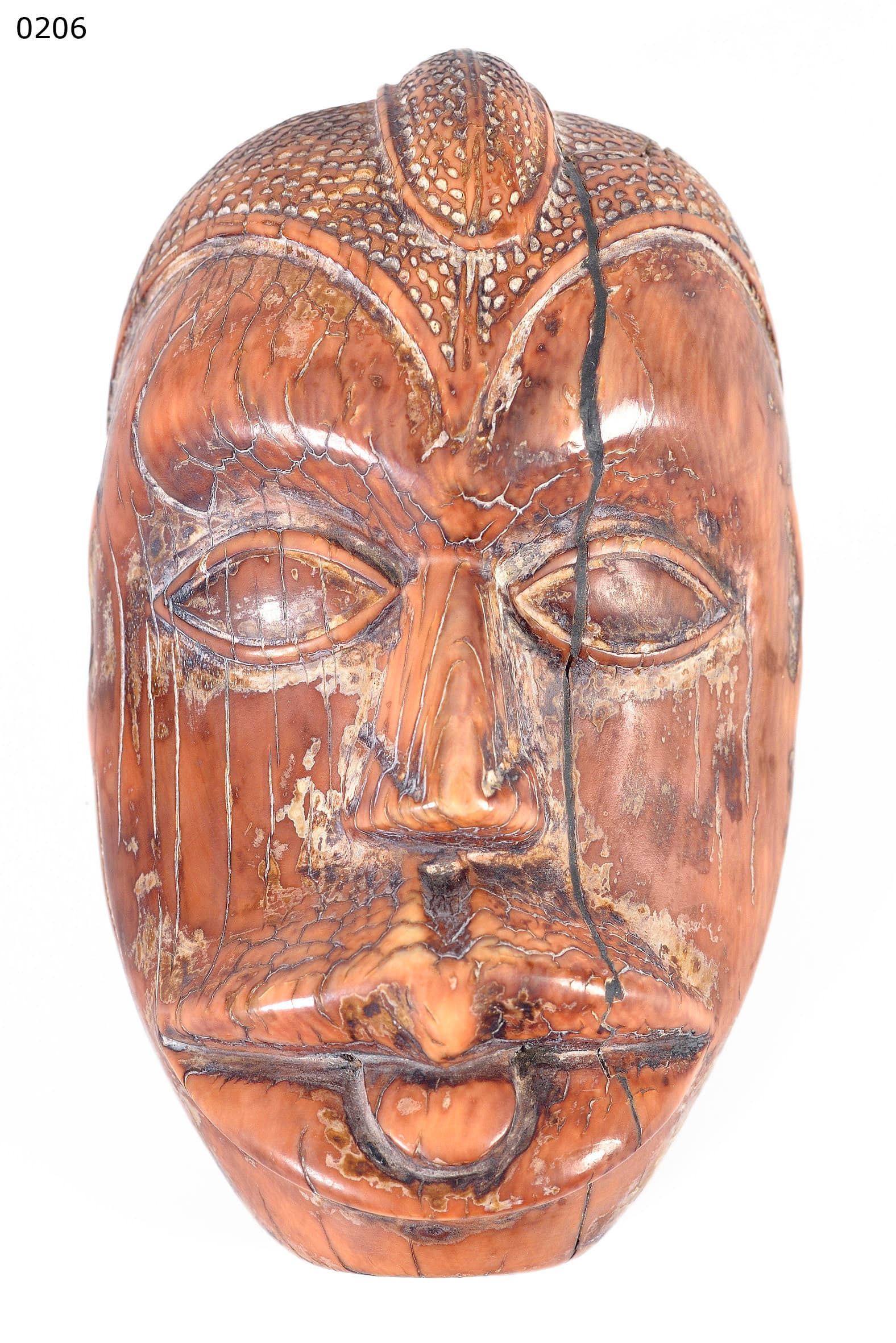
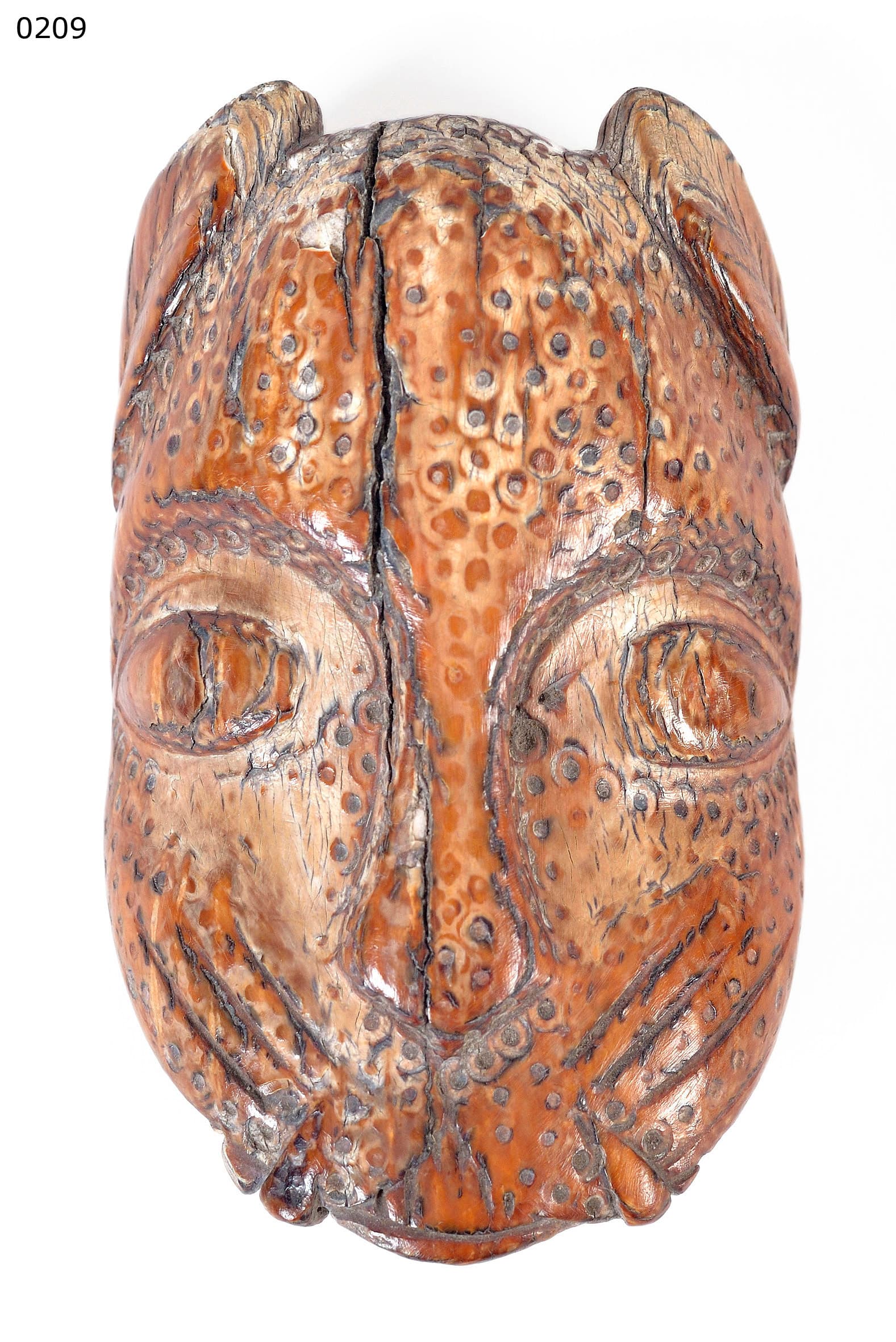
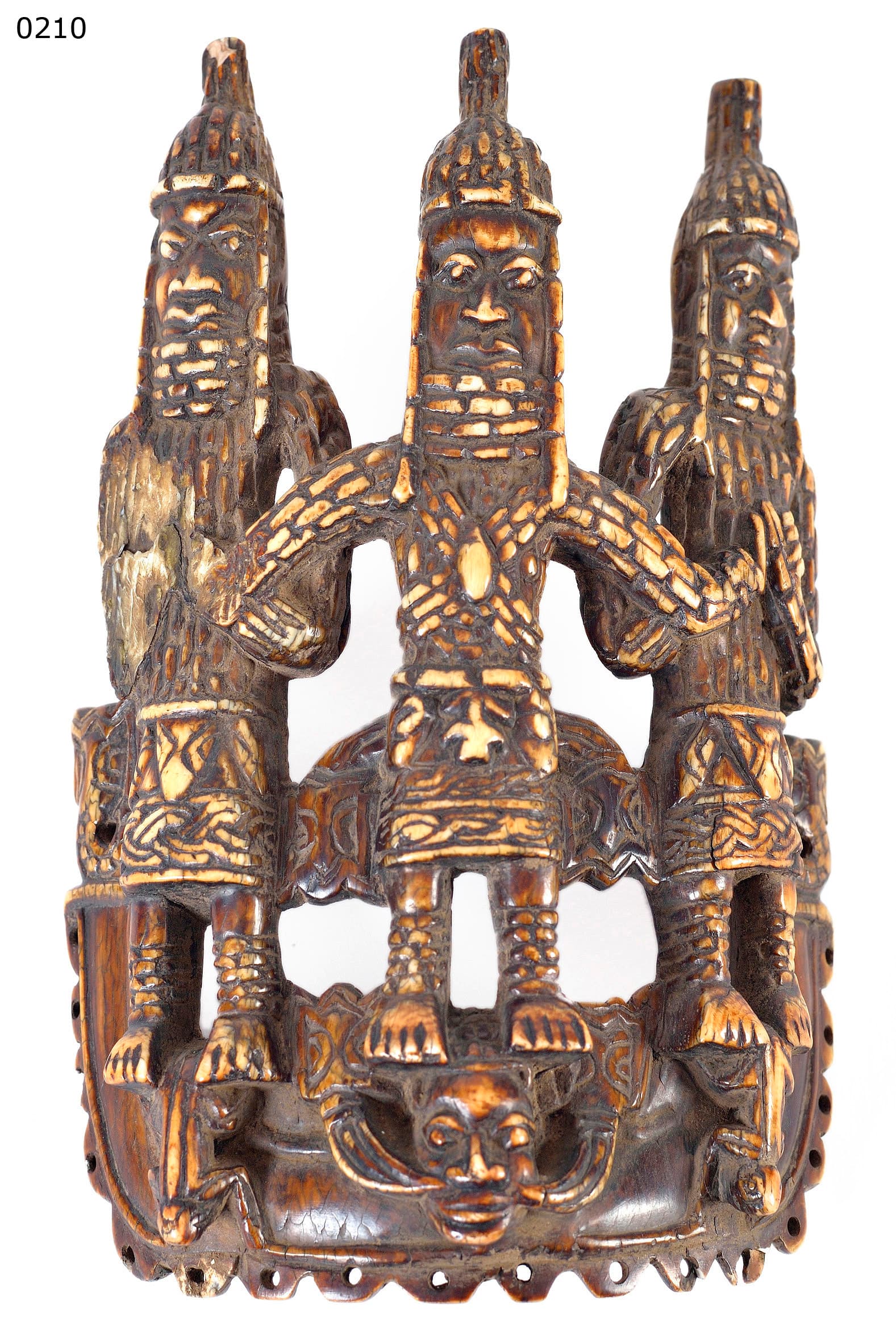
These two rectangular cast-bronze plaques feature high-relief, central figures of Edo chiefs or warriors dressed in elaborate court regalia (including leopard-tooth necklaces and wrapped skirts), set against backgrounds densely stippled with a classic rosette/quatrefoil pattern. The heavy bronze matrices exhibit deep, earthy brown and malachite-green oxidation.
1. Aesthetic style and regional traits
These are quintessential examples of the legendary Benin bronzes cast by the royal Igun Eronmwon guilds. The aesthetic is strictly hierarchical and highly detailed; the stippled "river leaf" background is a universal hallmark of Edo court plaques, designed to catch the light and symbolize Olokun, the god of wealth and the sea. The rigid, frontal posing of the figures, combined with their meticulously chased, elaborate coral bead collars, bell adornments, and ceremonial tools, projects the absolute, unyielding, and opulent power of the Oba's (King's) court.
2. Ritual function and secret society context
Originally, hundreds of these massive, heavy bronze plaques were nailed directly to the thick wooden pillars of the Oba's palace courtyard in Benin City. They served as a massive, permanent historical archive and political propaganda. By walking through the courtyards, visitors, dignitaries, and subjects were visually overwhelmed by this metallic record of court protocols, legendary battles, and the complex hierarchy of the royal retinue, forever cementing the divine right and historical authority of the Edo monarchs.
3. Physical patina and age indicators
Attributed to the late Benin period (18th/19th century), these heavy plaques exhibit a deep, slow-forming metallurgical oxidation. The surfaces possess a dense, dark-olive and chocolate-brown oxidation layer, accented by granular blooms of green malachite in the deeply chased recesses of the background and garments. The smooth wear on the prominent high points of the faces, noses, and torsos is consistent with decades of historical dusting, touching, and exposure within a traditional royal architectural setting.
Summary
These Benin bronze plaques are notable examples of royal African metallurgy and court art. Their high-relief lost-wax casting and multi-colored oxidation are consistent with historical Edo craftsmanship.
Written with AI assistance from the collection appraisal, object photography and our own research; editorially reviewed. Mistakes are possible — corrections are welcome. How we work →