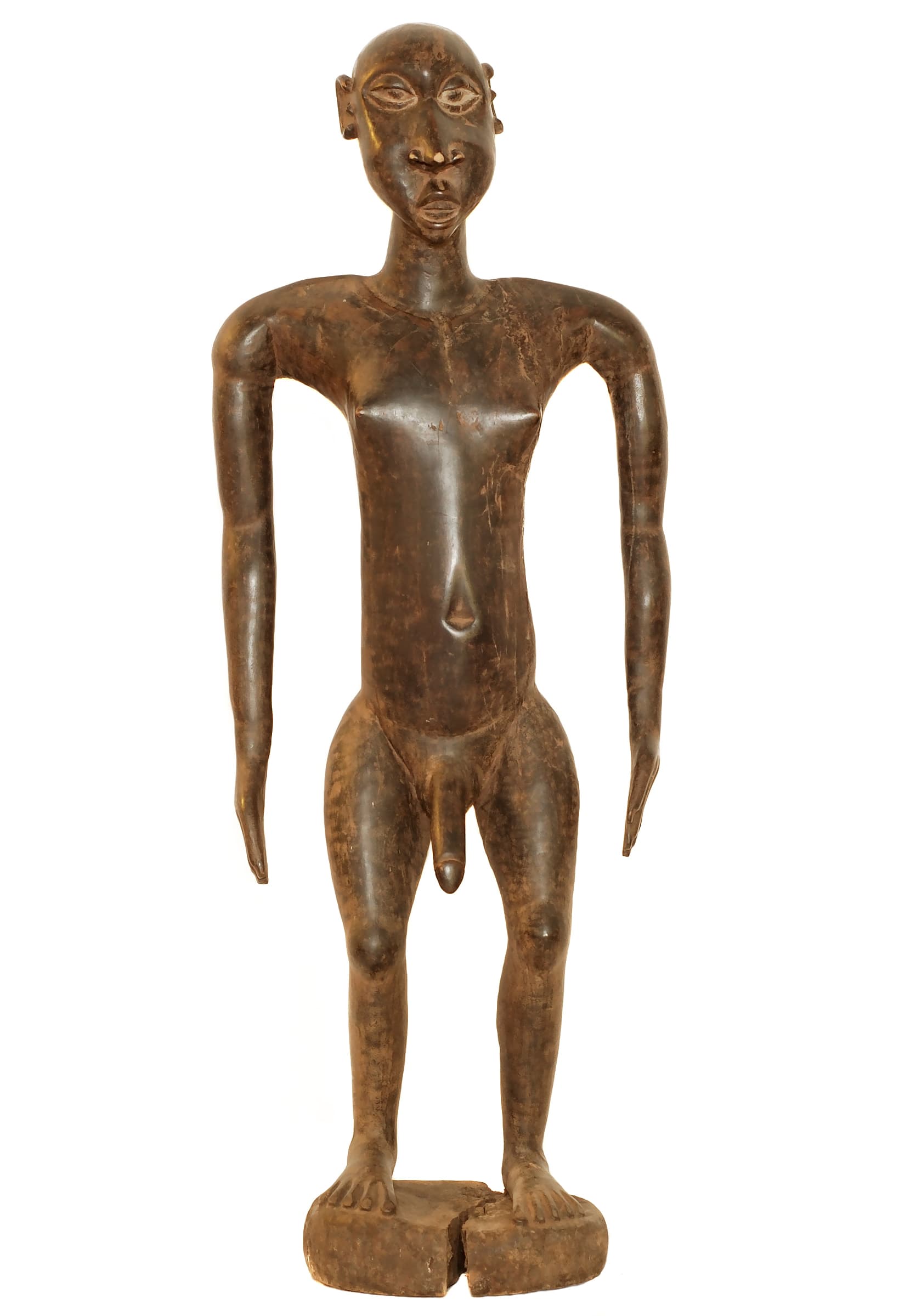
This solid brass figure depicts a standing male with slightly bent knees, hands resting on his abdomen, and a large, rounded head with protruding eyes. A distinct diamond-shaped scarification mark is cast onto his chest, and the metal has a smooth, dark brown oxidized finish with subtle green highlights.
1. Aesthetic style and regional traits
The Tiv people of the Benue River Valley are known for their distinct approach to human proportions, often emphasizing the head and the navel as centers of life force and ancestral power. The diamond scarification on the chest is a precise cultural marker, reflecting actual Tiv body-modification patterns associated with initiation or status. Tiv aesthetic favors a frontal, alert posture with clearly delineated body landmarks, treating the human figure as an inventory of meaningful sites rather than a smoothly continuous form.
2. Ritual function and altar practice
Known as atsuku or related protective figures, such brass castings were placed on shrines to mediate between the living and the spiritual forces (mbatsav). The hands resting on the abdomen signify peace, digestion of life forces, and the containment of magical power, ensuring the well-being of the family or the individual owner. The figure's role was active rather than commemorative — it was anointed, addressed, and consulted, functioning as a permanent diplomatic envoy stationed at the boundary between household and spirit world.
3. Physical patina and age indicators
The smoothness of the brass, particularly on the prominent features like the forehead, belly, and knees, shows wear consistent with extensive ritual handling and anointing over time. The solid lost-wax casting technique and the rich, even oxidation are compatible with an early to mid-20th-century age. Differential polishing on the projecting features — where ritual touch typically concentrates — is consistent with shrine wear, distinct from the uniform sheen of mechanically buffed reproductions.
Summary
This Tiv brass altar figure is a compelling example of Benue River Valley metalwork, marked by strong geometric forms and specific cultural scarification. Its smooth, handled patina and serene posture are consistent with well-preserved examples of this sculptural tradition.
Written with AI assistance from the collection appraisal, object photography and our own research; editorially reviewed. Mistakes are possible — corrections are welcome. How we work →