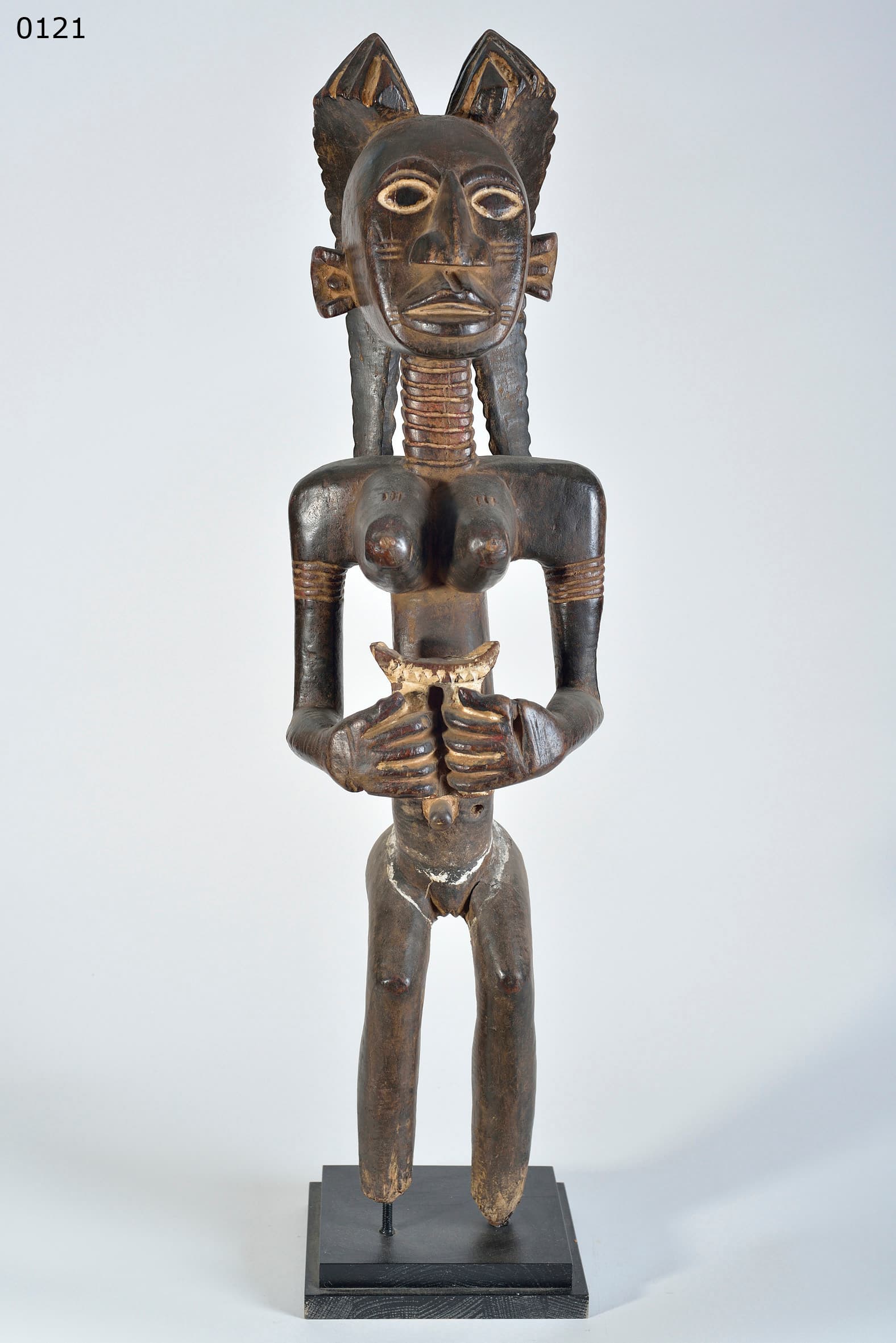
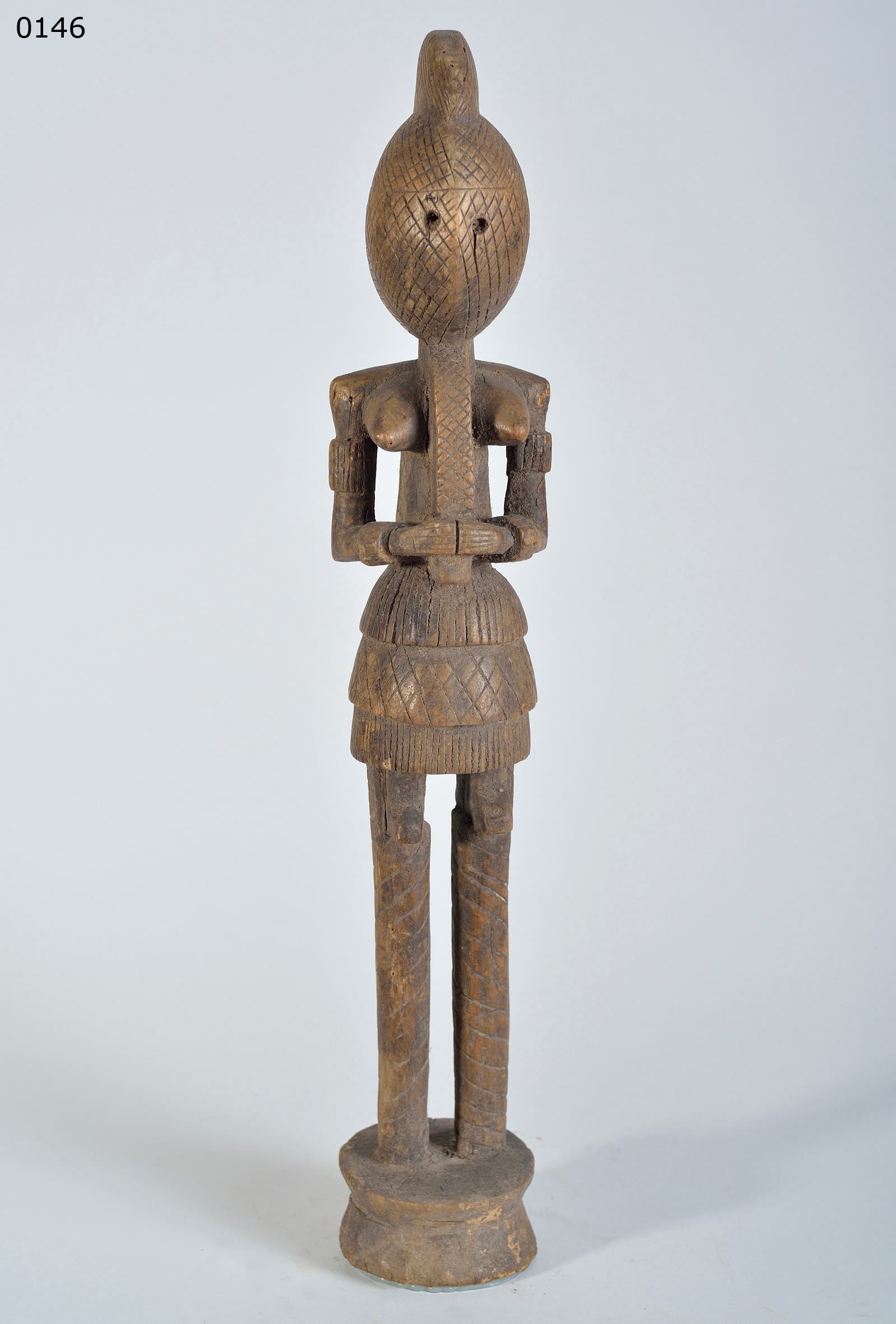
A stylized wooden fertility doll (biiga) characterized by a semicircular, crescent-like crested head, a tubular body devoid of limbs, and subtle geometric incisions, bearing a dark, well-handled patina.
1. Aesthetic style and regional traits
The Mossi biiga (child) represents a classic example of West African abstract reductionism. By omitting arms and legs, the carver forces the viewer's attention onto the heavily stylized, crested coiffure — a traditional hairstyle worn by Mossi women — and the pendulous breasts, immediately identifying the object not just as a child, but as an emblem of future motherhood and feminine maturity. The radical simplification is itself the point: the biiga's power lies precisely in its refusal to be a child portrait, presenting instead a condensed icon of feminine reproductive identity.
2. Ritual function and maternal instruction
These dolls served a dual purpose in Mossi society. They were given to young girls as educational toys to teach them the responsibilities of child-rearing, involving washing, dressing, and carrying the wooden figure. Later in life, if a woman faced infertility, the doll would be ritually consecrated and carried to invoke the blessings of the ancestors for a successful pregnancy. The same physical object thus traveled across the woman's lifecycle — from instructional toy to consecrated fertility intercessor — accumulating layered ritual significance with each phase.
3. Physical patina and indications of age
The visual character of this specific piece is enhanced by its rich patina. The mid-section, where it was constantly gripped and strapped to the backs of young girls, has been worn smooth. The rich, dark, oily finish is the result of years of being anointed with shea butter, suggesting its deep, active integration into Mossi family life. The wear is asymmetric and concentrated, exactly where carrying-pressure and oil application would naturally focus — a pattern consistent with genuine age and traditional use.
Summary
A finely stylized Mossi biiga that distills the essence of fertility and female maturation into a geometric wooden form. Its rich, hand-polished patina is consistent with a historically utilized example of Burkina Faso art.
Written with AI assistance from the collection appraisal, object photography and our own research; editorially reviewed. Mistakes are possible — corrections are welcome. How we work →