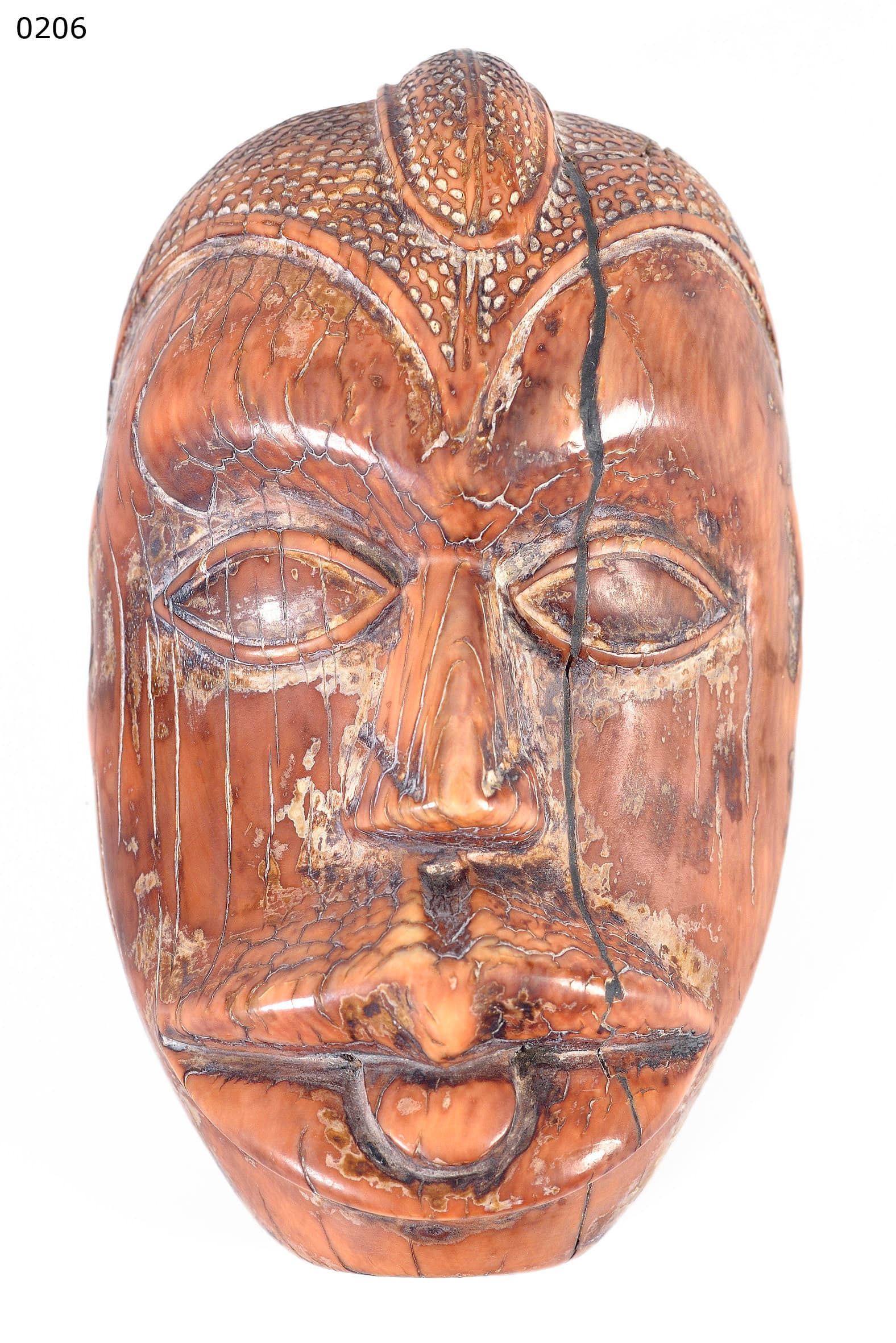
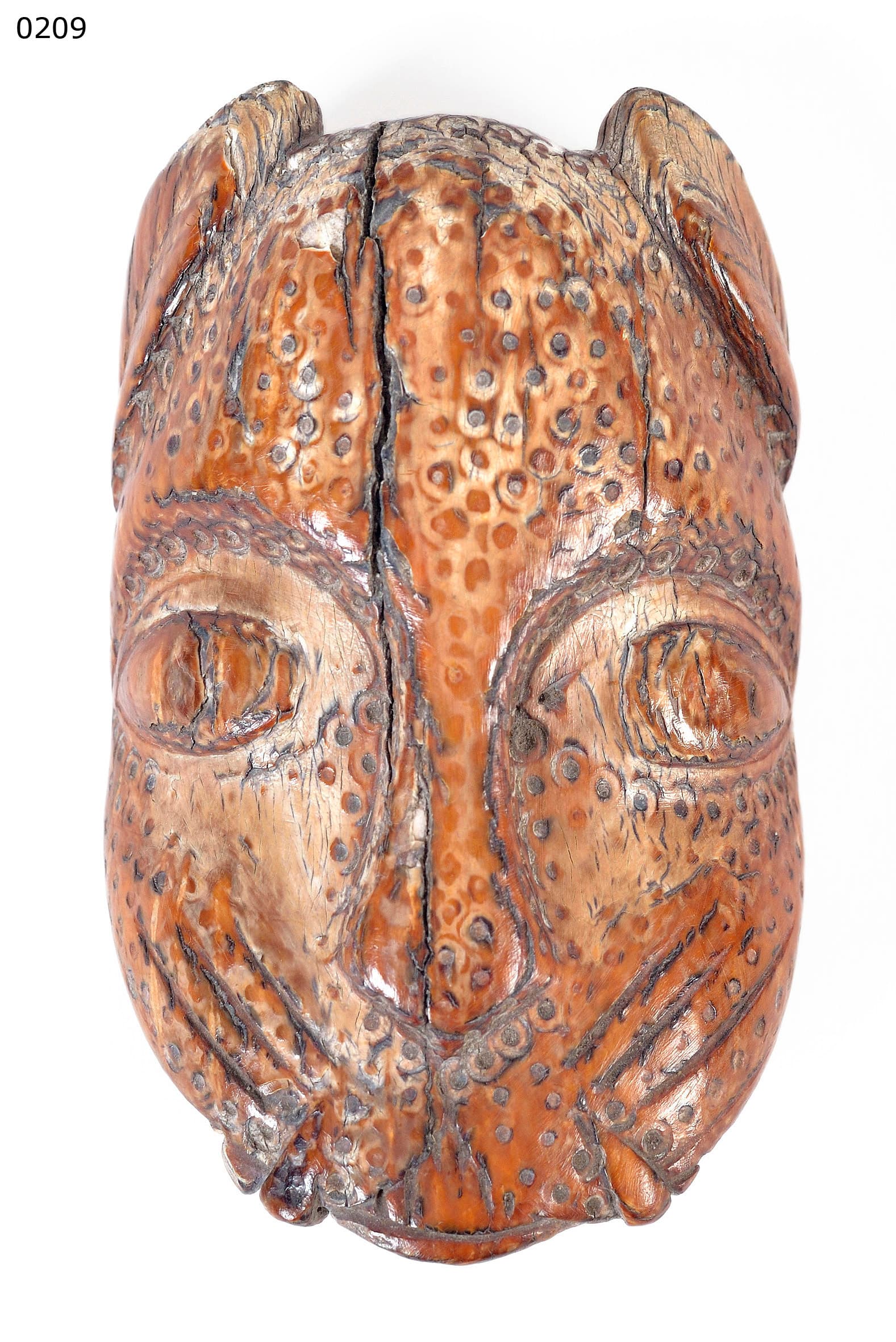
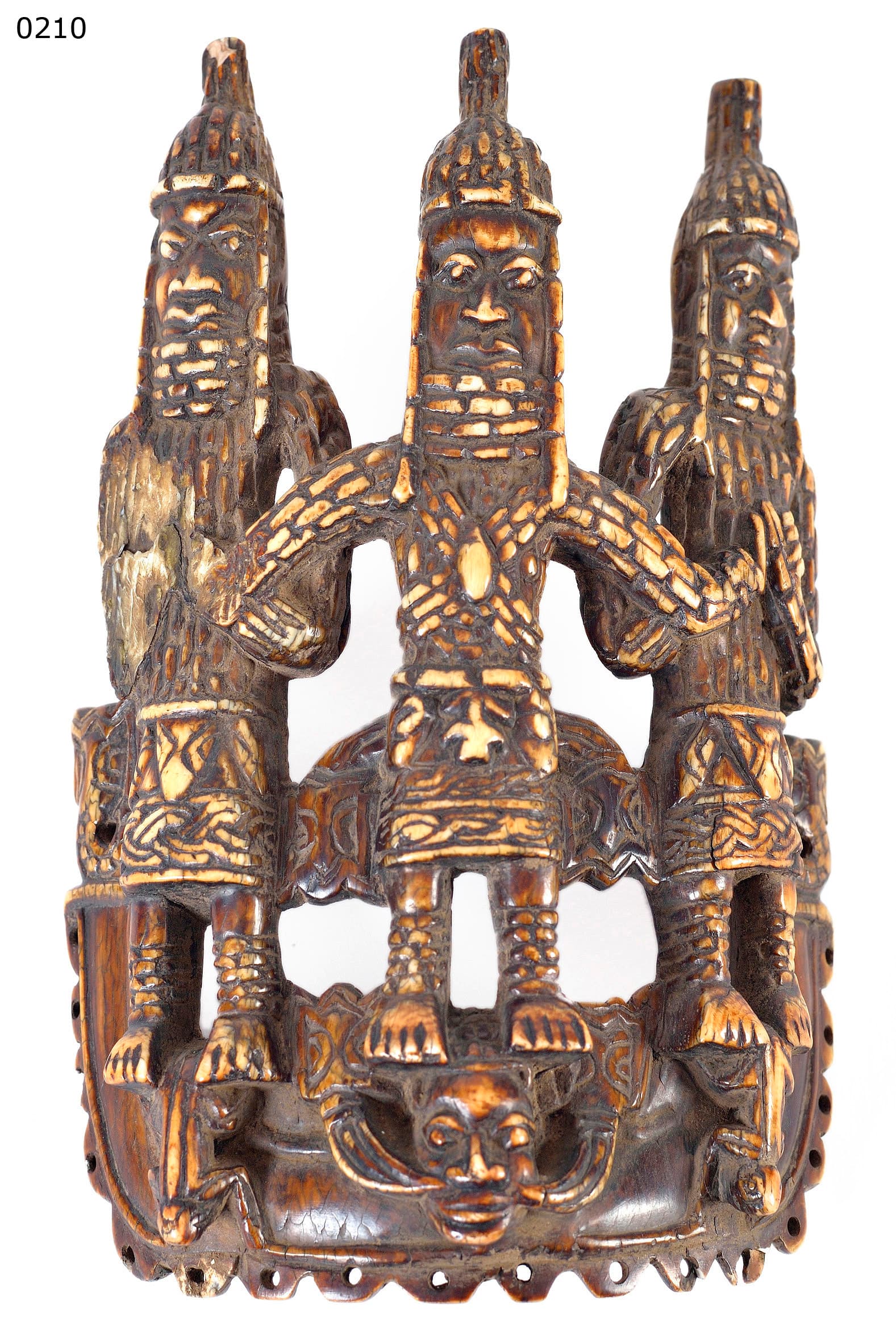
An intricately carved ivory equestrian figure depicting a Benin Oba (king) or high-ranking chief wearing a high coral-beaded collar (odigba) and holding regalia, seated on a stylized horse. The ivory has a creamy, pale tone with prominent vertical age cracks.
1. Aesthetic style and regional traits
Ivory carving in the Benin Kingdom was the strict monopoly of the royal Igbesanmwan guild. This sculpture demonstrates their meticulous attention to the complex, layered regalia of the Benin court. The high choker of coral beads (odigba), the woven wrapper, and the specific ceremonial implements are not mere decorations, but traditional markers of royal rank and divine authority. The Igbesanmwan's institutional monopoly meant that all ivory passing through Benin had to flow through guild channels — making each surviving piece a fragment of an integrated royal production system.
2. Ritual function and royal iconography
In the dense tropical forests of southern Nigeria, horses were rare, incredibly expensive, and highly vulnerable to tsetse flies. Consequently, depicting a figure on horseback is the ultimate symbol of wealth, military conquest, and elevated political status. This figure was likely placed on a royal ancestral altar within the Oba's palace, honoring a specific warrior king from Benin's history. The equestrian iconography functioned as visualized political legitimacy — every viewer understood that the depicted ruler was wealthy and victorious enough to maintain horses despite the regional challenges.
3. Physical patina and age characteristics
The physical condition of the ivory is consistent with substantial age. The deep, longitudinal desiccation cracks (craquelure) running parallel to the natural grain of the tusk are characteristic of the natural aging process and organic cellular contraction over time. This un-restored, cracked state is compatible with a "late Benin" period dating, supporting its attribution as a historical antiquity. The cracks track along the tusk's growth rings, a structural alignment typical of natural aging.
Summary
An accomplished expression of Benin royal iconography, capturing the prestige and martial power of the Oba through the medium of ivory. The intricate rendering of coral regalia and the deep, natural age fissures make it a significant artifact of Nigerian court art.
Written with AI assistance from the collection appraisal, object photography and our own research; editorially reviewed. Mistakes are possible — corrections are welcome. How we work →