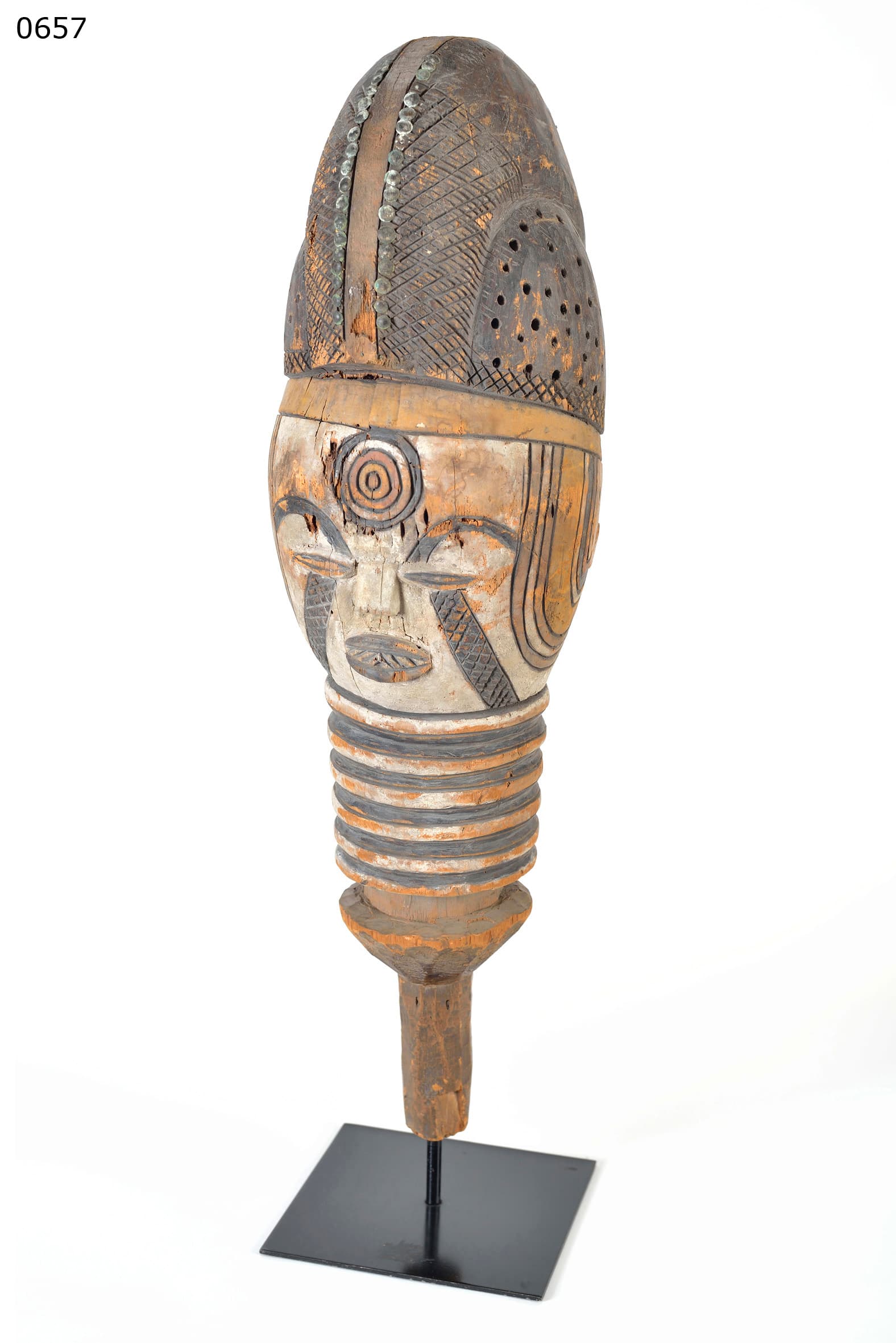
These two wooden figures stand rigidly on a shared base, completely covered in dense, concentric circles and linear scarification patterns across their torsos and faces. The dark, densely incised wood shows wear consistent with ceremonial use and an aggressively textured surface.
1. Aesthetic style and regional traits
The Kuyu people (geographically situated in the Republic of Congo, though noted here per the spreadsheet as DR Congo) are renowned for their dense application of surface texture, and this couple clearly exemplifies that trait. Every inch of their bodies and oversized, flattened heads is enveloped in deeply gouged scarification marks (mabina). This is not merely decorative but a sculptural language that transforms the wooden surface into a map of social identity, turning the human form into an abstract, rhythmic cylinder of pure pattern.
2. Ritual function and the kebe-kebe society
Kuyu statuary is inextricably linked to the Kebe-Kebe (or Kieb-Kieb) secret society, which honors the mythical serpent creator, Ebongo, and the panther. While best known for their colorful club-heads (marottes), the Kuyu also produced these rare, full-body altar figures to represent the primordial founding couple. Placed in secluded shrines, they functioned as the terrestrial anchors for ancestral spirits, ensuring the fertility of the lineage and the authority of the village chiefs who controlled the society.
3. Physical patina and wear consistent with age
The dark, crusty patina interspersed within the deep grooves of the scarification is consistent with years of receiving libations and being housed in a dark, soot-filled shrine environment. The slight erosion at the shared base and the softening of the outermost carved ridges suggest significant age and handling, compatible with an early 20th-century dating. The preservation of the couple as an unbroken, paired unit adds notable ethnographic interest.
Summary
Featuring deeply carved, rhythmic scarification, this Kuyu couple is a striking example of the region's highly textured sculptural style. Their dense, libation-encrusted patina and rare paired composition make them a notable expression of Kebe-Kebe ancestral devotion.
Written with AI assistance from the collection appraisal, object photography and our own research; editorially reviewed. Mistakes are possible — corrections are welcome. How we work →