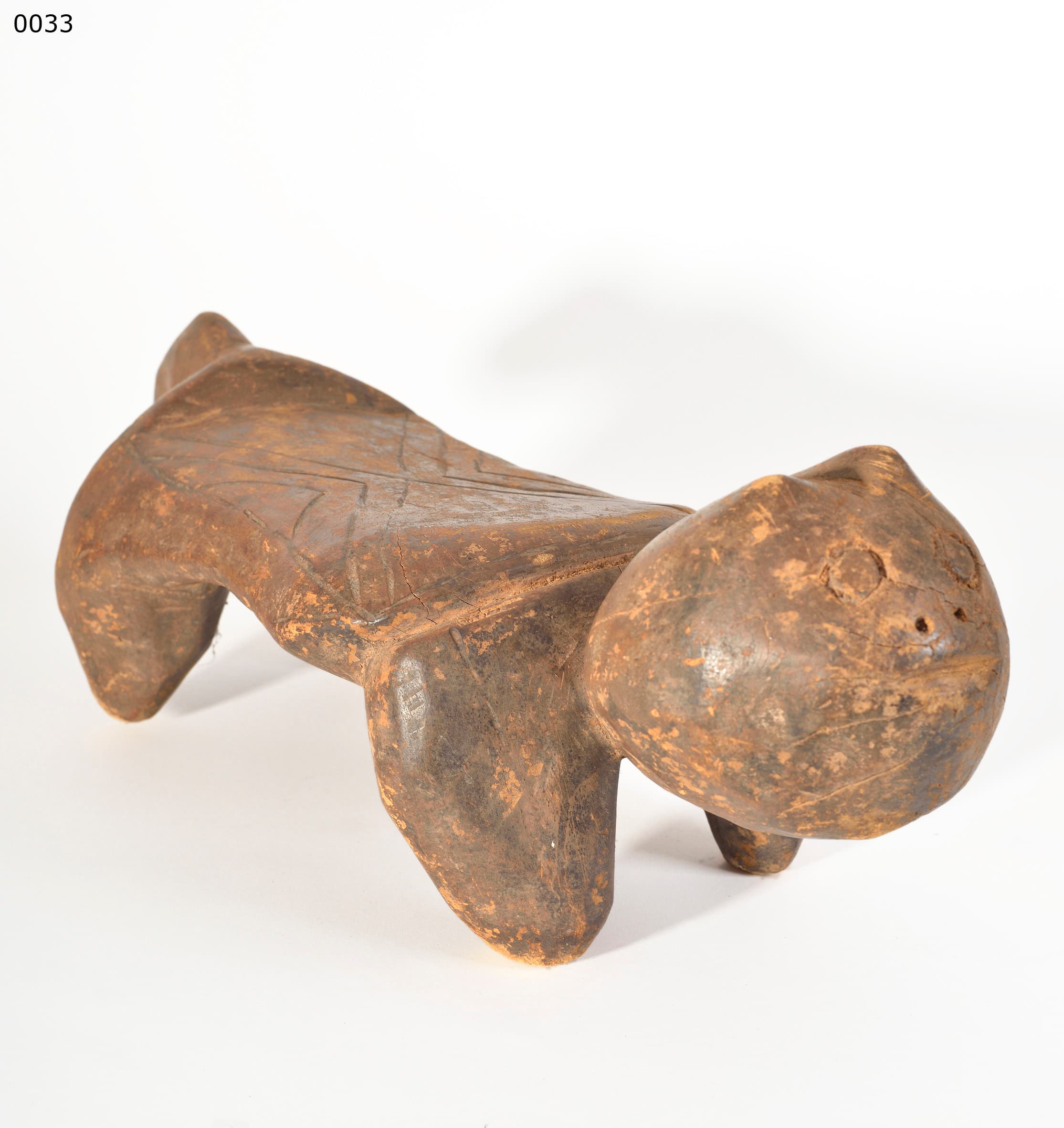
The Gurunsi are a Burkina Faso and northern Ghana people along the Black and White Volta river systems, known for their material and ritual culture, mask festivals, and acephalous social structure.
Overview
The geographical and demographic location of the indigenous farming communities covered in this dossier extends primarily across the vast, fertile savannah plateaus along the Black and White Volta river systems in southern and central Burkina Faso and in the immediately neighbouring northern territories of Ghana (Roy 1987: 14). Burkina Faso, whose total population is estimated to be around 23.5 million in 2024 and around 24 million in 2025 (UNFPA 2024), is ethnically highly diversified. Within this national structure, the ethnic groups in focus here make up a comparatively small but culturally disproportionately influential demographic share of around 5 to 6 per cent. The Nuna subgroup is estimated to comprise around 100,000 individuals, while the neighbouring Bwa, who have a closely related material and ritual culture, are estimated to number around 300,000 people (Roy 2007: 26).
Linguistically, these populations are categorised as belonging to the Gur language family (also classified as Voltaic languages), which is a primary branch of the Niger-Congo languages. However, this linguistic uniformity conceals a high degree of local diversity. The primary languages and dialects include Nuni (spoken by the Nuna), Winien (Winiama), Lélé (Lela) and Kasem (Kasena).
| Demographic distribution | Estimated population | Primary language | Geographic centre of gravity |
|---|
| Nuna | ca. 100,000 | Nuni | Central-South Burkina Faso |
| Winiama | approx. 60,000 | Winien | North of the Nuna |
| Lela | approx. 80,000 | Lélé | Northwest of the Nuna |
| Kasena | approx. 120,000 | Kasem | Border area Burkina Faso / Ghana |
| Sissala | approx. 100,000 | Sissali | Northern Ghana |
One of the most central and virulent classification controversies in ethnographic and art historical research concerns the term "Gurunsi" (in Francophone literature often written Gourounsi, more rarely Grunshi or Grusi). The sources and recent ethnographic discourses clearly prove that this term is under no circumstances an indigenous self-designation (endonym), but an exonymic and historically loaded construct. The term originates from Moré, the language of the centralised Mossi (Nakomse) to the north and east. The word has the Moré classifier "-ga, -se" and was historically used as a pejorative collective term to summarise the non-centralised, autochthonous peasant peoples who were regarded by the Mossi as uncivilised, as potential slaves or as subjects subject to tribute.
In his canonical works (Art of the Upper Volta Rivers, 1987; Land of the Flying Masks, 2007), the influential art historian Christopher D. Roy argues emphatically for the complete replacement and outlawing of the generalising Gurunsi term within scholarly nomenclature. Roy argues in detail that the retention of this term in Western collections inadmissibly homogenises the specific stylistic and cultural identities of the Nuna, Winiama, Lela and Kasena and reproduces colonial power structures. Nevertheless, the term continues to be used in the global art market and in older inventory catalogues - for example in the British Museum in London or the Musée du quai Branly - Jacques Chirac in Paris - as a pragmatic auxiliary construction. The source situation is ambiguous as to the extent to which modern descendants of these ethnic groups have selectively reappropriated the term in the course of pan-ethnic identity-building measures (for example at national mask festivals), but in the academic context the differentiation is considered obligatory.
In sharp contrast to the hierarchically organised and centralised Mossi kingdoms in the north, the Nuna, Winiama and Lela communities are characterised by a strictly acephalous (rule-free) social structure. Political and social power is not centralised in the institution of a king, a chief or in dynastic lines. Rather, these societies operate on the basis of a decentralised consensus model based on lineages and complex kinship systems (Daannaa 2002: 61). The basic social unit is the extended patrilineal family, which settles in dense, architecturally complex homestead groups. Decisions that affect the entire village community are made by a council of elders, which is made up of the senior representatives of the respective families.
The only authorities who can make binding decisions that go beyond the purely familial are ritual functionaries, in particular the earth priests (chief de terre or tengsoba). These authorities act as mediators between the human community and the vital forces of the earth; they regulate the agricultural cycle, allocate land parcels and atone for offences against the sacred order. This form of segmentary, consensus-democratic organisation historically made external attempts at conquest much more difficult, as there was no central centre of power whose fall would have meant the subjugation of the entire people.
Economically, these ethnic groups are primarily based on a sedentary, agropastoral type of subsistence. They practise a form of shifting cultivation (slash-and-burn agriculture) in which fields are left fallow for regeneration after a useful life of around seven years. The main agricultural crops include millet, sorghum and yams, which are supplemented by maize, rice, peanuts and beans. A strict gender-specific division of labour is evident: while women often cultivate commercial crops (cash crops) such as sesame and tobacco for the local market, men are responsible for hunting and fishing in the dry season, which serve not only as food supplements but also primarily for the ritual procurement of animal elements for altars and masked costumes.
The relationship with the neighbouring peoples is characterised by a complex dynamic of cultural exchange and historical enmity. In the west, they border on the Bwa and Bobo, with whom there is a lively exchange of ritual practices and mask styles. The north and east are dominated by the Mossi, whose historical attempts at expansion had a lasting effect on the collective memory and the architectural defensive structure of the Winiama and Nuna. This continuous external pressure consolidated the internal solidarity of the acephalous groups and catalysed the development of highly specific ritual protection mechanisms that were directly reflected in art production.
Cultural context
The ontological structure and the religious system of the societies considered here (Nuna, Winiama, Lela, Kasena) are based on a dualistic and at the same time mediating cosmos, which is strictly divided into a domesticated village sphere and an untamed wilderness (la brousse). At the centre of the religious sphere is a distant, omnipotent creator god who, depending on the ethnic subgroup, is referred to as Yi (among the Nuna), Wuro (among the Bobo/Bwa) or Su (Roy 1987: 26). Since this creator god moved into a transcendent distance after the completion of the world and is inaccessible to direct human invocation, the entire cultic life is based on interaction with intermediary instances.
These intermediaries manifest themselves in two distinct main categories: the ancestors (the deceased lineage founders) and the nature or bush spirits (génies de la brousse). The bush spirits reside in the wilderness and inhabit distinctive topographical elements such as old trees, watercourses or rock formations. They can take on animal, anthropomorphic or entirely hybrid forms and are considered unpredictable. The initiation of these wild spirits into the organised social space of the village takes place exclusively through the creation and ritual activation of sculptures - masks and wooden figures. It is only through these physical shells that the uncontrollable energy of the wilderness is transformed into a protective, life-giving force for the lineage. A central altar dedicated to the creator being is usually found in the centre of each village, while specific magical objects and ancestral figures are kept in the private shrines of the extended families.
A significant structural feature that fundamentally distinguishes the religion of the Nuna, Winiama and Bwa from that of many neighbouring Mande-speaking peoples (such as the Senufo, Dan or Bamana with their Poro or Jo societies) is the total absence of exclusive, age-class-based secret societies. In this region, the masks are not the property of an elite, restrictive spiritual society that monopolises knowledge. Rather, they belong to the entire extended families or clans (lineages). The physical custody and ritual care of these objects is the responsibility of the male elders, but the masks represent the guardian spirits of the entire family. In principle, they are accessible to all family members, although the wearing and performative activation of the masks is strictly reserved for young, physically fit men.
The central ritual authority in the event of a crisis is the divinator (fortune teller). He is consulted when existential disturbances - such as droughts, illnesses, unexplained deaths or insufficient harvests - threaten the community. The divinator uses divinatory techniques (such as throwing cowries or bones) to identify which specific bush spirit is responsible for the disturbance or offers help. He then orders the carving of a new mask or figure to propitiate that spirit (Roy 2007: 51). This practice differs fundamentally from the centralised altar administration of hierarchical peoples and is excellently documented in the collections of the Museum Rietberg Zurich, which possesses outstanding divination objects through the acquisitions of Hans Himmelheber.
The involvement of women in cultic practice and the general sensory perception of the world in these regions have been fundamentally reassessed in recent ethnographic research. Anthropologist Kathryn Linn Geurts introduced the concept of seselelame ("feel-feel-at-flesh-inside") into the scientific discourse in her groundbreaking work on the related language and cultural groups of the Sissala and Anlo-Ewe (Geurts 2002), which is based on intensive field research. Geurts formulates a sharp critique of Eurocentric ethnography and argues that the Western five-senses model (sight, hearing, smell, taste, touch) is completely inadequate to capture the phenomenological and spiritual experience in these African societies. Rather, a more holistic sensory system exists in which kinaesthesia, somatic balance and intuitive bodily perceptions are considered fundamental sensory categories. This physical balance not only defines health, but is inextricably linked to moral behaviour and ritual purity.
This "body knowledge" manifests itself significantly in initiation and rites of passage. Although the active dancing of the wooden masks is reserved for men, women play a vital role in the preparation of rites of passage, such as the non-obligatory bur initiation rite (which generates health and social status). The physical and spiritual balance of women is understood in these cults as a direct reflection of the fertility of the earth. The mask as the embodiment of the spirit Su is demonstrably responsible not only for communal harmony, but also explicitly for female fertility.
This reveals a profound research controversy (Geurts vs. Capron). While traditional, structuralist ethnographers such as Jean Capron in the 1960s and 1970s reduced the cohesion of village communities primarily to rigid sociological kinship structures, economic environments and formal myths (Capron 1973), scholars such as Geurts call for a reconceptualisation of African ontology through "somatic modes of attention" (somatic modes of attention). According to Geurts, the action of the mask cannot only be read as a sociological cement, but must be understood as a kinaesthetic intervention that recalibrates the seselelame of the community.
Another, primarily iconographic controversy concerns the diffusion of the cult of the earth and the mask tradition. Christopher Roy postulates that the southern Bwa only adapted their tradition of wooden plank masks from the neighbouring southern Nuna and Winiama in the late 19th or early 20th century. Prior to this, the Bwa only used masks made from fresh leaves to represent the god Dwo. This appropriation led to violent conflicts between the traditionalist northern Bwa (who clung to leaf masks) and the progressive southern factions. This historical contamination of traditions by travelling artists and the exchange of masks between villages still makes exact ethnic classification difficult today. In institutions such as the Musée royal de l'Afrique centrale (RMCA) in Tervuren or the Musée du quai Branly, objects were often catalogued as generic "Gurunsi / Bwa" works in a historically imprecise manner due to these stylistic overlaps.
Aesthetic features
The formal and aesthetic repertoire of the Nuna, Winiama, Lela and Kasena is characterised by an unprecedented polychrome geometry that differs fundamentally from the darkly patinated, organic austerity of many West African coastal styles (such as the Baule or Dan). The object typology of the region is dominated by two central categories of masks: the monumental plank masks (vertical board masks) and the three-dimensional animal masks.
The animal masks represent a broad, carefully selected spectrum of the local savannah fauna. These animals do not function as images of nature, but as conceptual physical shells for the formless bush spirits. Canonical subtypes include the koba antelope (often referred to as koan masks), bush pigs, hornbills (calao), crocodiles, snakes, butterflies and monkeys.
| Mask subtype | Formal characteristics | Iconographic meaning / spirit association |
|---|
| Koba / Koan (antelope) | V-shaped face, vertically protruding horns, often complex openings. | Gracefulness, speed; positive mediator between creator and human. |
| Monkey | Protuberant mouth, spherical skull shape, often deep-set eyes. | Trickster figure (rogue); often the lead mask for initial blood sacrifices. |
| Bushpig | Massive, stocky snout, aggressive appearance. | Impurity, wild nature; often avoided by other masks on the dance floor. |
| Hornbill (Calao) | Long, massive, downward-curving beak. Often mythical motifs in the beak. | Messenger between the earthly world and the transcendent spirit realm. |
| Nwantantay (plank) | Flat face, surmounted by a vertical plank (up to 2 metres high). | Abstract representation of the spirit, cosmogram of the social and moral order. |
The iconography of these subtypes is highly codified and allows stylistic attributions. Nuna masks tend towards a naturalistic habitus of animal physiognomy, characterised by relatively short muzzles and highly stylised, cylindrically protruding mouths. An unmistakable identifying feature of the Nuna workshops are the large, protruding eyes, which are framed by deeply carved, strongly rhythmic concentric circles that magnetically focus the gaze of the mind. The Winiama, on the other hand, abstract these forms much more strongly. They often forgo the annual repigmentation of their masks, giving their works a more archaic, earthy and weathered texture that contrasts with the luminous polychromy of the Nuna. The canon of proportions varies considerably: from compact monkey masks measuring around 30 centimetres to imposing vertical Nwantantay planks that can reach heights of well over 1.5 to 2 metres.
The geometric decoration scheme - consisting of white, red and black chequerboard patterns, concentric circles, zigzag lines and triangles - is not purely ornamental in nature, but conveys complex esoteric knowledge. On the most profane, literal level, the chequerboard pattern represents the spotted skins of the savannah animals. In the ritual hermeneutics of the initiates, however, the white (clean) field stands for the pure fur of the newly initiated, while the black (darkened) field represents the experience and knowledge of the elders. On the highest metaphysical level, the strict geometry symbolises the separation of good and evil, of light and darkness, and of cosmic order versus the chaos of the wilderness (Roy 2007).
In addition to the prominent masks, these groups also produce anthropomorphic shrine sculptures and ancestor figures, whose existence on the Western market is often overshadowed by the spectacular masks. This results in a necessary and complex differentiation from the Lobi living in the south-west. While Lobi figures (Bateba or Kotina) are often characterised by a strict, block-like reduction, asymmetrical poses and a dense organic sacrificial crust, Gurunsi figures have a different formal lexis: they are usually arranged in pairs (male/female), smaller in size and occasionally have a softer modelling of the facial areas. They are also heavily encrusted with millet pulp and blood on the altars, but retain a clearer vertical symmetry. A dates stylistic overlaps to recent marriage alliances, while B (like Daniela Bognolo) argues that specific patrilineal styles were also transmitted across ethnic boundaries by travelling carvers.
The choice of materials for the sculptures is strictly regulated. Locally available, resilient hardwoods such as Ceiba pentandra (kapok tree), Lannea spec. and Sclerocarya birrea (Marula tree) dominate as types of wood. The mineral and botanical colour extraction is traditionally defined and itself has ritual significance: White is obtained from lizard droppings or ground kaolin, red from powdered haematite (iron oxide), and the intense black from charred acacia seed pods or charcoal (Roy 1987: 40). The analysis of these pigments using modern chemical methods confirms the historical continuity of these practices.
In recent decades, art historical research has completely deconstructed the colonial paradigm of the eternally anonymous, purely instinctive African craftsman. Based on the pioneering work of the German ethnographer Hans Himmelheber, who methodically identified master craftsmen (such as the "Master of Bouaflé" in Côte d'Ivoire) in West Africa as early as the 1930s and interviewed artists by name for the first time, specific workshops in the Gur region can now be identified. Among the most prominent examples are the Konaté workshop in the village of Ouri and the works of the master carver Yacouba Bondé from Boni. Their creations, which are characterised by an unmistakable signature in the lines of the planks, are referenced in the high-calibre holdings of the Metropolitan Museum of Art (Michael C. Rockefeller Wing), among others, and document the individuality of African artists.
For the private collector, the distinction between a ritually activated object and a profane copy produced for the market is highly relevant. Forgery criteria manifest themselves primarily in the development of patina and material degradation. Activated objects show traces of oxidised sacrificial blood and encrusted millet beer in the deep recesses of the carvings. Plank masks, which are held in the mouth during the dance by means of a biting rope (fibre rope) embedded in the back of the mask, show deep traces of wear and saliva patina on the inner biting edges. Forensic examinations of heartwood cracks (which occur in insufficiently dried wood from hastily carved copies) and specific termite damage serve as markers. Natural termite damage occurs organically from the outside to the inside of masks that have been stored in lineage shrines for decades. Forgers, on the other hand, often induce artificial feeding traces by acid or selective insect exposure on fresh wood, which can be quickly unmasked by forensic analysis using microscopy.
Ritual practice
The ritual career of a mask or ancestor figure among the Nuna, Winiama or Lela follows a highly formalised lifecycle, which spans from the purely material genesis to the spiritual activation and performative use to the final disposal. This cycle always begins in the forge. As the carving of wood in this region is traditionally reserved for endogamous blacksmiths, a family to whom the divinator has revealed the need for a new mask must commission a local master (such as from the established Konaté family) to make it.
Once the purely mundane wooden corpus has been completed, a complex activation rite is required to transform the sculpture from a dead artefact into a spiritual vessel - a refuge for the summoned bush spirit (Su or Wuro). This activation takes place in the hidden, darkened setting of the patrilineal lineage shrine. The physical altar structure often includes earthen vessels, immovable stones and magical bundles (amulets), which are closely grouped with the new mask or figure. The actual consecration takes place through recited incantations by the elders and dense, repetitive offerings.
Freshly slaughtered chickens or guinea fowl are primarily used for this, the blood of which is poured directly over the wooden surface of the mask - often specifically over the eye area and mouth in order to open the "senses" of the mask. Added to this is chapalo (traditionally brewed, fermented millet beer) and thick, unsalted millet porridge. These substances are applied in layers and leave a thick, heavily incrusted patina on the objects over the years. Particularly in the case of the small ancestor figures, which remain permanently in the shrine and are not danced, this sacrificial crust can almost completely cover the original carving contours. A significant research controversy, which is intensively discussed on the basis of masks from the Horvitz collection, concerns the interpretation of hand-forged iron nails and barbs driven deep into the wood of old masks: While some scholars see this as purely pragmatic, structural repairs, other art historians (such as Roy) argue that the hammering in of iron - the material of the forge, which has an inherent spiritual heat (often paraphrased as nyama) - represents a deliberate ritual intensification and spiritual activation of the object.
The performative use of the masks - the mask dance - is the visual highlight of the ritual practice. These performances take place almost exclusively during the dry season (between October and May), which lasts several months, when agricultural work is at a standstill. Key performative occasions include initiation rites for adolescent boys (which take place in cycles of three, five or seven years), extensive village purification rites in May to expel malevolent forces before sowing, as well as funerals and the secondary memorial ceremonies (soukou) for deceased elders that often follow months later. At the latter, the soul of the deceased is escorted safely through the masks into the metaphysical realm of the ancestors.
Wearing the mask is strictly regulated and only permitted for initiated young men. Interacting with the bush spirits incorporated into the masks is considered highly dangerous and requires physical and psychological preparation. The performance demands maximum physical endurance and kinaesthetic precision from the dancer. His body is completely covered by a voluminous, shaggy fibre or bast costume (often made of hibiscus or hemp fibres). Traditionally, these fibres were dyed black or red with vegetable juices, but today imported European textile dyes are increasingly used, which shine in bright green, yellow or purple. The wooden mask is not put on like a helmet or strapped to the back of the head, but the dancer fixes it in front of the face by biting firmly with the teeth on a thick fibre rope that is stretched on the inside of the mask.
The choreography of the dances is strictly mimetic to the physiognomy of the spirit represented: With animal masks such as the koba antelope, the dancer imitates the rapid head movements, shying and abrupt gestures of the animal. He often leans on two short wooden sticks to represent the antelope's front legs and looks at the dance floor through the open mouth of the mask instead of through the carved eyes. Plank masks (Nwantantay) require a completely different kind of body control. The dancer has to balance extreme physical centrifugal forces through rapidly rotating, circling and sinking low to the ground (twirling) in order to create the illusion of a disembodied, flying apparition of the spirit for the audience. The smaller monkey masks in particular often appear at these festivities as aggressive lead masks ("lead masks"), who are responsible for performing spontaneous blood sacrifices directly in front of the assembled crowd during the ceremony. The dancers are accompanied by highly complex polyrhythmic structures created by wooden flutes, drum ensembles and the responsorial singing of the unmasked women.
The life cycle of a mask ends when the wood is irreparably damaged by intensive ritual use, harsh weather conditions or termite infestation. The sources document that intact masks are often passed on to the son within the family when the primary owner or dancer dies. However, if the mask physically deteriorates to such an extent that it can no longer be danced safely, it is deactivated. It is placed in the dark ancestral hut (the lineage shrine) and left there to decay slowly and naturally (Roy 1987).
As soon as the divinator authorises the re-carving of a replacement mask, the spirit transfers to the new wood. At this moment, the old object loses its cultic connection to the spirit and becomes profane wood. At this end point in the object's biography, the now "empty" cases are often stripped of their solid fibre cladding - which, according to Roy, deprives them of all their ritual visual coherence and makes them look worthless to African eyes. Only these naked, stripped wooden faces are then sold to dealers or middlemen on the lucrative Western antiques market. Regional variations of the practice are particularly evident among the southern Bwa, who only recently adopted this woodcarving and dancing tradition from the Nuna. This occasionally leads to a fascinating hybridisation of choreographies and costumes in peripheral areas. This performative and ritual diversity is excellently documented in the renowned Thomas G. B. Wheelock Collection (exhibited at the Fowler Museum UCLA, among others), whose systematically compiled holdings are among the world's most in-depth archives of Burkina Faso's material culture and ritual practice.
Historical context
The genesis of the Nuna, Winiama and Lela in their current settlement area in southern Burkina Faso is the result of highly complex waves of migration characterised by flight, displacement and geopolitical pressure. Historical oral traditions and linguistic analyses generally date these migratory movements to the late 15th century. In order to escape the brutal military pressure of the advancing Nakomse - heavily armed cavalry warriors from the areas of present-day northern Ghana, who later founded the centralised Mossi empire - these pacifist, peasant groups moved northwards.
The exact dating of these pre-colonial migrations is sometimes disputed among African historians. While some scholars place the refugee movements as early as the 14th century, others (such as Roy) explicitly date the consolidation of today's settlement areas to around 1500. However, there is consensus on the primary resilience factor that ensured the survival of the acephalous Gurunsi peoples: the specific ecology of their environment. The new settlement area was densely overgrown with savannah scrubland and acted as a natural habitat for the tsetse fly. This fly transmitted trypanosomiasis (sleeping sickness), which is fatal to horses and effectively neutralised the superior, speed-based cavalry of the Mossi when entering these areas. This biological shield was flanked by a specifically developed defence architecture: the Winiama and Nuna built their homesteads as fortress-like complexes with extremely narrow, labyrinthine alleyways and flat roofs. From this elevated position, they could easily fend off cavalry warriors invading the village. This successful, centuries-long resistance contributed significantly to the creation of myths among the Mossi, who attributed "magical powers" to the Gurunsi, with which they could supposedly put enemies to sleep or cast spells.
Despite their successful defence against Mossi hegemony, the region remained a fragile, bloody borderland. In the second half of the 19th century, the area was massively infested by the Zaberma (also known as Zerma) under the leadership of the notorious warlord Babatu. These Islamised slave hunters, as well as parallel Fulani and Songhai raids, depopulated entire regions. They left behind a deep socio-cultural trauma that is still reflected today in the defensive structures of the homesteads and the cyclical cleansing rituals of the villages. Paradoxically, this period of extreme insecurity led to an intensification of mask production, as the oppressed communities increasingly sought protection from the bush spirits.
With the arrival of the French colonial power at the end of the 19th and beginning of the 20th century, the slave hunts came to an abrupt end, but a new paradigm of oppression was immediately established. Through the system of Indirect Rule, the French administrative practice attempted to break up the historically grown, consensus-orientated and acephalous structures. The colonial administration attempted to implement artificial chefferies (chiefdoms) with centralised powers to collect taxes and organise forced labour, which led to massive social tensions and local resistance. At the same time, the use of Jula translators by the French officers resulted in far-reaching ethnographic classification errors. The complex, distinct ethnicities of the region were blurred and generalised as "Gourounsi" or "Bobo-Fing" in the colonial registers and early museum catalogues.
The reception of Gurunsi art in the West and the development of the global market began relatively late, especially in comparison to the classical, smoothly patinated coastal styles such as those of Baule, Dan or Fang. The first significant objects reached Europe between the 1930s and 1950s, often through French colonial officials, military doctors (such as the famous Colonel Lerouisique, who was stationed in the Lobi and Nuna regions and some of whose objects are highly traded today) or missionaries. In the middle of the 20th century, pioneering Parisian gallery owners and dealers, above all Pierre Vérité (Galerie Carrefour) and Charles Ratton, began to integrate these highly abstracted, luminous polychrome masks into the canon of Arts Premiers as masterpieces of form and to communicate them to the Western avant-garde.
However, the definitive breakthrough of art from Burkina Faso on the international art market is primarily due to the systematic collecting activities of Thomas G. B. Wheelock from the 1970s onwards and the accompanying, standard-setting publications by Christopher D. Roy. This scientific foundation and the provision of context led to an enormous price development and a re-evaluation of the objects. Today, high-calibre Nuna plank masks, rare Winiama bush pigs or ancient Lela sculptures achieve five to six-figure sums at auctions in houses such as Sotheby's, Christie's or Bonhams (as evidenced by sales in 2023 and 2024).
This price explosion on the international collectors' market inevitably led to a massive forgery problem. Local art production in Burkina Faso quickly adapted to the lucrative demand from Western collectors. Today, many workshops no longer produce primarily for ritual use in the village, but manufacture artificially "aged" masks directly for export. Verification of authenticity is therefore no longer based solely on connoisseurship, but increasingly on hard forensic and material science criteria. Private collectors and institutions pay meticulous attention to natural degradation processes.
Termite damage must run organically along the natural wood grain from the outside to the inside, which proves that it has remained in the lineage shrine for years. Cracks in the heartwood must not show any signs of forced, artificial kiln drying. In recent material science studies, mass spectrometric and highly complex proteomic methods have even been used to detect specific animal proteins in the deep patina layers (such as human or animal blood, egg yolk) at a molecular level. Only the interdisciplinary interplay of microscopic patina analysis (detection of organic millet beer and oxidised haematite), seamlessly documented provenance chains dating back to the colonial period and stylistic conformity with the canon of historical master workshops documented by Roy and Himmelheber guarantee the unrestricted, museum-worthy authenticity of a Gurunsi ritual object on the global market today.