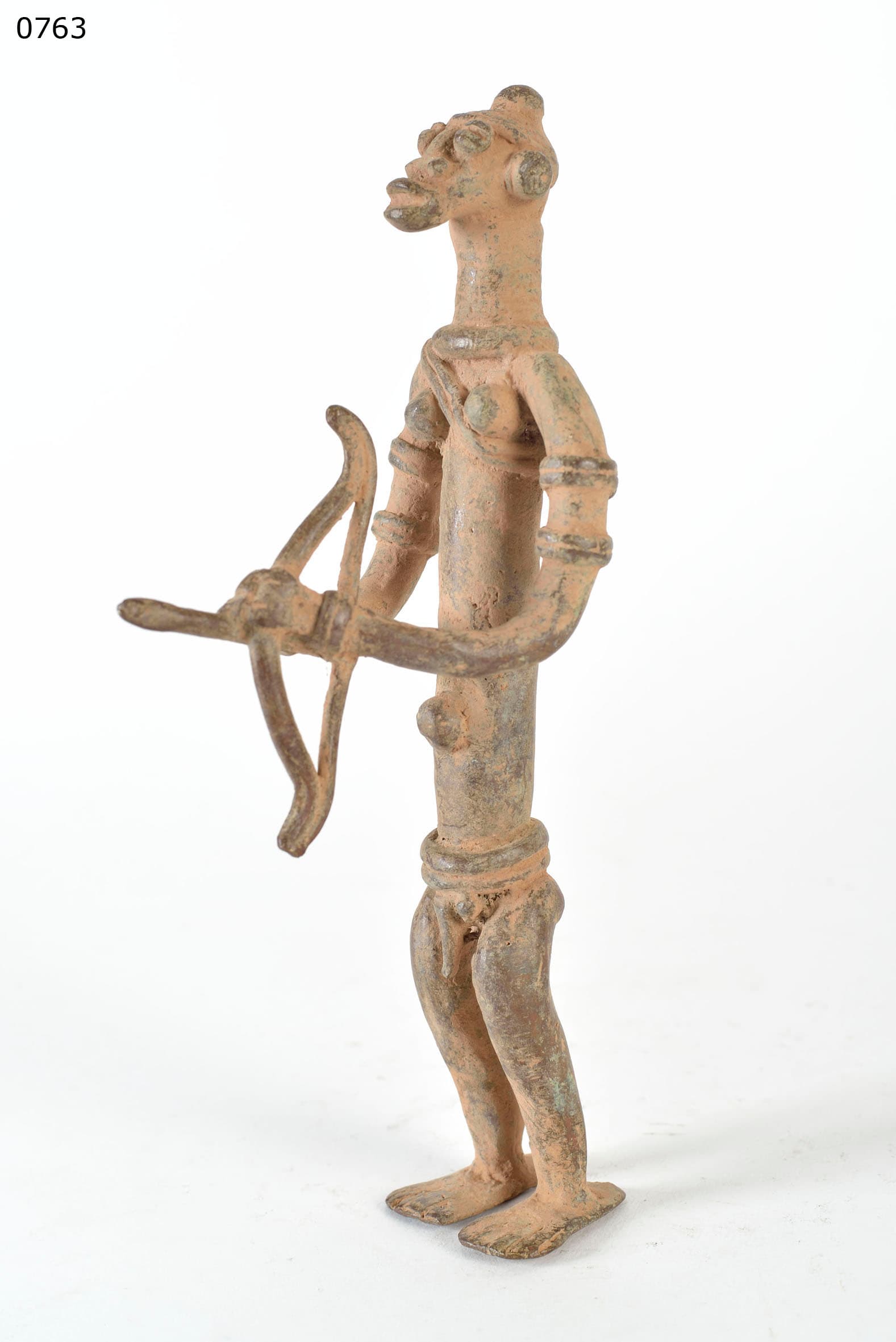
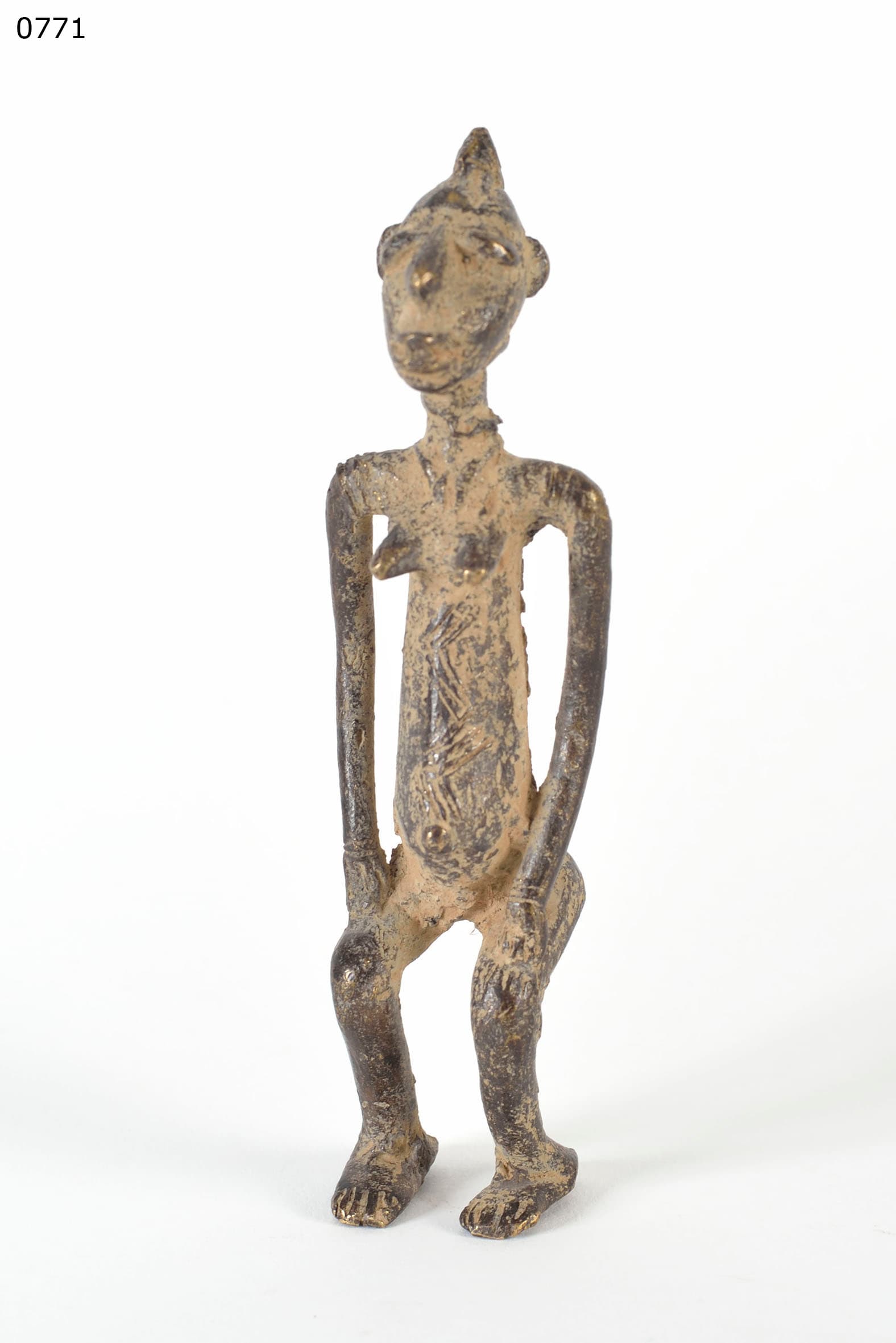
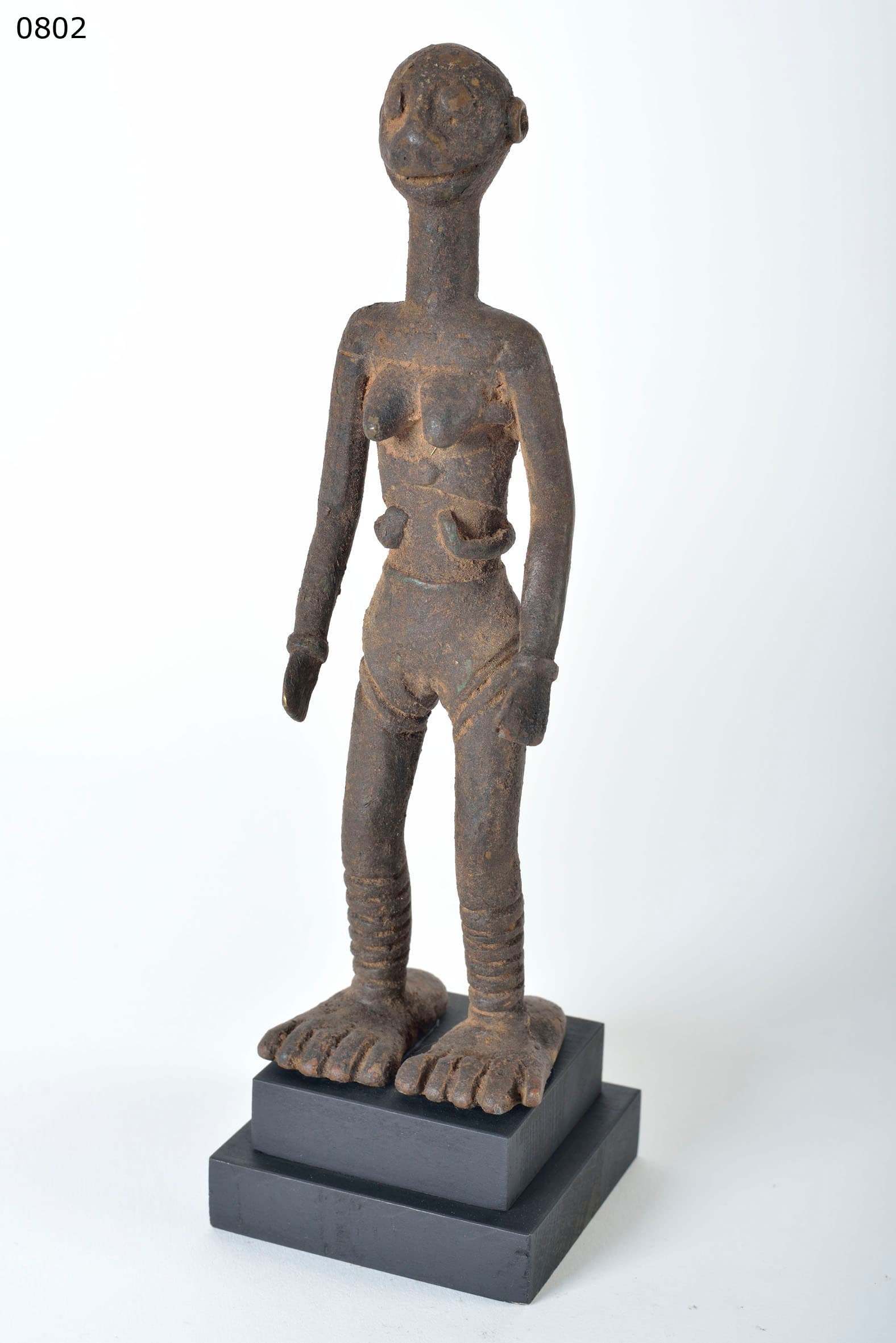
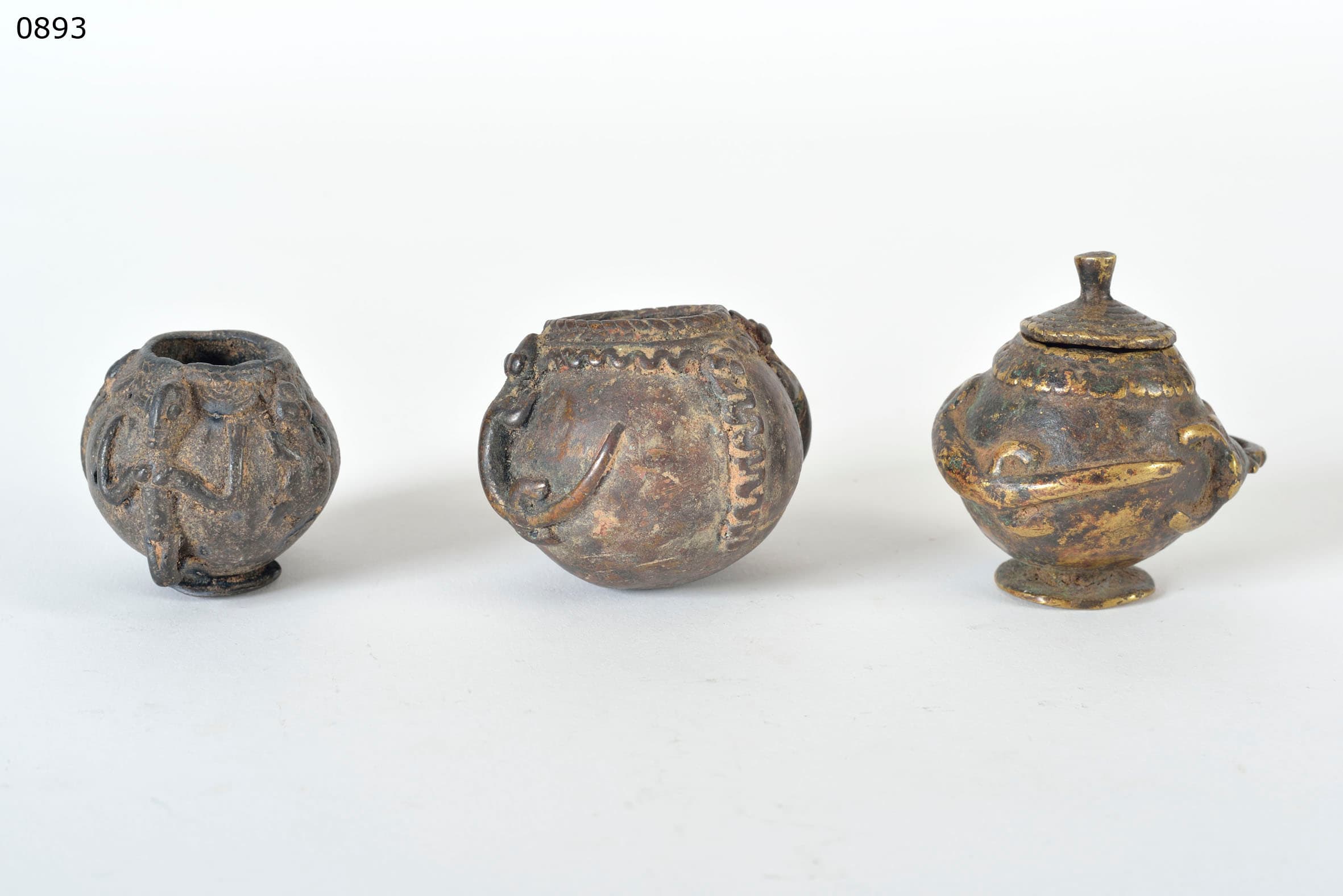
The Gan are a Burkina Faso people in the extreme south-west region of Poni, known for their metallurgical blacksmith castes, yellow casting of copper alloys, and royal representation artefacts.
Overview
The Gan ethnic group, whose members refer to themselves in their own language as Kaansa or Kaamba, represents a linguistic and cultural micropopulation in the extreme south-west of the present-day state of Burkina Faso. The geographical distribution of this group is highly concentrated and is primarily limited to the administrative region of Poni, with the historical and political epicentres in and around the settlements of Loropéni, Gaoua and Obiré. Compared to the expansive neighbouring ethnic groups, the demographic base of the Gan is extremely narrow. Current census data and linguistic surveys put the population at only around 6,000 individuals.
Their language, Kaansa (often listed in linguistic registers under the code "gna" or as Kãnsa), is assigned to the extensive Gur language family (Volta languages), which embeds it in a broader West African language context, although it is distinguished from its direct neighbouring dialects by specific lexical and phonological characteristics. The discrepancy between the foreign term "Gan" (an exonym that was historically coined by neighbouring groups such as the Kulango and later by the Francophone colonial administration) and the self-designation "Kaansa" marks the beginning of a highly complex ethnographic identity discourse. The self-designation reflects an indigenous awareness of socio-political autonomy, which was often levelled out in the foreign designation.
In sharp structural contrast to the socio-political landscape of the neighbouring peoples immediately surrounding them - primarily the Lobi, Dagara and Birifor - which is characterised by akephaly (absence of rule or decentralised segmentary structures), the social structure of the Gan is characterised by a highly centralised, dynastic royal rule (kpangba). This monarchical architecture of rule manifests itself in a continuous bloodline, albeit historically contested by internal factional struggles, which can be traced back genealogically to the late 16th century. The kinship system is strictly patrilineal. The dynastic succession is subject to highly complex ritual protocols that legitimise the sacral kingship and define the transfer of power as a cosmological, not merely a political act.
The subsistence economy of the Gan is essentially based on agricultural production in the savannah areas of the Sudan zone (millet, sorghum, yams). Historically, however, the economic power and consolidation of the kingship was largely based on the control of local gold deposits and the domination of trans-regional trade routes that connected West Africa with the northern trans-Saharan networks. This access to metallurgical resources not only favoured the accumulation of material wealth, but also enabled the establishment of highly specialised craftsmen and metallurgical castes (blacksmiths, Noumou), whose technological skills in yellow casting (copper alloys) formed the fundamental backbone of royal representation.
The relationship between the Gan and their neighbouring peoples is characterised by a profound dialectical tension between ritual demarcation and inevitable cultural osmosis. Spatially surrounded by groups such as the Lobi, the Gan historically acted both as a hegemonic power in trade matters and as a cultural minority. The sources regarding the classification of the Gan are historically ambiguous and characterised by systematic misinterpretations. The classification controversies must be explicitly highlighted here: In Western collections, in early ethnology and especially in the inventory registers of large European institutions such as the British Museum in the early to mid-20th century, Gan artefacts were erroneously subsumed as Ashanti works or simply as a sub-category under the collective term "Lobi" or "Southern Lobi". This "Lobi complex" hypothesis is highly debated in modern ethnographic and art historical research.
| Criterion | Gan (Kaansa) | Neighbouring Lobi groups |
|---|
| Socio-political organisation | Centralised sacral kingship (kpangba) | Acephalous, segmentary lineage systems |
| Primary religious focus | Royal ancestor worship, dynastic cenotaphs | Local earth spirits (thil), nature beings |
| Material culture (focus) | Elitist bronzes, regalia | Wooden sculptures (bateba), clay altars |
| Colonial classification | Often marginalised or subsumed as Lobi | Recorded as defining standard of the region |
While early authors such as the French administrator Henri Labouret (1931) regarded the Gan as a mere morphological branch of the "Rameau Lobi" and thus negated their institutional independence, more recent research postulates a strict conceptual separation. This separation is based on the completely divergent cosmological state order and the diametrically opposed principles of authority and representation. The persistence of the nomenclature problem in museum databases (where objects are often tagged as "Lobi/Gan") still leads to the misattribution of objects in the art trade and makes precise iconographic contextualisation difficult for private collectors.
Cultural context
The religious system of the Gan is inextricably interwoven with the institution of sacred kingship. It is a system in which political authority and spiritual legitimisation are congruent. The cosmological order is centred around a distant, non-directly intervening creator god and a complex pantheon of supernatural entities. The absolute culmination and operative core of the religion, however, is the state-sanctioned ancestor cult of the royal lineage.
The spirits of the deceased kings (manes) act as primary intermediaries between the human sphere, the earth forces and the divine. The ritual architecture of this system manifests itself most impressively in the dynastic sanctuaries of the historical capital Obiré. Here you will find the so-called cénotaphes (cenotaphs) - ritual architectural structures that expressly do not contain the physical remains (neither ashes nor corpse) of the rulers. Rather, they are metaphysical constructs designed exclusively as "demeure aux âmes" (abode of souls). To date, 28 deceased kings of the dynasty have been documented, for whom corresponding cenotaphs were erected. These are spread over two strictly separate main ritual sites: Nyᴐgthã (the site of the Munyibo clan, which currently houses 19 cenotaphs) and Wᴐᴐgᴐ (the site of the Wurkhumbo clan, with 9 cenotaphs).
The ritual authorities within Gan society are rigidly hierarchised. In addition to the reigning regent, who acts as the ultimate mediator of ancestral will, there are highly specialised earth priests and divinators. The initiation of a divinator requires the establishment of a formal alliance, often metaphorically described as a marriage, with the spirits of the wilderness (kool). This pact gives the divinator access to the unseen world and enables them to decode the will of the ancestors or causes of social misfortune.
The role of women in the sacred cult of the Gan is complex, deeply rooted in history and defies simple Western categorisations of patriarchal dominance. Although certain fundamental spheres of the sacred ("the management of the sacred") are formally reserved for initiated men, the historical topography of Obiré documents a significant female level of authority: among the 19 rulers who are honoured in the Nyᴐgthã sanctuary, there are four female regents (queens) who led the empire and experienced complete ritual inclusion in the elite ancestor cult.
Women were also compulsory participants in the region's central rites of passage. The most important pan-ethnic ritual is the Jòrò initiation. This ceremony, which takes place every seven years, requires all adolescents aged seven and over to cross the river on whose banks their ancestors settled over two hundred years ago. Without completing the Jòrò, no individual - male or female - can be considered fully socially and spiritually integrated. In her decades of field research, anthropologist Madeleine Père has also documented the phenomenon of "animation féminine", a structural network in which women act as primary custodians and transmitters of microcosmic, local knowledge and artisanal traditions.
What most distinguishes this religion structurally from the neighbouring peoples is its centralisation. While the religious survival of a Lobi village depends on the correct handling of local earth spirits (thil) and the erection of individually commissioned protective figures (bateba), in the Gan the welfare of the entire state ensures the maintenance of the royal cenotaphs. In the exhibitions of the RMCA (Royal Museum for Central Africa) in Tervuren, this dichotomy in West Africa was repeatedly presented as a paradigmatic example of the coexistence of acephaly and centralised state power in a confined space, with material culture serving as an indicator of political systems.
However, there are striking controversies in research regarding the genesis of this religious isolation. One primary research controversy (author vs. author) concerns the historical origin of the cosmological order: Madeleine Père (2004) argues on the basis of oral tradition and comparative iconography that the centralised system of the Gan is the relic of a direct migration from present-day Ghana and has structural parallels to the prehistoric Komaland culture. Piet Meyer (1981) and subsequently other Volta specialists take a diametrically opposed position; they postulate that the Gan religion is not an isolated imported structure, but is deeply rooted in the syncretic exchange processes of the Volta region and only solidified into its present form through interaction with the local conditions as a demarcation mechanism.
Aesthetic features
The material culture of the Gan generates a canonical object typology that is highly valued in the Western art market, in institutional collections and by private collectors. The inventory is strictly divided into elite bronzes (copper alloys) and wooden sculptures, with the former forming the undisputed unique selling point of the ethnic group.
The typology of bronzes, produced using the sophisticated cire-perdue process (lost wax technique), primarily comprises royal regalia. These include ceremonial short swords, ritual stools, pectorals and massive bracelets and anklets (bangmieni). Iconographically, zoomorphic leitmotifs dominate, symbolising the metaphysical qualities of rulership. A particularly canonical subtype is the snake amulet or the snake hoop. These elaborate, sculpturally moulded and writhing reptilian figures usually have several heads (historically documented objects with one to ten heads). The iconographic significance scales linearly with the number of heads: the more heads the smiths were able to model in wax, the more potent the apotropaic (ominous) power of the object was considered to be. The snake represents the python, the protective heraldic animal of the earth lord and a symbol of regeneration and chthonic power. Other documented motifs include chameleons and tortoises, which symbolise the adaptability and longevity of the dynasty.
The choice of material is essential for the effectiveness. The use of copper alloys (colloquially referred to as bronze or yellow cast iron) and iron is directly linked to the exclusive caste of blacksmiths who, as "masters of fire", had a technological monopoly on the transformation of unsouled matter into sacred resonating bodies.
The patina that develops on these objects is not the result of passive ageing, but of active liturgical actions. Over generations, ritual offerings (poultry blood, fermented millet beer, chewed kola nuts, vegetable decoctions) are poured over the objects. In the hot, oxidising climate of the Sudan zone, these organic substances form a deep, crusty and often scaly surface layer with the copper salts that escape. The nature of this patina is the primary distinguishing feature between an activated ritual object (which is ritually "charged") and a profane decorative object, which has a smooth, untreated brass surface.
The typology of the wooden ancestor figures differs significantly from the better-known Bateba protective figures of the Lobi in terms of their proportions and posture. Gan sculptures show a much more condensed, voluminous and stately proportioning. While Lobi figures often adopt a dynamic, asymmetrical posture (to suggest movement or readiness to defend themselves), Gan ancestor figures usually stand statically, strictly frontally and symmetrically, as they represent the gravitational imperturbability of historical rulers. A key iconographic identification feature of Gan sculptures is the hairstyle: the so-called yuú-burkúrè hairstyle is frequently found - a striking, long central comb that stretches from the forehead to the nape of the neck. During his lifetime, this hairstyle characterised high-ranking dignitaries who officiated at the jòrò initiation and visualises the concept of punitive justice.
One of the most prominent iconographic controversies in current research (author vs. author) manifests itself at this point: The art historian Daniela Bognolo (2007) argues vehemently in favour of a strict stylistic autonomy of Gan carving. She postulates that stylistic characteristics such as the dense proportions and specific hairstyles are exclusively linked to patrilineal lines and represent portraits of individual historical rulers. Scholars such as Bernard de Grunne (2015) and collectors/researchers such as Thomas Keller position themselves against this. They emphasise the fluidity and the flowing stylistic boundaries within the "Lobi complex". De Grunne argues that there were workshops of highly mobile carvers who accepted commissions from different ethnic groups (Lobi, Gan, Dagara). In this context, he coined the term "Ascher Master", whose works exhibit characteristics that defy simple ethnic categorisation. Documented master craftsmen known by name are extremely rare in this region; however, the carver Sikire Kambire is repeatedly mentioned as a historical actor in debates about stylistic interactions and adoptions between Lobi, Gan and Baule.
Where market relevance arises, forgeries follow. Highly specific forgery criteria exist for collectors. In bronzes, the primary indicators of modern forgeries are artificially applied, monochrome green patinas (often produced by nitric acid) that lack the organic depth layering and odour of ritual matter. In addition, forged castings often reveal excessively thin wall thicknesses achieved by modern industrial casting processes instead of the traditional hand-modelled wax core. In the case of wooden objects, the lack of authentic heartwood cracks (caused by decades of drying in the savannahs) and the absence of natural termite feeding marks at the base are revealing. In the Museum Rietberg in Zurich, absolutely authentic, multi-headed snake pendants from the Gan can be studied as examples, which are used by researchers as reference objects for the evaluation of authentic yellow moulding and correct ritual patina.
Ritual practice
The ritual practice of the Gan is highly codified and structures the entire annual and life cycle of the community. The detailed description of altar use reveals a complex interaction between the profane, physical world and the spiritual sphere of the ancestors. At the geographical and ritual epicentre of this practice are the 28 documented cenotaphs of Obiré, which function not only as monuments but also as active channels of communication.
The construction of such an altar is by no means arbitrary or based purely on architectural considerations. The precise topography, the alignment and the sacred substances to be incorporated require prior consultation and legitimisation by diviners, who ascertain the specific will of the deceased king to be honoured. Inside the cenotaphs, which are understood as "demeure aux âmes", wooden statues or bronze regalia are placed, which serve as physical anchor points (supports cultuels) for the otherwise immaterial souls.
The activation of a newly carved wooden object or a freshly cast bronze egg follows a fixed ritual sequence. The object is initially merely matter. It is only through the "rituel de renouvellement des expressions" (ritual of renewing expressions) that the spirit is invited to move into the artefact. This sacralisation transforms the artwork into an acting entity.
The practice of offerings is the medium for maintaining the favour of the objects. The intensity of the offerings varies greatly depending on the occasion and the addressee. Regular, cyclical offerings (for example, to secure the agricultural cycle, the rainy season or harvest thanksgiving) include libations of carefully fermented millet beer. Blood sacrifices are offered during crisis interventions - for example in the event of rampant disease, periods of drought or threats to state cohesion. The blood of chickens or guinea fowl, and in serious cases even mammals, is usually poured directly over the figurines and bronzes. This practice "feeds" the object and phenomenologically leads to the creation of the dense sacrificial patina valued by collectors.
The interaction with the cenotaphs is also characterised by rigid avoidance practices and taboos. The handling of the cenotaph of the 9th king of the dynasty, Tkυkpã (Tokpã Farma), provides a striking example. According to historical records, this ruler was notorious for his extreme cruelty towards his subjects. As a consequence, a strict taboo still exists today: his name must not be spoken at dawn or before the first meal is taken, as the Gan fear that this would evoke his destructive nature. His cenotaph is maintained by the community as conspicuously "piètre" (poor, shabby). This impressively illustrates the active, ritual punishment of an ancestor deemed tyrannical through deliberate neglect and marginalisation within the cult.
The ritual lifecycle of a Gan object is characterised by initiation, active service and eventual deactivation or disposal. One historically exceptionally well-documented mechanism of collective ritual commitment and subsequent deactivation is the concept of "Les deux bouches" (The Two Mouths). As the ethnographer Madeleine Père documented during her field research, the Gan swore a highly secret collective oath (the first "bouche") on the altars of their ancestors at the end of the 19th century. This oath obliged the community to strictly reject the path and colonial influences of the "whites" and to isolate themselves culturally. Decades later, when the pressure of economic and infrastructural modernity became unavoidable, this binding oath could not simply be ignored. The villages had to stage a formal deactivation of the oath through a "nouvelle bouche" (new mouth) - an elaborate disposal and renewal ritual on the exact same altars to ward off the spiritual wrath of the ancestors.
Physical objects (figurines or altar vessels) that have lost their power due to breakage, have been ritually contaminated or whose associated ancestral cycle is considered complete are ritually disposed of. Recent excavations in the region suggest that this practice is deeply rooted in history. The systematic and ritual breaking of objects shows remarkable structural parallels to the disposal practice of terracottas in the historical Komaland culture (northern Ghana), where vessels and figurines were often deliberately broken and deposited in mounds of earth to finally sever their metaphysical connection to the world of the living (Kankpeyeng et al. 2011). Through its publications and exhibitions, the Fondation Barbier-Mueller in Geneva documents this lifecycle as well as the detailed altar use of the Gan through extensive photographic material in situ, which makes the essential distinction between a static museum object and an animate, ritually integrated artefact tangible to the Western eye.
Historical context
Recording the historical context of the Gan requires a synthesis of oral history, archaeological findings and Western market history. The migration history of the Gan is the subject of intensive interdisciplinary research. According to the oral traditions systematically recorded by Madeleine Père (2004) and Daniela Bognolo (2010), the origins of the Gan ethnic group lie in present-day Ghana, specifically in regions close to the present-day coast of Accra. From there, the group initiated a northward migration that was strongly oriented towards geological conditions, especially areas with rich gold deposits. This migration led them via historical stations such as Bole, Larabanga, Wa and Gambaga until they settled in the south-west of present-day Burkina Faso in the region around Obiré and Loropéni in the late 16th century.
The ruins of Loropéni (called Kpõ-kayãga in the Gan language, which translates as "house of rejection" or "abandoned house") are a monumental stone testimony to this early settlement phase. The ruins were inscribed as Burkina Faso's first UNESCO World Heritage Site in 2009; the official UNESCO dating places their heyday in the trans-Saharan gold trade between the 14th and 17th centuries (UNESCO 2009). According to Gan oral tradition, these massive enclosures built from laterite stone blocks are attributed to the 9th Gan king, Tokpã Farma. According to historical narratives, this king intended to move the capital from Obiré to this new fortress towards the end of his life. However, as this project did not meet with the metaphysical approval of the ancestors, the king died shortly afterwards and the ambitious project was abandoned as cursed. The attribution controversy should be explicitly emphasised here: UNESCO documentation and international archaeology attribute the ten Laterite fortifications in the region (of which Loropéni is the best preserved) to the Lohron or Kulango - not the Gan. The source situation is ambiguous: while the oral tradition of the Gan claims direct dynastic continuity, UNESCO-centred research treats the fortifications as a predecessor culture that was ritually appropriated by the later arriving Gan.
The dating of the material culture of the Gan, in particular the elaborate bronzes, harbours considerable scientific controversy. The question centres around the aspect of whether the stylistically accomplished snake bronzes and regalia represent designs from a pre-colonial heyday or were primarily created in the post-colonial era (19th and 20th centuries).
Scientific forensics offers divergent approaches. Thermoluminescence (TL) dating carried out by specialised laboratories (such as Ralf Kotalla, Germany) on remaining clay cores in Volta bronzes and related Komaland terracottas indicate an astonishing age in some cases. Such expertises have dated some objects to periods between 500 and 1100 AD or have certified them to be around 400 to 800 years old (Kankpeyeng et al. 2011: 209). However, the source situation remains ambiguous in the interpretation of these dates: Author A (Kankpeyeng/Bognolo) argues that these TL dates indicate very early stylistic origins and a deep pre-colonial rootedness of the art of moulding in the region. Author B (often represented by market analysts and experts on late Voltaic art) argues that the vast majority of snake bronzes circulating today are typologically post-colonial or 19th century productions of the Noumou smithing caste for the Gan and Lobi.
The colonial encounter towards the end of the 19th century represented a traumatic caesura. French colonial troops invaded the region and destroyed ritually and architecturally significant structures. This catastrophic contact provoked the aforementioned reaction of "Les deux bouches" oath among the Gan - a total ritual and social withdrawal that led to the isolation of Gan art production from early European collecting and markets. This explains why Gan objects were hardly recognised as such in the early ethnographic expeditions (around 1900 to 1930) and were mostly misclassified in museums such as the British Museum.
As a result, the specific market history of Gan art in the West only gained significant momentum very late, in the 1980s. The breakthrough for international reception is largely due to pioneering gallery owners. The Galerie Maine Durieu in Paris deserves special mention here. Maine Durieu recognised the unique aesthetic quality of the gan bronzes - praised by experts as a phenomenon of "monumental miniature" - and began to systematically extract them from the anonymity of the "Lobi complex", collect them and exhibit them.
The resulting price development on the international art market was rapid and experienced a massive upswing thanks to targeted, high-calibre publications (in particular by Daniela Bognolo on behalf of the Fondation Barbier-Mueller, 2010). At major international auctions (for example Drouot Paris, 2021), top works from the historic Maine-Durieu collection realised hammer prices of up to EUR 65,000.
This economic appreciation inevitably exacerbated the problem of forgery. Today, collectors base their authenticity criteria on a bundle of empirical and forensic indicators: the microstructural analysis of the patina (identification of organic sacrificial layers as opposed to rapid chemical etching), the assessment of natural termite damage and authentic heartwood cracks in older wooden sculptures as well as the aforementioned TL dating. Large institutions such as the Musée du quai Branly in Paris - which today houses exemplary pieces such as an elegant bronze gan foot ring from the former Maine Durieu collection (inventory number 70.2011.19.5) - are increasingly relying on metallurgical isotope analyses. These analyses are intended to precisely differentiate historical casting alloys originating from ancient trans-Saharan trade networks from modern, recycled industrial scrap in order to ensure the integrity of the collections for the future.