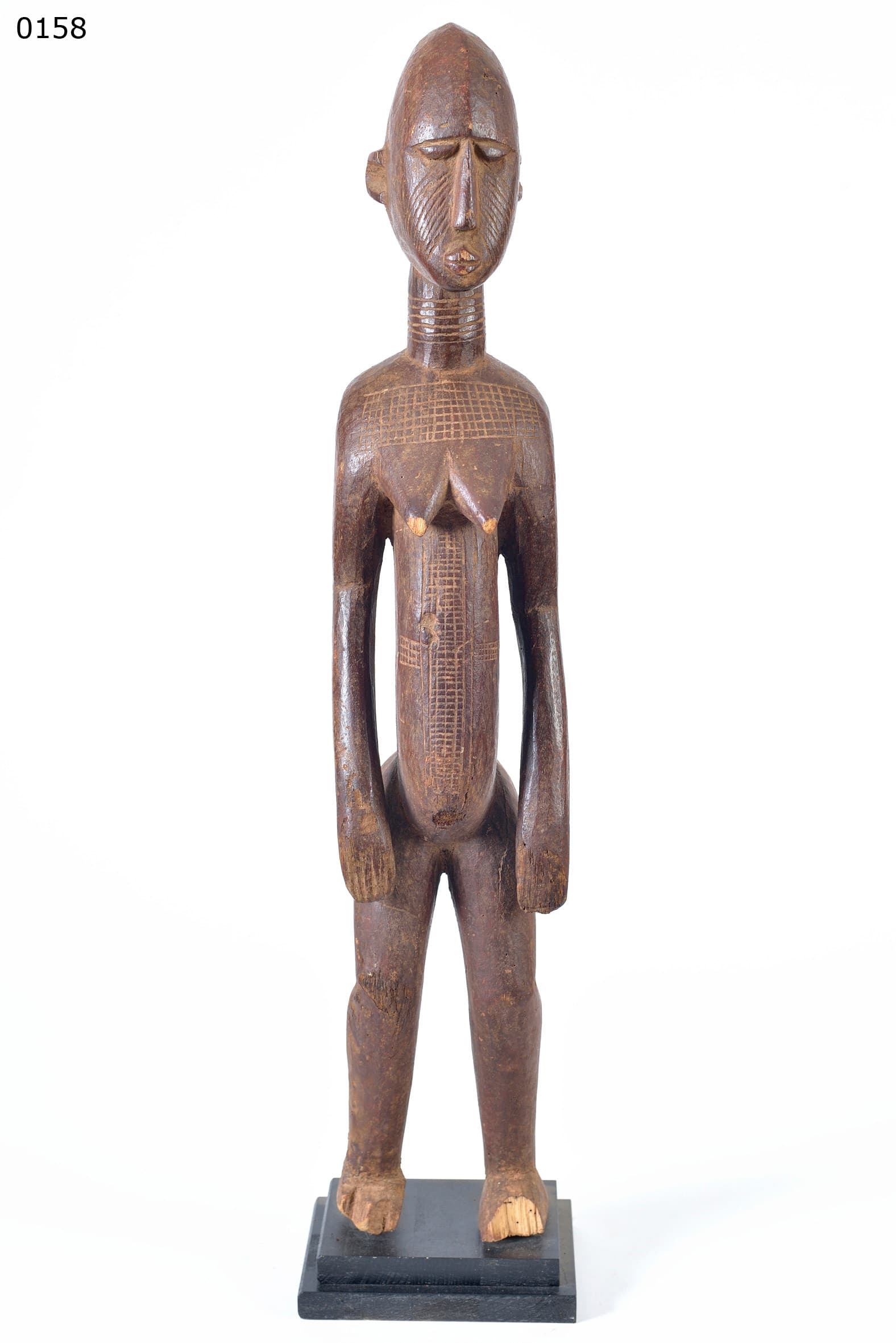
Eine streng vertikale Gurunsi-Figur (1. Hälfte 20. Jh., 73 cm) aus Burkina Faso - abgeflachtes, geometrisches Gesicht, röhrenförmiger Torso und stark verwitterte, verkürzte Beine. Das Holz ist stark ausgetrocknet, die Oberfläche ist blass oxidiert, und an den Extremitäten ist eine deutliche historische Insektenerosion zu erkennen.
1. Voltaische architektonische Strenge
Die Gurunsi, die den voltaischen Stilbereich mit den Mossi und Lobi teilen, treiben ihre Skulpturen häufig zu extremer architektonischer Strenge.
- Ablehnung des Naturalismus: Diese Figur verwandelt den menschlichen Körper in eine strenge vertikale Säule - das Gesicht wird zu einer strengen schildartigen Fläche mit minimal eingeschnittenen Zügen abgeflacht.
- Unzerstörbare Präsenz: Die unnachgiebige Geometrie erzeugt eine angespannte formale Präsenz, die eher imposant und unzerstörbar als naturgetreu wirken soll.
2. Dörfliche Weissagung und schamanischer Schutz
Im Gegensatz zu passiven Gedenkstatuen gelten Gurunsi-Figuren dieser Größenordnung oft als aktive schamanische Werkzeuge, die von dörflichen Wahrsagern und Heilern verwendet wurden.
- Beherbergen von Naturgeistern: Sie werden beauftragt, mächtige Naturgeister (su) oder schützende Ahnenwesen zu beherbergen.
- Opferaktivierung: Bei Krisen, Krankheiten oder Hexerei interagiert der Wahrsager direkt mit der Figur und schreibt Opfer vor, um ihre latente Kraft zu aktivieren und die Gemeinschaft aggressiv zu verteidigen.
3. Termitenabnutzung und sahelische Austrocknung
Der physische Zustand legt ein hohes Alter und eine traditionelle Lagerung in einem ländlichen Lehmziegelschrein nahe.
- Sprödes, blasses Holz: Die extreme Austrocknung hat das Holz blass und strukturell brüchig gemacht.
- Historische Termitenschäden: Die Basis und die unteren Beine zeigen schweren historischen Termitenbefall – Spuren, die für eine jahrzehntelange Platzierung direkt auf dem Erdboden eines Schreins in Burkina Faso sprechen und eine Zuschreibung in das frühe 20. Jahrhundert stützen.
Zusammenfassung
Diese Ahnenfigur der Gurunsi, die eine starke architektonische Spannung ausstrahlt, ist ein eindrucksvolles Beispiel für die minimalistische Geometrie der Voltaik. Die tiefgreifende sahelische Austrocknung und die historische Abnutzung durch Insekten stützen die Zuschreibung als rituell genutztes Instrument.
KI-unterstützt erstellt aus Sammlungsgutachten, Objektfotografie und eigener Recherche, redaktionell geprüft. Fehler sind möglich — Hinweise darauf sind uns willkommen. Zum Verfahren →