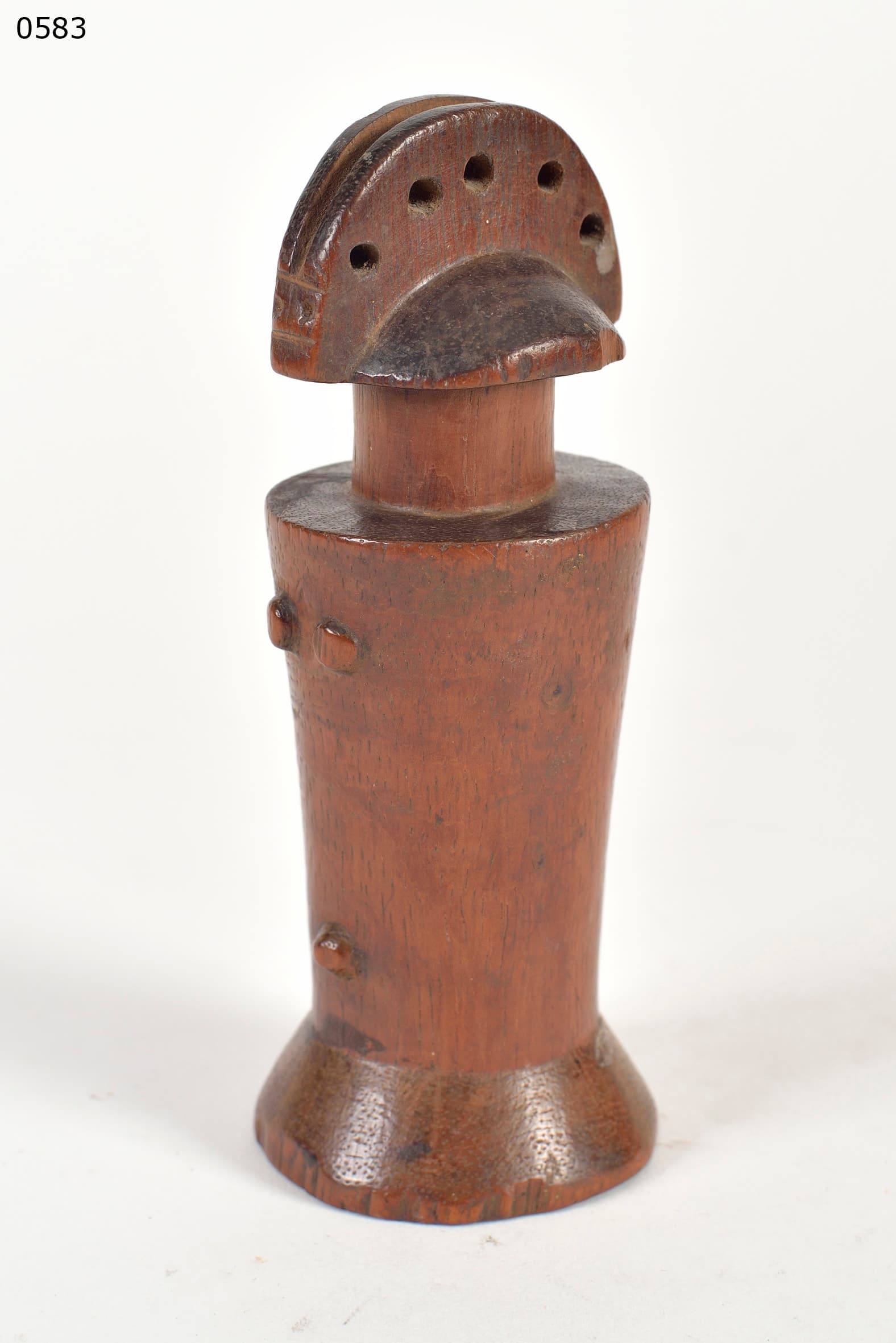
Eine stark stilisierte Kwere-Maske (1. Hälfte 20. Jh., 29 cm) aus Tansania - ein herzförmiges, blassweißes Gesicht mit auffälligen rötlichen Röhrenaugen und zwei massiven, schweren hornartigen Anhängseln, die sich entlang der Wangen nach unten ziehen. Das Holz ist stark gealtert und die weißen Kaolin- und roten Pigmente sind stark abgerieben und verblichen.
1. Ostafrikanische Abstraktion
Masken aus Ostafrika (Kwere, Zaramo, Luguru) sind im Vergleich zu ihren west- und zentralafrikanischen Verwandten selten.
- Negativraum-Gesicht: Die herzförmige Gesichtsebene zeigt eine wirkungsvolle Nutzung des Negativraums.
- Vertikalität nach unten: Die massiven, nach unten gerichteten Anhängsel (stilisierte Haarsträhnen, Stoßzähne von Tieren oder spirituelle Ohren) verleihen der Maske eine schwere, beeindruckende Vertikalität.
2. Mwali und Jando Initiationsriten
In der Kwere-Gesellschaft sind Masken dieser Art eng mit wichtigen Übergangsriten verbunden.
- Mädchen- und Jungenlager: Entweder die Mwali (Initiationslager für Mädchen) oder die Jando (Beschneidungs- und Initiationslager für Jungen).
- Geisterwelt-Kaolin: Das grellweiße Kaolin (Dongo), das auf das Gesicht gemalt wird, ist die universelle Farbe der Geisterwelt - ein Zeichen dafür, dass der Tänzer nicht länger ein Mensch ist, sondern ein Ahnenbesuch oder ein Buschgeist, der getanzt wird, um die Eingeweihten zu unterrichten, ihren Mut zu testen und ihre Rückkehr als voll ausgebildete Erwachsene zu feiern.
3. Charakteristische polychrome Alterungsspuren
Die Patina spricht für eine rituelle Verwendung im frühen 20. Jahrhundert.
- Aufgeriebene Pigmente: Das weiße Kaolin und der rote Ocker um die röhrenförmigen Augen sind stark aufgerieben, schweißbefleckt und in die tiefe, poröse Maserung des Holzes eingedrungen.
- Gebrauchsspuren: Die dunklen exponierten Kanten der nach unten gerichteten Anhängsel zeigen glatte, dunkle Abnutzungsspuren – ein Hinweis auf wiederholtes Greifen und Bewegen im Rahmen traditioneller tansanischer Zeremonien.
Zusammenfassung
Diese Kwere-Maske ist ein seltenes und visuell auffälliges Beispiel ostafrikanischer Schnitzkunst und bietet ein harmonisches Zusammenspiel von kräftigen Farben und abstrakten Volumen. Ihre verblassten Pigmente machen sie zu einem hochgeschätzten ethnografischen Objekt.
KI-unterstützt erstellt aus Sammlungsgutachten, Objektfotografie und eigener Recherche, redaktionell geprüft. Fehler sind möglich — Hinweise darauf sind uns willkommen. Zum Verfahren →