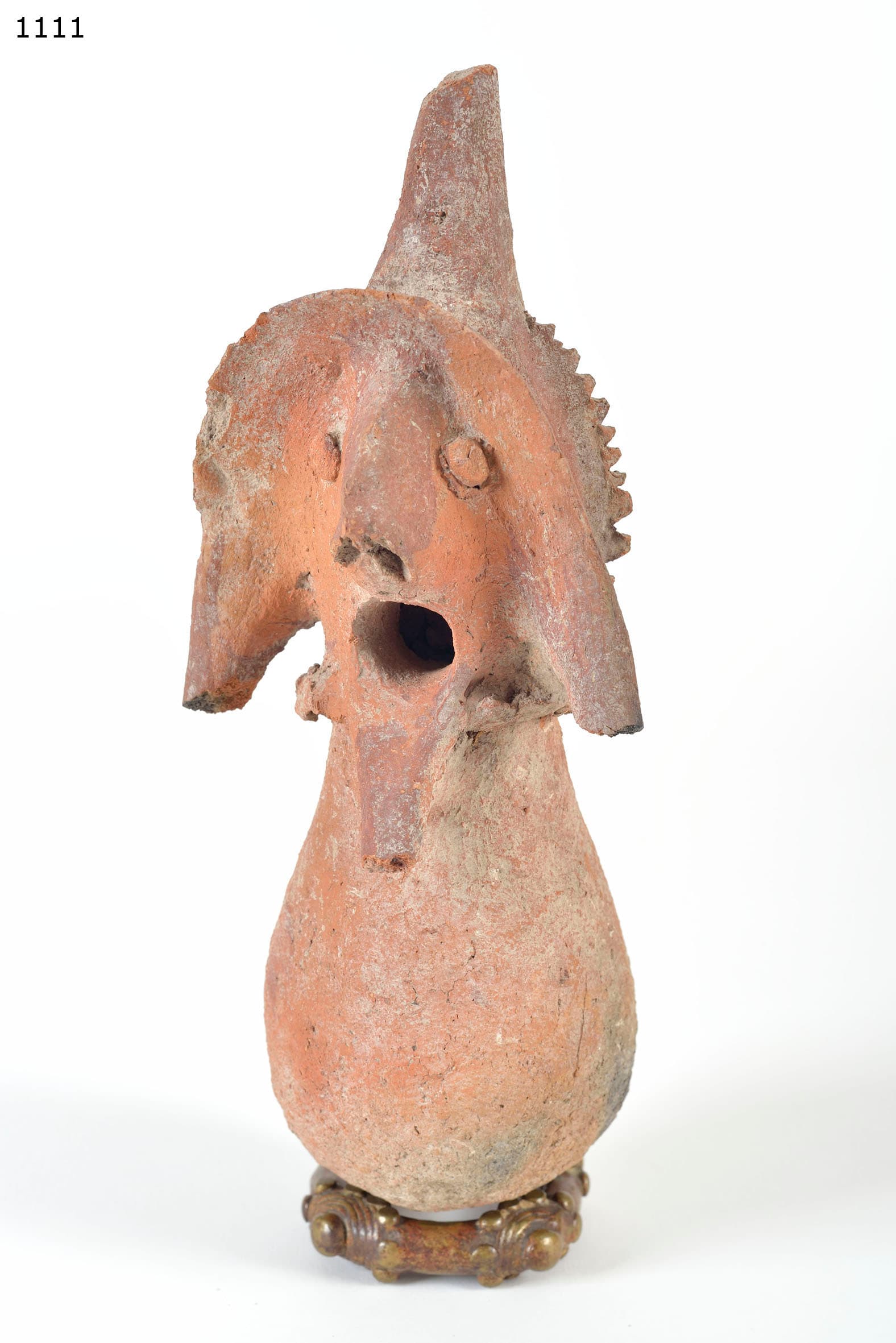
Ein sehr charakteristisches, topfartiges Cham-Terrakotta-Gefäß (12.-18. Jh., 19 cm) aus Nigeria - eine offene, runde Öffnung, die als Ausguss dient, markante, gekniffene Gesichtszüge und strukturierte Knötchen, die den oberen Rand zieren. Das Gefäß weist einen dichten, graubraunen Tonkörper mit einer trockenen, groben Patina und deutlichen Tonresten auf.
1. Die Mwona/Mwana-Gefäßtradition
Diese anthropomorphen Gefäße stammen vom Volk der Cham (oder Mwana) aus dem mittleren Benue-Tal im Osten Nigerias und stellen eine stark lokalisierte, ausgeprägte stilistische Tradition dar.
- Nützlichkeit mit Figur verschmolzen: Die Cham-Ästhetik verbindet Nützlichkeit mit Figuration - das Gefäß selbst dient als Schädel und Torso des Wesens.
- Bewegter Rand: Der offene, geriffelte Mund, die stark vorspringende Nase und die dekorativen Tonknötchen entlang des Randes (die Haare oder Skarifikationen darstellen) schaffen eine bewegte, ausdrucksstarke Präsenz, die in starkem Kontrast zu den eher statischen nigerianischen Keramiktraditionen steht.
2. Krankheitseindämmung und Geistergefäße
Diese Objekte waren tief in die komplexen Heil- und Wahrsagepraktiken des Benue-Tals integriert.
- Geisterbehältnis: Speziell angefertigt, um bestimmte Geister, die für Krankheiten, Unfruchtbarkeit oder Unglück verantwortlich sind, zu beherbergen, zu bändigen oder zu besänftigen.
- Geisterfütterung: Während der Rituale gossen die traditionellen Heiler Medikamente, Kräutermischungen oder Blutopfer in den klaffenden Mund - sie "fütterten" buchstäblich den Geist, der im Ton untergebracht war, um seinen schädlichen Einfluss auf den menschlichen Patienten zu neutralisieren.
3. Brenntechniken und Schreinpatinierung
Die Cham brannten ihre Töpfe im Freien, was zu den charakteristischen, ungleichmäßig oxidierten graubraunen Farbtönen führte.
- Rauchiger Schreingebrauch: Der physische Zustand - abgeplatzte Ränder, brüchige Kanten und tief eingebrannte rituelle Trankopfer - steht im Einklang mit dem jahrhundertelangen aktiven Gebrauch in einem rauchigen Heilschrein unter freiem Himmel.
- Authentischer Laterit: Das Fehlen moderner Reparaturen und das Vorhandensein von authentischem, hart gepacktem Lateritboden in den inneren Hohlräumen bestätigen die Zeitachse des 12. bis 18.
Zusammenfassung
Als funktionale architektonische Komponente der Heilmagie des Benue-Tals stellt dieses Cham-Gefäß eine faszinierende Konvergenz von Skulptur und medizinischem Nutzen dar. Seine ausdrucksstarke Geometrie und die robuste Schreinpatina machen es zu einem begehrten ethnografischen Altertum.
KI-unterstützt erstellt aus Sammlungsgutachten, Objektfotografie und eigener Recherche, redaktionell geprüft. Fehler sind möglich — Hinweise darauf sind uns willkommen. Zum Verfahren →