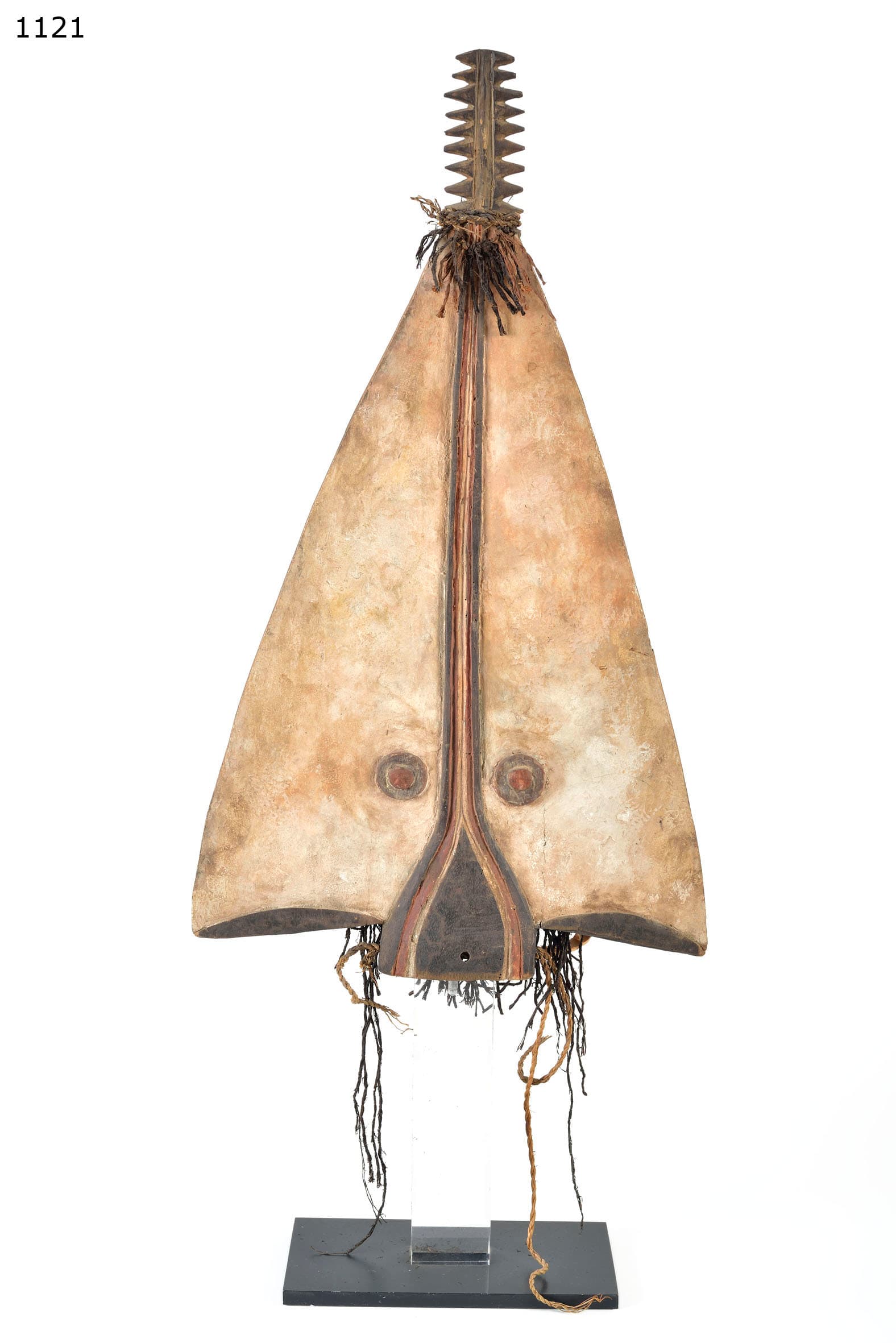
Eine sehr naturalistische hölzerne Bidjogo-Wappenmaske (1. Hälfte 20. Jh., 46 cm) aus Guinea-Bissau - sie zeigt den mächtigen Kopf eines Stiers (Vaca) mit aufgesetzten echten Tierhörnern, eingesetzten Glas- oder polierten Augen und einem gemalten weißen Band quer über die Schnauze. Das Maul ist geöffnet und zeigt geschnitzte Zähne und eine rot bemalte Zunge, das Holz zeigt eine staubige, abgenutzte Patina.
1. Zoomorpher Realismus von den Bissagos-Inseln
Die Bidjogo (Bijago) des abgelegenen Bissagos-Archipels vor der Küste von Guinea-Bissau schaffen Kunst, die sich von der westafrikanischen Abstraktion auf dem Festland deutlich unterscheidet und außergewöhnlich realistisch ist.
- Meisterhafte Anatomie: Dieses Wappen des Vaca Bruto (wilder Stier) gilt als ein ausdrucksstarkes Beispiel des zoomorphen Naturalismus - der Schnitzer hat die schwere muskulöse Anatomie des Rinderkopfes detailliert eingefangen.
- Echte Hörner verstärken: Echte massive Stierhörner verstärken das physische und visuelle Gewicht - eingesetzte Augen und eine gemalte rote Zunge verleihen dem Objekt eine verblüffend aggressive Vitalität.
2. Cabaro Riten und die Zähmung der Jugend
Diese schwere Wappenmaske ist das zentrale Element der Cabaro-Initiationszeremonien der Altersstufen.
- Bürde des jungen Mannes: Sie wird von einem jungen, unverheirateten Mann waagerecht auf dem Kopf getragen - die Maske erfordert immense körperliche Kraft, um zu balancieren und zu tanzen.
- Zähmung der tierischen Vitalität: Der wilde Stier steht für die ungezähmte, aggressive und gefährliche Energie der Jugend - während der frenetisch stampfenden Tänze verkörpert der junge Mann diese tierische Kraft. Das Ritual kanalisiert, erschöpft und zähmt schließlich diese gefährliche jugendliche Vitalität und integriert die jungen Männer in die disziplinierte Gesellschaft der Erwachsenen.
3. Authentischer Leistungsverschleiß und Pigmentabbau
Die Patina und der bauliche Zustand lassen auf eine Verwendung in der ersten Hälfte des 20. Jahrhunderts schließen.
- Verblasste oxidierte Pigmente: Das naturalistische weiße Band über das Gesicht und das Rot der Zunge sind tief verblasst, abgeblättert und in das Holz oxidiert.
- Sweat-Stained Base: Der Basisrand, an dem die Maske auf dem Kopf des Tänzers auflag, zeigt dunkle, ölige Spuren und erheblichen Reibungsverschleiß – die Integration der echten Hörner (mit natürlicher Austrocknung und Altersspuren) spricht dafür, dass es sich um ein funktionales, schweres Tanzobjekt handelte.
Zusammenfassung
Als eindringliche Darstellung ungezähmter animalischer Kraft ist diese Bidjogo-Stiermaske ein charakteristisches Werk des afrikanischen zoomorphen Realismus. Ihre schweren, echten Hörner und die deutlichen Gebrauchsspuren machen sie zu einem repräsentativen Zeugnis der Initiationsriten in Guinea-Bissau.
KI-unterstützt erstellt aus Sammlungsgutachten, Objektfotografie und eigener Recherche, redaktionell geprüft. Fehler sind möglich — Hinweise darauf sind uns willkommen. Zum Verfahren →