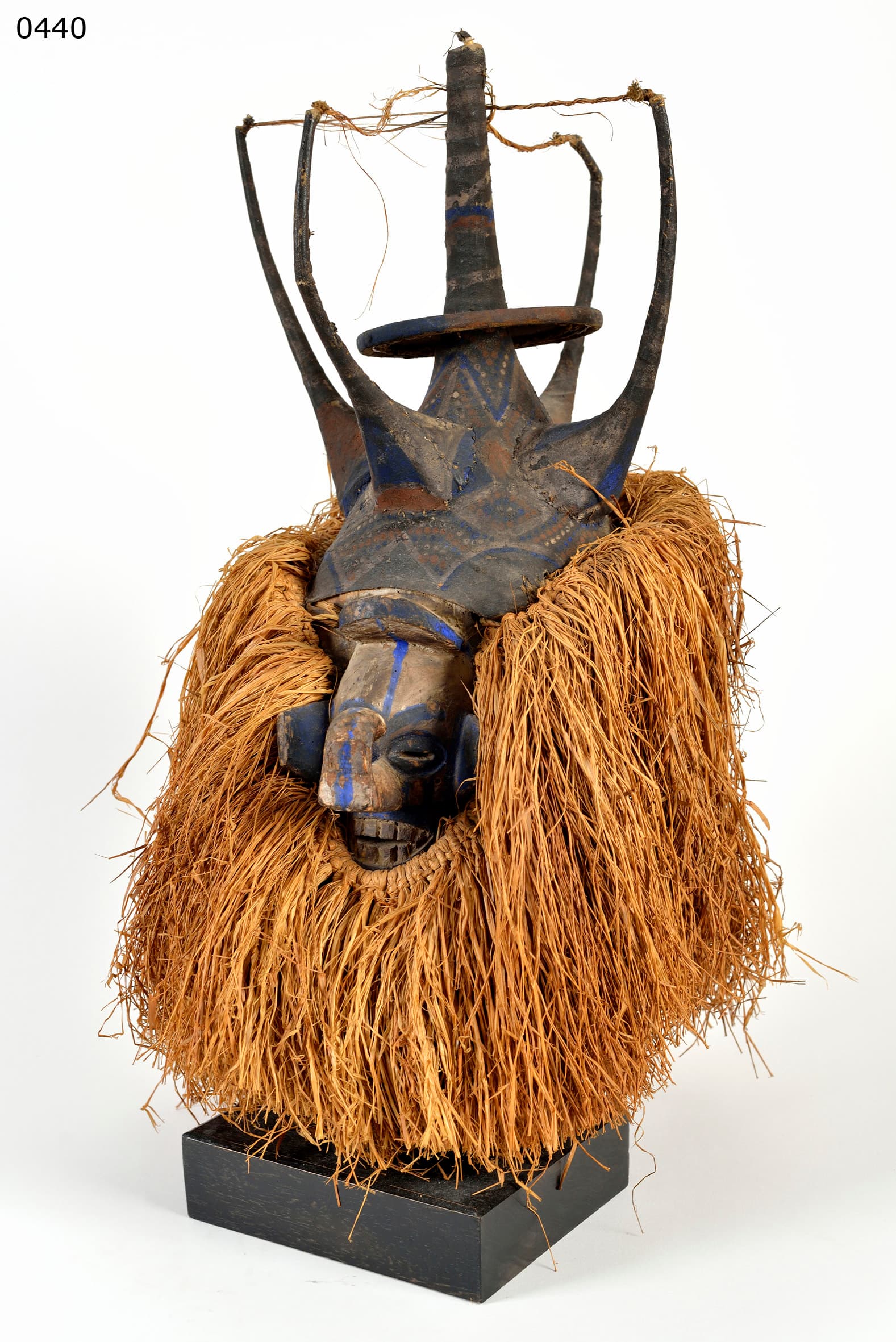
Ein Yaka-Prestige-Fliegenbesen (1. Hälfte 20. Jh., 40 cm) aus der DR Kongo - ein wunderschön geschnitzter Holzgriff, der in einem klassischen anthropomorphen Yaka-Kopf mit übertriebener, nach oben gerichteter Nase und einer gestuften Frisur endet, mit einem dicken, dunklen Tierschwanz, der fest an der Basis befestigt ist, akzentuiert durch ein Band aus mehrfarbigen Glasperlen.
1. Die hochgezogene Nase und die Yaka-Ästhetik
Die Yaka aus dem Südwesten der Demokratischen Republik Kongo verwenden eine der am leichtesten erkennbaren Gesichtsstilisierungen in der afrikanischen Kunst - die aggressiv nach oben gerichtete "retroussé"-Nase.
- Arroganz und Vitalität: Dieses besondere morphologische Merkmal soll Arroganz, übernatürliche Vitalität und unnachgiebige Autorität ausstrahlen.
- Meisterhaftes Miniaturformat: Der Schnitzer integriert dieses ausdrucksstarke geometrische Gesicht nahtlos in die engen zylindrischen Grenzen eines funktionalen Werkzeuggriffs, was für ein ausgeprägtes Geschick in der Miniaturdarstellung spricht, das an die bekannten großformatigen Initiationsmasken erinnert.
2. Der Ngoombu-Wahrsager und die Insignien des Ansehens
Obwohl es sich funktionell um einen Fliegenwedel handelt, ist ein Objekt dieses verschnörkelten Kalibers ein hoch aufgeladenes Stück zeremonieller Insignien.
- Häuptlings- oder Wahrsager-Besitz: Wahrscheinlich das exklusive Eigentum eines Dorfhäuptlings (kiamfu) oder eines mächtigen Wahrsagers (ngoombu).
- Magisches Klatschen: Bei öffentlichen Gerichtsverhandlungen oder Heilungsritualen war das rhythmische Schnipsen des Tierschwanzes nicht nur praktisch - es war eine magische Handlung, mit der bösartige Geister, Krankheiten und unsichtbare Kräfte der Hexerei, die die Aura des Häuptlings oder den Trancezustand des Wahrsagers bedrohten, symbolisch weggeschlagen wurden.
3. Organische Integrität und "gläserne" Politur
Der Erhaltungszustand dieses zusammengesetzten Objekts ist bemerkenswert gut.
- Intaktes Haar und Handelsperlen: Tierhaar (wahrscheinlich Pferd, Büffel oder Gnu) bleibt dick und sicher gebunden - authentische importierte Glashandelsperlen bieten eine historische Markierung des frühen 20.
- Glaspatina Griff: Der hölzerne Griff verfügt über eine tief gesättigte Patina - eine dunkle, glänzende Politur, die auf einen langjährigen Gebrauch durch die Yaka-Elite hindeutet.
Zusammenfassung
Dieser Yaka-Fliegenbesen zeigt eine gelungene Synthese aus nützlicher Funktion und kongolesischer Schnitzkunst und gilt als ein anschauliches Beispiel für Miniaturporträts. Sein fein polierter Griff und die erhaltenen organischen Elemente sprechen für ein prestigeträchtiges Artefakt von hoher Bedeutung.
KI-unterstützt erstellt aus Sammlungsgutachten, Objektfotografie und eigener Recherche, redaktionell geprüft. Fehler sind möglich — Hinweise darauf sind uns willkommen. Zum Verfahren →