Eine raffinierte Senufo Kpelie-Maske (wohl 1. Hälfte 20. Jh., 37 cm) von der Elfenbeinküste - ein langgestrecktes, zartes Profil mit schmalen Schlitzaugen, einem kleinen vorspringenden Mund und komplexen flügelartigen geometrischen Flanschen, die von Wangen und Kinn abstehen. Über der Figur befindet sich ein stilisierter Nashornvogel. Sie weist eine dunkle, polierte Patina mit schwachen Spuren von blauem Pigment auf.
1. Die Kpelie-Ästhetik der weiblichen Anmut
Die Kpelie-Maske gilt als eine der zartesten und am stärksten idealisierten skulpturalen Formen der Senufo – sie wird oft mit dem Ideal stilisierter weiblicher Schönheit (kodal) verbunden.
- Heiteres Oval vs. dynamische Flansche: Die Gestaltung balanciert das ruhige, schlanke Oval des Gesichts und die komplexe Architektur der seitlichen Flansche aus.
- Flansche als Haare und Skarifikationen: Diese geometrischen Vorsprünge sind nicht nur dekorativ - sie symbolisieren die komplizierten Frisuren, die von Senufo-Frauen getragen werden, während die "Beine" am unteren Rand baumelnde geflochtene Haare oder Skarifikationsmuster darstellen, die soziale Ideale ausdrücken.
2. Die Poro-Gesellschaft und der Ur-Hornvogel
Die Kpelie steht zwar für weibliche Schönheit, wird jedoch traditionell mit der Poro (der männlichen Geheimgesellschaft, die das Leben der Senufo regelt) assoziiert.
- Begleitung der Seele ins Jenseits: Die Maske wird von Männern bei der Beerdigung von wichtigen Ältesten getanzt, um den Verstorbenen zu ehren und seine Seele ins Jenseits zu begleiten.
- Schöpfungsmythos des Sejen-Hornvogels: Der markante geschnitzte Vogel an der Spitze ist der Sejen (Hornvogel) - eines der fünf Urgeschöpfe der Senufo-Schöpfungsmythologie, das intellektuelle Kraft, Adel und die Verbindung zwischen den Gründervätern und der lebenden Gemeinschaft repräsentiert.
3. Reckitt's Blue und taktiles Polieren
Die physische Oberfläche bietet eine interessante historische Erzählung.
- Importiertes Pigment aus der Kolonialzeit: Tief in den eingeritzten Ritzlinien finden sich Spuren von blauem Pigment - farblich vergleichbar mit "Reckitt's Blue", einem importierten europäischen Waschpulver, das von Senufo-Schnitzern des frühen 20. Jahrhunderts als prestigeträchtige Farbe angenommen wurde.
- Glänzende Patina: Der Rest der Maske weist eine tief glänzende Patina auf; die Aufweichung der geometrischen Flansche und die Oxidationsspuren am inneren Rand legen eine aktive Nutzung durch die Tänzer nahe.
Zusammenfassung
Diese Senufo Kpelie zeigt eine feine Ausführung des idealisierten Porträts der Elfenbeinküste und bietet ein ausgewogenes Verhältnis zwischen heiterer weiblicher Schönheit und komplexen geometrischen Flanschen. Die Politur und die blauen Pigmente sprechen für eine Verwendung im Kontext der Poro-Gesellschaft.
KI-unterstützt erstellt aus Sammlungsgutachten, Objektfotografie und eigener Recherche, redaktionell geprüft. Fehler sind möglich — Hinweise darauf sind uns willkommen. Zum Verfahren →
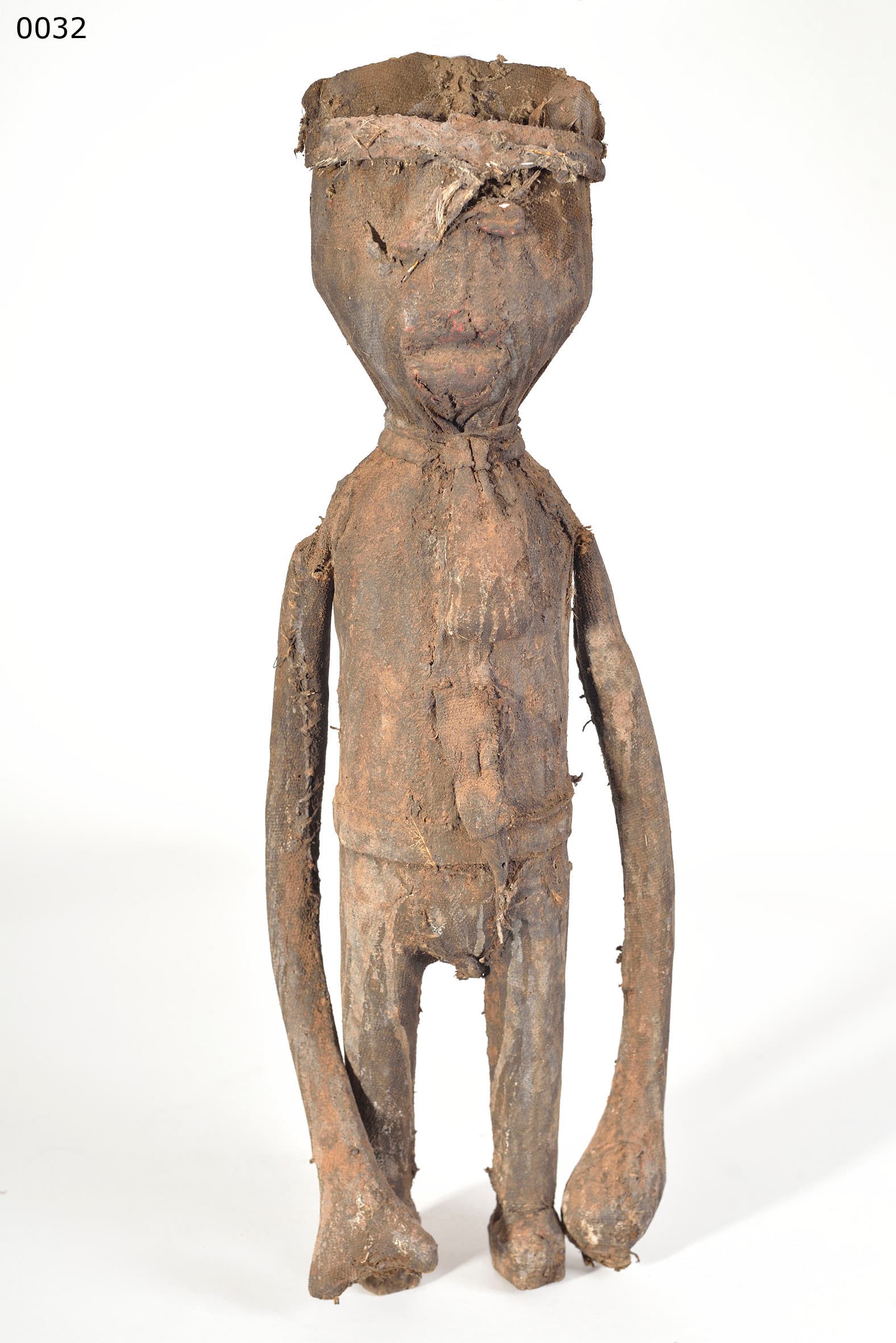
Kraftfigur (genannt KAFIGELEDJO)
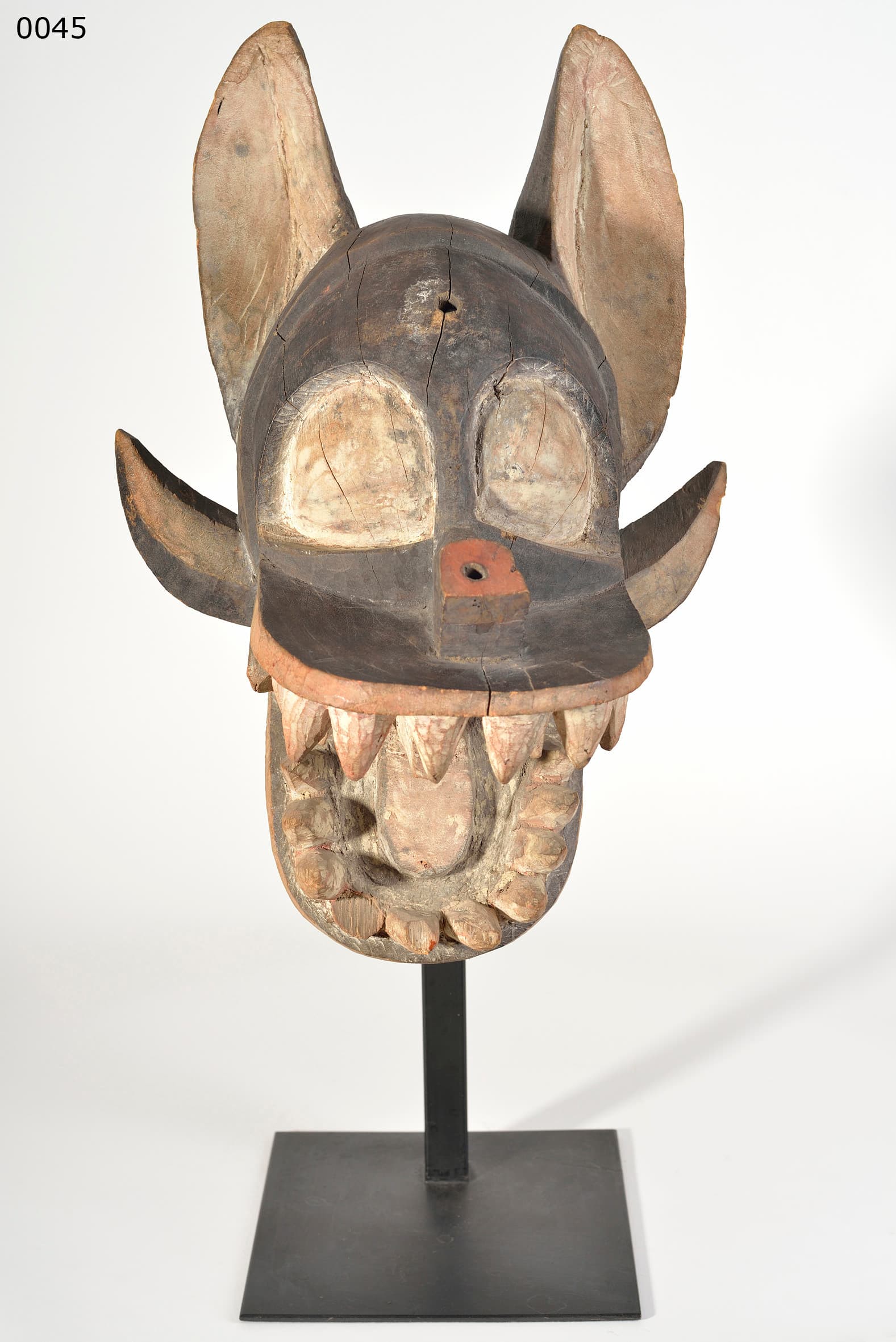
Aufsatzmaske
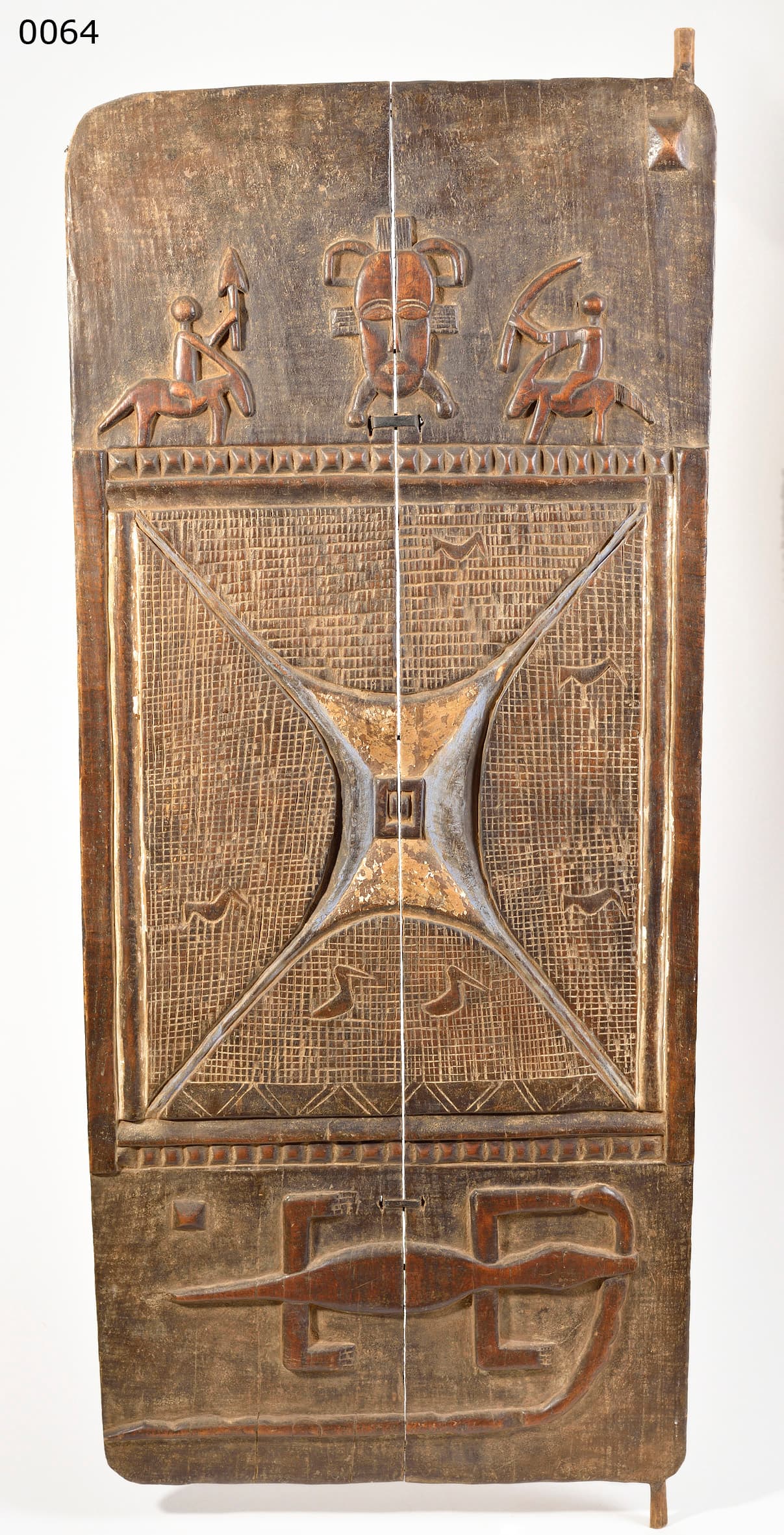
Tür
