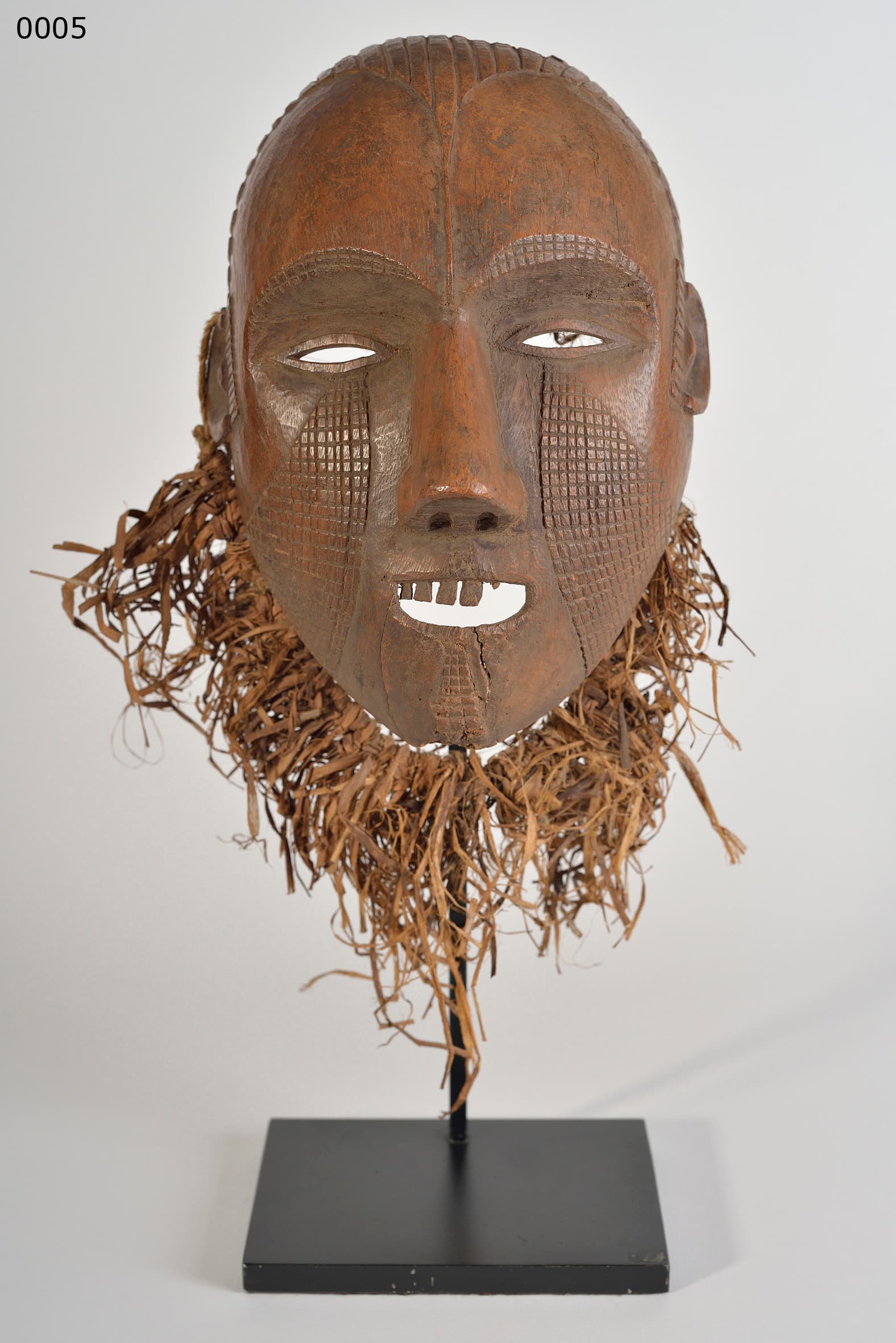
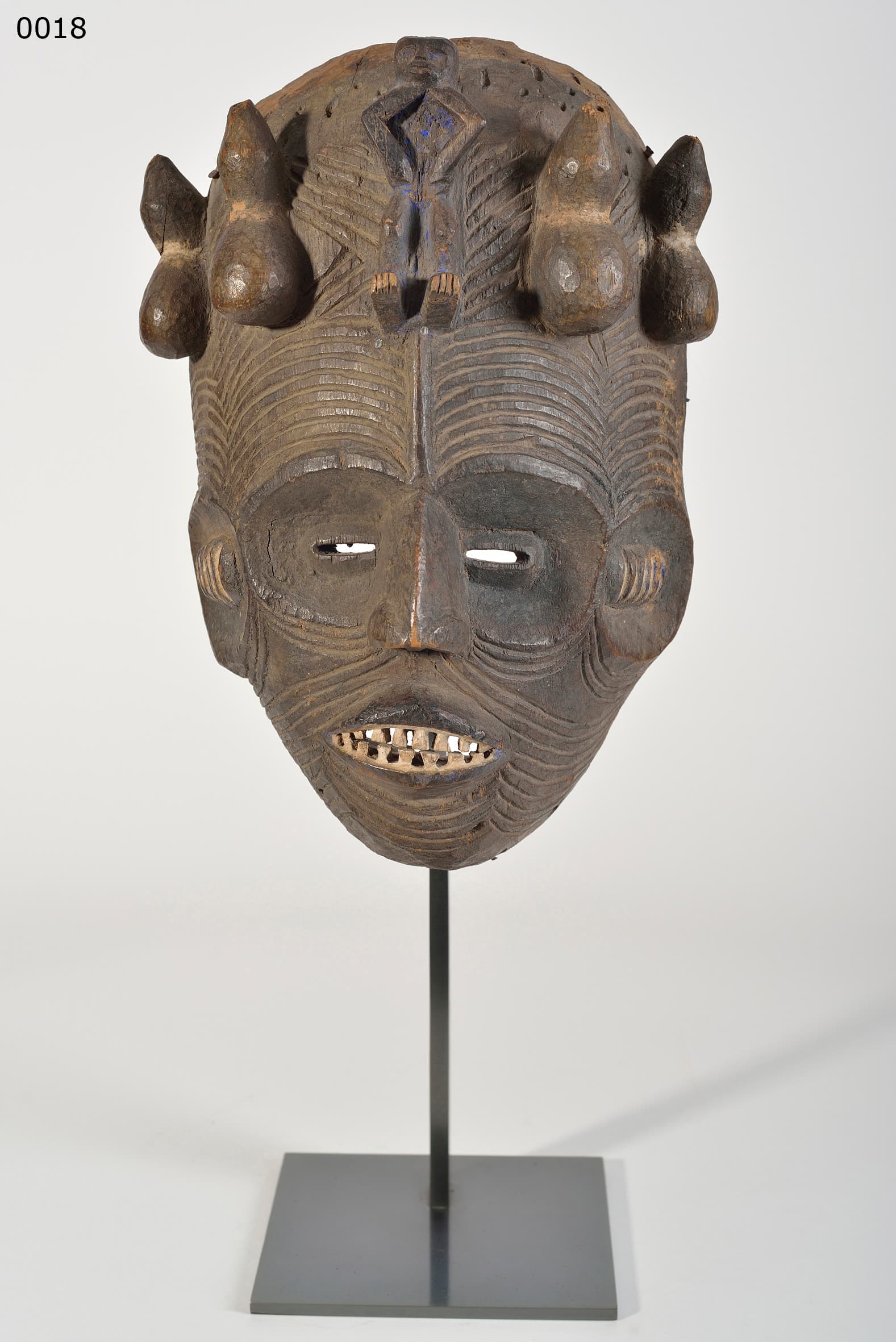
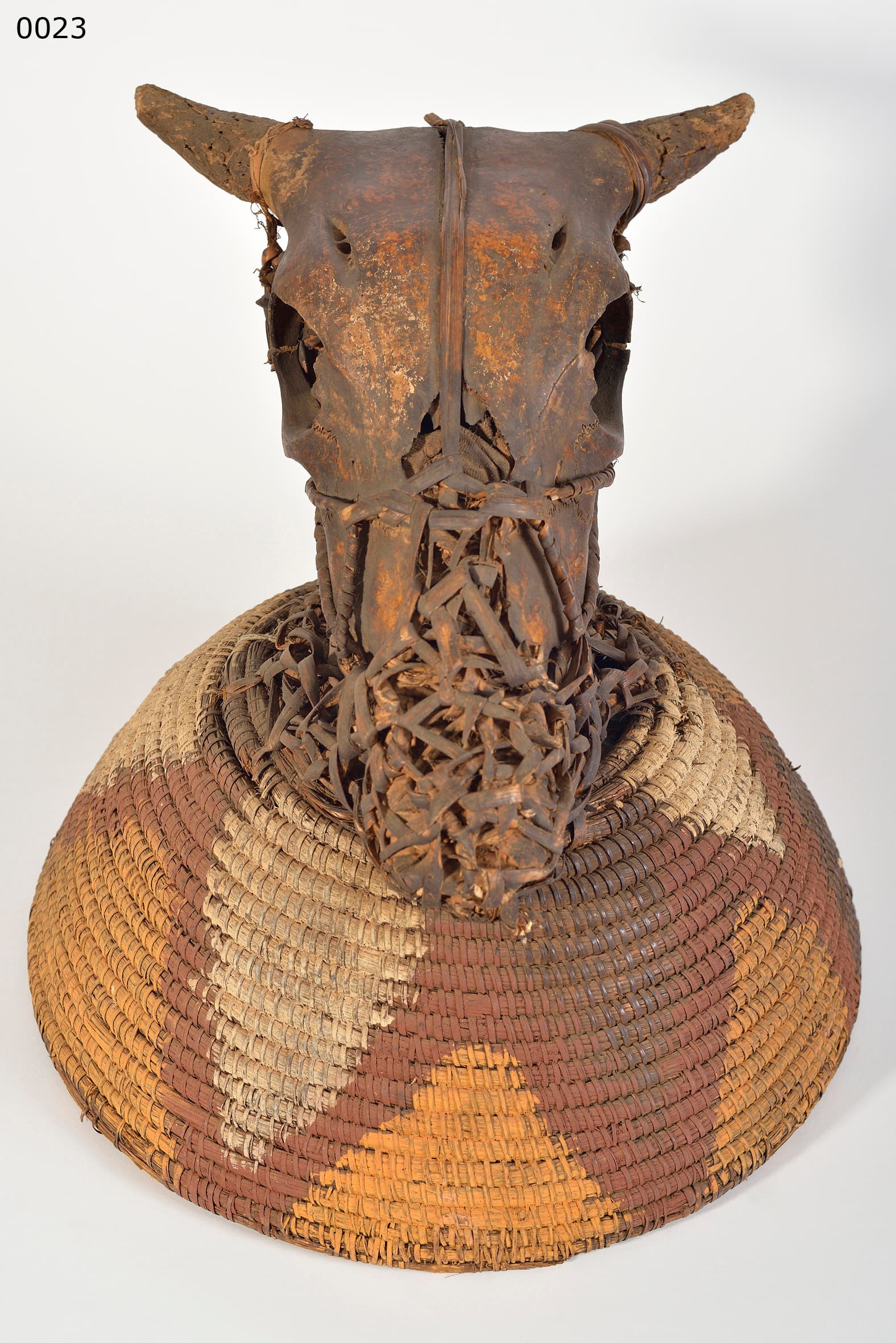
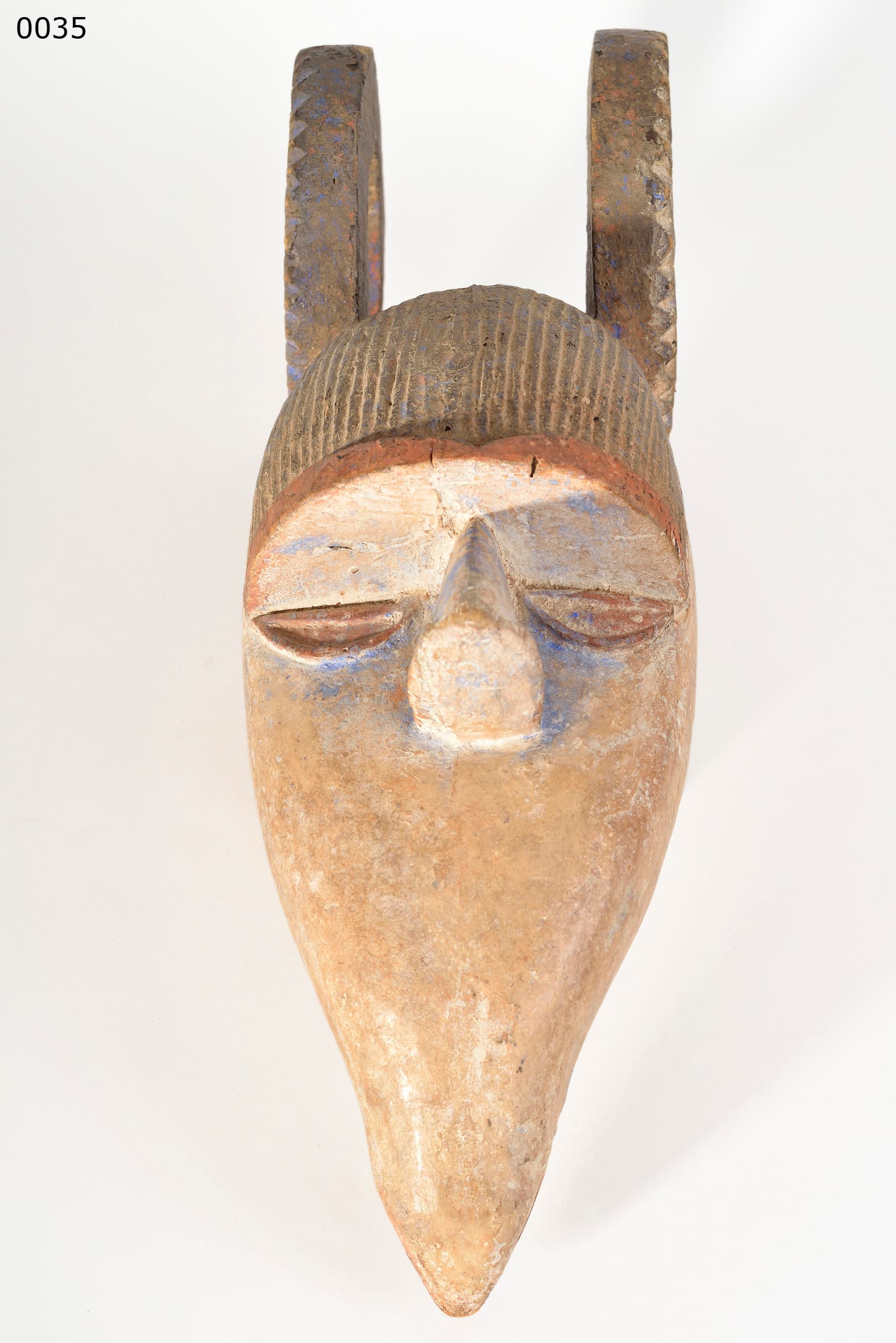
Diese beiden Holzfiguren zeigen eine stark abstrahierte, säulenartige Annäherung an die weibliche Form, die durch gestapelte, geometrische Torsi, vorspringende konische Brüste und hervorstehende Nabelbrüche gekennzeichnet ist. Das dunkle Holz weist tiefe Austrocknungsrisse und eine glatte, behandelte Reibungspatina auf den höheren Reliefs auf.
1. Ästhetischer Stil und regionale Charakteristika
Die Kunst der Igbo ist sehr vielfältig; diese Figuren weisen Merkmale einer lokal begrenzten Abstraktion der nördlichen Igbo auf, bei der der menschliche Körper auf eine Reihe von gestapelten, architektonischen Segmenten reduziert wird. Die Gestaltung umgeht naturalistische Proportionen, um die primären Symbole der Zeugungskraft – die hervorstehenden Brüste und die ausgeprägte Nabelschnur – zu betonen. Diese visuelle Sprache abstrahiert die weltliche Identität und verweist auf ein grafisches Ideogramm der mütterlichen Fruchtbarkeit und der Verbindung zwischen den Vorfahren und dem Ungeborenen.
2. Rituelle Funktion und Geheimbund-Kontext
Es dürfte sich hierbei um Fruchtbarkeitsfiguren handeln, wie sie traditionell in persönlichen Hausschreinen von Frauen aufbewahrt wurden, die auf ein Kind hofften oder Schutz während einer Schwangerschaft suchten. In der Kosmologie der Igbo dienen solche Figuren als physische Gebete an Ala (die Erdgöttin) oder an Schutzgeister des Wassers. Sie fungieren der Überlieferung nach als Ersatzgefäße, die von einem Priester geweiht werden, um die wandernden Seelen der ungeborenen Kinder anzuziehen und den Mutterleib vor böswilligen spirituellen Einflüssen zu schützen.
3. Physische Patina und Altersnachweis
Für ein entsprechendes Alter der beiden Figuren spricht die tiefe, natürliche Rissbildung, die vertikal entlang der Holzmaserung verläuft und auf eine jahrzehntelange strukturelle Trocknung im schwankenden nigerianischen Klima hindeuten kann. Zudem legt die glänzende, dunkle Oberfläche auf den vorstehenden Flächen (Brüste, Nabel und Köpfe) eine über längere Zeit entstandene Gebrauchspatina nahe. Dieser Glanz ist mit wiederholten Berührungen, dem Einreiben mit Palmöl und ritueller Handhabung vereinbar.
Zusammenfassung
Diese Igbo-Fertilitätspuppen gelten als charakteristische Beispiele für nigerianische geometrische Abstraktion. Ihre ausgeprägte generative Ikonographie und das tief bearbeitete Holz weisen auf eine traditionelle Verwendung im Kontext mütterlicher Hingabe hin.
KI-unterstützt erstellt aus Sammlungsgutachten, Objektfotografie und eigener Recherche, redaktionell geprüft. Fehler sind möglich — Hinweise darauf sind uns willkommen. Zum Verfahren →