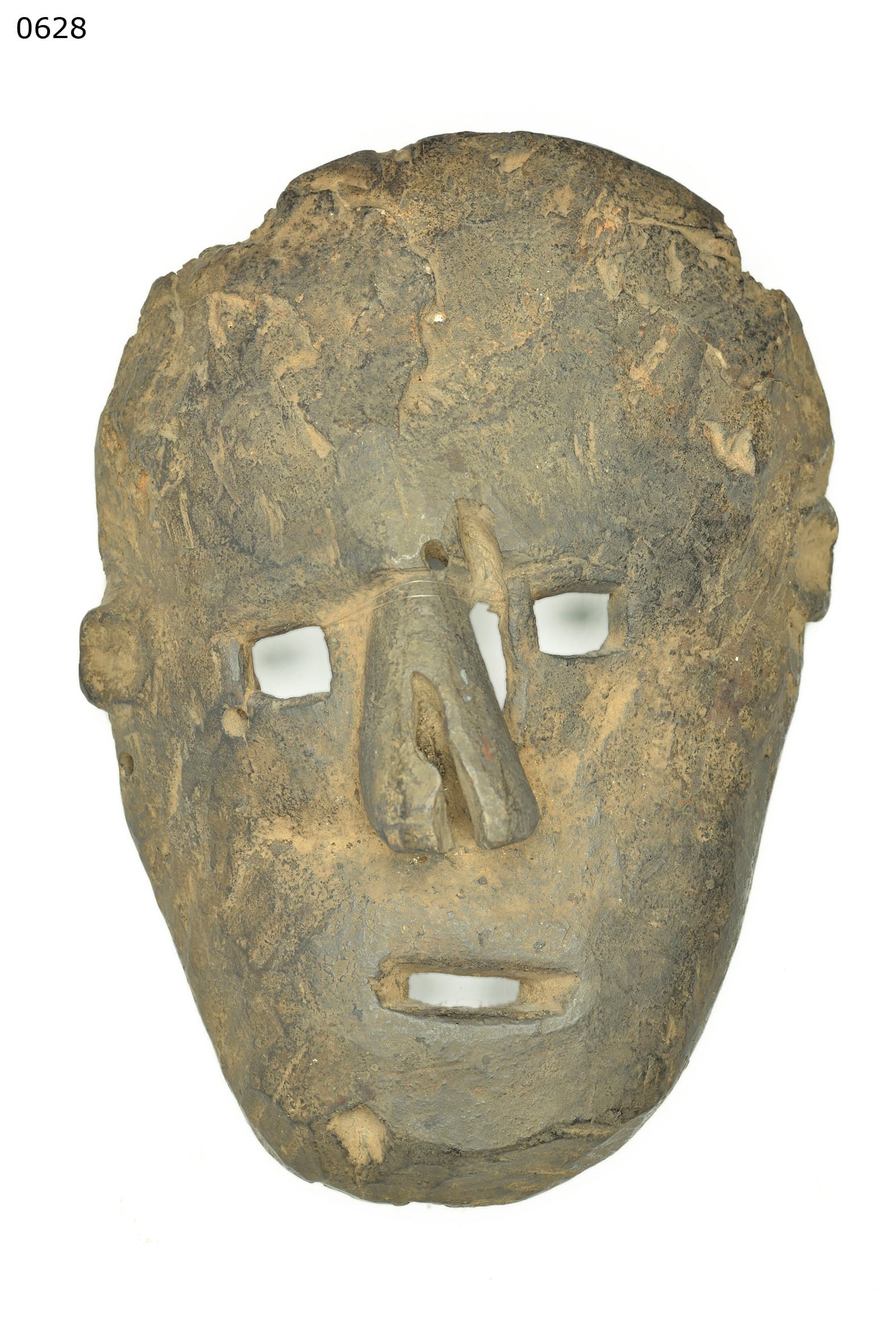
Dieses Paar rudimentärer Terrakotta-Halbfiguren weist stark verlängerte, zylindrische Köpfe mit zusammengekniffenen, stilisierten Gesichtszügen, geschlitzten Augen und aufgesetzten groben Bärten auf, die alle mit einer stark körnigen, erdverkrusteten Oberfläche überzogen sind.
1. Ästhetischer Stil und regionale Charakteristika
Die Kaguru, die im Landesinneren Tansanias leben (und oft künstlerische Züge mit den Zaramo und Kwere teilen), besitzen eine sehr seltene und stark lokalisierte Keramiktradition. Diese Figuren lehnen den polierten Naturalismus westafrikanischer Terrakotten zugunsten eines rohen, fast brutalistischen Expressionismus vollständig ab. Der Ton ist stark mit grobem Korn gehärtet, und die Gesichtszüge werden durch einfaches Zwicken und Auftragen grober Tonspiralen erreicht, wobei eine heftige spirituelle Präsenz gegenüber ästhetischer Raffinesse im Vordergrund steht.
2. Rituelle Funktion und religiöse Bedeutung
Es handelt sich um Grabmale und Gedenkfiguren, die in der Region allgemein als mwana hiti bekannt sind (obwohl sich der Begriff normalerweise auf Holz bezieht, lässt er sich auf Terrakotta übertragen). Sie wurden direkt auf den Gräbern wichtiger Vorfahren aufgestellt oder in kleinen, strohgedeckten Schreinen untergebracht und dienten als irdische Körper für die Seelen der Verstorbenen. Sie waren der Mittelpunkt für familiäre Opfergaben in Form von Bier und Mehl, um sicherzustellen, dass die Ahnen den Lebenden Fruchtbarkeit und Regen schenken würden.
3. Physische Patina und Altersnachweis
Der Zustand dieser Terrakotten spricht stark für eine Zuordnung zum 18. Jahrhundert. Da sie niedrig gebrannt wurden, sind sie sehr anfällig für umweltbedingten Verfall. Die Oberflächen sind stark erodiert, so dass die ursprünglichen Zacken nicht mehr erkennbar sind. Die tiefe, kalkhaltige Einbindung tansanischer Erde in die poröse, kiesige Tonmatrix bestätigt, dass sie jahrhundertelang in einem Schrein im Freien den Elementen ausgesetzt waren.
Zusammenfassung
Dieses seltene Paar von Kaguru-Terrakotten bietet einen faszinierenden Einblick in die strenge, ausdrucksstarke Gedenkkunst Ostafrikas. Ihre rohe, ungeschliffene Modellierung und die tiefgreifende archäologische Erosion machen sie zu höchst bedeutenden historischen Ankern des tansanischen Ahnenkults.
KI-unterstützt erstellt aus Sammlungsgutachten, Objektfotografie und eigener Recherche, redaktionell geprüft. Fehler sind möglich — Hinweise darauf sind uns willkommen. Zum Verfahren →