Diese drei massiven Holzstatuen (zwei weibliche, eine männliche) zeichnen sich durch ihre extreme, elegante vertikale Streckung, ihre geschwungenen säulenartigen Gliedmaßen und ihre Kammfrisuren aus, die alle auf dicken, schweren zylindrischen Sockeln ruhen. Das stark oxidierte Holz weist an den Torsi leichte Gebrauchsspuren und an den Sockeln schwere Schlagschäden auf.
1. Ästhetischer Stil und regionale Charakteristika
Diese Figuren, die als pombibele ("diejenigen, die den Poro gebären") bekannt sind, gelten als ein Höhepunkt der bildhauerischen Eleganz der Senufo. Die von den Kulebele-Holzarbeitern geschnitzten Statuen zeigen eine ausgeprägt gestreckte, aerodynamische Form. Die Körper sind in sehr schlanke, geschwungene Linien gestreckt, wobei die Arme vom Rumpf abgetrennt sind, um einen negativen Raum zu schaffen. Die weiblichen Figuren sind mit hervorstehenden, kegelförmigen Brüsten ausgestattet, die die mütterliche Ernährung symbolisieren, während die männliche Figur die gleiche ruhige, geometrische Abstraktion aufweist, wodurch eine ausgewogene Ästhetik der geschlechtlichen Harmonie entsteht.
2. Rituelle Funktion und Geheimbund-Kontext
Pombibele sind kinetische Instrumente, die traditionell bei den Begräbnisriten verstorbener älterer Eingeweihter des Poro-Geheimbundes verwendet werden. An den Armen oder der Taille gehalten, schlagen junge Eingeweihte die schweren zylindrischen Sockel der Statuen in einem rhythmischen, stampfenden Tanz direkt auf die Erde. Man glaubt, dass diese akustische und physische Vibration die Ahnen erweckt, den heiligen Hain reinigt und den erfolgreichen Übergang des Geistes des verstorbenen Ältesten in das Reich der Toten gewährleistet.
3. Physische Patina und Altersnachweis
Die physischen Spuren an diesen drei Statuen sprechen für ihre intensive zeremonielle Nutzung. Die Torsi, Hüften und Arme sind mit einer dunklen, glatten und glänzenden Reibungspatina überzogen, die auf das Umgreifen durch Hände während der Bestattungstänze zurückzuführen sein dürfte. Im Gegensatz dazu sind die dicken zylindrischen Sockel stark ramponiert, zersplittert und zusammengedrückt, was für ihre primäre Funktion als schlagende, erdverbundene Instrumente in der ersten Hälfte des 20. Jahrhunderts spricht.
Zusammenfassung
Diese Pombibele-Rhythmusschläger sind bekannte Beispiele der Senufo-Kunst, die skulpturale Anmut mit perkussivem Nutzen verbinden. Ihre Eleganz, kombiniert mit der schweren Schlagabnutzung an ihren Sockeln, verweist auf ihre Rolle in der rituellen Poro-Performance.
KI-unterstützt erstellt aus Sammlungsgutachten, Objektfotografie und eigener Recherche, redaktionell geprüft. Fehler sind möglich — Hinweise darauf sind uns willkommen. Zum Verfahren →
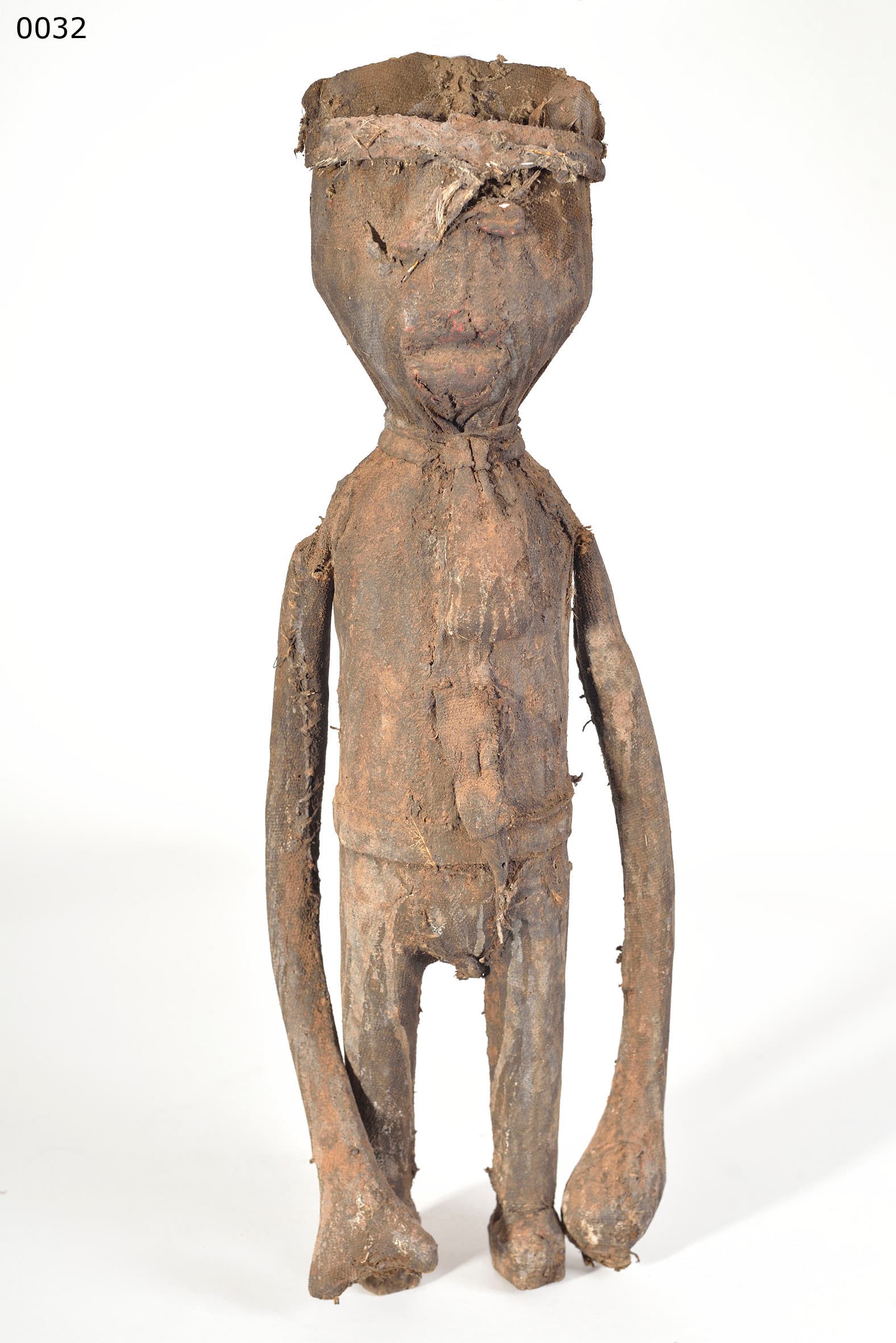
Kraftfigur (genannt KAFIGELEDJO)
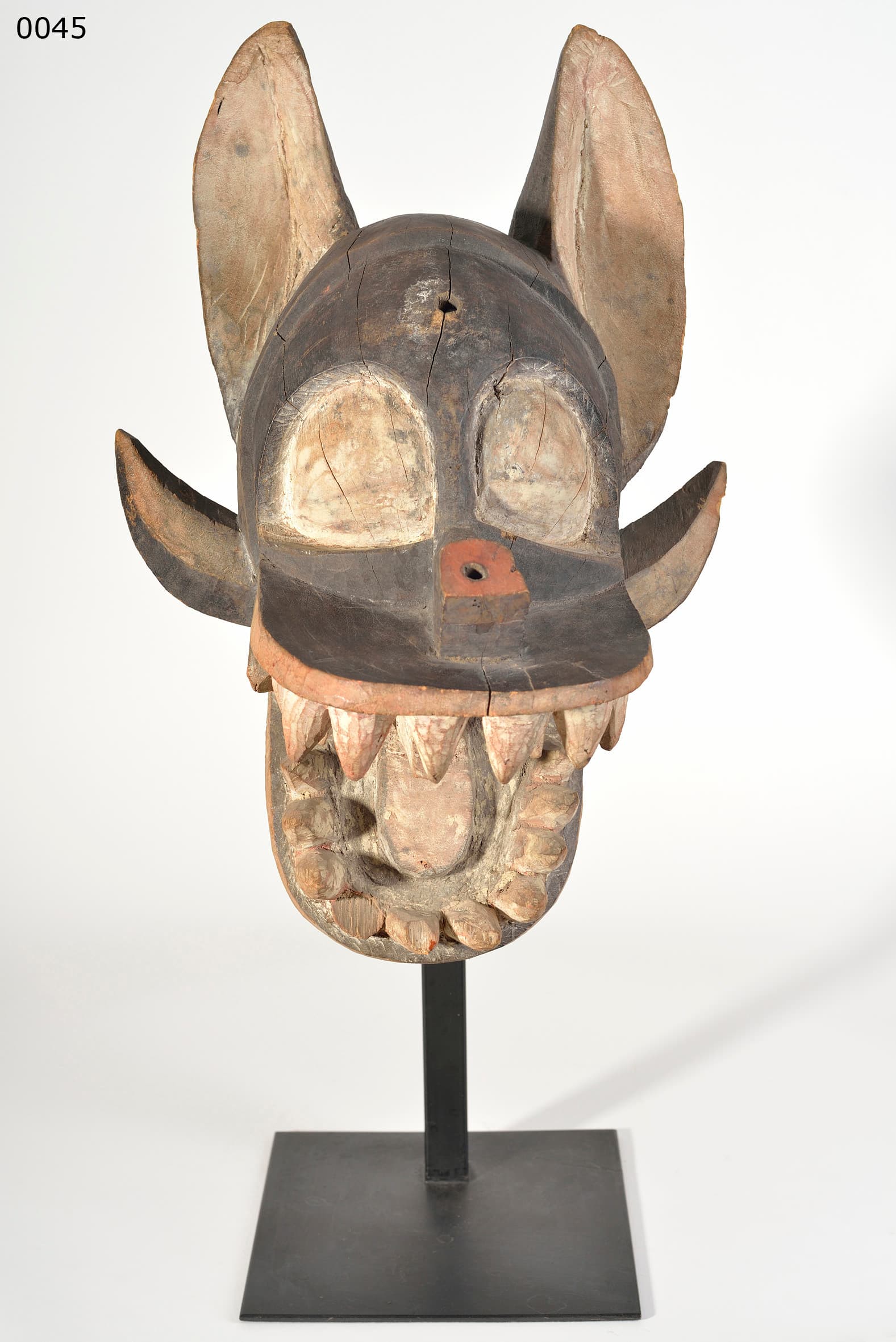
Aufsatzmaske
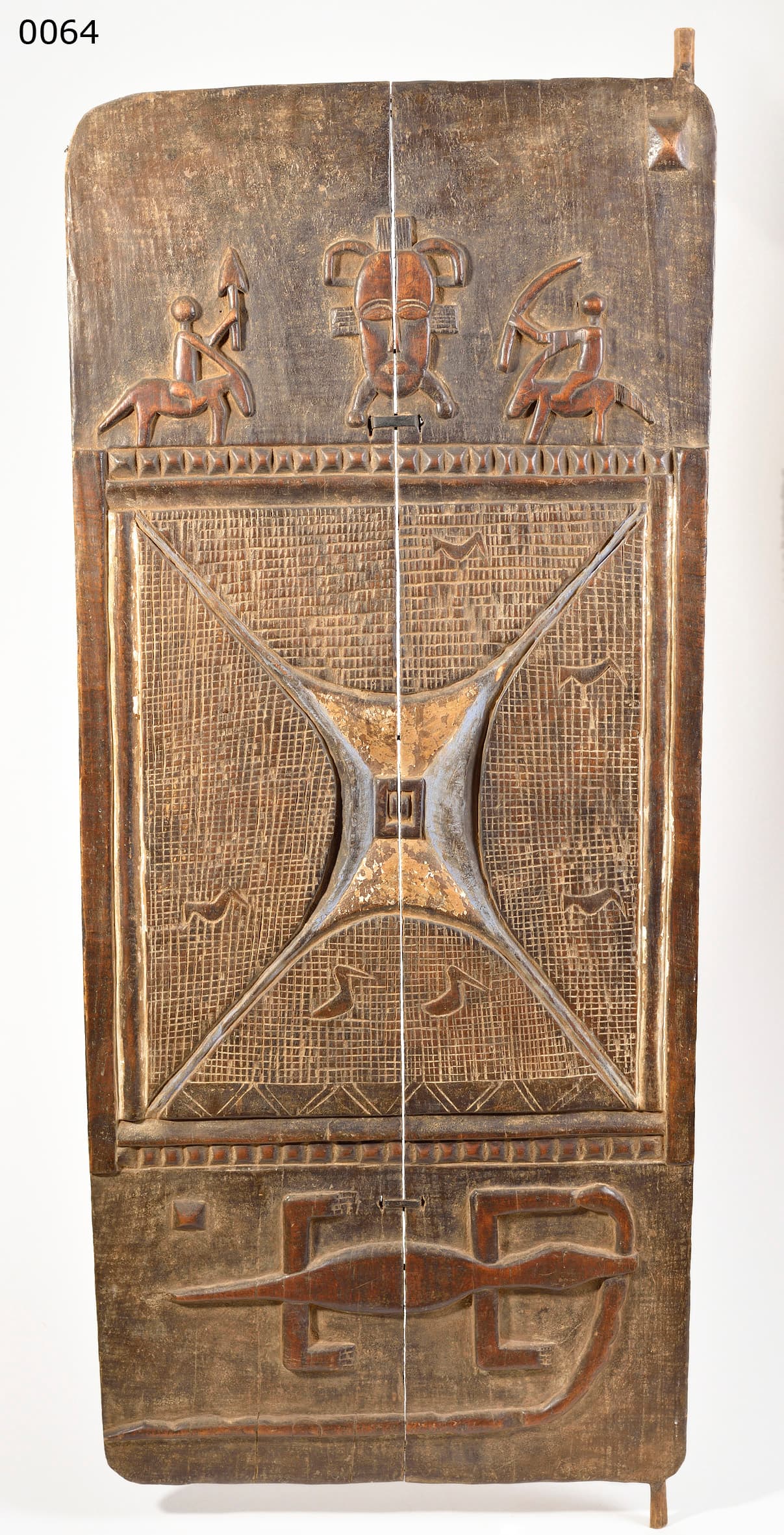
Tür
