Diese große, stark stilisierte Holzfigur hat einen länglichen, zylindrischen Oberkörper, geschwungene, abgesetzte Arme und ein heiteres Gesicht mit Kammfrisur, das auf einem schweren, massiven zylindrischen Sockel steht. Das Holz ist dunkel und poliert, mit deutlichen Abnutzungserscheinungen in der Mitte des Körpers und deutlichen Abflachungen am unteren Sockel.
1. Ästhetischer Stil und regionale Eigenheiten
Diese als pombibele ("diejenigen, die den Poro gebären") bekannten Rhythmusklopfer stellen eine bedeutende Ausprägung der strukturellen Eleganz der Senufo dar. Die der spezialisierten Kulebele-Kaste zugeschriebene Schnitzarbeit zeigt eine radikal verlängerte menschliche Form, die eine elegante Silhouette schafft. Die Abtrennung der Arme vom Rumpf schafft einen auffälligen Negativraum, der den Blick an den geschwungenen Linien des Körpers hinunter auf den schweren Sockel lenkt. Obwohl es sich um eine männliche Figur handelt (was durch das Fehlen von Brüsten und spezifischen anatomischen Schnitzereien angedeutet wird), teilt sie die heitere, einheitliche geometrische Abstraktion ihrer weiblichen Gegenstücke.
2. Rituelle Funktion und Geheimbundkontext
Pombibele sind keine statischen Schreinobjekte, sondern kinetische Instrumente, die traditionell bei den Begräbnisriten verstorbener älterer Eingeweihter des Poro-Geheimbundes verwendet werden. An der Taille oder an den Armen gehalten, schlagen junge Eingeweihte die schweren zylindrischen Sockel der Statuen in einem rhythmischen, stampfenden Tanz direkt auf die Erde. Man glaubt, dass diese akustische und physische Vibration die Geister der Vorfahren erweckt, den heiligen Hain reinigt und den Übergang der Seele des verstorbenen Ältesten in das Reich der Toten begleiten soll.
3. Physische Patina und Altersnachweis
Der physische Zustand dieser Statue gibt Hinweise auf ihr zeremonielles Leben. Der Torso und die Arme sind mit einer dunklen, glatten Reibungspatina überzogen, was auf das wiederholte Umgreifen während des Gebrauchs hindeutet. Der dicke zylindrische Sockel ist an den Rändern stark ramponiert, zusammengedrückt und abgesplittert, was für seine primäre Funktion als schlagendes Instrument spricht, dessen Nutzung in die erste Hälfte des 20. Jahrhunderts eingeordnet werden kann.
Zusammenfassung
Diese männliche Senufo-Pombibele ist ein repräsentatives Beispiel westafrikanischer Schnitzkunst, das skulpturale Eleganz mit einer perkussiven Funktion verbindet. Ihre ausgewogene Formgebung in Verbindung mit den deutlichen Schlagspuren an der Basis spricht für eine intensive Nutzung im Rahmen der rituellen Poro-Performance.
KI-unterstützt erstellt aus Sammlungsgutachten, Objektfotografie und eigener Recherche, redaktionell geprüft. Fehler sind möglich — Hinweise darauf sind uns willkommen. Zum Verfahren →
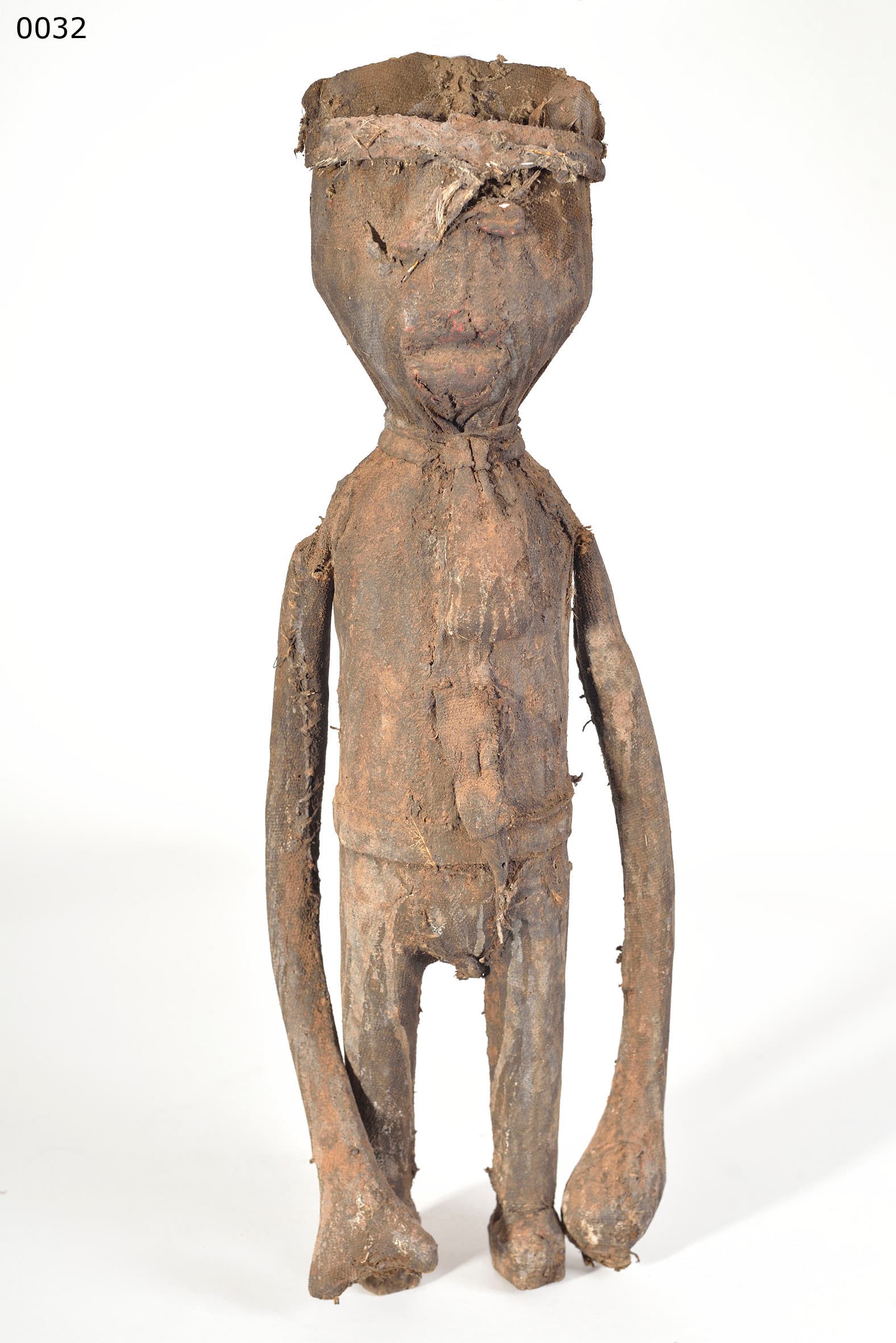
Kraftfigur (genannt KAFIGELEDJO)
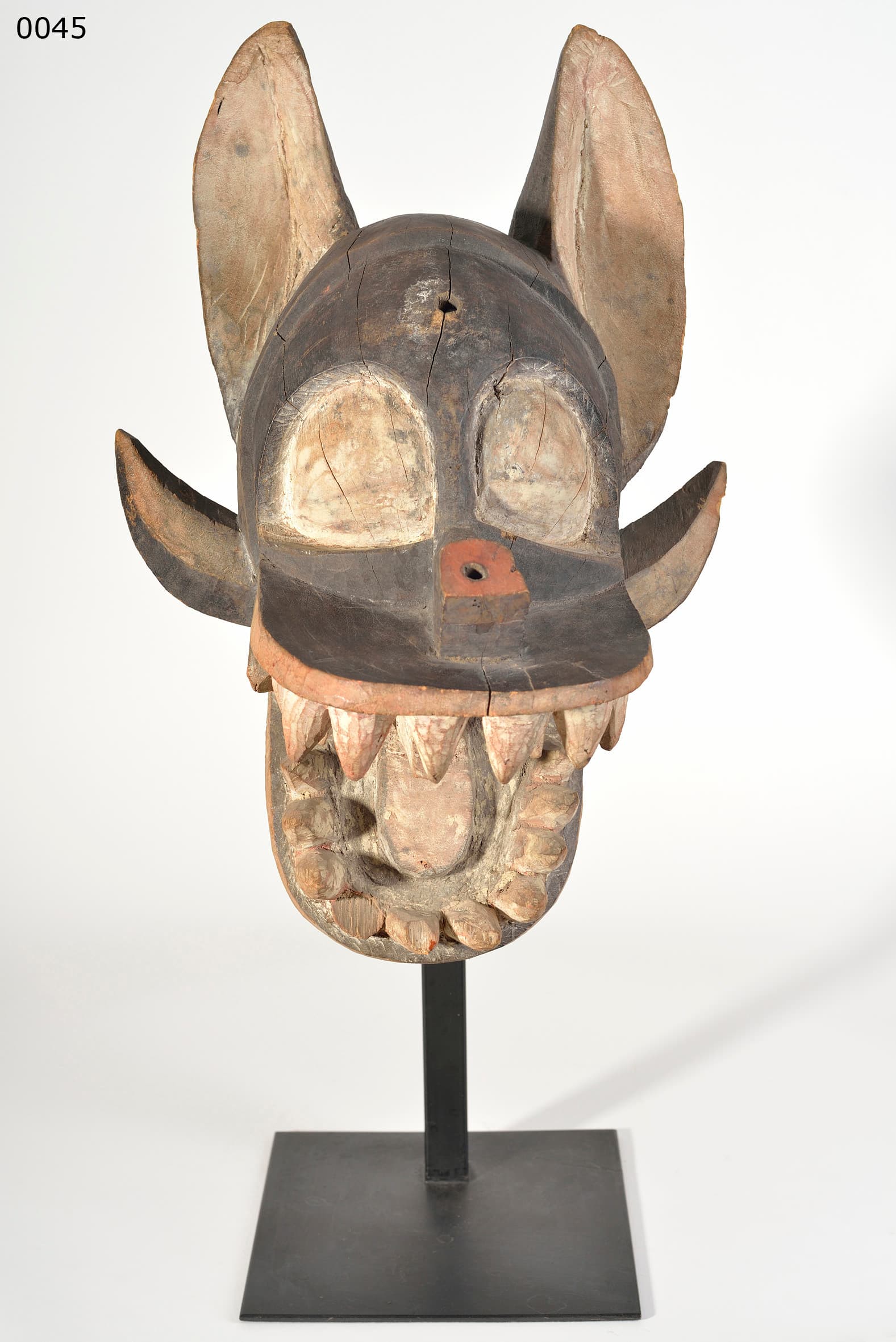
Aufsatzmaske
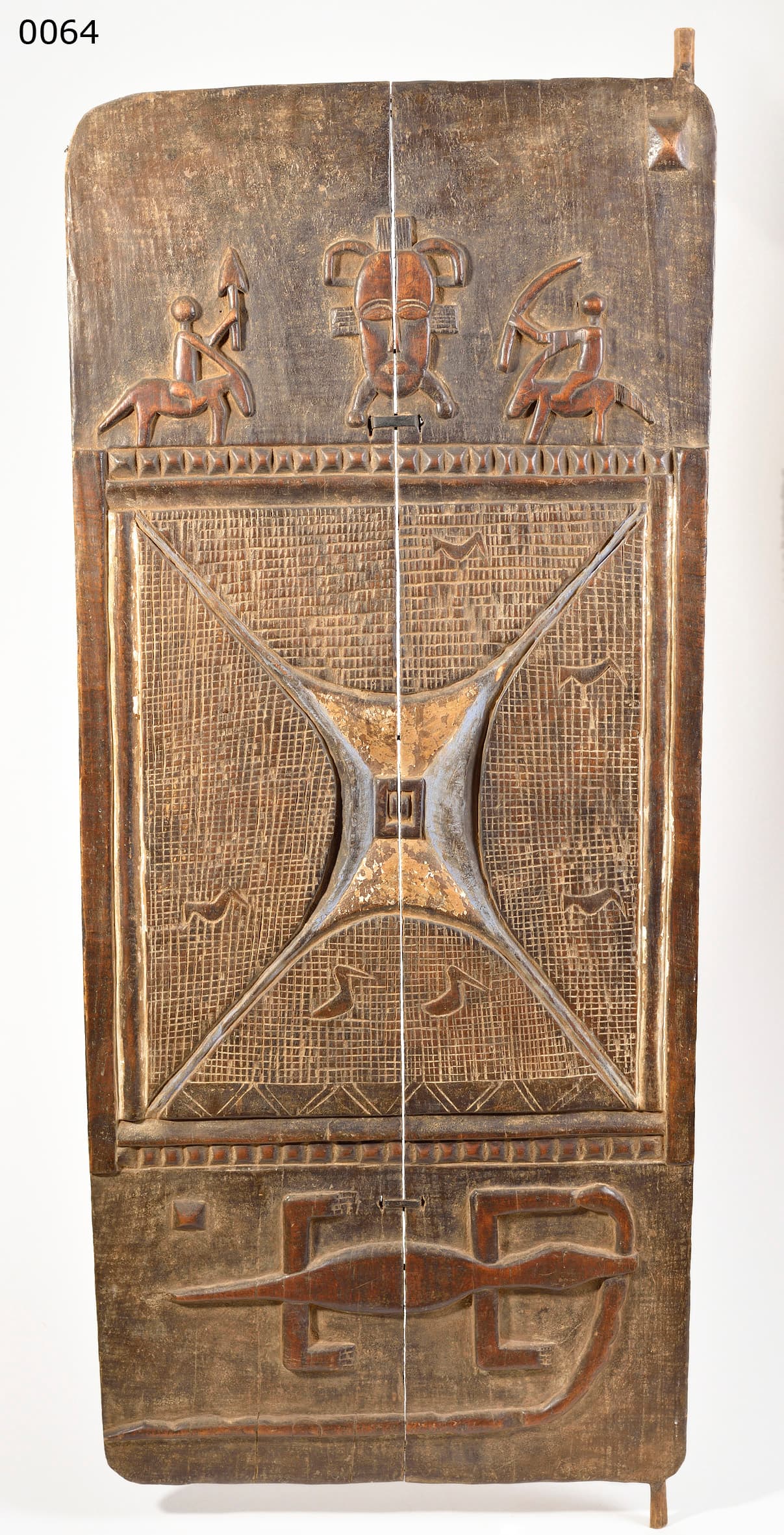
Tür
