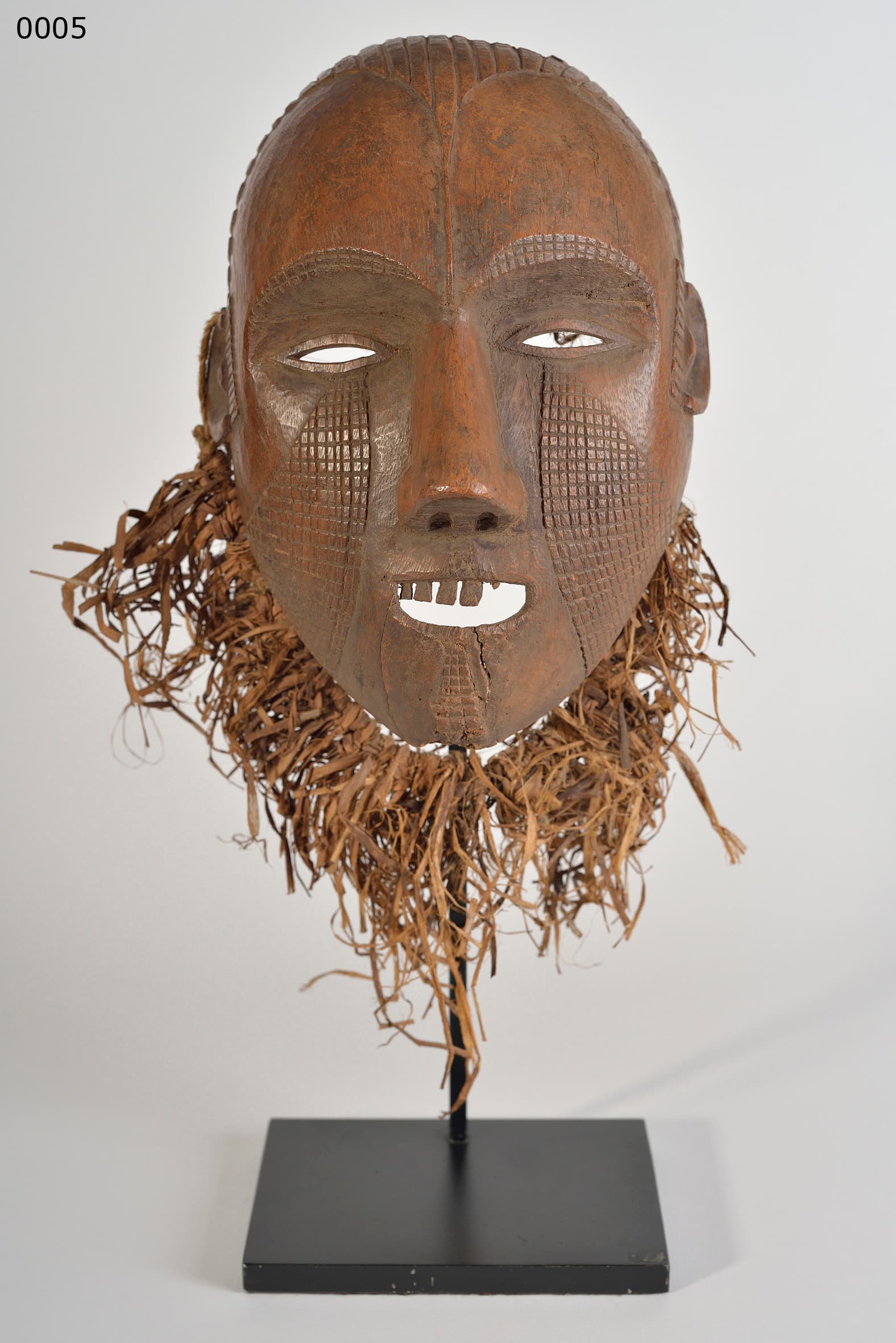
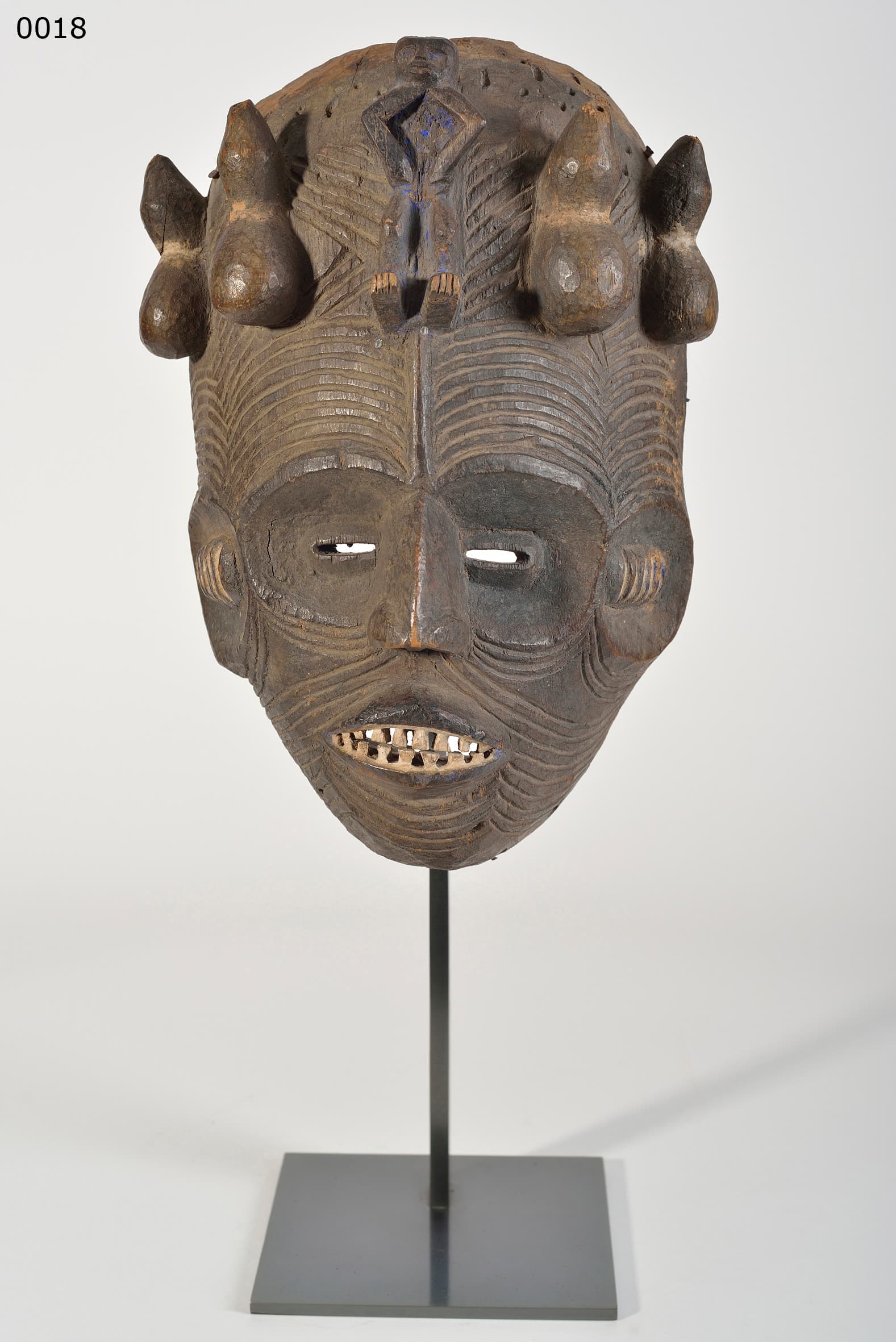
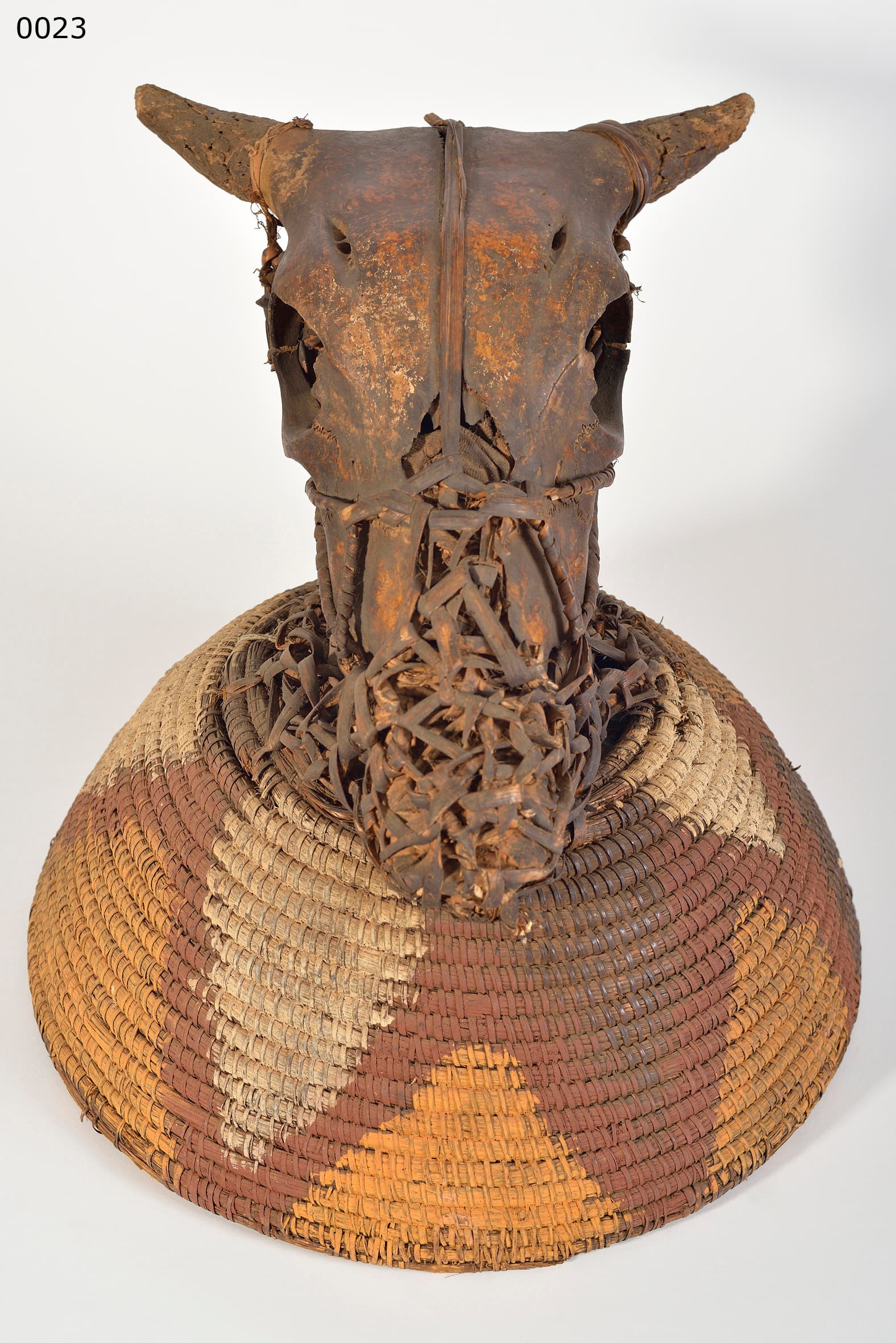
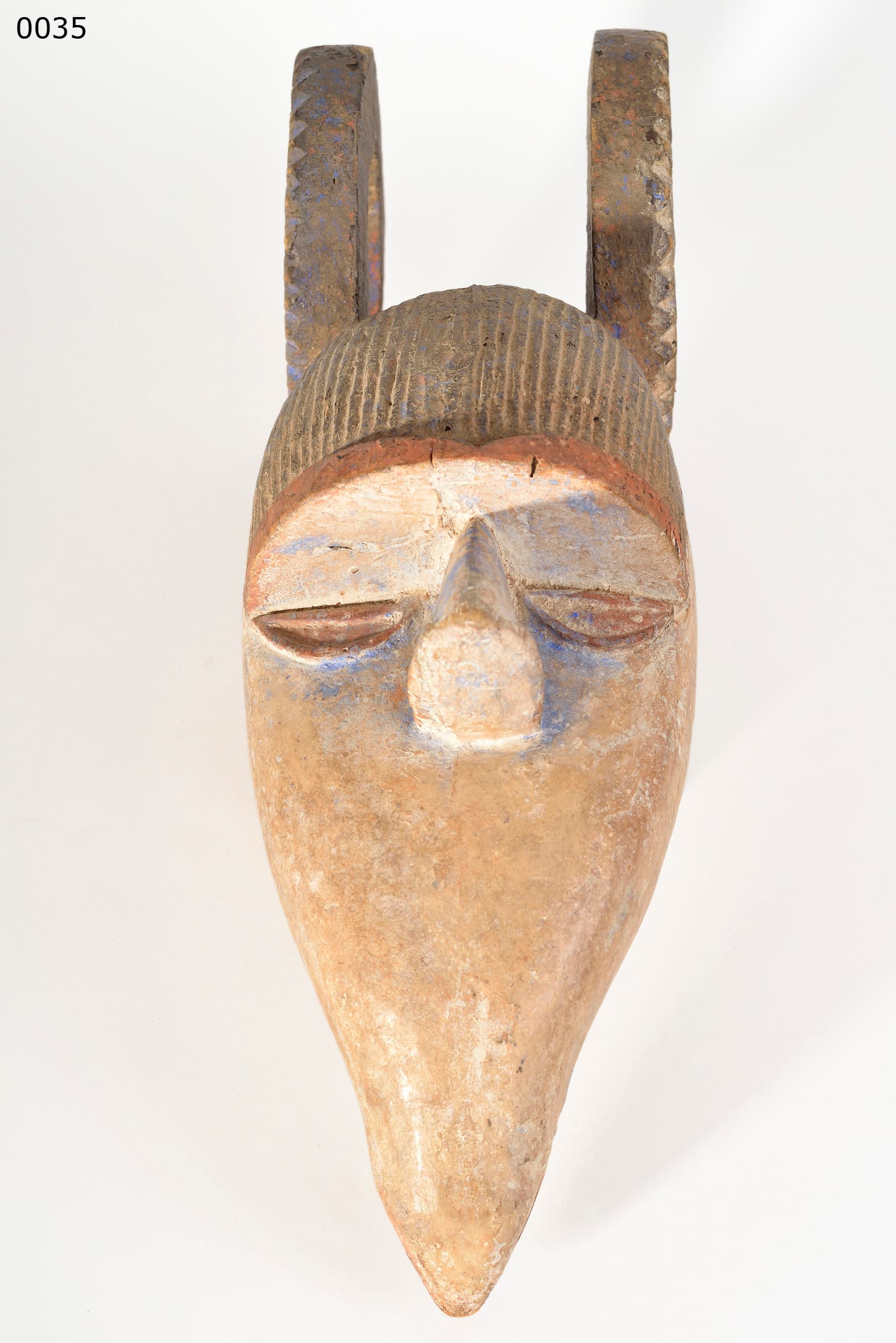
Diese beiden monumentalen, stehenden Holzfiguren (eine männliche und eine weibliche) zeichnen sich durch hoch aufragende Kammfrisuren, komplizierte geometrische Körperbemalung und lang gestreckte, stark stilisierte Torsi aus. Beide Figuren stehen starr mit vom Körper getrennten Händen, und ihre Oberflächen weisen eine verblasste, geisterhafte polychrome Patina über stark gealtertem, tief gerissenem Holz auf.
1. Ästhetischer Stil und regionale Charakteristika
Diese hoch aufragenden, paarweise angeordneten Skulpturen repräsentieren den klassischen Alusi-Stil (Schutzgottheit) aus der nord-zentralen Igbo-Region Nigerias. Der Schnitzer hat eine strenge, unnachgiebige Frontalität und eine langgestreckte Säulenstruktur verwendet, um eine Aura göttlicher Stabilität zu vermitteln. Die hoch aufragenden, komplexen Frisuren spiegeln die aristokratische Mode der Igbo-Elite des 19. und frühen 20. Jahrhunderts wider. Die Körper sind sorgfältig mit erhabenen, geschnitzten Skarifikationen (ichi im Gesicht und uli-Bemalungsmustern) verziert, die als herausragende visuelle Zeichen für einen hohen moralischen Charakter, sozialen Rang und spirituelle Reinheit gelten.
2. Rituelle Funktion und religiöse Bedeutung
Die Alusi-Figuren, die in aufwendigen, der Gemeinschaft gewidmeten Schreinen (wie den Mbari-Häusern oder speziellen Gottheiten) untergebracht sind, sind nicht nur Ahnen, sondern stellen mächtige Schutzgötter der Erde, der Flüsse und der landwirtschaftlichen Zyklen dar. Die Paarung einer männlichen und einer weiblichen Figur manifestiert physisch das kosmische Gleichgewicht, das für eine blühende Gemeinschaft erforderlich ist. Einmal im Jahr, während der Yam-Erntefeste, wurden diese Statuen aus der Dunkelheit geholt, frisch mit heiliger Kreide und Rotholz bemalt, bekleidet und von den Dorfpriestern geopfert, um Frieden und eine reiche Ernte zu sichern.
3. Physische Patina und Altersnachweis
Ein Alter dieses Paares aus dem 20. Jahrhundert ist mit seinem ausgeprägten physischen Verfall vereinbar. Ursprünglich waren sie mit dicken Schichten aus weißer Kaolin-Kreide (nzu), rotem Rotholz (uhie) und Indigo überzogen, doch die jahrzehntelange Einwirkung des feuchten nigerianischen Klimas hat die Pigmente bis auf einen schwachen, pulverförmigen Rückstand ausgewaschen. Die massiven hölzernen Sockel und Unterschenkel haben unter dem natürlichen Insektenbefall und der Fäulnis gelitten, die durch das direkte Stehen auf dem feuchten Lehmboden eines traditionellen Schreinhauses hervorgerufen wurde, und weisen auf eine langjährige zeremonielle Nutzung hin.
Zusammenfassung
Dieses monumentale Paar Igbo-Alusi-Figuren gilt als bedeutendes Zeugnis der traditionellen nigerianischen Schreinarchitektur. Ihre beachtliche Größe, ihre feierliche geometrische Haltung und ihre ausgeprägte, geisterhafte Erosion machen sie zu repräsentativen Beispielen dieser sakralen Kunsttradition.
KI-unterstützt erstellt aus Sammlungsgutachten, Objektfotografie und eigener Recherche, redaktionell geprüft. Fehler sind möglich — Hinweise darauf sind uns willkommen. Zum Verfahren →