Diese fein geschnitzte Gesichtsmaske aus Holz zeigt ein elegantes, längliches Gesicht, das von geometrischen "Flügeln" oder Flanschen umgeben ist und von einer sitzenden menschlichen Figur gekrönt wird. Das dunkle, polierte Holz wird umrahmt von Resten eines alten, groben Sackleinen- und Raphiabandes, das am Rand befestigt ist.
1. Ästhetischer Stil und regionale Eigenheiten
Diese Maske ist ein typisches Beispiel für die Senufo Kpelie (oder Kodoli-yehe). Die Ästhetik beruht auf einem harmonischen, zarten Gleichgewicht, das in scharfem Kontrast zu den furchterregenden, zoomorphen "Feuerspucker"-Masken der gleichen Region steht. Das ruhige, schmale Gesicht wird von strahlenden geometrischen Formen eingerahmt, die die Flügel des Nashornvogels und die Ohren/Hörner eines Opferbocks darstellen. Die Hinzufügung der sitzenden Figur auf der Oberseite - die wahrscheinlich einen bestimmten Vorfahren oder die Urmutter darstellt - verleiht der Geschichte zusätzliche Tiefe und zeigt das außergewöhnliche Können der Kulebele-Schnitzerkaste.
2. Rituelle Funktion und Geheimbundkontext
Kpelie-Masken sind von zentraler Bedeutung für die Poro-Geheimgesellschaft, die wichtigste Institution des sozialen und politischen Lebens der Senufo. Die Maske wird von männlichen Eingeweihten bei den Beerdigungsriten der Ältesten der Gesellschaft getanzt und stellt eine idealisierte Vorstellung von weiblicher Schönheit und geistiger Anmut dar. Der Tänzer trägt ein Ganzkörperkostüm, um seine menschliche Gestalt vollständig zu verbergen und den Geist des Verstorbenen aus dem Dorf in das Reich der Ahnen zu geleiten, damit das spirituelle Gleichgewicht der Gemeinschaft gewahrt bleibt.
3. Physische Patina und Altersnachweis
Die Oberflächenbeschaffenheit dieser Maske spricht für eine aktive zeremonielle Verwendung. Die dunkle, glänzende Oberfläche der markanten Gesichtszüge (Nase, Lippen und Augenbrauen) zeigt eine Reibungspatina, die auf eine längere Handhabung und Salbung mit Palmöl hindeutet. Bemerkenswert ist das Überleben der Sackleinen- und Faserbefestigungen um den Rand herum - die stark ausgetrocknet, brüchig und verdunkelt sind -, was für eine Herkunft aus dem frühen 20. Jahrhundert spricht.
Zusammenfassung
Diese Senufo-Kpelie ist ein ausdrucksstarkes Beispiel westafrikanischer formaler Ausgewogenheit und idealisierter Porträtkunst. Die gelungene Integration der sitzenden Figur und die von der Handhabung geprägte Patina machen sie zu einem bedeutenden Artefakt der Poro-Gesellschaft.
KI-unterstützt erstellt aus Sammlungsgutachten, Objektfotografie und eigener Recherche, redaktionell geprüft. Fehler sind möglich — Hinweise darauf sind uns willkommen. Zum Verfahren →
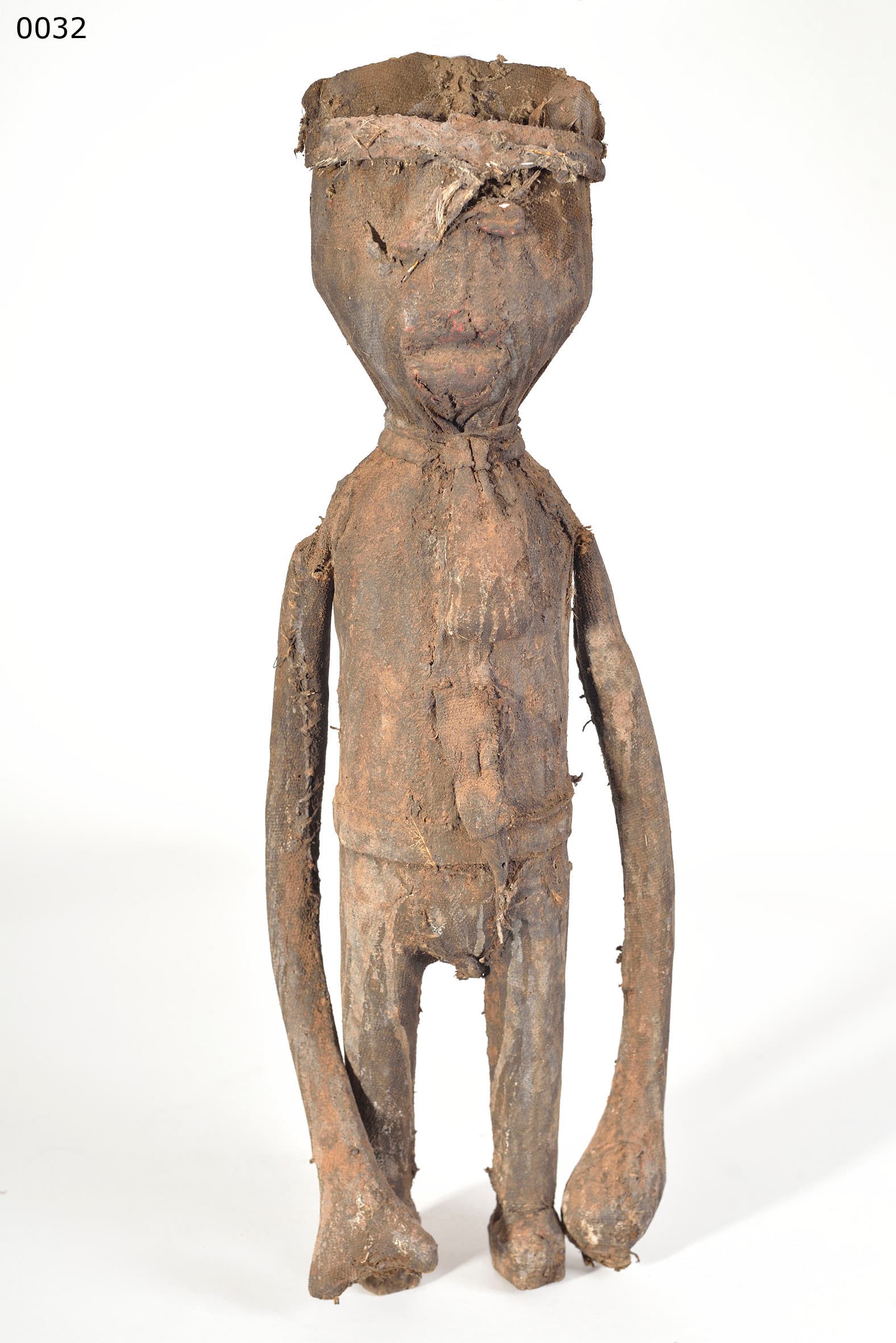
Kraftfigur (genannt KAFIGELEDJO)
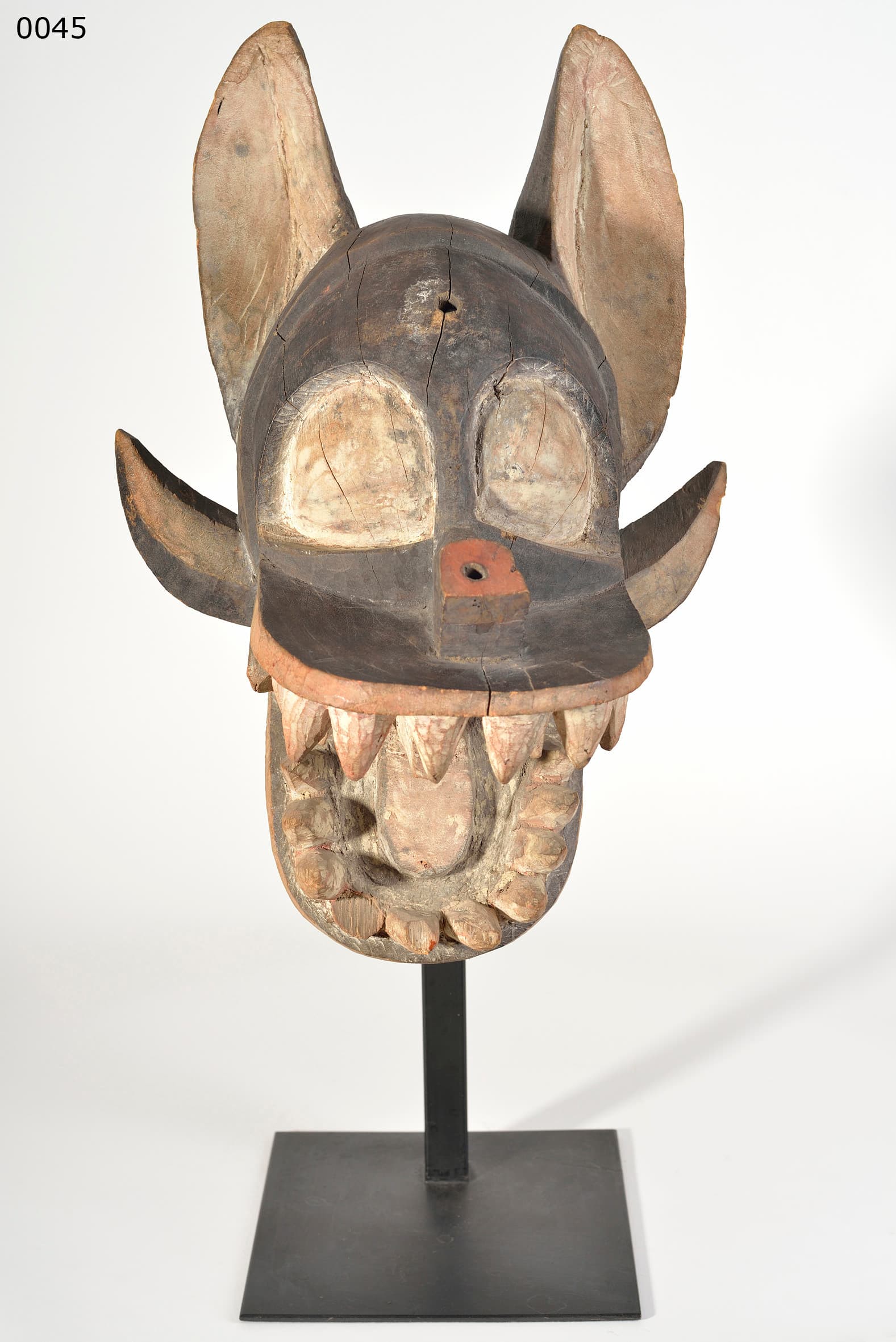
Aufsatzmaske
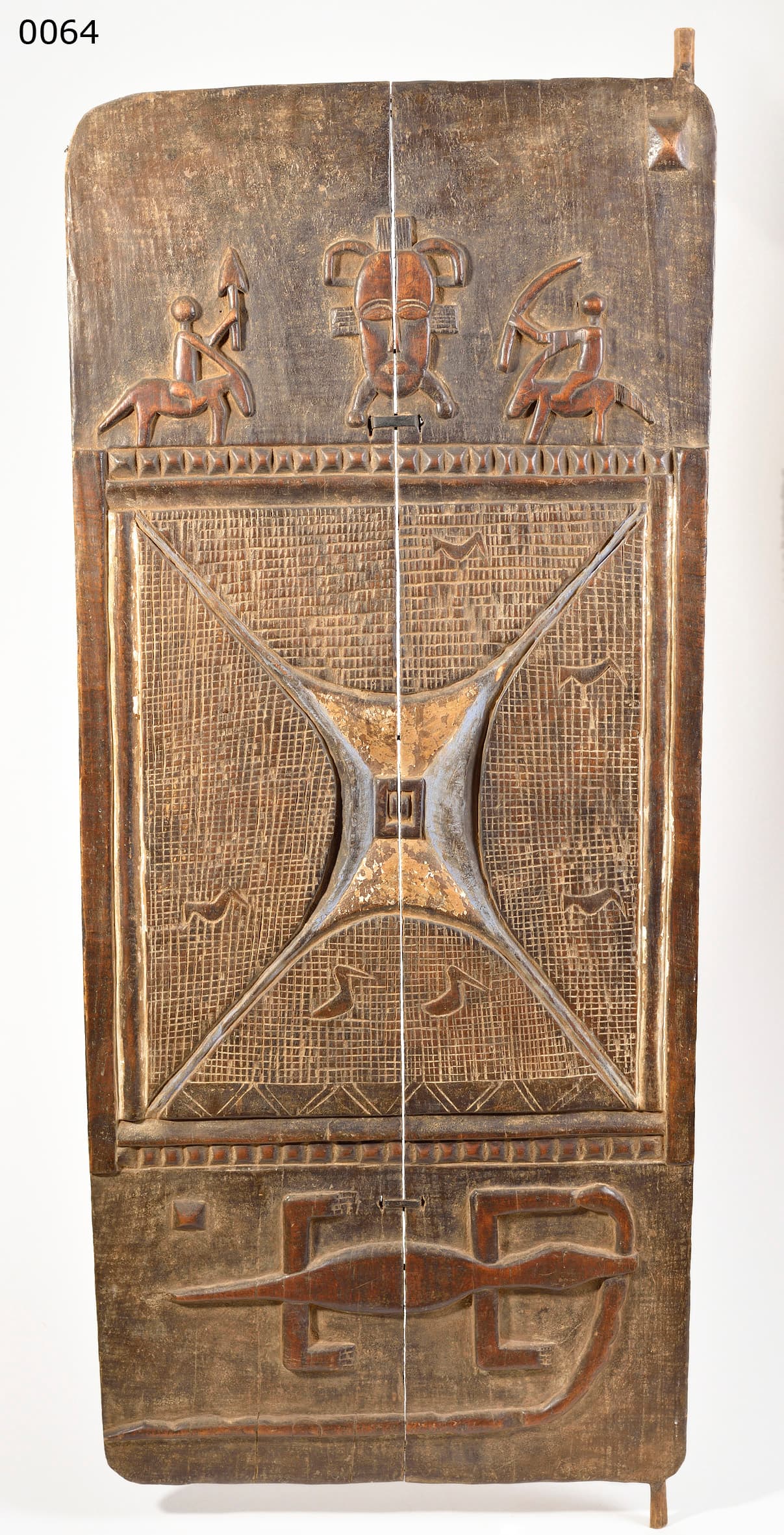
Tür
