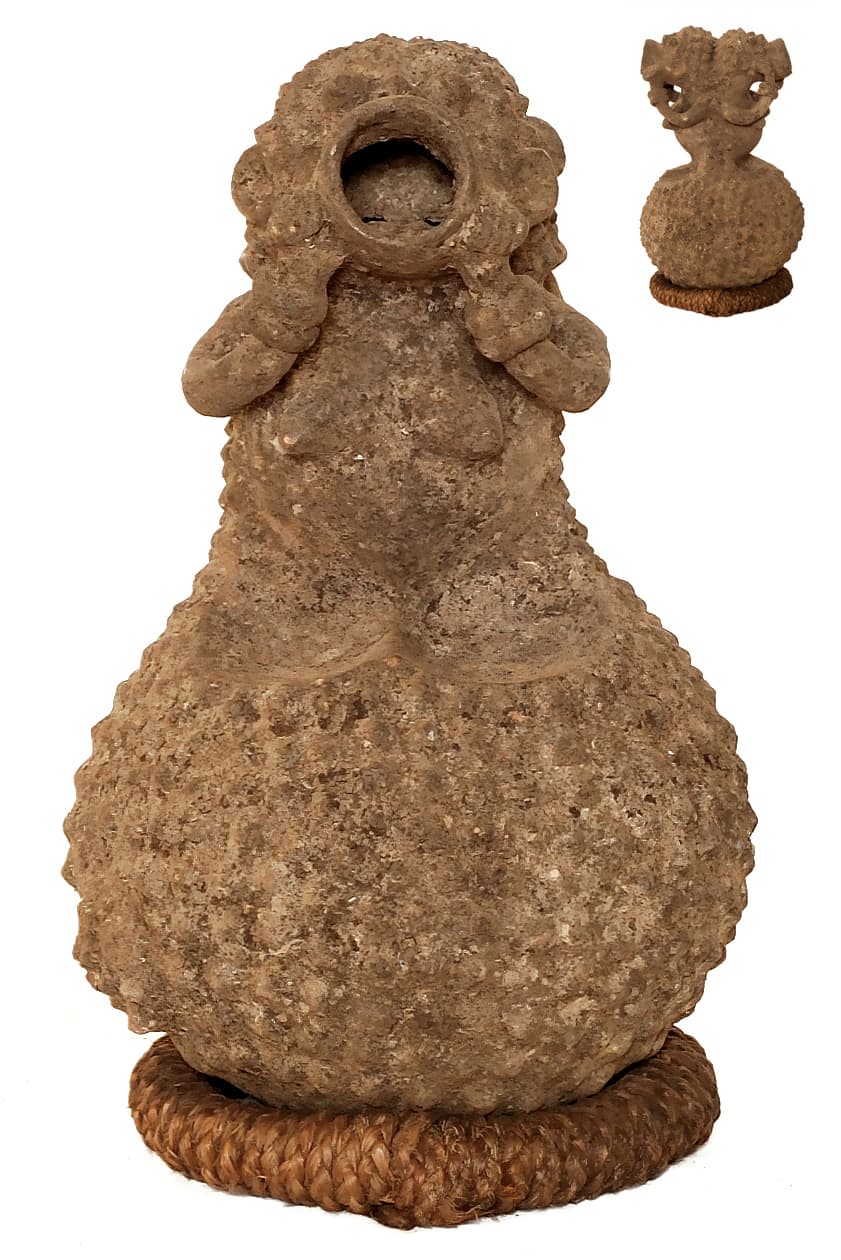
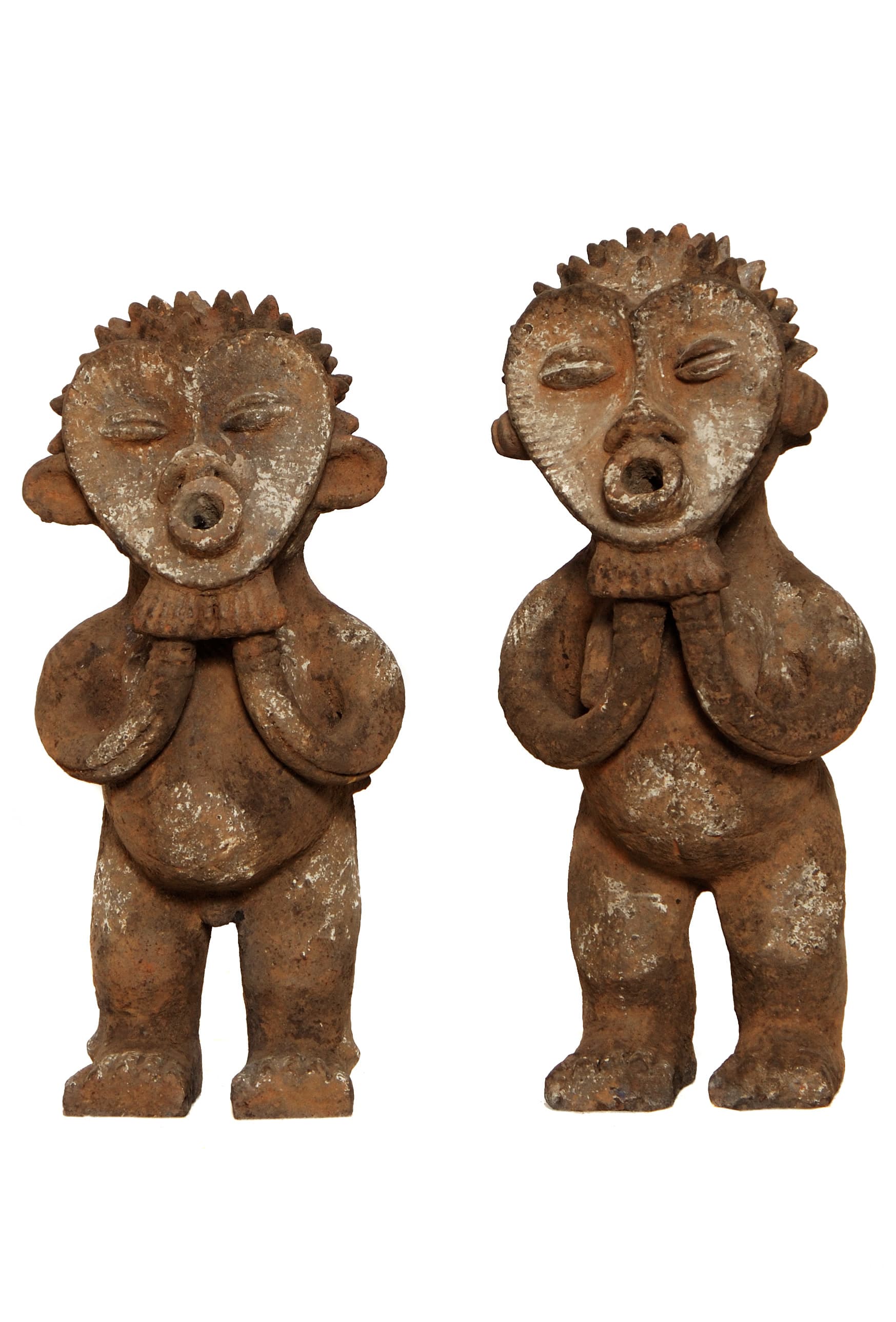
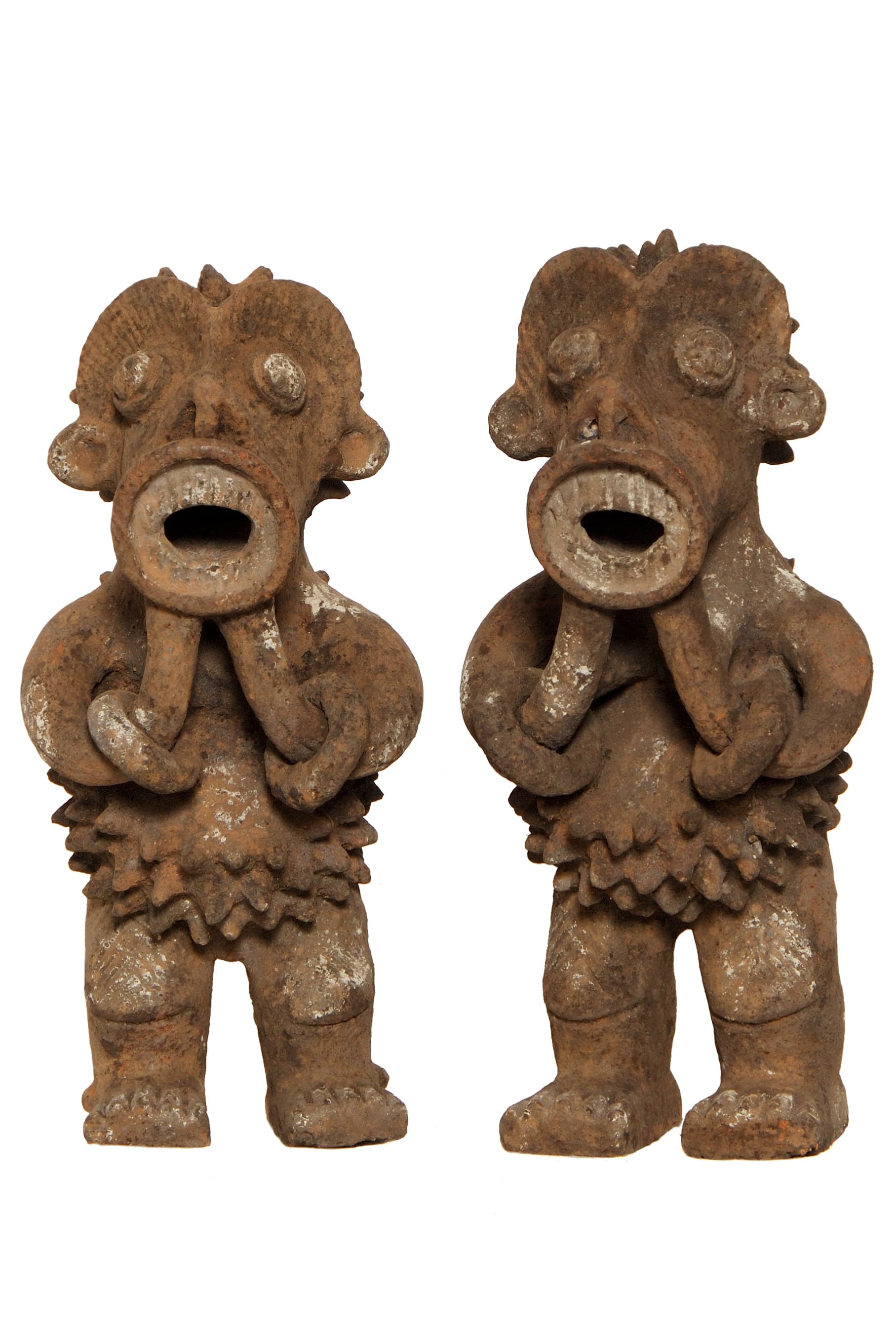
Diese stark abstrahierte, blockhafte Holzfigur steht mit tief angewinkelten Knien, die Arme umklammern die Brust, und ein überdimensionales, herzförmiges Gesicht mit einem klaffenden, stilisierten Mund. Die Oberfläche ist außergewöhnlich trocken, leicht und mit einer flockigen, graubraunen Opferpatina überzogen.
1. Ästhetischer Stil und regionale Merkmale
Die Mambila-Skulptur ist bekanntlich expressionistisch, dynamisch und ungeschliffen. Diese Tadep-Figur zeigt die klassische, aggressive Mambila-Silhouette: Die strenge Zickzack-Haltung der angewinkelten Beine und die massive, herzförmige Gesichtsebene erzeugen ein Gefühl von komprimierter, aufgespannter kinetischer Energie. Der Schnitzer verzichtet völlig auf glatte, naturalistische Übergänge oder polierte Oberflächen und setzt stattdessen auf rohe, geometrische Intensität und die klare Darstellung des klaffenden, wachsamen Mundes.
2. Rituelle Funktion und Geheimbund-Kontext
Tadep-Figuren sind das heilige Eigentum der Mambila-Männergesellschaften (Suaga). Sie werden in der Regel in speziellen, mit Netzen versehenen Getreidespeichern oder dunklen Schreinen im Zentrum des Dorfes aufbewahrt. Sie fungieren als aktive, aggressive Wächter der Ahnengeister und der Ernte und schützen die Lebensmittelvorräte der Gemeinschaft vor Dieben, böswilligen Hexen und Krankheiten. Um die Wächtergeister wach und mächtig zu halten, werden die Figuren regelmäßig mit rituellen Waschungen, Blut und Palmwein aktiviert.
3. Physische Patina und Altersnachweis
Ein hohes Alter dieser Figur, das mit dem 19. Jahrhundert vereinbar ist, legt der federleichte, stark ausgetrocknete Zustand des Holzes nahe. Die Schnitzerei hat an Feuchtigkeit verloren und ist brüchig geworden. Die dicke, gräuliche Kruste, die den Körper bedeckt, spricht für eine über längere Zeit entstandene Ansammlung von Opfersubstanzen und Umweltverwitterung. Die Füße und der Sockel weisen einen starken organischen Verfall auf, was mit einer längeren Aufstellung im rituellen Kontext vereinbar ist.
Zusammenfassung
Diese Mambila-Tadep-Figur gilt als ein eindrucksvolles Zeugnis des kamerunischen Expressionismus und vermittelt eine rohe, komprimierte Dynamik. Ihre ausgeprägte geometrische Abstraktion und die dichte, tief verkrustete Patina, die auf ein hohes Alter verweist, machen sie zu einem bemerkenswerten Artefakt im Kontext der traditionellen Schutzmagie.
KI-unterstützt erstellt aus Sammlungsgutachten, Objektfotografie und eigener Recherche, redaktionell geprüft. Fehler sind möglich — Hinweise darauf sind uns willkommen. Zum Verfahren →