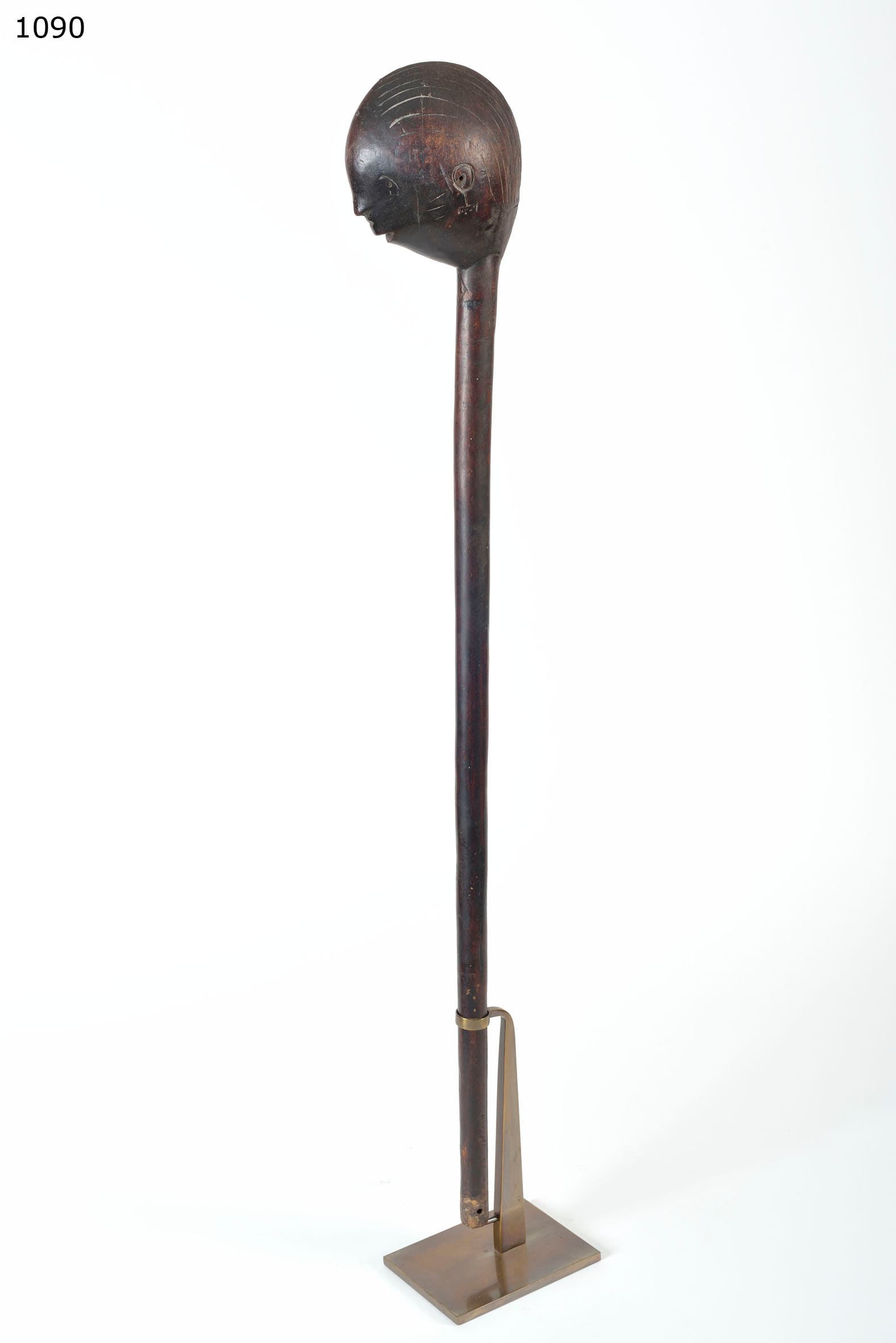
Eine hohe, sehr langgestreckte Holzfigur, die als Abschluss eines Stabes dient. Sie hat einen stilisierten weiblichen Torso, einen gebogenen Hals, der mit bunten Glasperlen verziert ist, einen großen runden Kopf und eine glatte, honigbraune Oberfläche.
1. Ästhetischer Stil und regionale Eigenheiten
Während in der westafrikanischen Kunst oft dicke, schwere Volumina im Vordergrund stehen, bevorzugt die ostafrikanische Schnitzkunst - insbesondere bei tansanischen Gruppen wie den Hehe, Nyamwezi und Zaramo - eine extreme, elegante Vertikalität. Diese Stabfigur ist ein Beispiel für die regionale Ästhetik. Sie verwendet glatte, minimalistische, geschwungene Linien, die den Blick nach oben auf den übergroßen, ruhigen Kopf lenken und die Würde des Geistes der Vorfahren widerspiegeln, den er repräsentiert. Die bewusste Vergrößerung des Kopfes ist eine regionale ikonografische Konvention, die signalisiert, dass es sich bei der Figur nicht um einen Körper handelt, der von einem Kopf gekrönt wird, sondern um einen Körper, der in erster Linie dazu da ist, die spirituelle Präsenz des Kopfes zu unterstützen und zu präsentieren.
2. Rituelle Funktion und Autorität
In der Hehe-Kultur waren Stäbe dieser Größe der exklusive Besitz von Häuptlingen (mtwa) oder mächtigen traditionellen Heilern und Wahrsagern (waganga). Die weibliche Figur, die den Stab krönt, steht für das Ahnengeschlecht oder einen Leitgeist. Wenn der Stab bei Gerichtsverhandlungen oder Heilungsritualen in der Hand gehalten wurde, fungierte er als physische Antenne, die die Autorität des Anführers auf die Weisheit der Ahnen gründete. Seine Größe sorgte auch für mehr Sichtbarkeit - ein 77 cm langer Stab in der Hand machte die Autorität des Trägers in einer ganzen Versammlung sichtbar und materialisierte die institutionelle Macht in einem einzigen getragenen Objekt.
3. Physische Patina und Altersnachweis
Der Zusatz von importierten, mehrfarbigen Glasperlen um den Hals erhöhte das Prestige und den wirtschaftlichen Wert des Objekts erheblich. Der untere Teil der Schnitzerei weist eine tiefe, handgescheuerte Politur auf, während der obere Torso eine reiche honigbraune Oxidation aufweist, was auf jahrzehntelange zeremonielle Handhabung und kontinuierliche Verehrung durch die Einheimischen hinweist. Der Übergang zwischen dem abgenutzten unteren Schaft und dem oxidierten oberen Torso spiegelt die natürliche Nutzungsgeometrie wider - die Griffzone wird poliert, während der erhöhte, zeremoniell zur Schau gestellte obere Teil ohne Scheuerkontakt altert.
Zusammenfassung
Ein anmutiger und imposanter ostafrikanischer Zeremonienstab, der die elegante Vertikalität der Hehe-Skulpturtraditionen widerspiegelt. Seine glatte Patina und die originale Perlenstickerei machen ihn zu einem wichtigen Zeugnis der tansanischen Führung des frühen 20. Jahrhunderts.
KI-unterstützt erstellt aus Sammlungsgutachten, Objektfotografie und eigener Recherche, redaktionell geprüft. Fehler sind möglich — Hinweise darauf sind uns willkommen. Zum Verfahren →