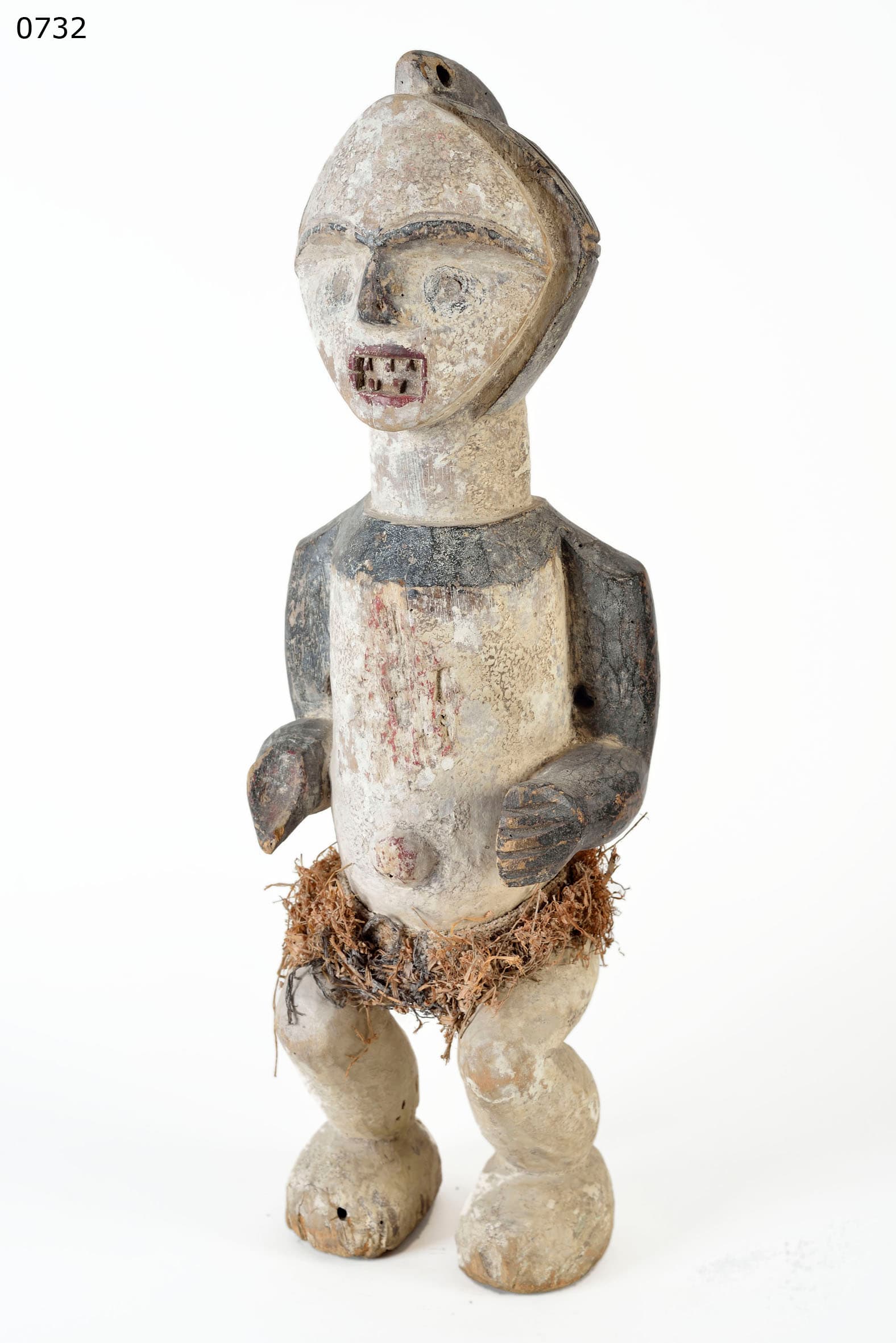
Eine von zwei komplementären Ambete-Holzfiguren, die stark mit einem blassen, krustigen weißen Kaolinpigment überzogen sind. Sie haben ein großes, markantes Gesicht mit einer flachen, vertieften Fläche und einen ausgehöhlten, blockigen, röhrenförmigen Torso.
1. Ästhetischer Stil und regionale Eigenheiten
Im Gegensatz zu den benachbarten Kota oder Fang, die ihre skulpturalen Köpfe auf separate geflochtene Körbe mit den Knochen ihrer Vorfahren stellten, entwickelten die Ambete (Mbete) eine ganz eigene Lösung für ihre Reliquien: Die Statue ist die Reliquie. Die langgestreckten, ausgehöhlten Rückentorsi dieser Figuren sind mit einem geschnitzten Hohlraum versehen, der speziell für die Aufbewahrung der Schädel- oder Röhrenknochen der verehrten Stammesgründer konzipiert wurde, wodurch eine nahtlose Integration von Skulptur und heiligen Überresten entsteht. Diese Integration ist eine strukturelle Neuerung: Während in der Kota-Reliquienpraxis Skulptur und Reliquie getrennt behandelt werden, verschmelzen sie in der Ambete-Praxis zu einem einzigen untrennbaren Objekt.
2. Rituelle Funktion und das Reich der Toten
Das auffällige, geisterhafte Aussehen dieser Statuen wird durch den starken Auftrag von weißem Kaolin-Ton erreicht. Im spirituellen Vokabular Gabuns ist Weiß die Farbe der Ahnen und symbolisiert Reinheit, Hellsichtigkeit und die Geisterwelt. Diese Figuren wurden bei den Einweihungen von Geheimgesellschaften hervorgeholt, wo ihre strengen, flachen Gesichter den Eingeweihten die furchterregende Autorität der Toten vermitteln sollten. Die Kaolinbeschichtung visualisierte wirkungsvoll die Grenze, an der sich die Figuren befinden - weder ganz in der Welt der Lebenden noch ganz in der der Toten - und machte ihren Grenzstatus zu einer sinnlichen Erfahrung für die Eingeweihten, die ihnen begegneten.
3. Physische Patina und Altersnachweis
Die Patinierung dieser Figuren ist außergewöhnlich und weist dicke, mehrschichtige und abblätternde Kaolin-Krusten auf, die über Jahrzehnte des zeremoniellen Gebrauchs wiederholt aufgetragen wurden. Der trockene, oxidierte Zustand des Holzes, der unter dem abblätternden Pigment sichtbar ist, sowie die verdunkelten Innenräume der Reliquienhohlräume bestätigen ihr authentisches Alter aus dem frühen 20. Jahrhundert. Die inneren Hohlräume weisen Verfärbungsmuster auf, die auf einen langfristigen Kontakt mit dem Knochenmaterial der Vorfahren hindeuten - eine chemische Signatur, die bei einem kürzlich geschnitzten Objekt unmöglich zu fälschen ist.
Zusammenfassung
Diese Ambete-Reliquienstatue repräsentiert zusammen mit ihrem größeren Gegenstück (Nr. 732) eine der innovativsten und spezifischsten Reliquientraditionen in der afrikanischen Kunst, da sie die Knochen der Vorfahren direkt in ihrem Torso beherbergt. Ihr eindringliches, mit Kaolin verkrustetes Gesicht und ihre strukturelle Integrität machen sie zu einem herausragenden Beispiel für die spirituelle Skulptur Gabuns.
KI-unterstützt erstellt aus Sammlungsgutachten, Objektfotografie und eigener Recherche, redaktionell geprüft. Fehler sind möglich — Hinweise darauf sind uns willkommen. Zum Verfahren →