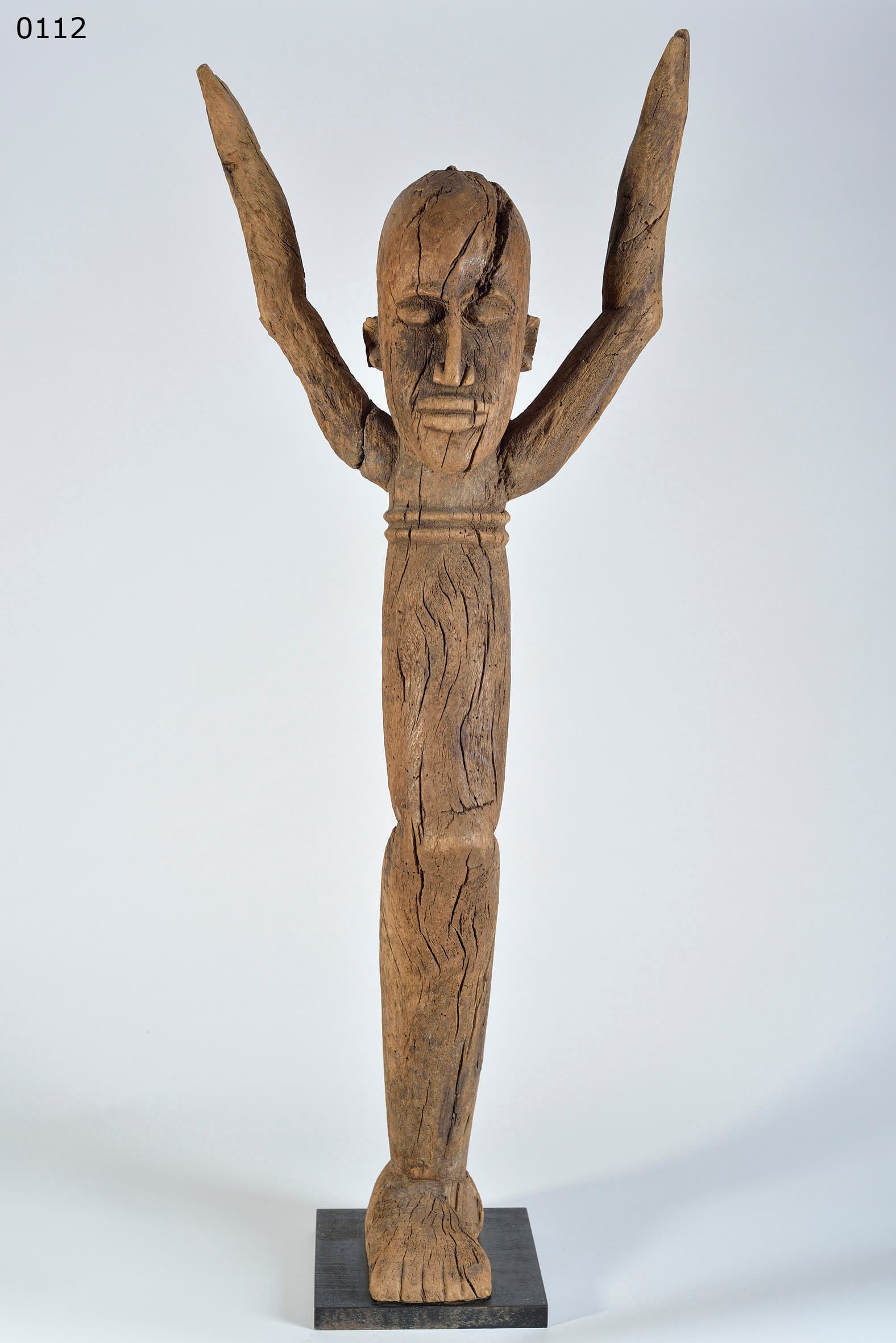
This is an example of a Lobi shrine altar from Burkina Faso. Your information is largely correct, though there is an important distinction to make regarding the terminology and the nature of the figures.
1. Terminology correction: Bateba vs. Bateke
The term "Bateke" likely refers to the Teke people of the Congo Basin, who are known for their own distinct power figures. However, these specific figures are consistent with Lobi style. In the Lobi language, these carved wooden figures are called Bateba.
- Bateba: Means "wooden carved figure" and refers to the physical vessel that houses a spirit.
- Thil (pl. Thila): The invisible spirits that inhabit these figures to protect the household.
2. Analysis of the figures
The carving style is characteristic of Lobi Bateba Phuwe (ordinary or normal figures):
- The Couple: Lobi shrines almost always feature pairs to maintain balance. The figure on the left is male, and the one on the right is female. They act as intermediaries between the living and the spirit world.
- Physical Features: Note the squared shoulders, block-like feet, and prominent navels. The heads are disproportionately large, which is intended to emphasize the wisdom and power of the spirit residing within.
- Posture: Their rigid, upright stance signifies a state of "vigilance," as their primary role is to guard the family against witchcraft, disease, and bad luck.
3. The altar base & sacrificial material
The most striking feature of this object is the large, dome-like base and the heavy encrustation of organic material.
- Shrine Altar: In a Lobi home, these figures would be placed in a dark, sacred corner or a small room called a thilda.
- Sacrificial Patina: The "furry" or crusty material seen at the junction of the feet and the base consists of sacrificial remains. This typically includes dried animal blood, millet porridge, and feathers.
- Ritual Use: When a family faces a problem, a diviner (bour) instructs them to make offerings to the Thil. The accumulation of this material over years (or generations) creates a thick "sacrificial patina," which is highly valued by collectors as it is consistent with use in traditional religious practice.
Summary
This object is a Lobi Bateba couple mounted on a consecrated shrine base. It served as a spiritual lightning rod for a household in Burkina Faso, designed to absorb negative energy and provide protection to the family. The presence of the original sacrificial fibers suggests it was an active part of a family's spiritual life for a significant period.
Written with AI assistance from the collection appraisal, object photography and our own research; editorially reviewed. Mistakes are possible — corrections are welcome. How we work →
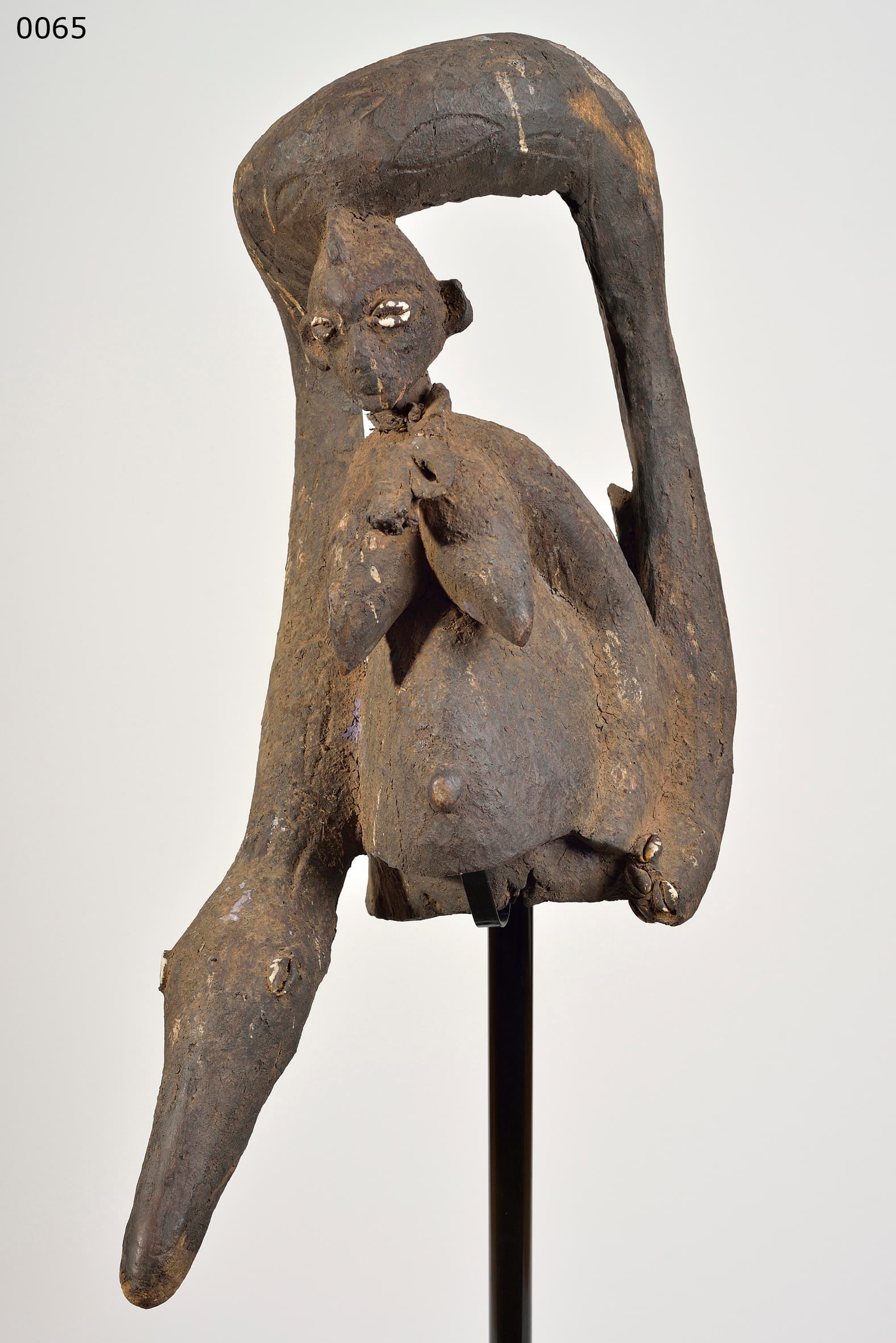
rare head crest mask
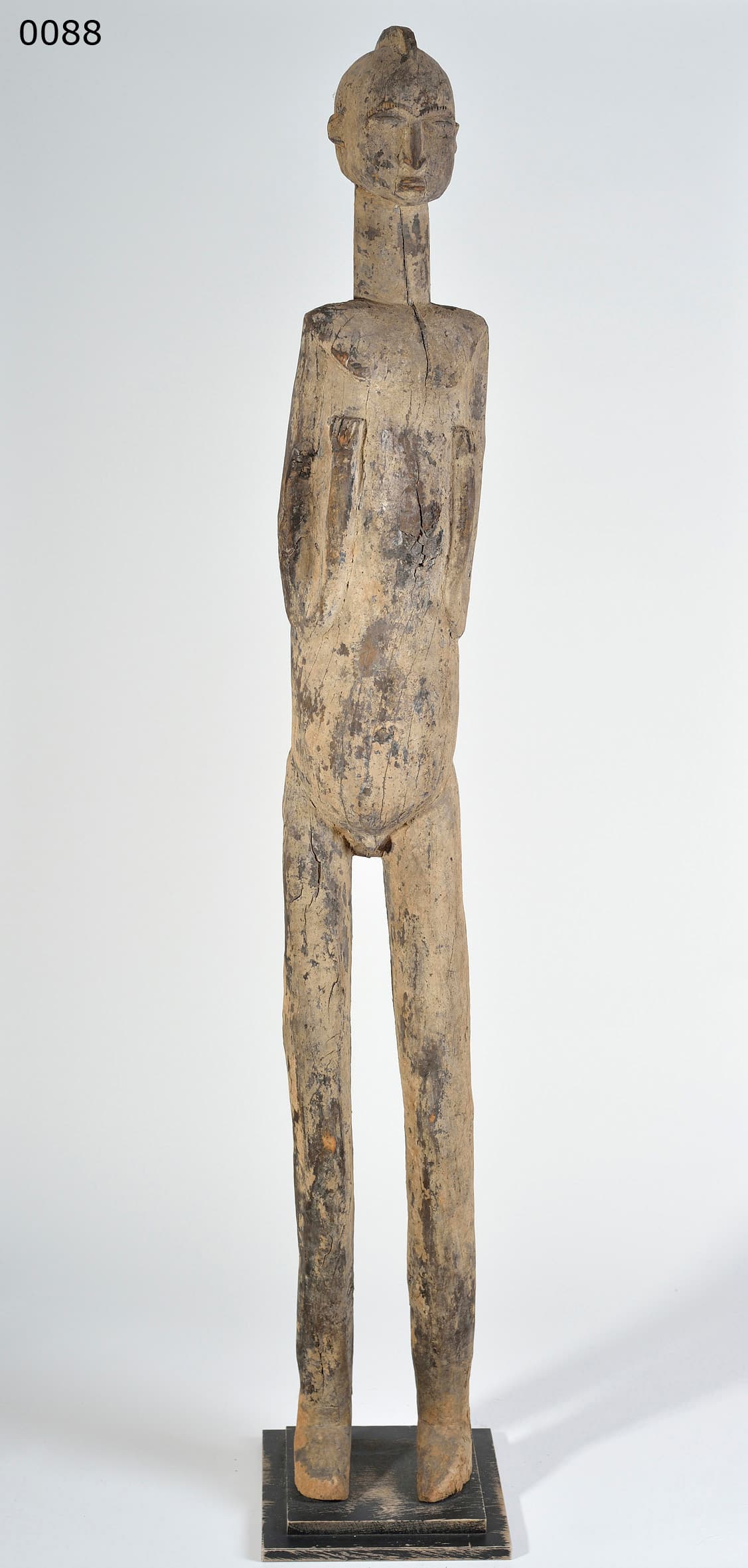
shrine figure representing a BATEBA spirit (unusually tall, rare)
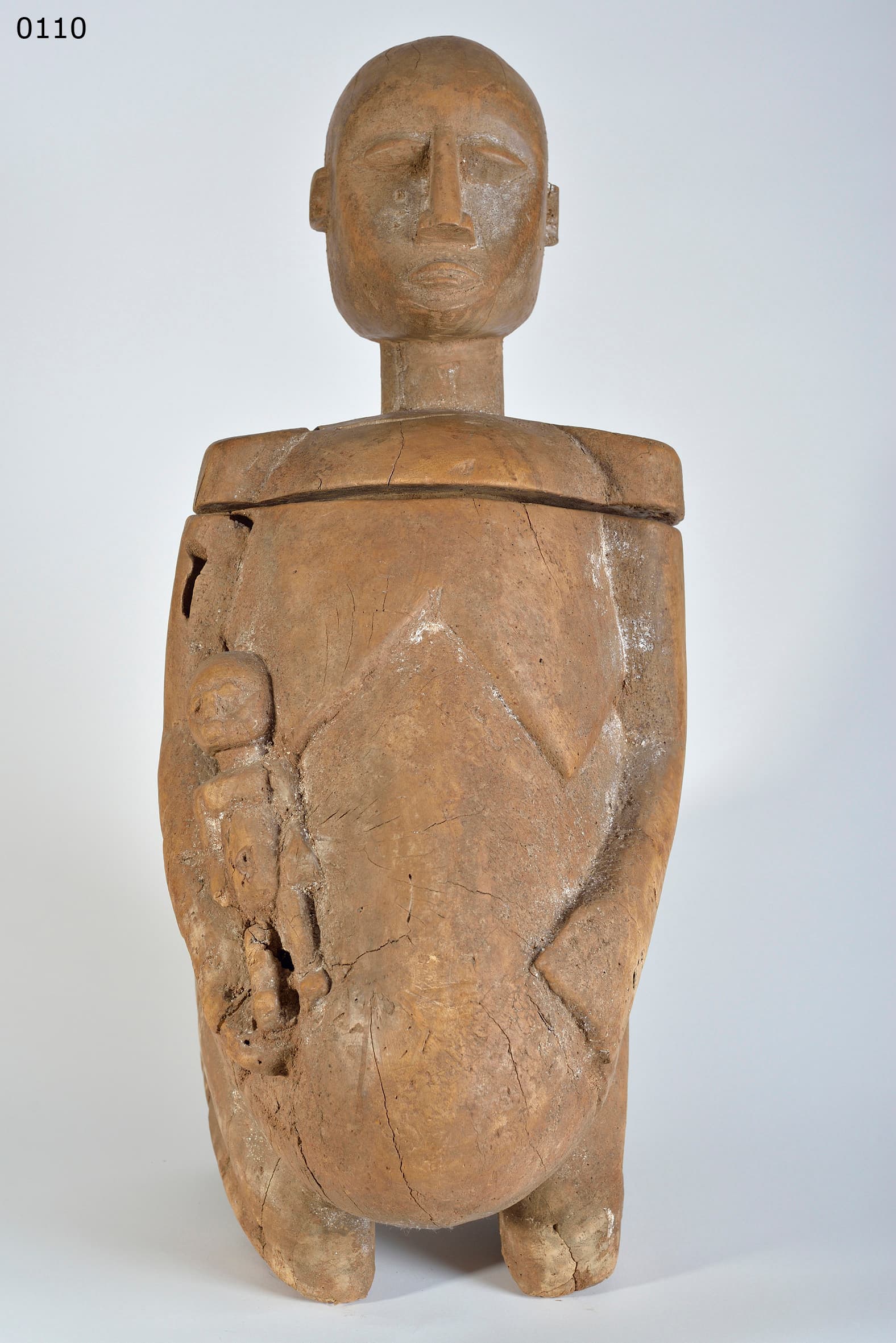
maternity shrine figure (container for magic ingredients and instruments - very rare)