A deeply patinated wooden figure (83 cm) from the Lobi of Burkina Faso, attributed to the 19th century — a mother holding a child on her hip, hollowed internally to serve as a concealed container for ritual ingredients and divinatory instruments.
1. The anomaly of the Lobi container
Lobi Bateba are almost universally carved from solid wood.
- Rare Anthropomorphic Box: A hidden seam across the shoulders separates the head-and-shoulder section from the torso, which opens as a lid.
- Diviner's Property: The hollow interior is designed to hold tiila medicines and divinatory tools associated with a ritual specialist.
2. The maternity motif
The exterior carving is functional, reinforcing the object's ritual purpose.
- Bateba ti Bala: Mother-and-child figures are carved specifically to intercede on behalf of women seeking fertility and to protect the lineage from infant mortality.
- Container as Womb: By making the container itself a mother, the carver visually maps the hidden medicines inside onto the literal life-giving womb of the figure.
3. Attributed 19th-century origin
The surface shows wear consistent with long shrine residence.
- Encrusted Patina: Dry, cracked wood with surfaces consistent with decades of millet-beer and ritual libations.
- Sanctuary Context: Traditionally kept inside the thilda of a diviner, serving a concealed ritual purpose under the guise of a standard mother-and-child figure.
Summary
This Lobi maternity container is a rare ethnographic object. It merges the protective, fertile symbolism of the mother with the secretive, utilitarian function of a medicine box, and is consistent with 19th-century examples of Voltaic ritual art.
Written with AI assistance from the collection appraisal, object photography and our own research; editorially reviewed. Mistakes are possible — corrections are welcome. How we work →
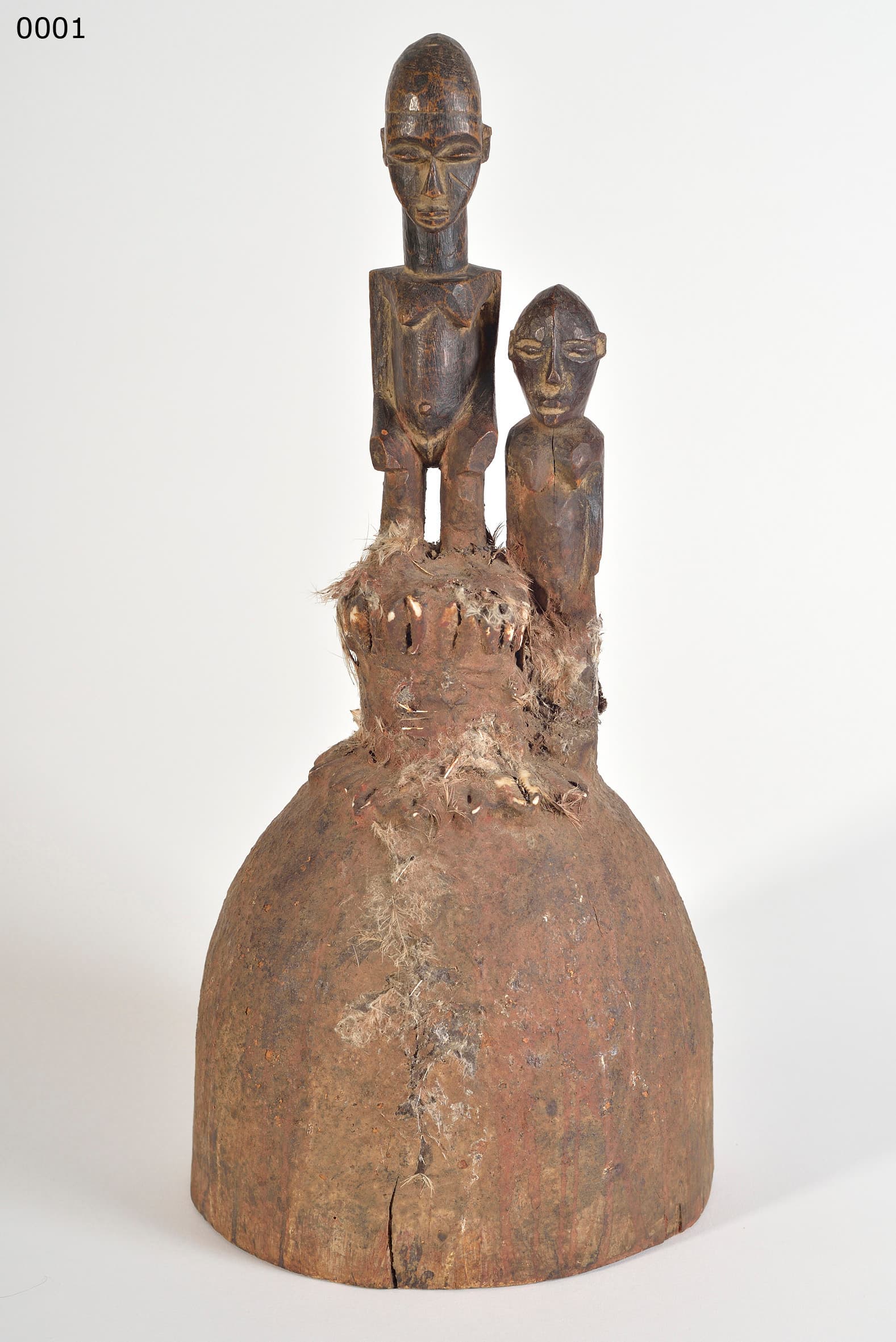
shrine altar with BATEKE couple
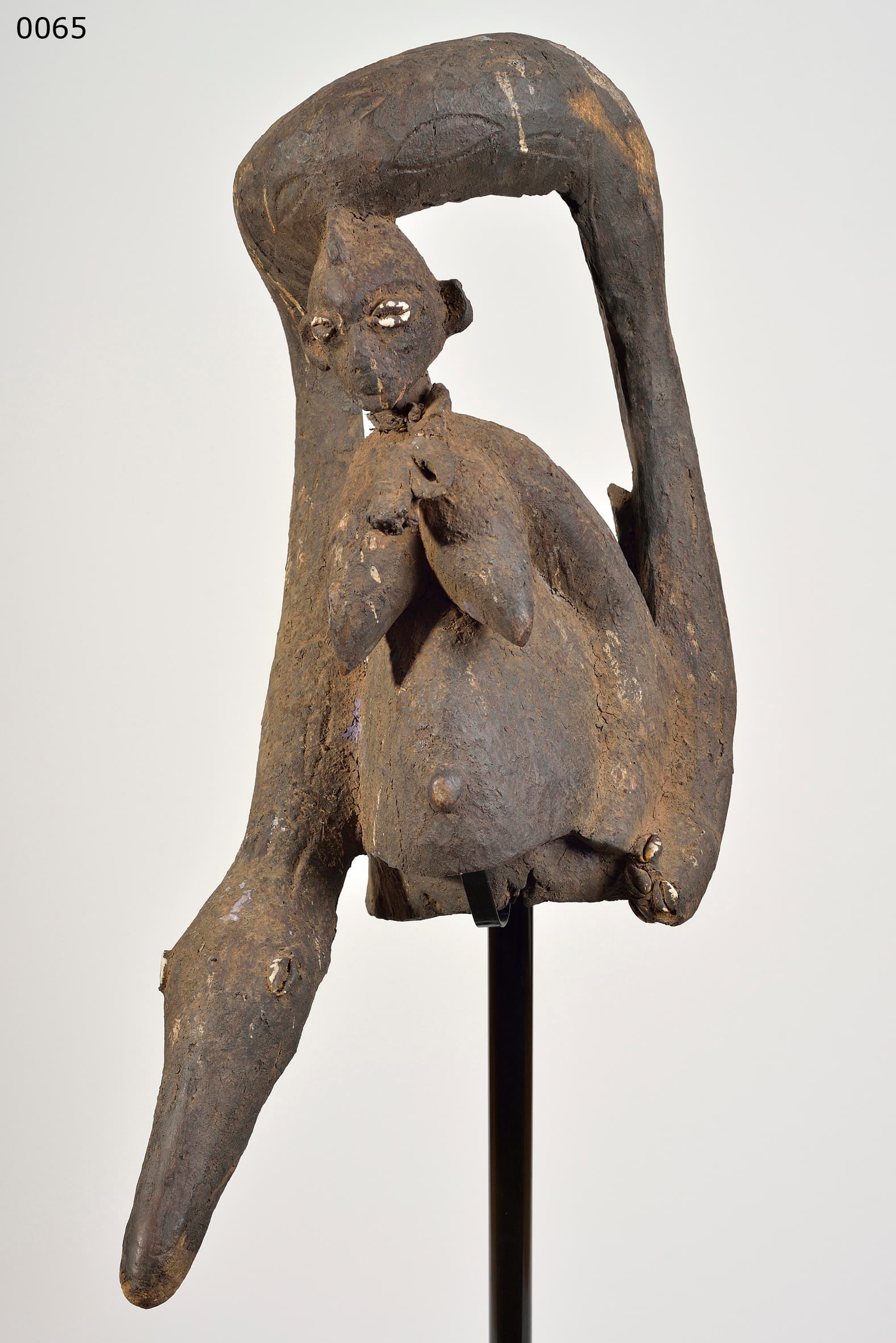
rare head crest mask
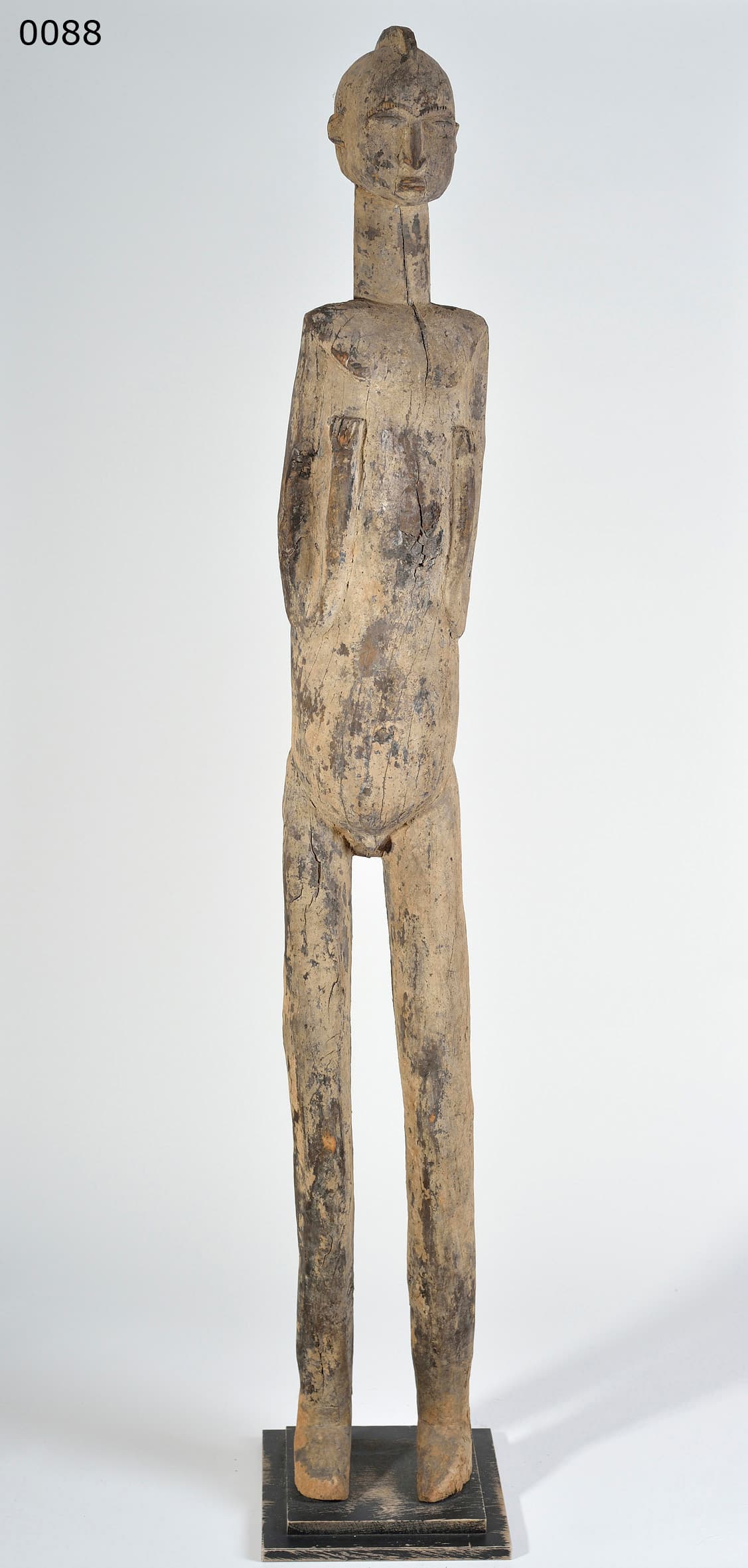
shrine figure representing a BATEBA spirit (unusually tall, rare)