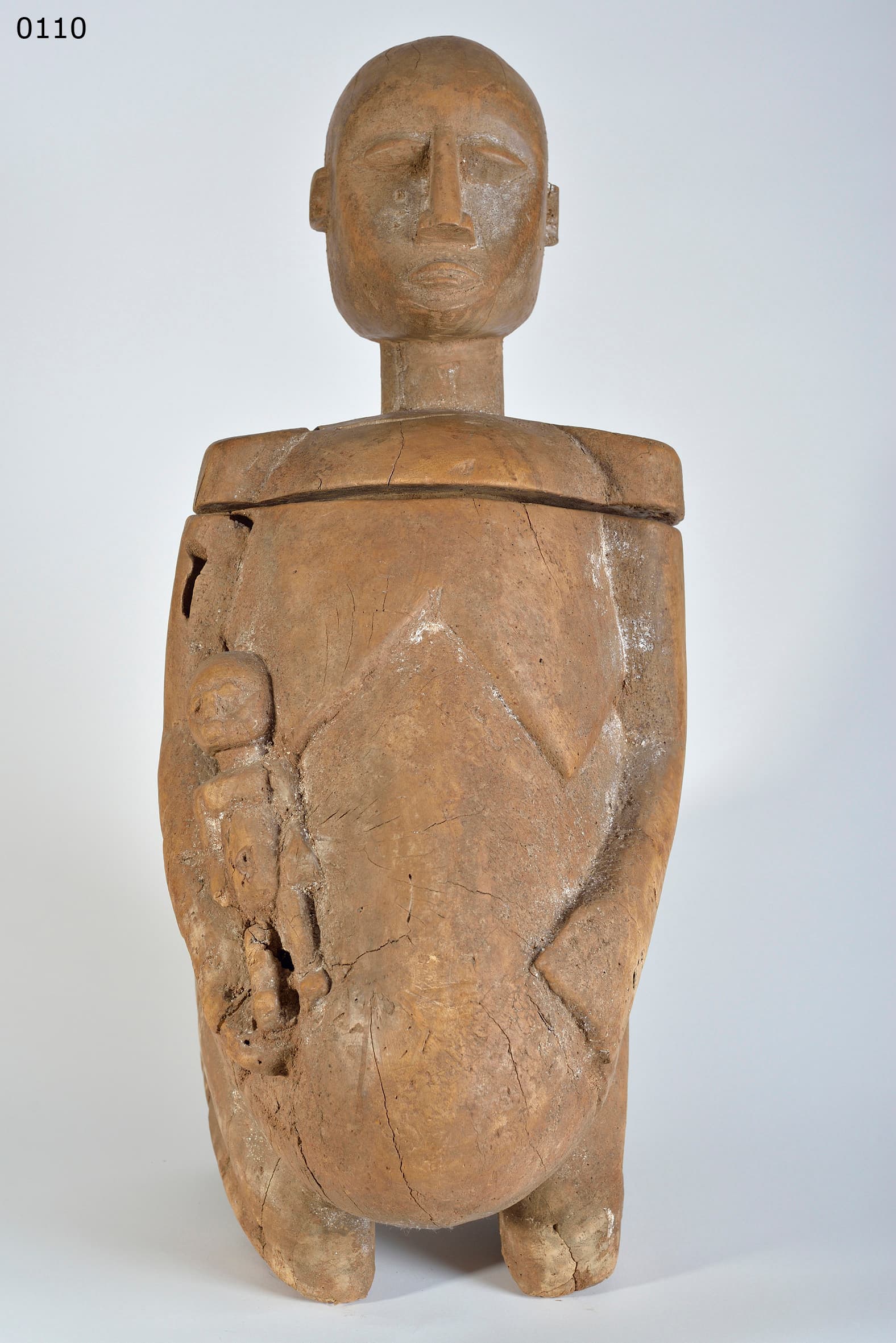
A deeply eroded wooden figure (99 cm) from the Lobi of Burkina Faso, attributed to the 19th century — one-legged and trunkless, the head and raised arms merging directly into a single post-like leg.
1. Bateba bambol (extraordinary beings)
While normal Lobi shrine figures (Bateba Phuwe) possess standard human anatomy, distorted figures belong to a highly powerful category.
- Commissioned by a Diviner: The Bateba Bambol is carved on explicit orders to combat extraordinary magical problems — severe witchcraft, taboo-breaking, or incurable epidemics.
- Distortion as Power: The physical anomaly is traditionally understood as a reflection of the figure's abnormal spiritual potency; the stranger the body, the greater the perceived occult range.
2. Prayer and grounding
The figure's posture encodes a double function.
- Arms to the Heavens: Raised arms are a classic Sahelian gesture (shared with Tellem and Dogon art), signaling a desperate plea for rain or divine intervention.
- Leg into the Earth: The singular post-like leg was likely designed to be driven into the soil of the shrine (thilda), physically rooting this charged spirit into the family's land.
3. Estimated 19th-century age
At nearly a meter tall, this is a substantial piece of Lobi statuary.
- Pre-Colonial Origin: The incredibly dry, cracked, eroded patina is consistent with a 19th-century origin.
- Sacrificial Context: It likely stood as an active shrine figure, absorbing libations and weathering as part of the family's ritual defense.
Summary
This "strange" Lobi Bateba is a significant example of Voltaic ritual art. Its anatomical distortion and raised-arm posture suggest a highly specific, charged object associated with addressing severe spiritual crises in 19th-century Burkina Faso.
Written with AI assistance from the collection appraisal, object photography and our own research; editorially reviewed. Mistakes are possible — corrections are welcome. How we work →
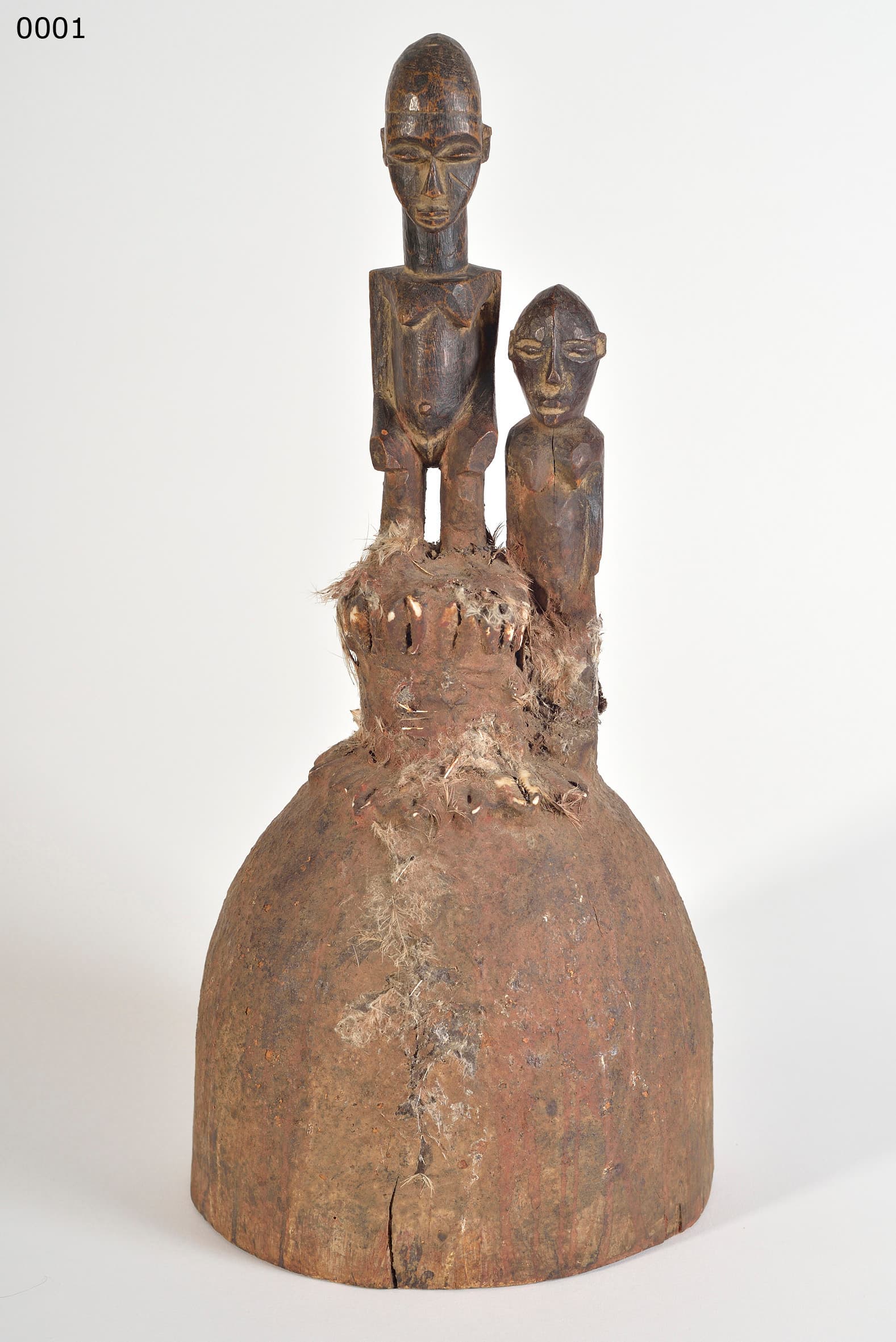
shrine altar with BATEKE couple
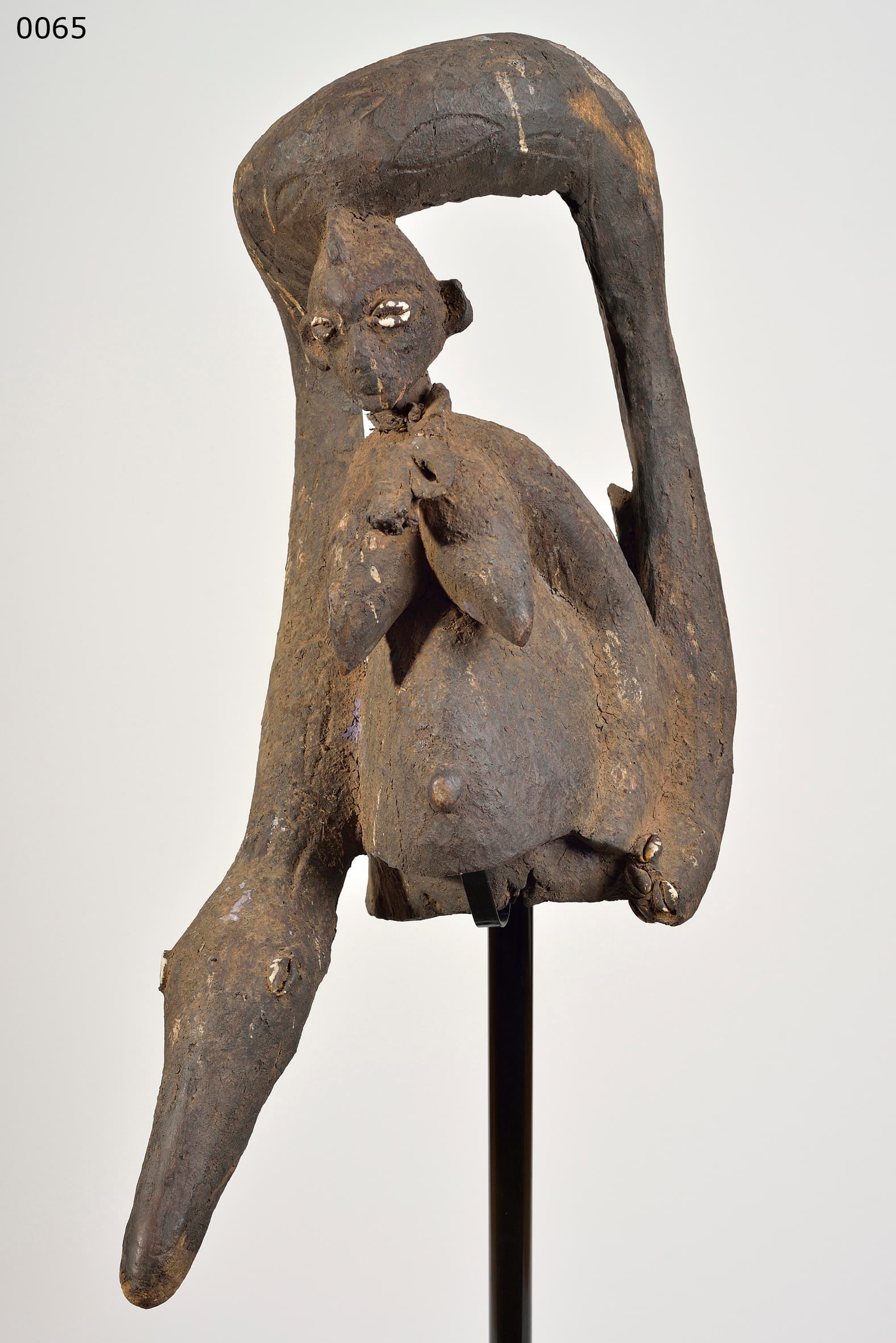
rare head crest mask
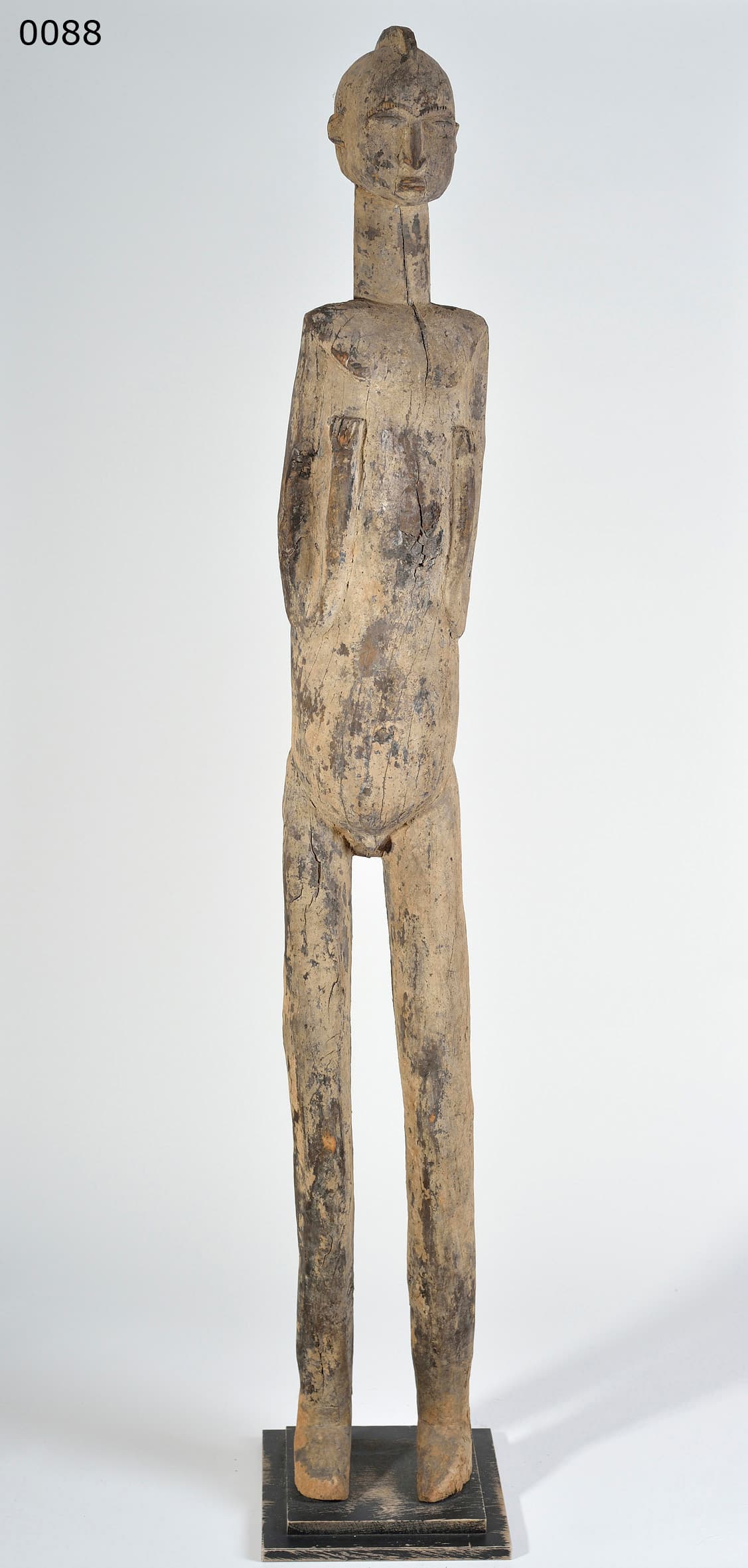
shrine figure representing a BATEBA spirit (unusually tall, rare)