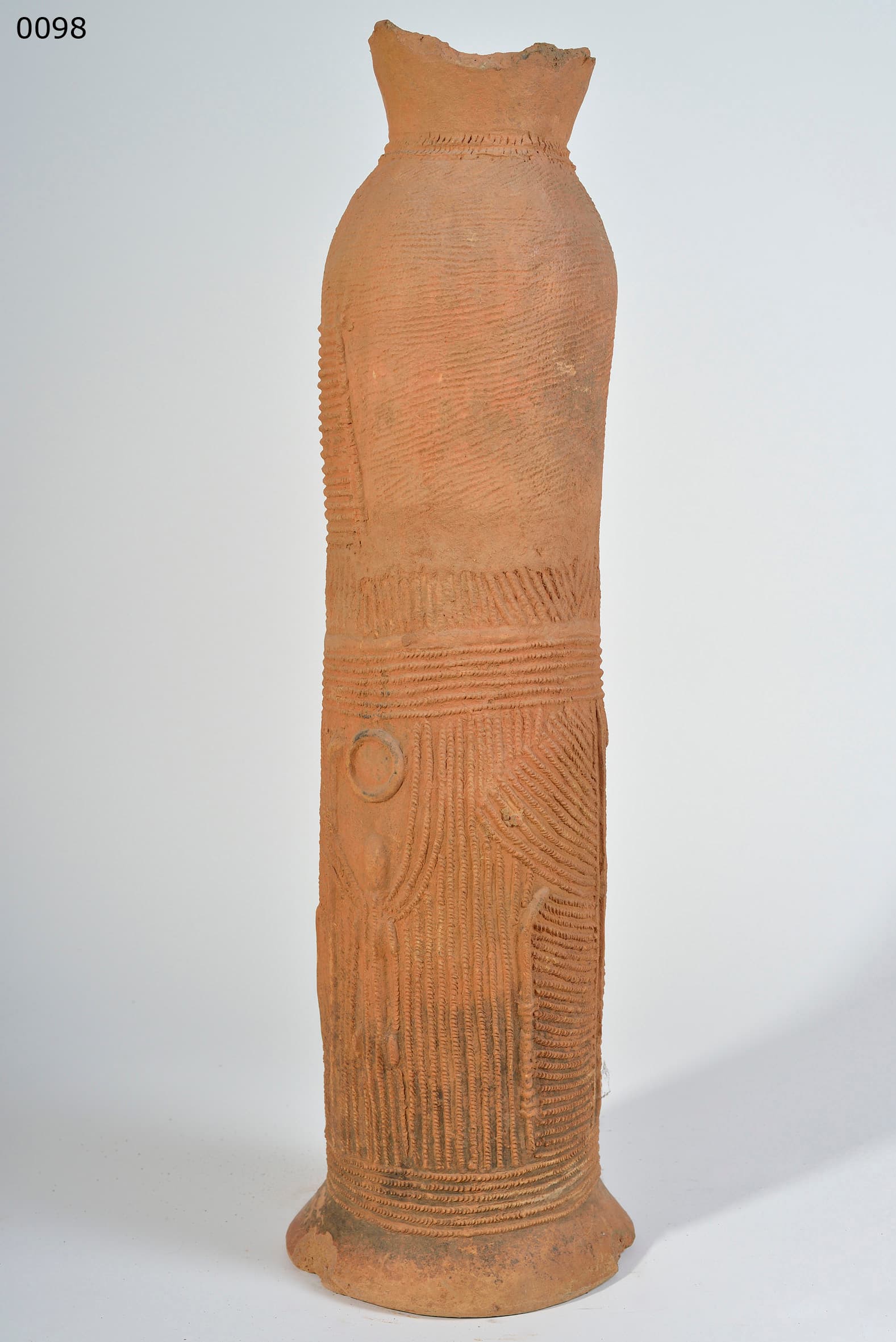
This is a highly significant archaeological object from the Bura culture (or Bura-Asinda-Sikka), which flourished in the lower Niger River valley of present-day Niger and Burkina Faso between the 3rd and 11th centuries CE.
While the previous stone figures (Nyonyosi) were made of laterite, this object belongs to a distinct Iron Age civilization discovered only recently in 1975.
1. Radical abstraction: The Bura aesthetic
The Bura people produced some of the most "modern-looking" ancient art in Africa. This figure is a prime example of their reductivist style:
- Geometric Form: The head is reduced to a flat, spade-like or oval slab. The central vertical ridge serves as a combined nose and forehead, while the two small circular protrusions represent eyes.
- The Columnar Base: The figure sits atop a thick, cylindrical neck or "shaft." This was functional: Bura figures were often designed to be planted directly into the earth or to serve as a "stopper" or "crest" for a large ceramic funerary urn.
- Materiality: These objects were typically made of low-fired terracotta (clay), though stone versions also exist. The rough, encrusted surface—often with patches of original earth still attached—is characteristic of objects excavated from the sandy Sahelian necropolises.
2. Funerary context: The necropolis
This is not a decorative statue, but a funerary marker.
- Burial Practice: The Bura practiced "secondary burials." They would first bury the body, then later exhume the bones (often just the skull) and place them inside large ceramic jars.
- The Guarding Spirit: These jars were then buried upside down in vast cemeteries. A figure like this one would be placed on the ground above the grave to mark the spot and act as a guardian for the deceased.
- The "Phallic" Connection: Many Bura tomb figures have a distinctly phallic silhouette. Scholars believe this was a symbolic reference to fertility and the "regeneration" of life, suggesting that death was seen as a transition rather than an end.
3. Historical significance
- Discovery: The Bura civilization remained unknown to history until a villager accidentally unearthed a terracotta head in 1975.
- Social Complexity: The existence of these massive necropolises (some containing over 600 jars) indicates a highly organized, wealthy, and complex society that controlled trade along the Niger River long before the rise of the great medieval West African empires like Mali or Songhai.
Summary
This Bura figure is a silent sentinel from a "lost" civilization. Its minimalist design—distilling the human face into its most basic geometric components—served as a bridge between the living community and the realm of the ancestors. It remains a powerful testament to the artistic innovation of the early Iron Age in the West African Sahel.
Written with AI assistance from the collection appraisal, object photography and our own research; editorially reviewed. Mistakes are possible — corrections are welcome. How we work →
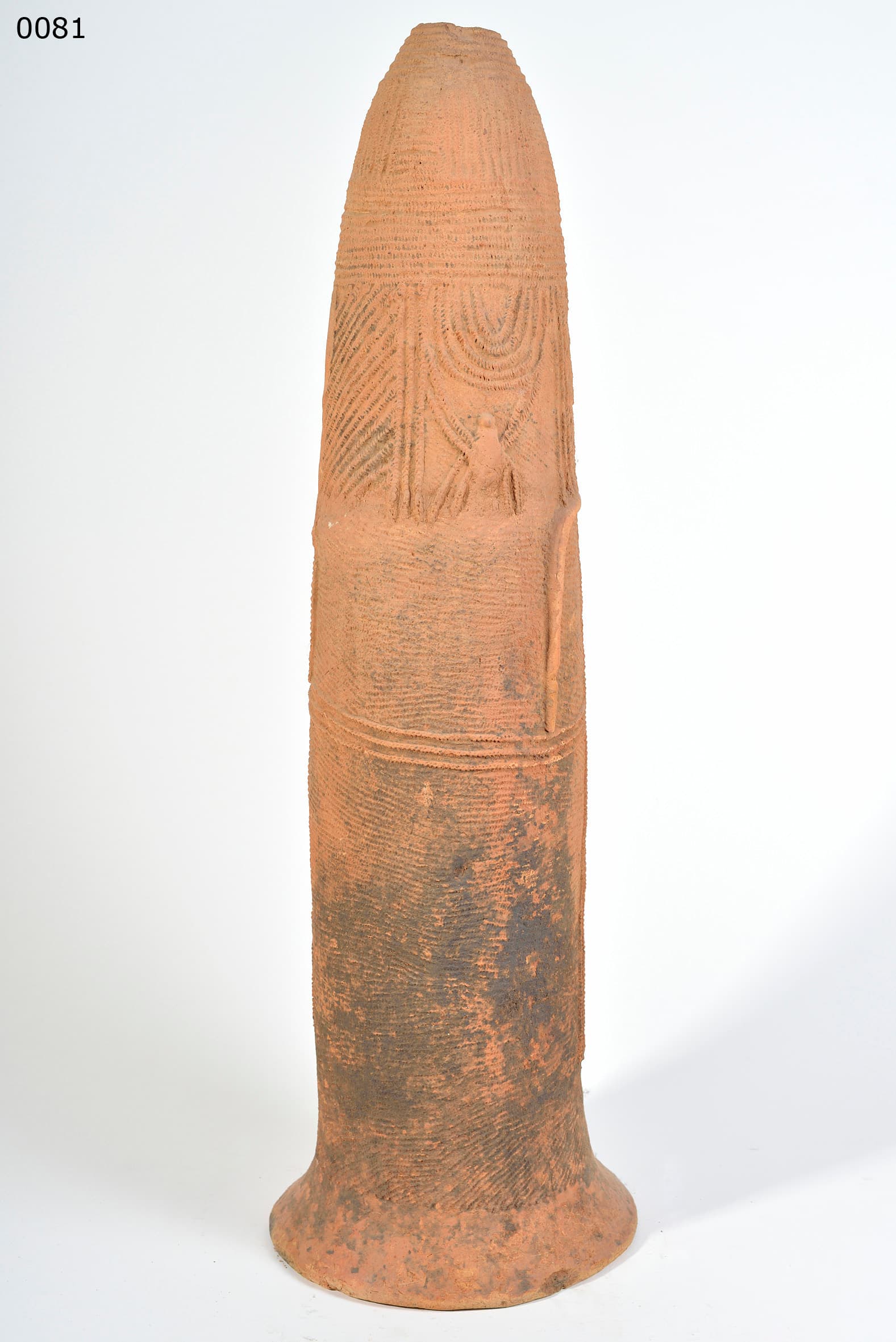
funerary phallic urn
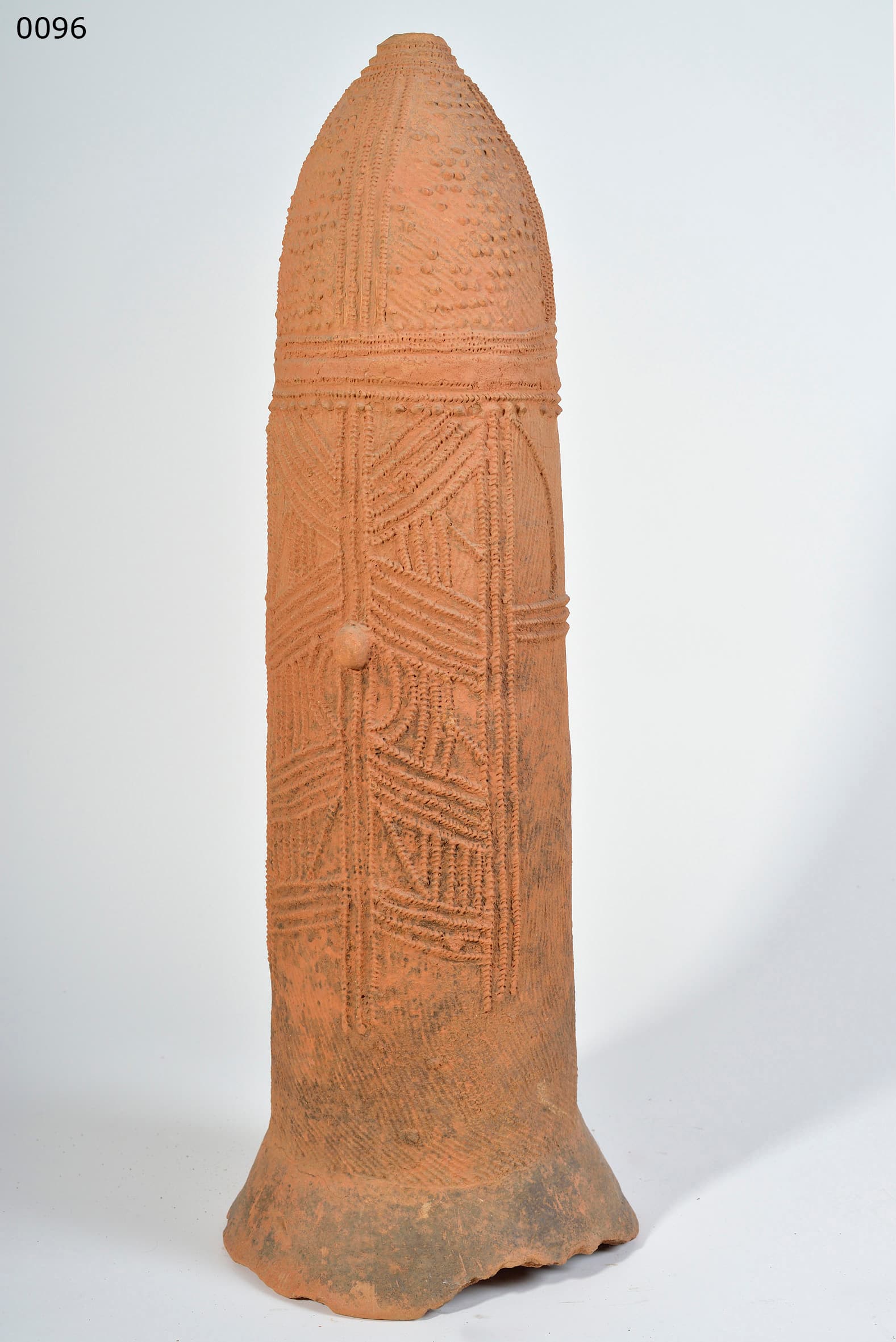
funerary phallic urn
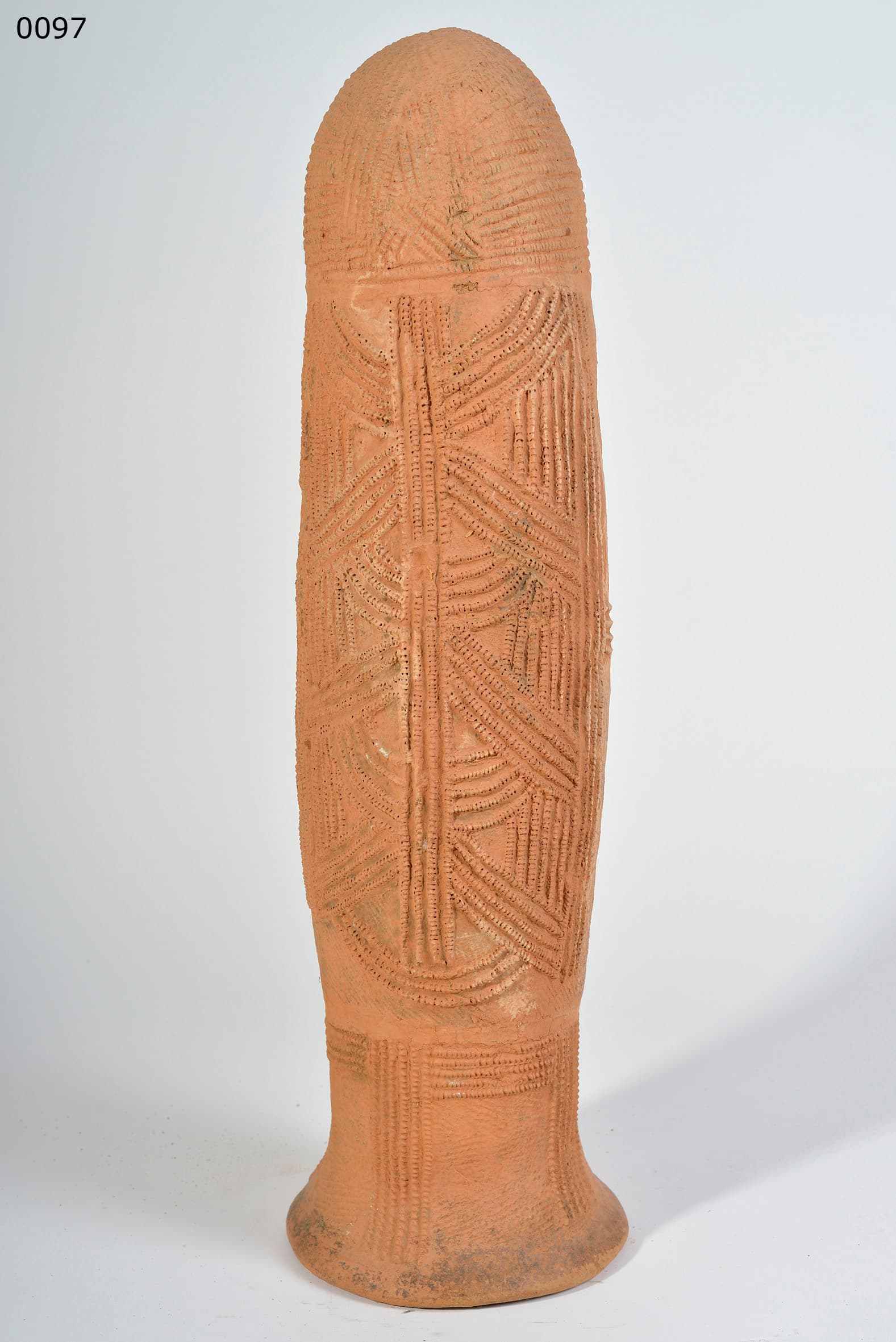
funerary phallic urn