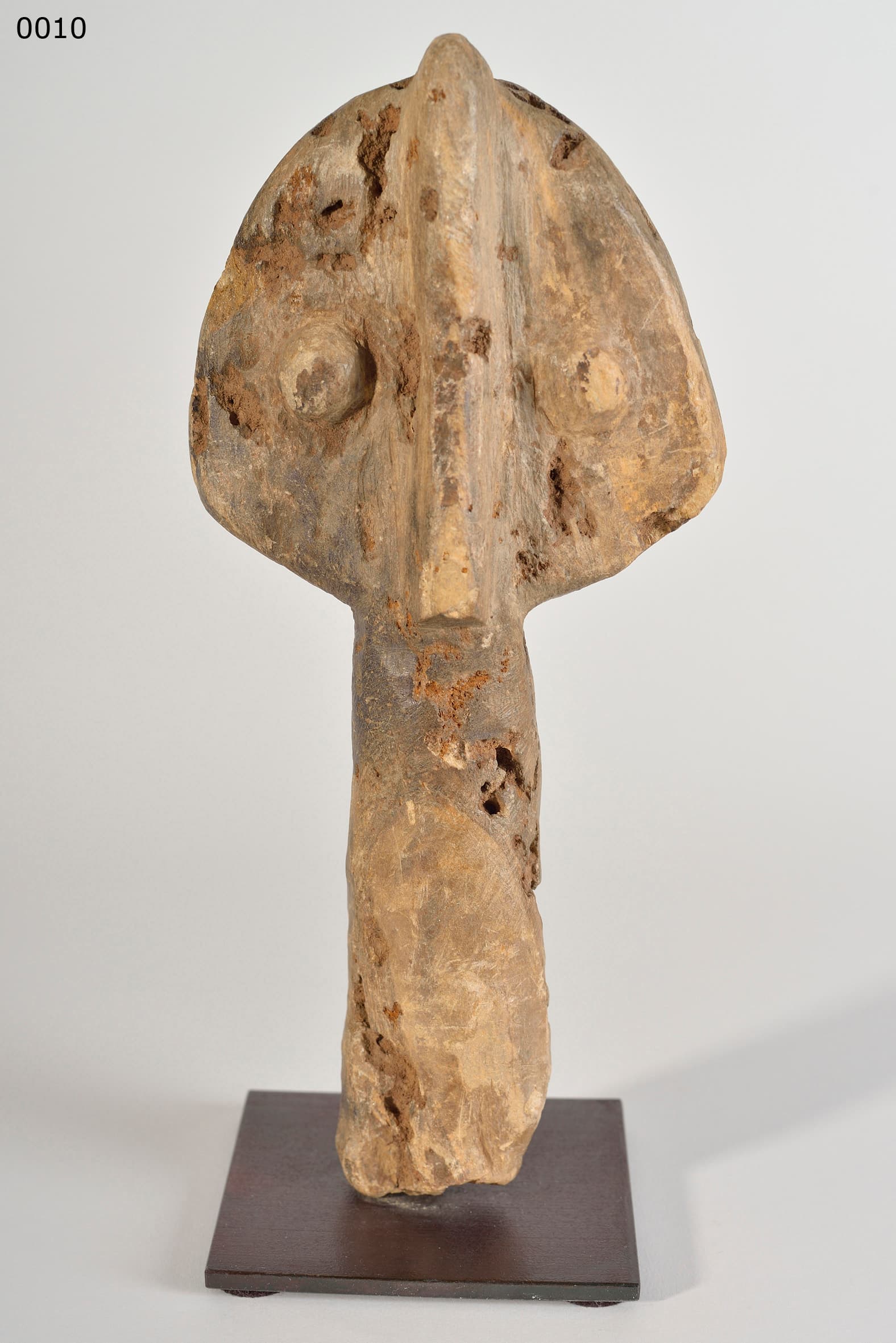
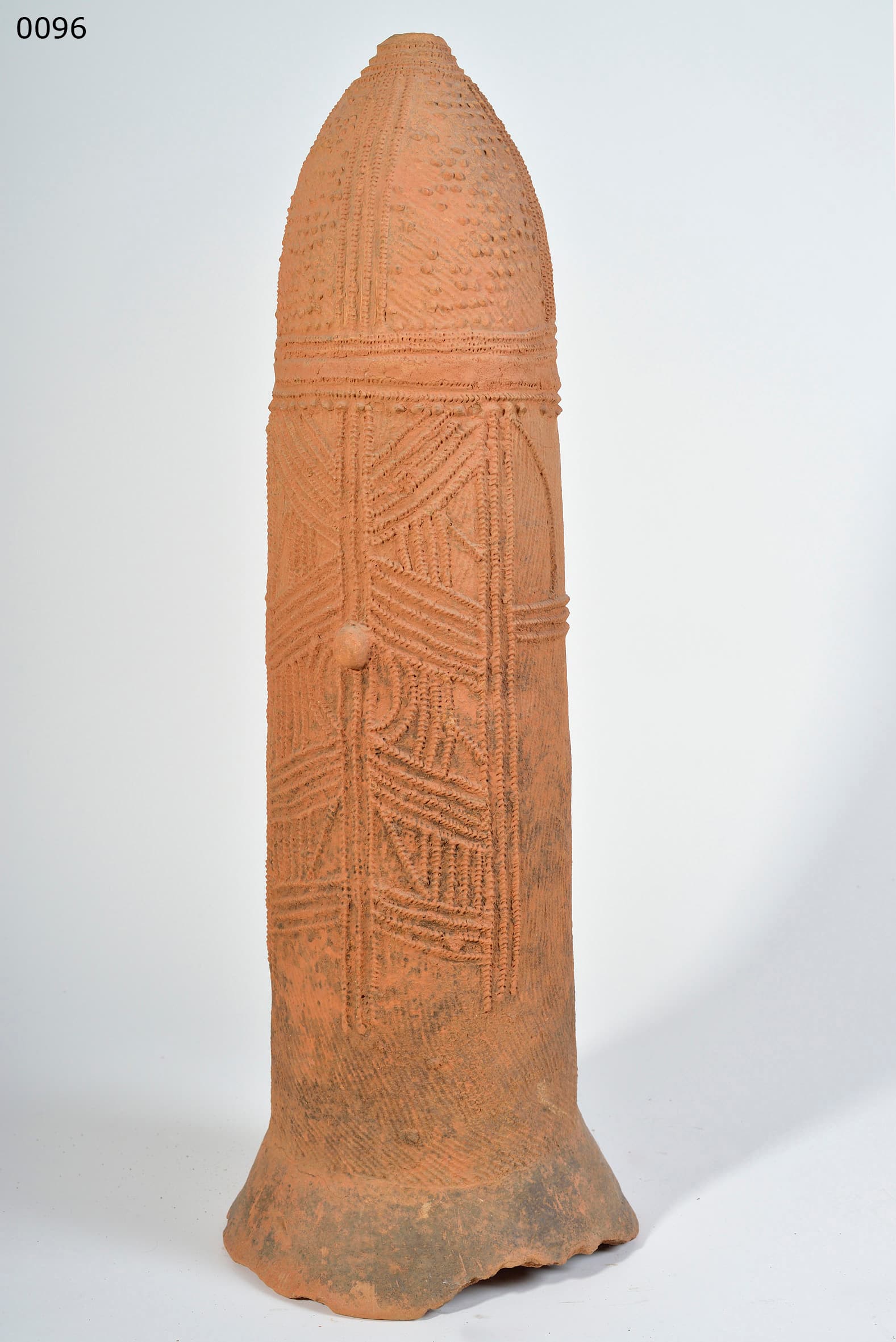
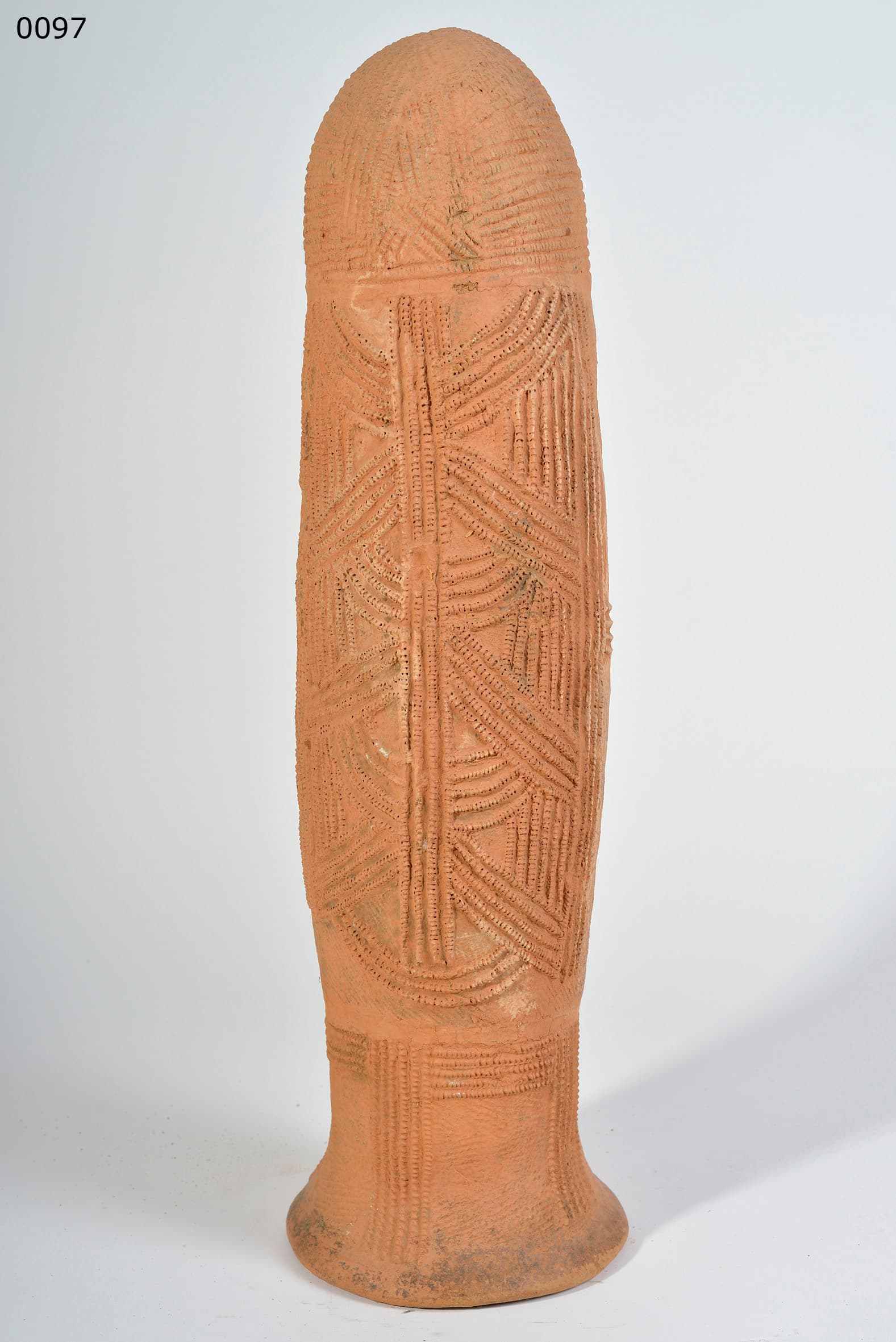
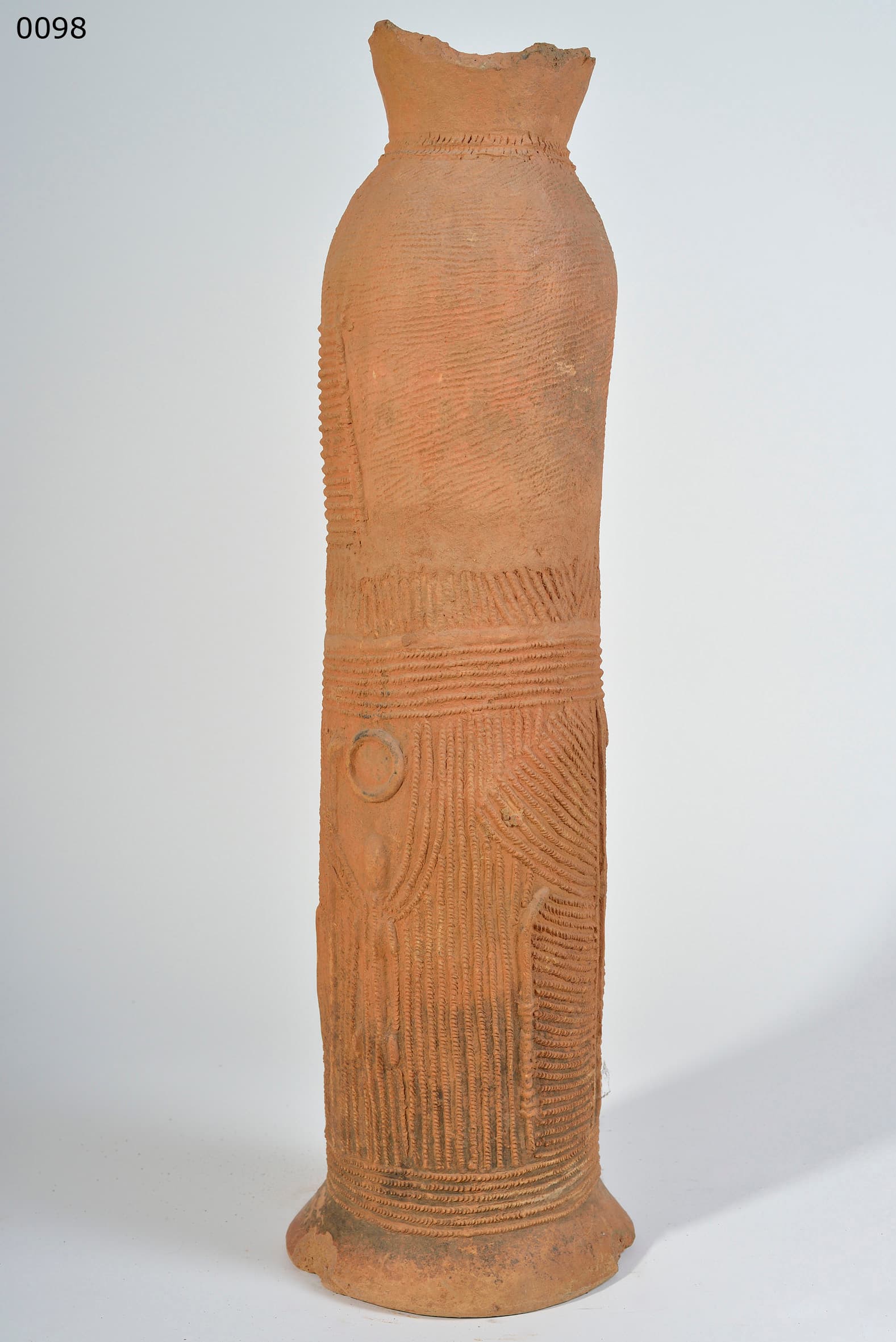
A massive bullet-shaped terracotta urn (3rd–11th C., 98 cm) from the Bura-Asinda-Sikka culture of the Niger/Burkina Faso border — densely covered in rouletted geometric patterns and concentric arches.
1. The ancient necropolis
The Bura produced some of the most striking ancient ceramics in West Africa. Unlike the earlier Bura terracotta head in the collection (Nr. 10), this is the actual funerary urn itself.
- Secondary Burial: The Bura practiced secondary burial. After the flesh decayed, the bones and skull of the deceased were placed inside these massive hollow terracotta tubes, which were then buried upright in vast, city-sized necropolises.
2. Phallic symbolism and rebirth
- The Shape of Life: The overt phallic shape is deliberate. In Bura cosmology, death was not an end but a transition. The phallic urn symbolizes ultimate fertility, regeneration, and the planting of the ancestor's "seed" back into the earth to bless the living community.
- Surface Textures: The intricate geometric grooves and lines (made by rolling braided cords over wet clay) mimic ancient textiles and scarification, marking the urn with the specific identity of the clan.
Summary
Standing nearly a meter tall, this ancient Bura urn is a spectacular archaeological monument — an eternal womb and tomb that blends the concepts of death and male fertility into a single, highly decorated terracotta pillar.
Written with AI assistance from the collection appraisal, object photography and our own research; editorially reviewed. Mistakes are possible — corrections are welcome. How we work →