A tall bronze throne from the Mayap chiefdom in the Sultanate of Foumban, built almost entirely from human figures: standing men carry the seat, and rows of attendants form its back. It measures about 135 cm in height.
1. Form and figures
The throne rises in several stages. A broad round base with an engraved rim carries a ring of standing male figures, and a second ring, joined by a banded hoop, supports the seat platform. The upper surface of the seat is engraved with a circular pattern. Behind and above it, the stepped back is again made of figures. In the lower register, men with raised arms hold up the tier above them, while tall female figures with carefully worked bodies and hairstyles stand at each end. In the upper tier a central figure in a rounded cap sits with knees apart, flanked by attendants who hold a drum and what appear to be wind instruments. A rail with zigzag engraving closes the top.
2. Surface
The bronze is dark brown to blackish, with greener tones in the recesses. Raised faces, limbs and the edge of the seat show a warmer, smoother sheen. Fine engraving marks garments, belts and bands on almost every figure.
3. Provenance
According to the collection catalogue, the Mayap chiefdom lies about 40 km north of Foumban and ranked among the more important chiefdoms of the sultanate. After a long history of conflict with the sultans, it was eventually subjected to them. The present chief, Homgoupayon, was installed by the government of Cameroon at about fourteen years of age and has reigned for more than fifty years. He sold a number of objects inherited from his father and grandfather, among them this throne, described as the pride of the chiefdom. As he commissioned no bronze objects himself, the catalogue concludes that the throne comes from his father or grandfather.
Summary
A figure-built bronze throne from the Mayap chiefdom, once the pride of the chiefdom and sold by its present chief.
Written with AI assistance from the collection appraisal, object photography and our own research; editorially reviewed. Mistakes are possible — corrections are welcome. How we work →
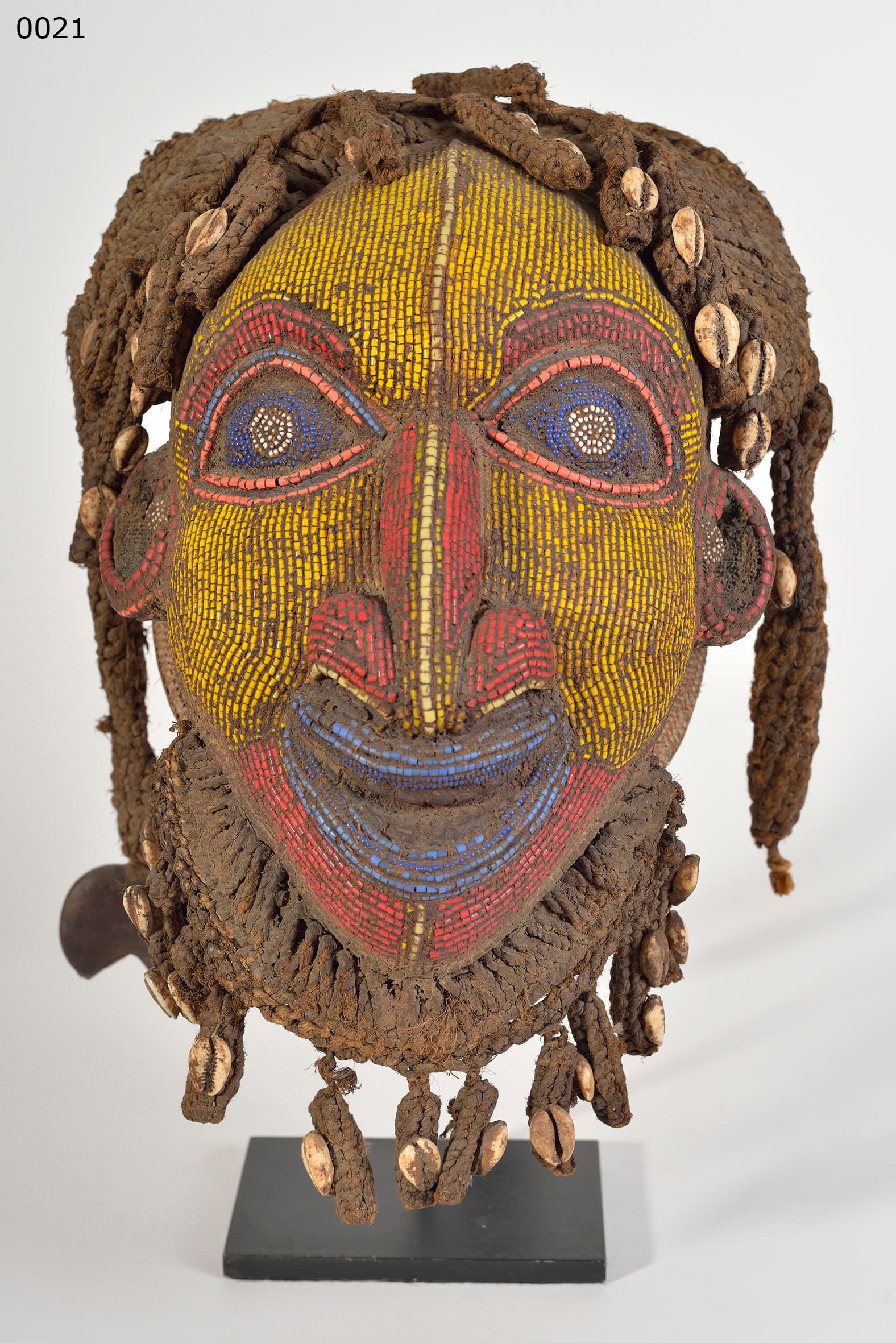
mask (covered with beads - shells on cloth)
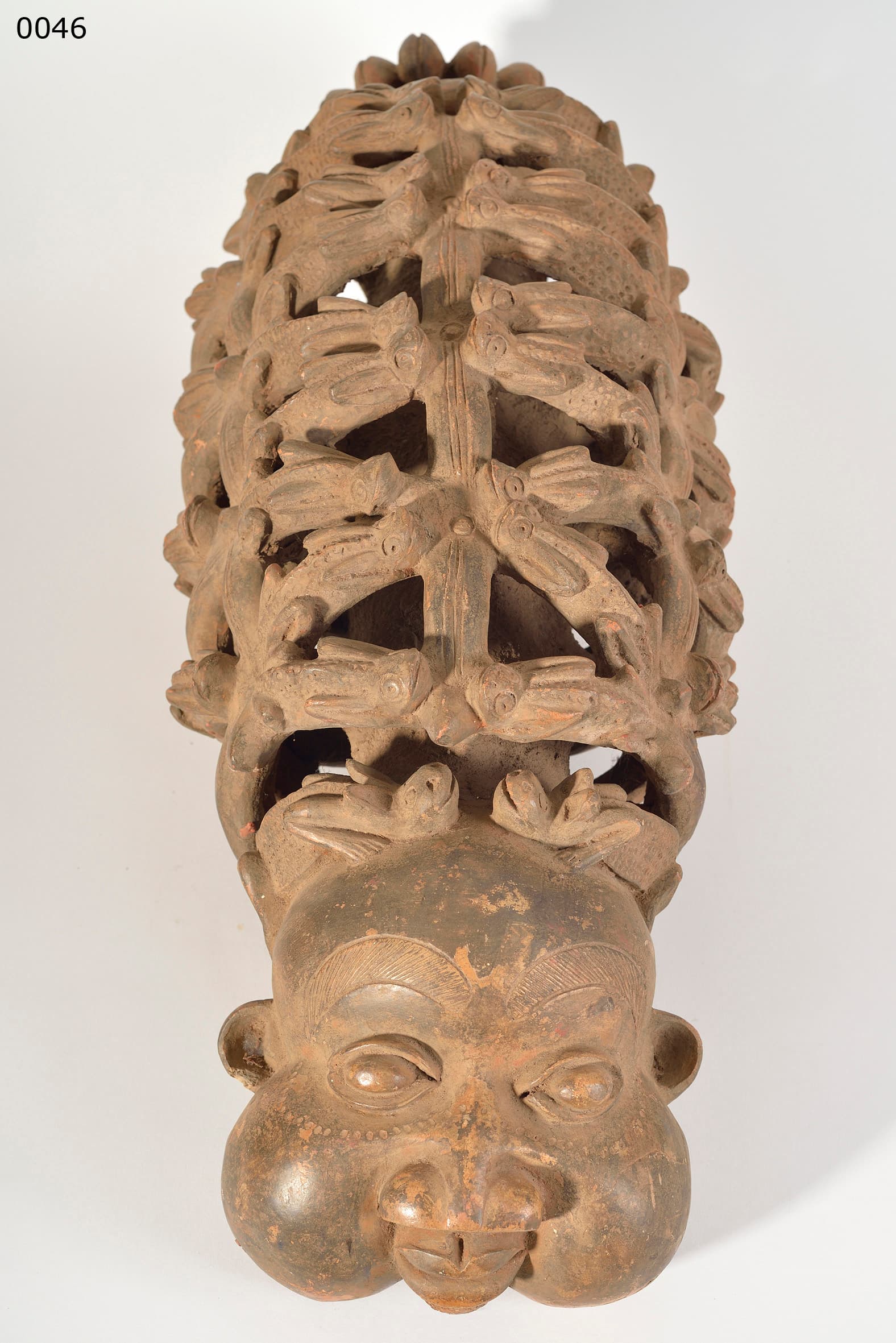
prestige pipe head
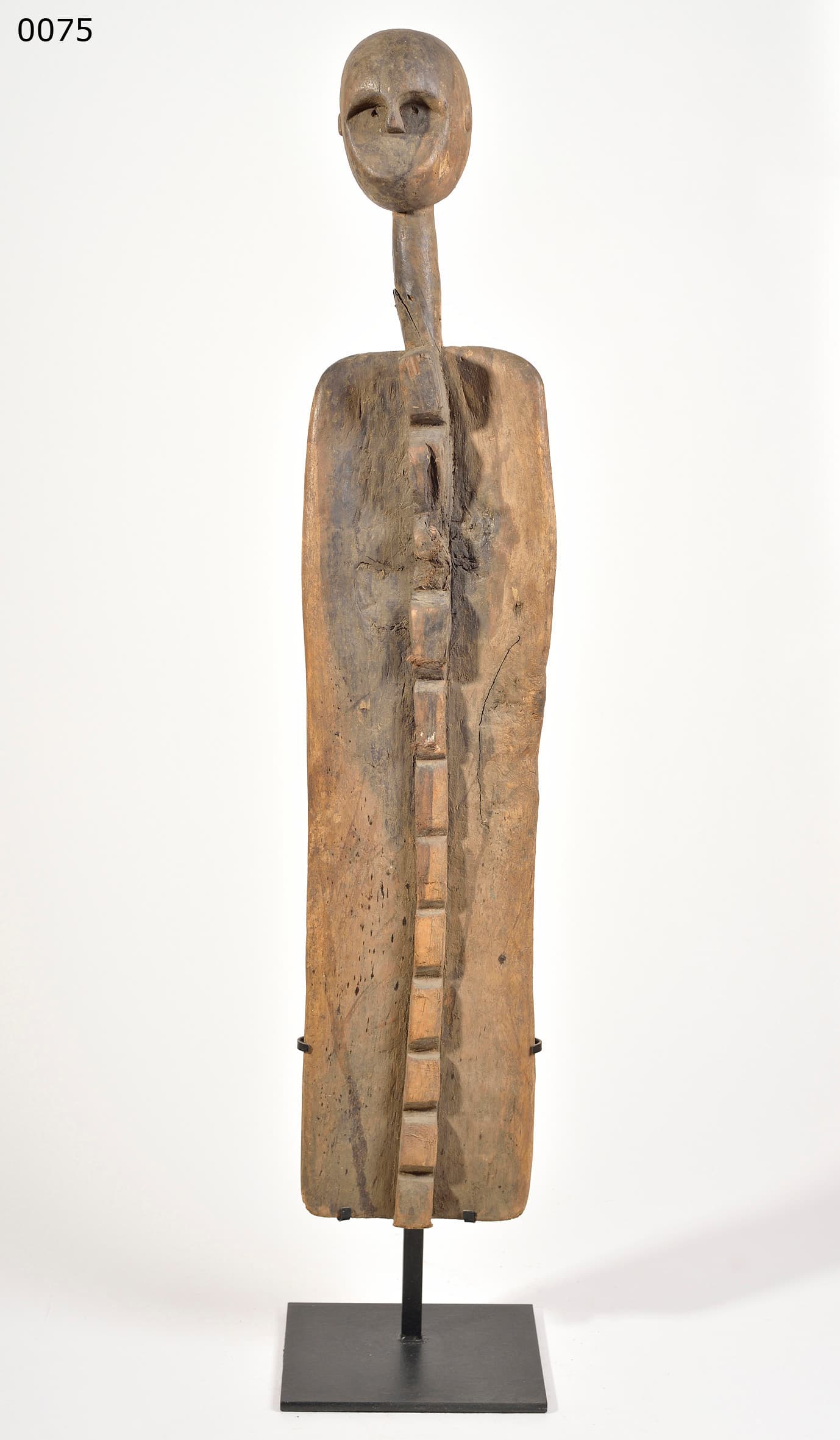
rare friction instrument