A massive, extremely intricate terracotta pipe bowl (late 19th to mid-20th C., 79 cm) from the Bamun Kingdom in the Cameroon Grassfields — a central face with puffed cheeks surmounted by a complex openwork lattice of stylized frogs (traditionally often interpreted as spiders) and human figures.
1. Courtly leisure and monumental scale
In the Grassfields, smoking tobacco was a highly ritualized sign of extreme prestige.
- The Impractical Size: At 79 cm, this pipe bowl is far too massive and heavy for practical everyday use. It is a "state pipe," brought out exclusively during major royal festivals.
- Servant and King: A servant would have to hold the heavy clay bowl while the King (Fon) smoked from an attached long wooden stem.
2. Technical virtuosity
The Bamun were master potters.
- Fire Mastery: Firing a piece of this size, with its complex multi-tiered openwork carving, required immense technical skill. If the clay was too thick or the fire too hot the piece would shatter in the kiln.
- An Artisan's Proof: Its successful creation is a testament to the mastery of earth and fire achieved by the great Foumban workshops. The irregular, deeply penetrated dark patina and authentic wear marks on the raised facial features, where the reddish clay shines through, indicate prolonged representational use. These organically grown signs of age strongly support an earlier dating to the late 19th to mid-20th century.
3. Iconography of power
- The Zoomorphic Motif: The openwork lattice in masterful ajour technique incorporates a dense network of stylized frogs or toads (often also interpreted as earth spiders) — central symbols of fertility, transformation, and connection to the ancestors in Bamun cosmology.
- The Swollen Face: The main bowl features the classic Grassfields face with enormously puffed cheeks, almond-shaped eyes, and finely hatched eyebrows, representing the King's vital "breath of life," royal presence, and unyielding prosperity.
Summary
This prestige pipe is a monument to aristocratic excess and sculptural mastery. A clay crown disguised as a smoking implement, whose convincing signs of age broadcast the unrivaled wealth and power of the Bamun King across generations.
Written with AI assistance from the collection appraisal, object photography and our own research; editorially reviewed. Mistakes are possible — corrections are welcome. How we work →
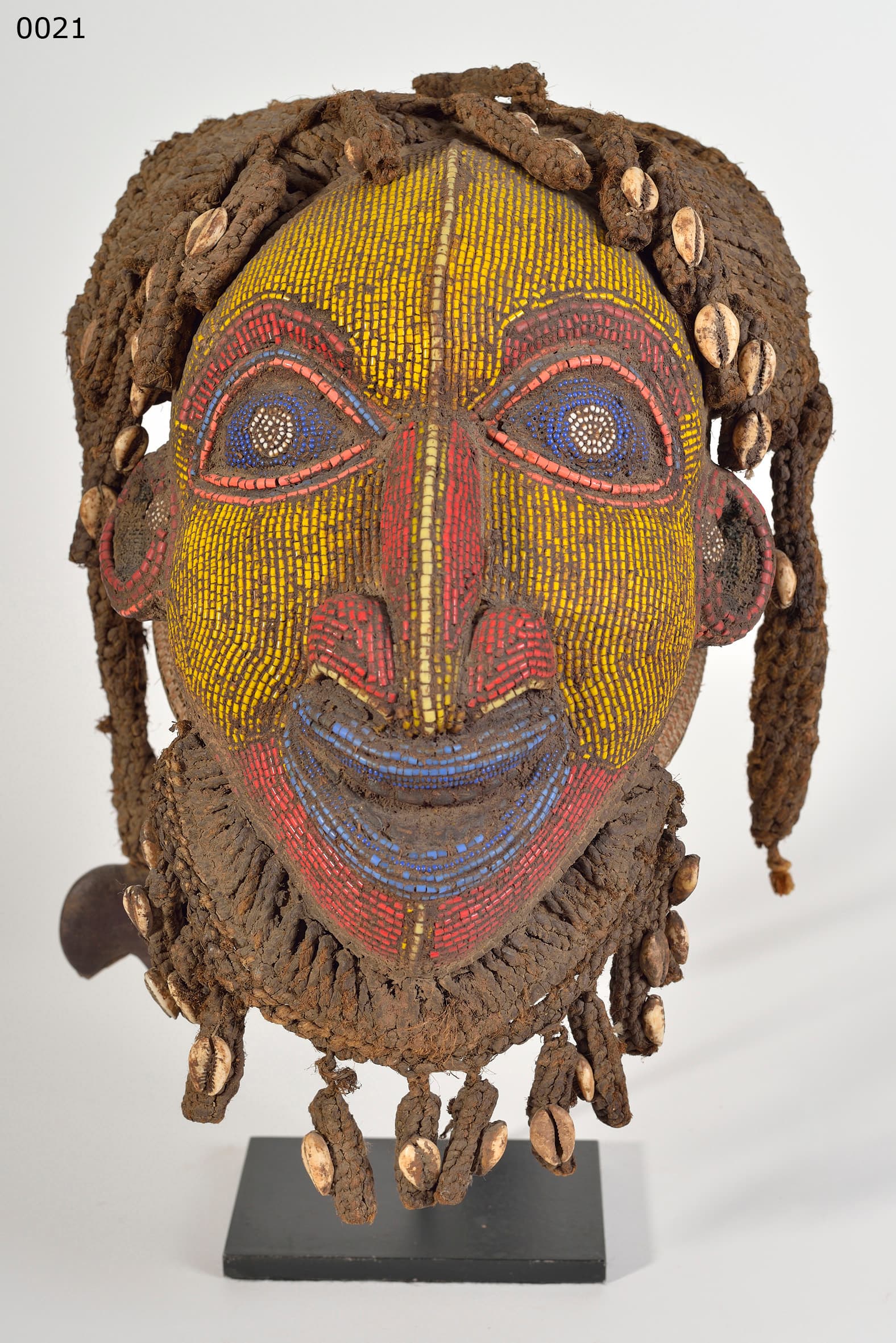
mask (covered with beads - shells on cloth)
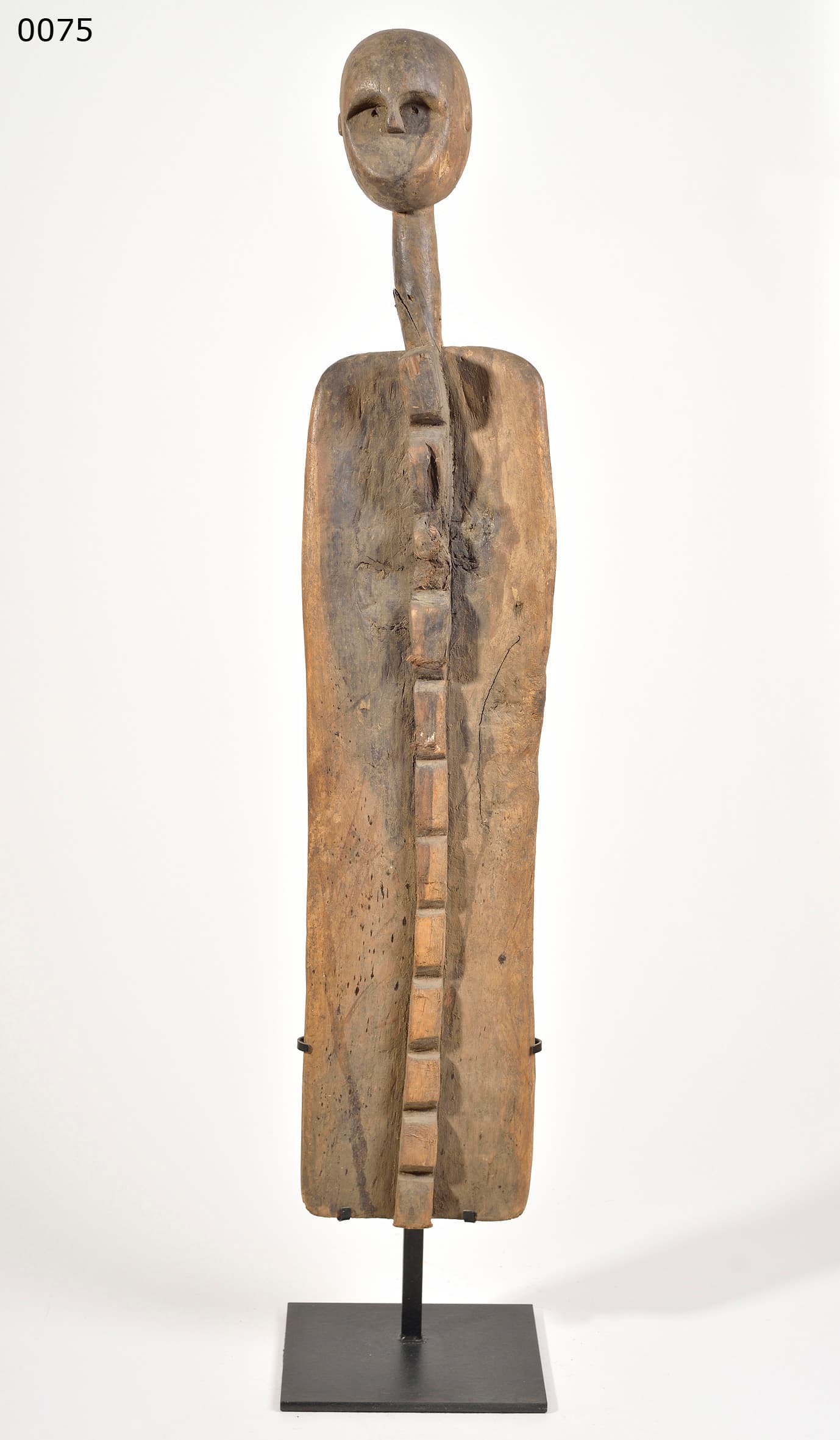
rare friction instrument
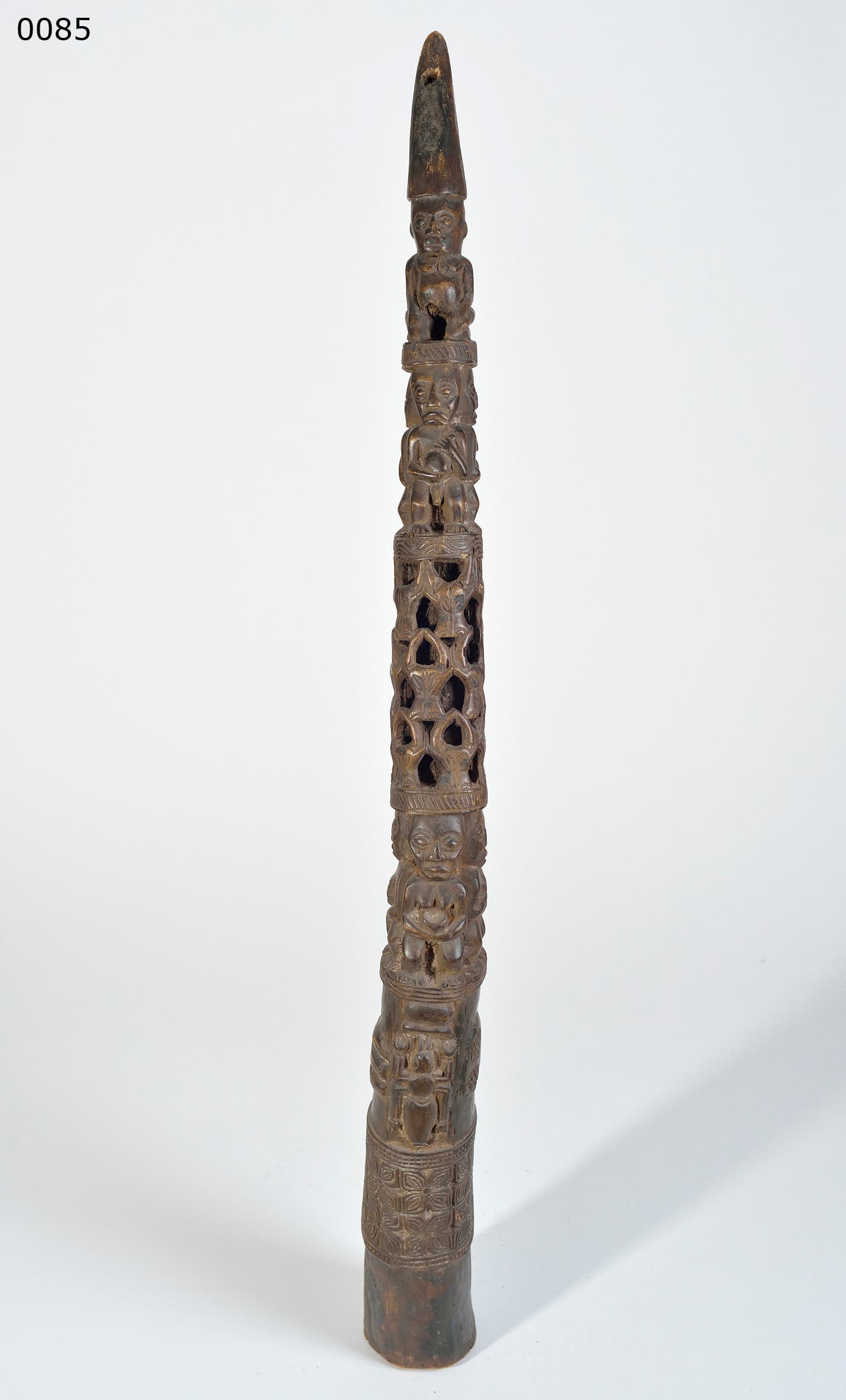
prestige trumpet