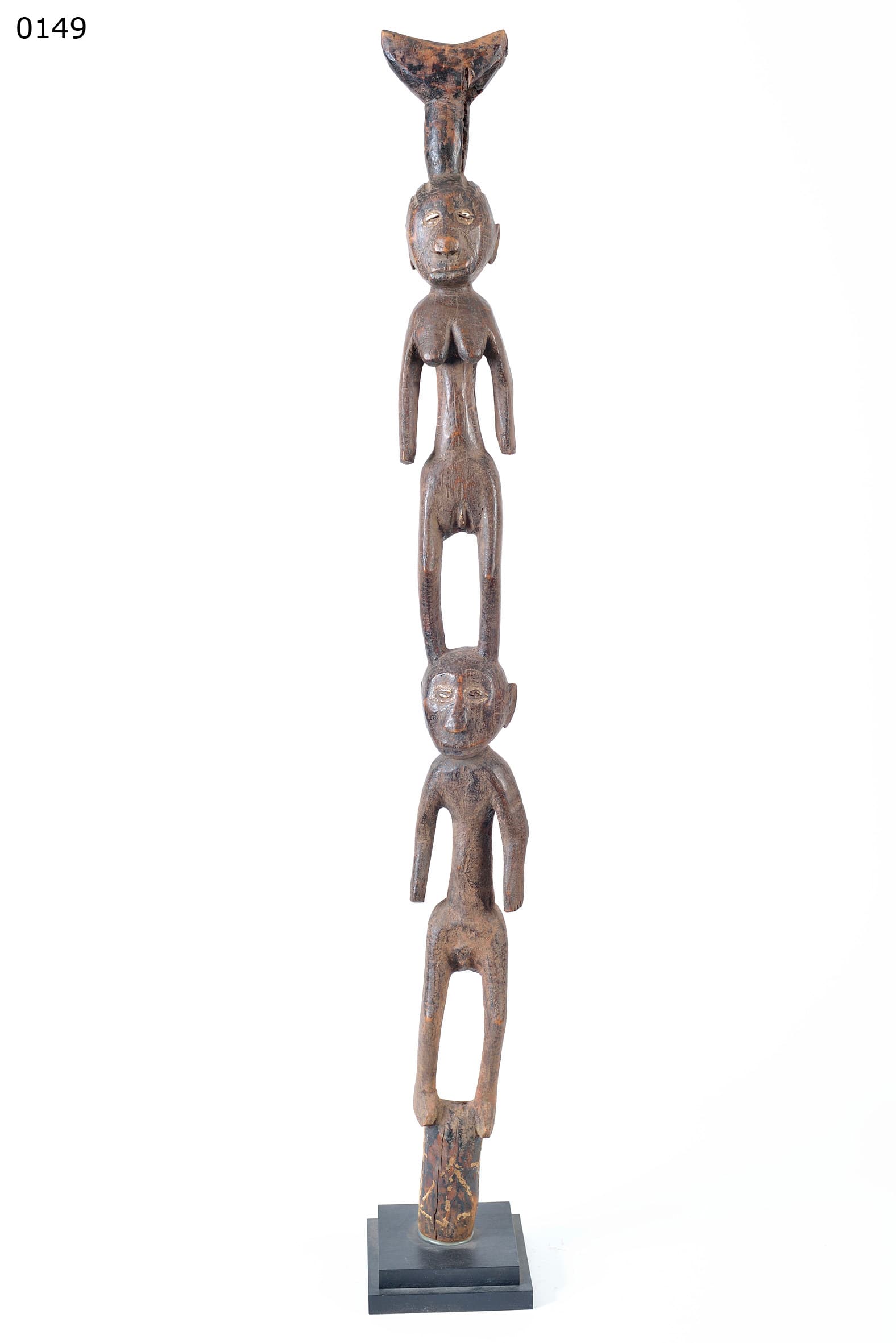
A long thick piece of carved wood (19th–20th century, 108 cm) from the Bamun Kingdom in the Cameroon Grassfields — a series of deep horizontal notches along its central ridge, terminating in a stylized smooth face or handle. The wood surface exhibits a deep, dry age patina with distinct oxidation marks and profound vertical drying cracks, indicating long ritual use and considerable age.
1. The court orchestra
The Bamun Kingdom was famous for its massive palace orchestras, which combined drums, ivory trumpets, iron gongs, and highly specialized idiophones like this one.
- The Rasp/Scraper: This is a friction instrument. A musician would rapidly scrape a stiff stick or bone up and down the deep notches, producing a loud, rhythmic, grating sound. The heavily rubbed edges of these horizontal notches bear physical witness to decades of repetitive mechanical friction, physically manifesting the object's functional purpose.
- Regulating the Festival: The sound was used to regulate the tempo of royal dances and to create a terrifying, unearthly acoustic environment announcing the arrival of masked spirits or the King (Fon) himself.
2. Sculptural utility
Like all Grassfields royal objects, utility is combined with art. The carving features a stylized head — likely representing a captured enemy or a bush spirit. This minimalist, almost skeleton-like head, with its deep-set, shadowy eye sockets and highly reduced physiognomy, deviates significantly from the expressive, voluminous court art that flourished in Foumban in the early 20th century. This formal strictness suggests a very early creation period in the 19th century or a more rural, peripheral context, indicating that even the highly sacred musical instruments of the court were imbued with supernatural and political dominance.
Summary
This Bamun friction instrument is a rare acoustic artifact. At over a meter long, it sits at the intersection of music, sculpture, and political theater at the height of the Cameroon Grassfields kingdoms.
Written with AI assistance from the collection appraisal, object photography and our own research; editorially reviewed. Mistakes are possible — corrections are welcome. How we work →
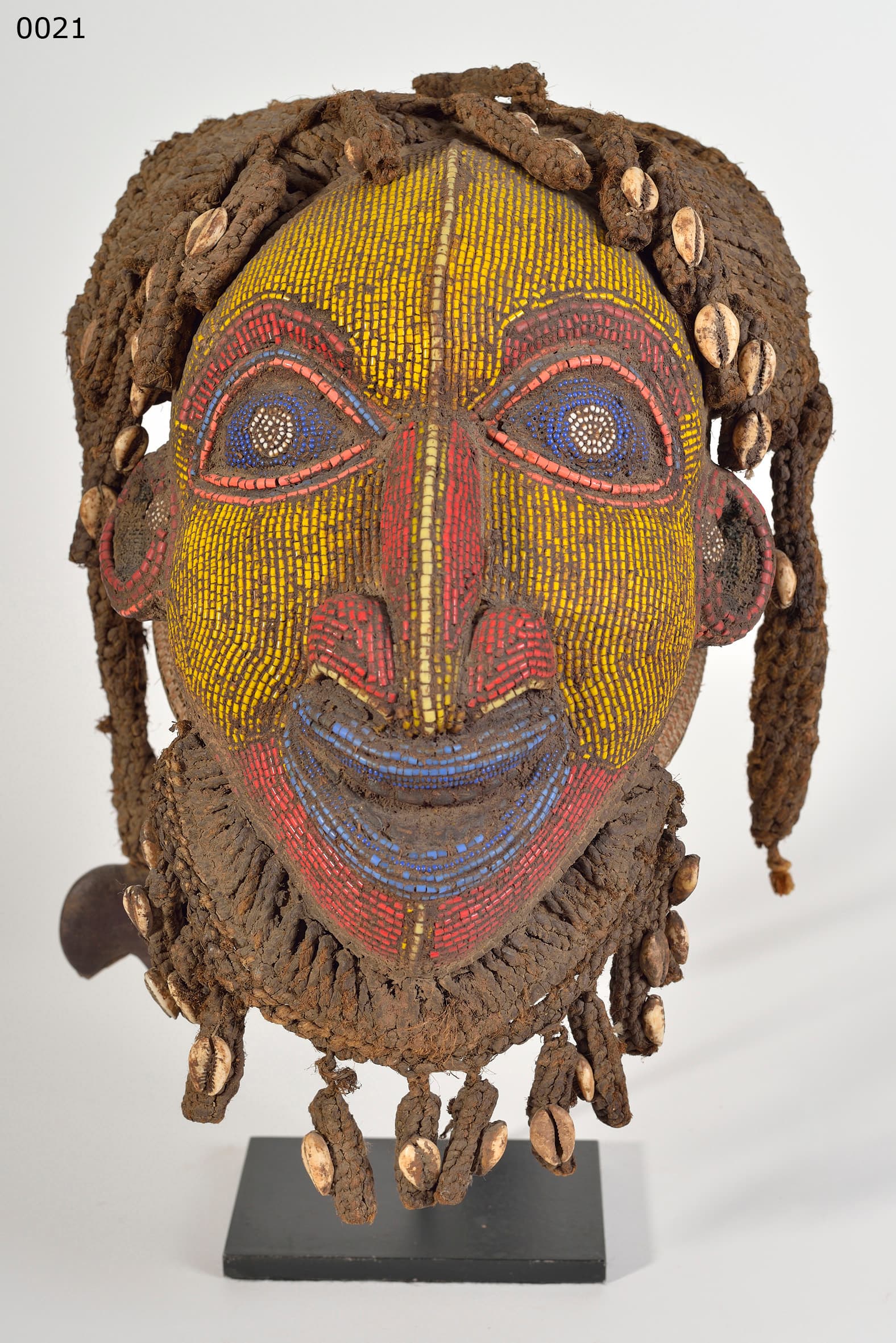
mask (covered with beads - shells on cloth)
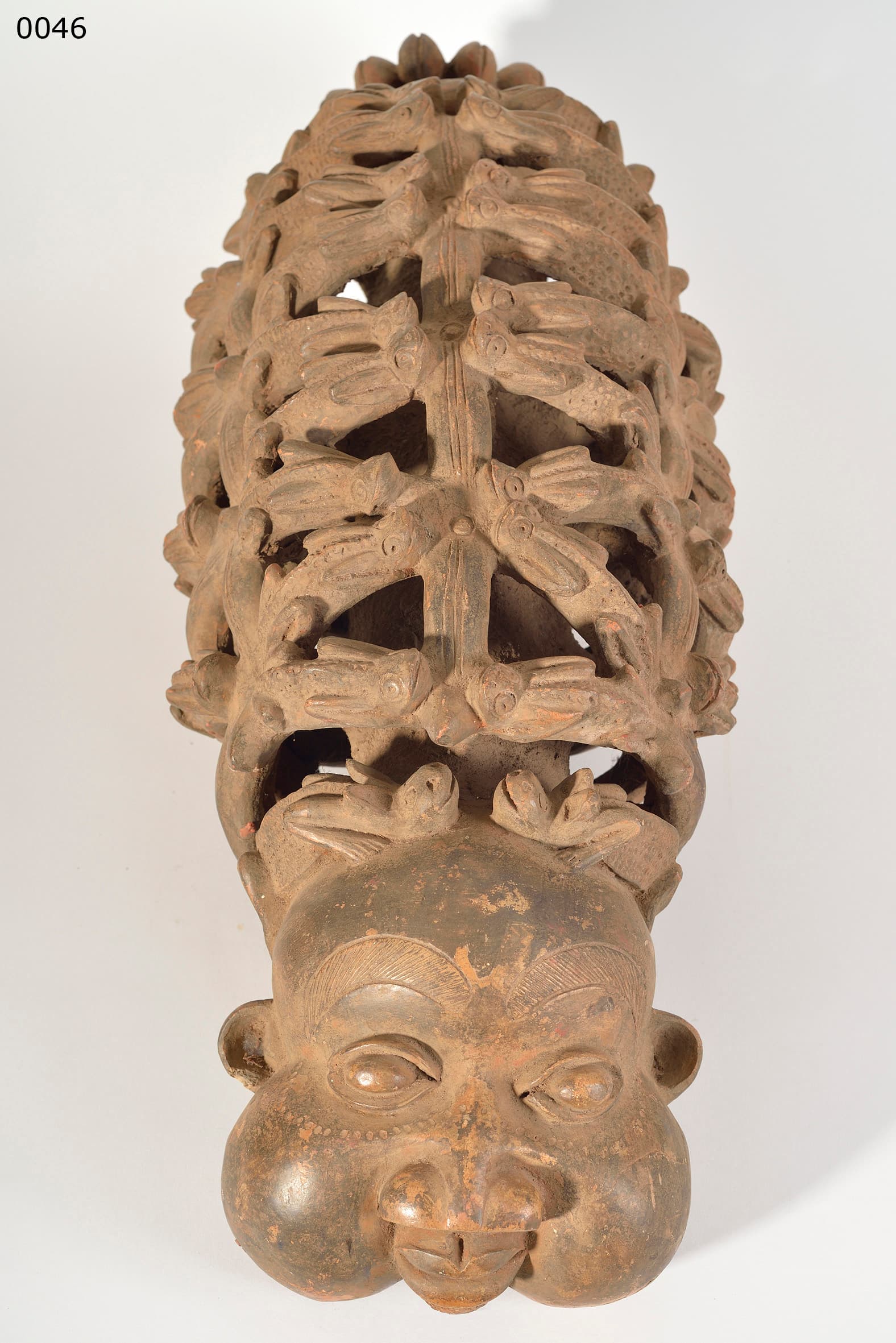
prestige pipe head
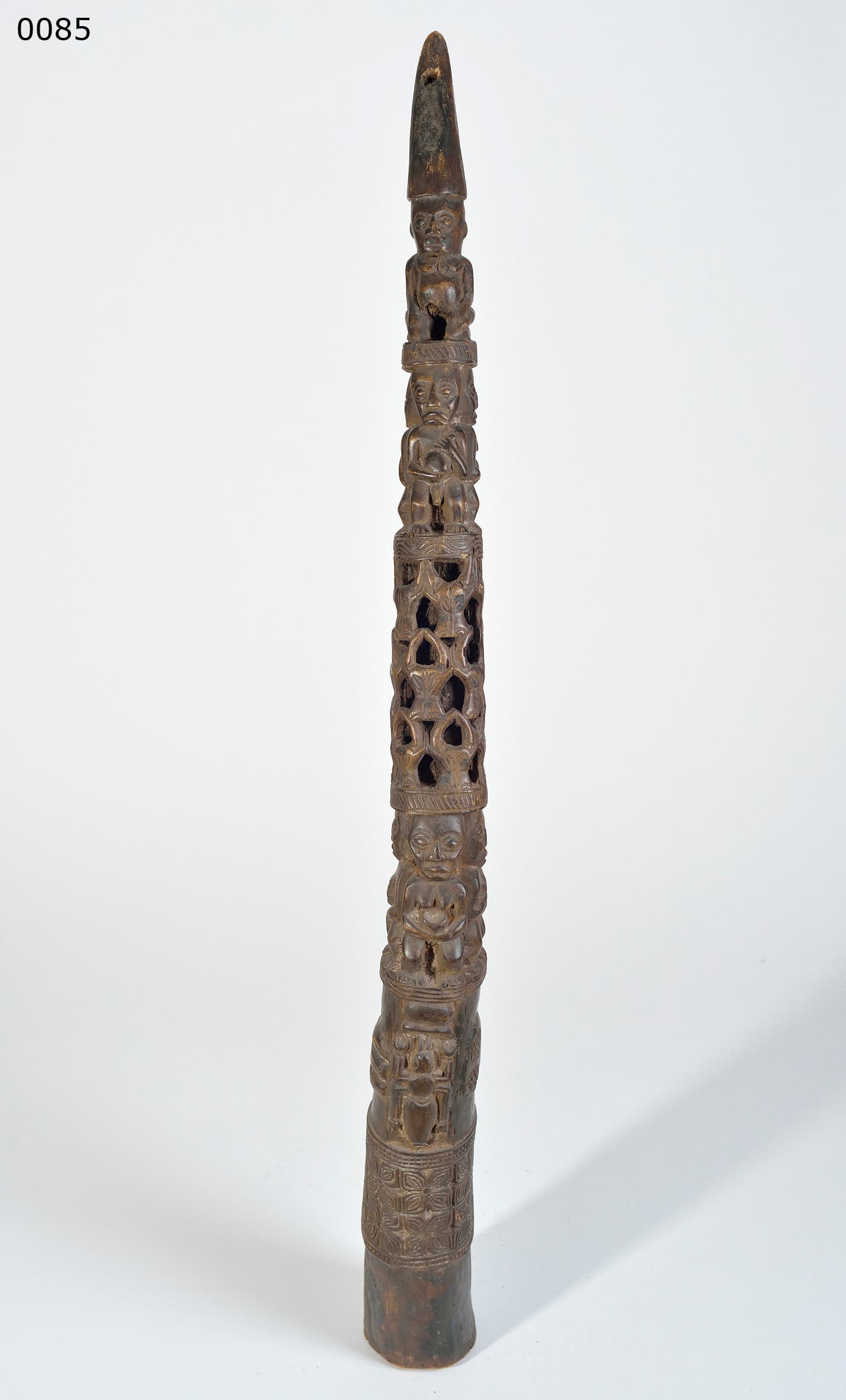
prestige trumpet