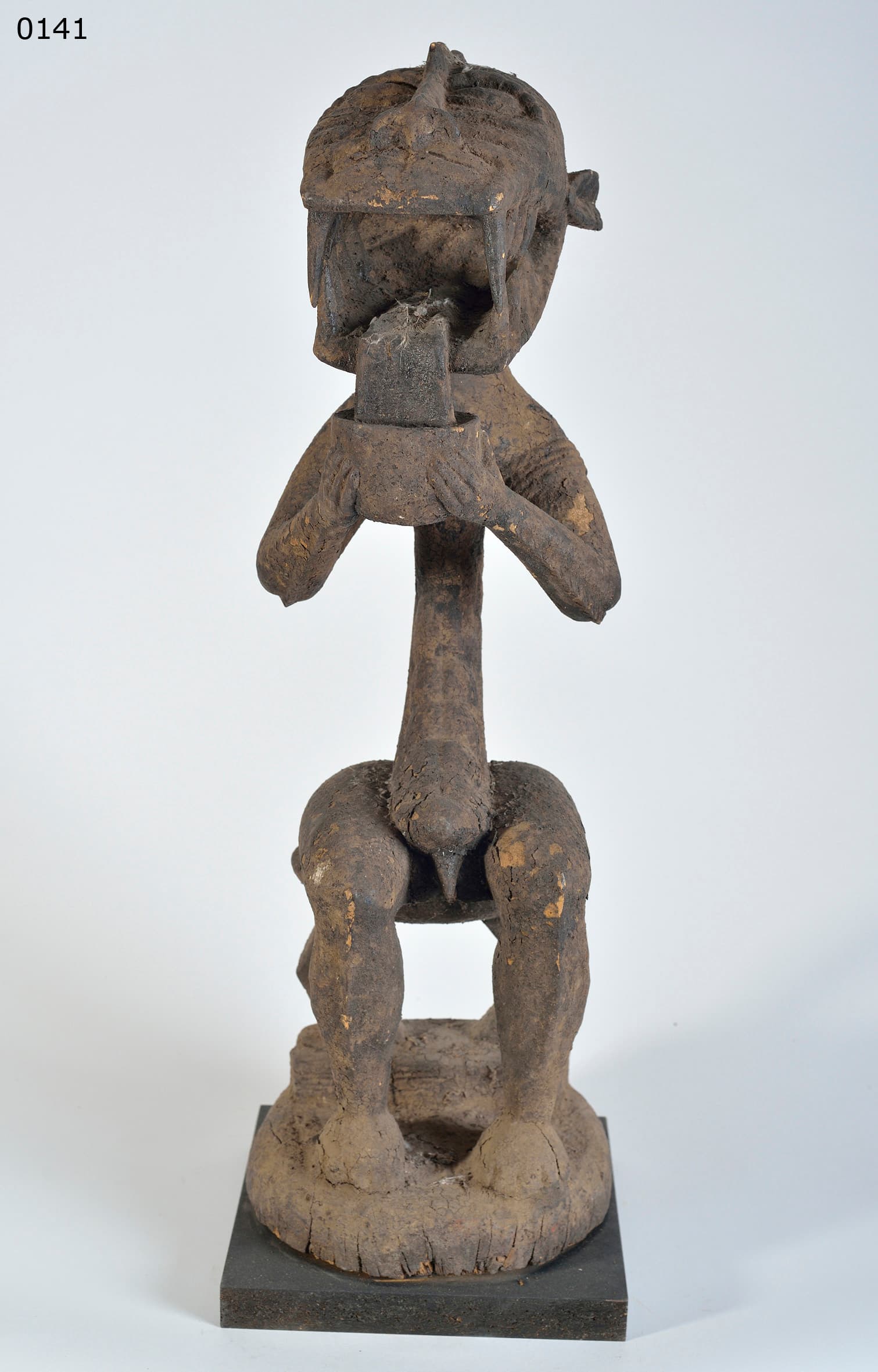
This dark wooden face mask features two large, lobe-like crests at the crown and is dramatically accented with stark white kaolin pigment around the eyes, temples, and mouth. The face presents arched eyebrows, half-closed eyes, and full, reddish-tinted lips, characteristic of idealized portraiture.
1. Aesthetic Style and Idealized Portraiture
Although carrying elements that echo Grassfields structural volumes, this mask aligns with the broad corpus of Baule portrait masks (Ndoma or Mblo), which are designed to represent idealized beauty. The high, arching eyebrows, elongated nose, and downcast eyes reflect Baule concepts of inner peace, morality, and intellectual refinement. The distinct twin lobes at the crest may represent a specific, elaborate coiffure from a bygone era, while the bold application of white kaolin around the mouth and eyes serves to highlight the features and connect the physical representation to the spirit realm.
2. Ritual Function and Mblo Performance Context
Masks of this type were typically utilized in Mblo entertainment dances, secular performances designed to honor specific individuals in the community. Unlike sacred masks kept hidden in shrines, this mask would have been worn by a skilled dancer to publicly flatter the person it portrayed, accompanied by drumming and singing. The white kaolin pigment, associated with the ancestors and spiritual clarity, suggests that the mask may also have played a dual role in protective rituals or funeral ceremonies for the honored individual.
3. Patina, Material Weathering, and Age Indicators
The mask displays a layered, encrusted patina with significant signs of oxidation and indigenous repair or repainting. The stark contrast between the oxidized dark wood and the deeply embedded white kaolin in the recessed areas points to repeated ritual applications. Wear marks on the interior rim (not fully visible but implied by the edge degradation) and the softening of the carved lines around the coiffure are consistent with its use as a ceremonially active piece rather than a static carving.
Summary
This mask represents a captivating intersection of idealized portraiture and bold geometric abstraction. Its layered, ritualistic patina and strong structural presence make it a compelling example of West African performance art.
Written with AI assistance from the collection appraisal, object photography and our own research; editorially reviewed. Mistakes are possible — corrections are welcome. How we work →
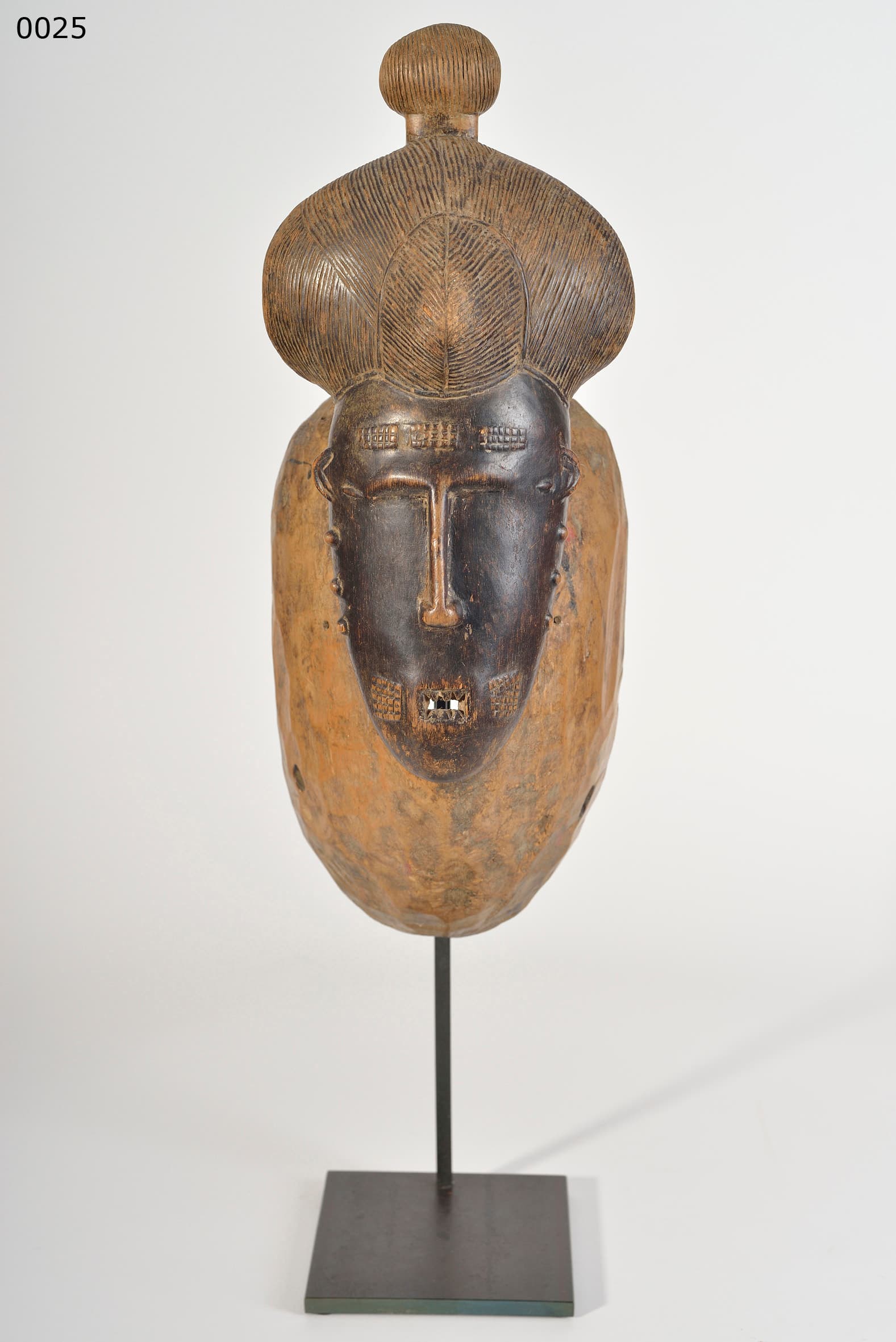
mask (collected in Abidjan)
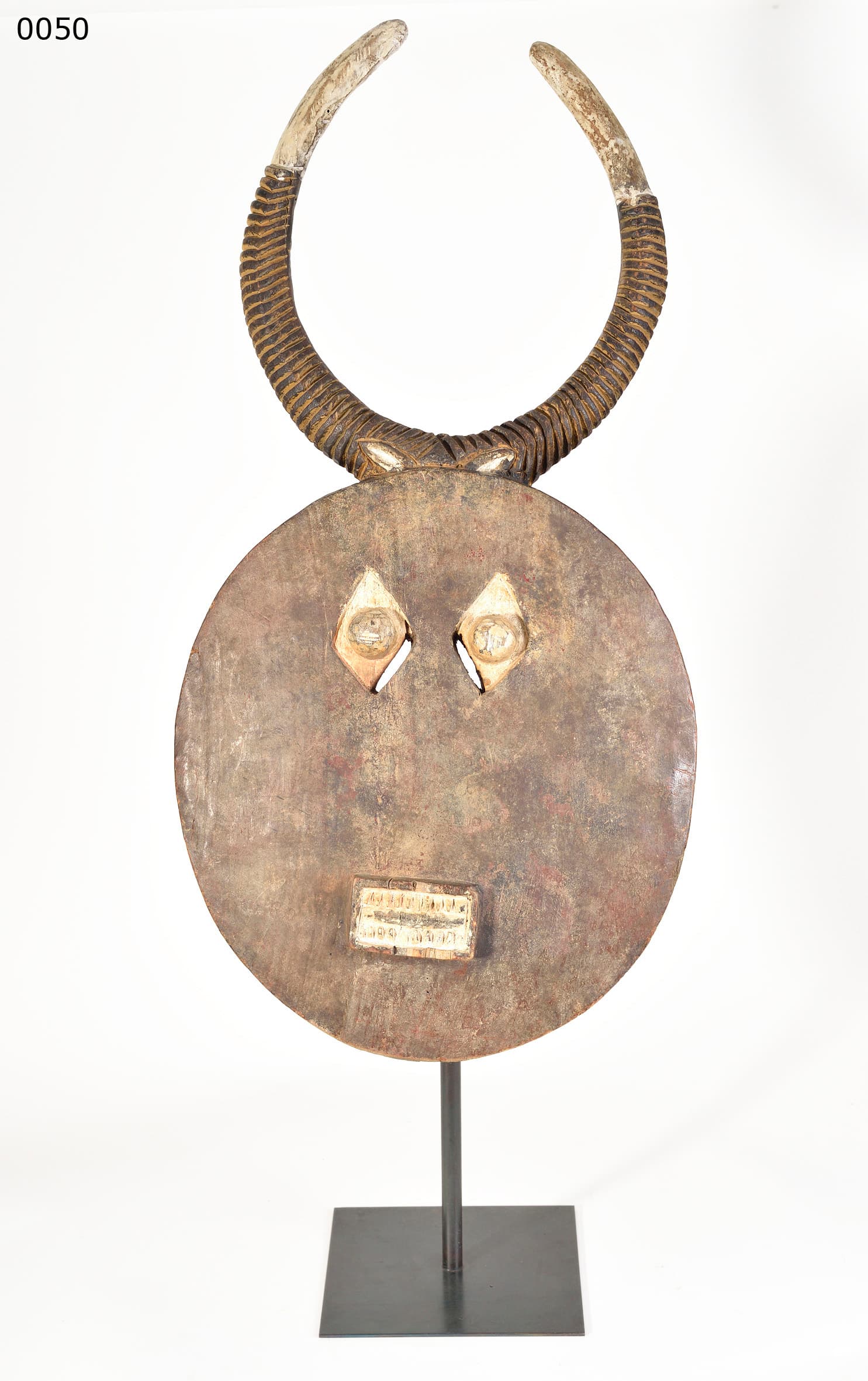
mask (called GOLI)
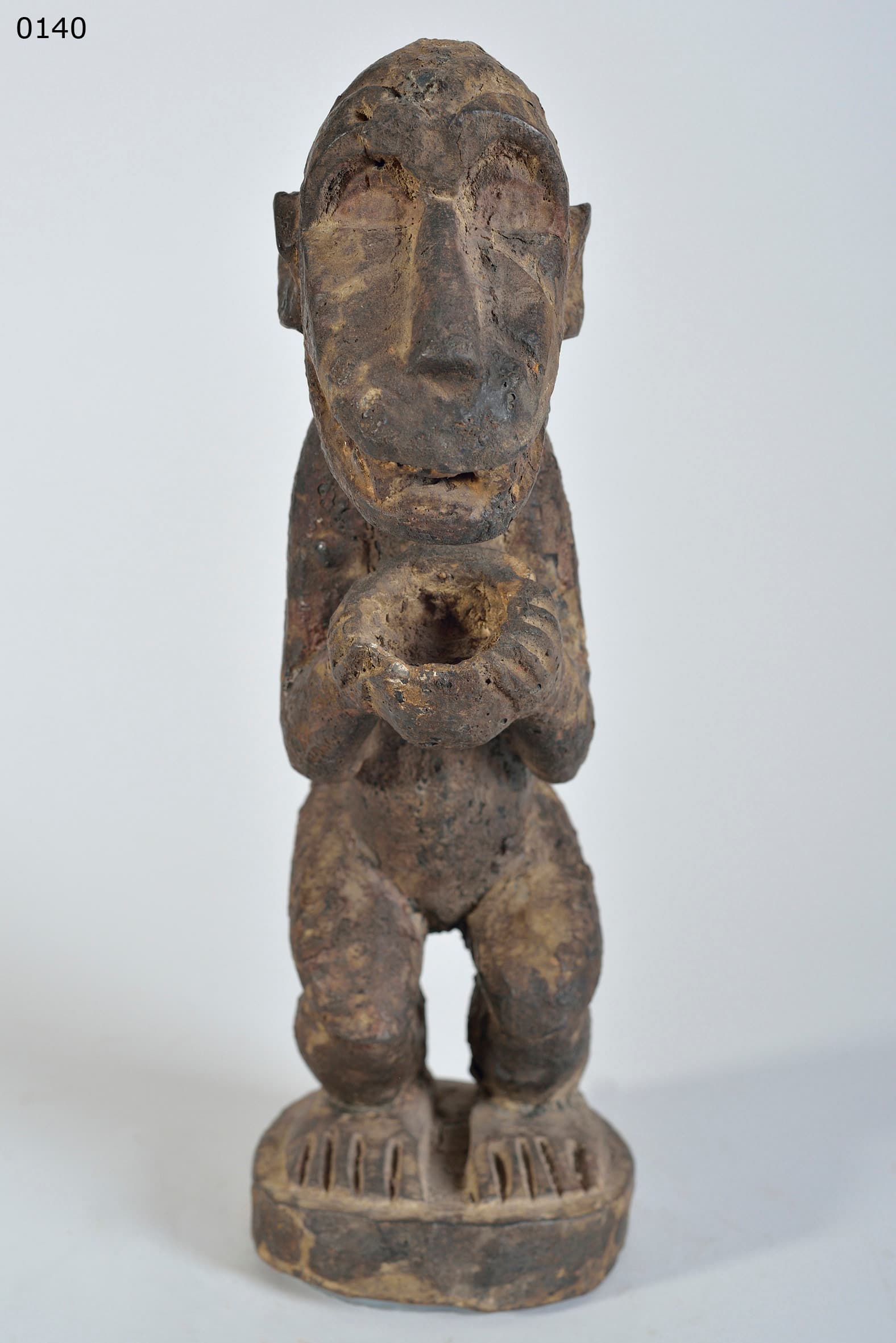
simian statue (called MBOTUMBO or GBEKRE)