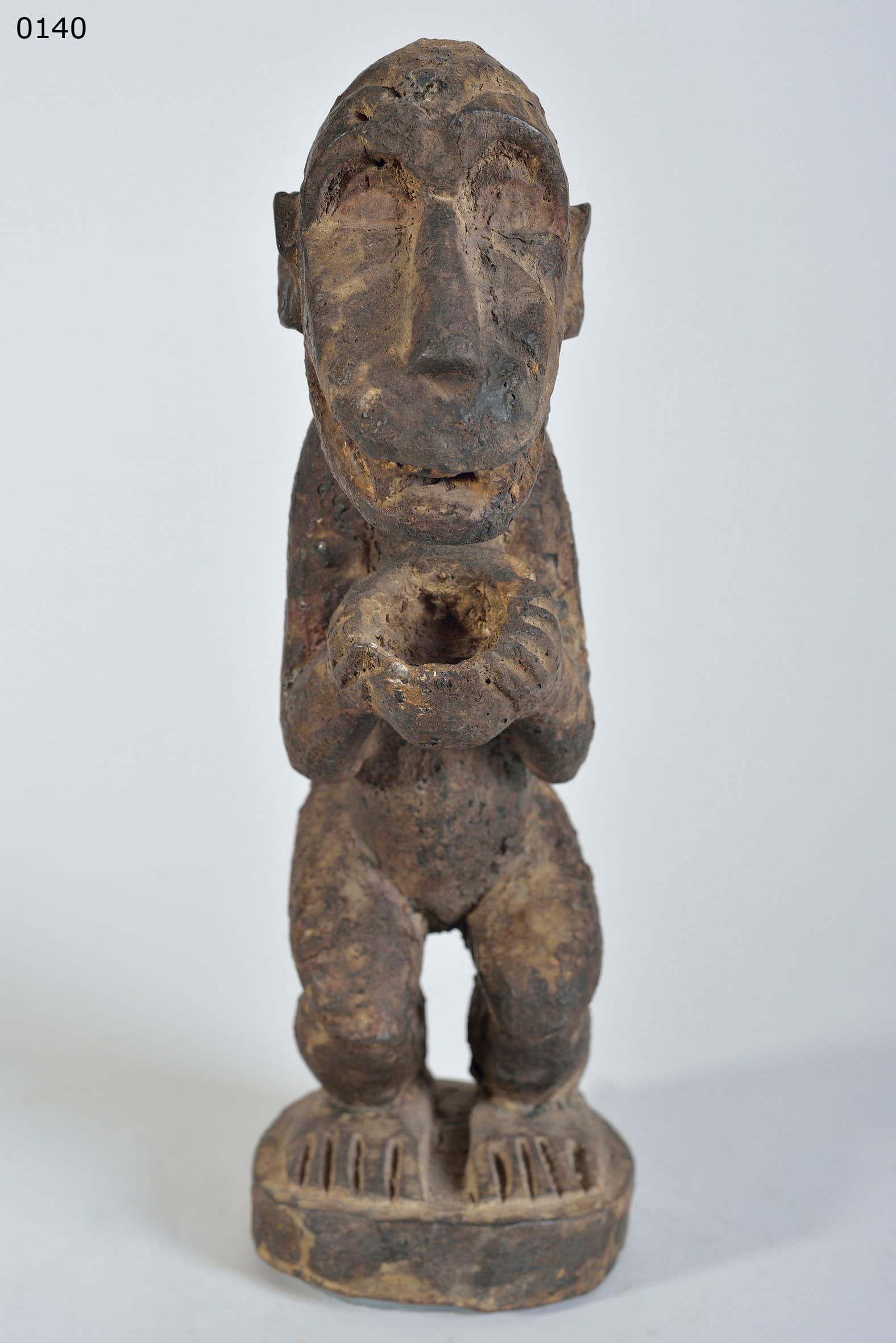
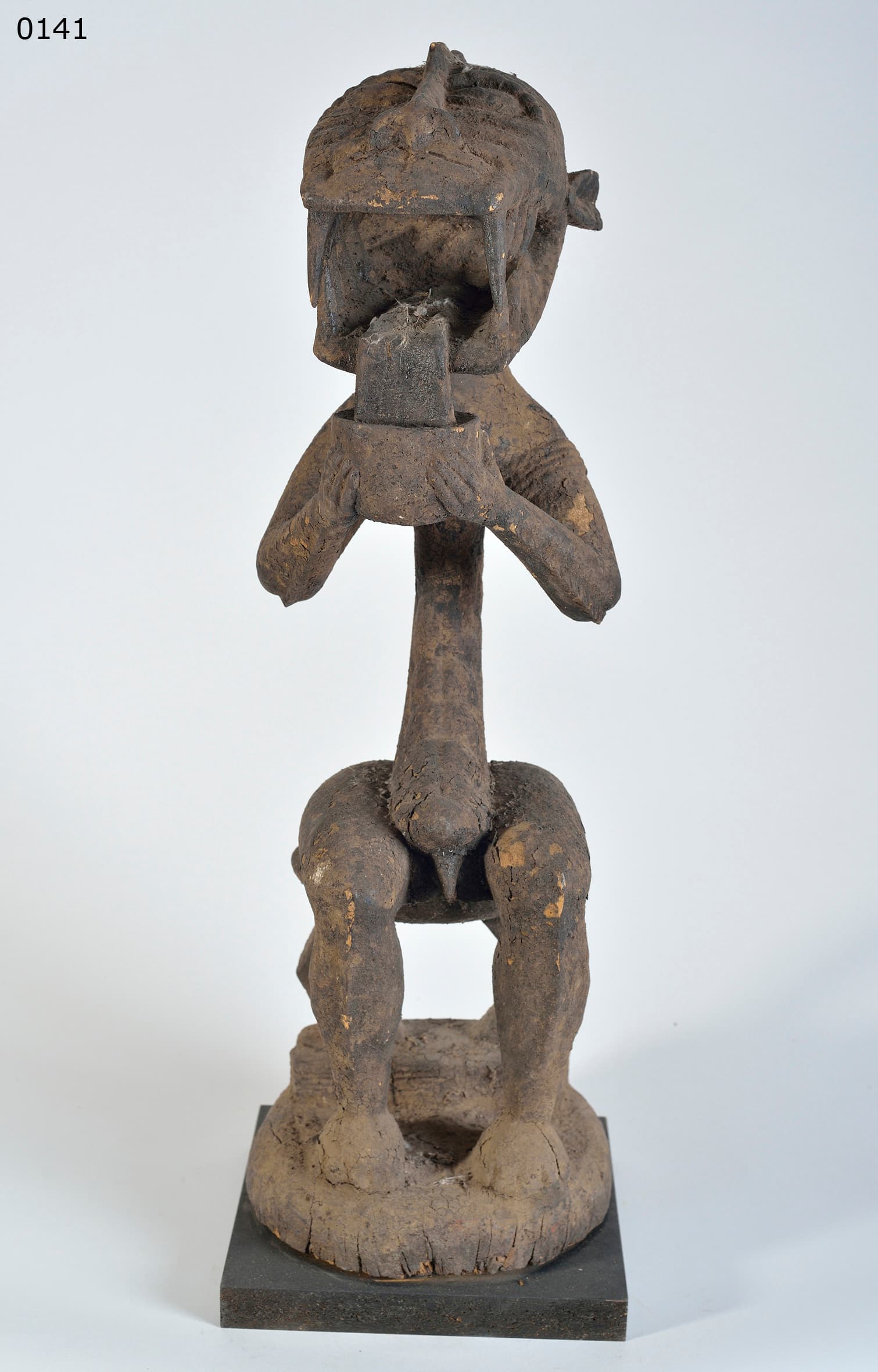
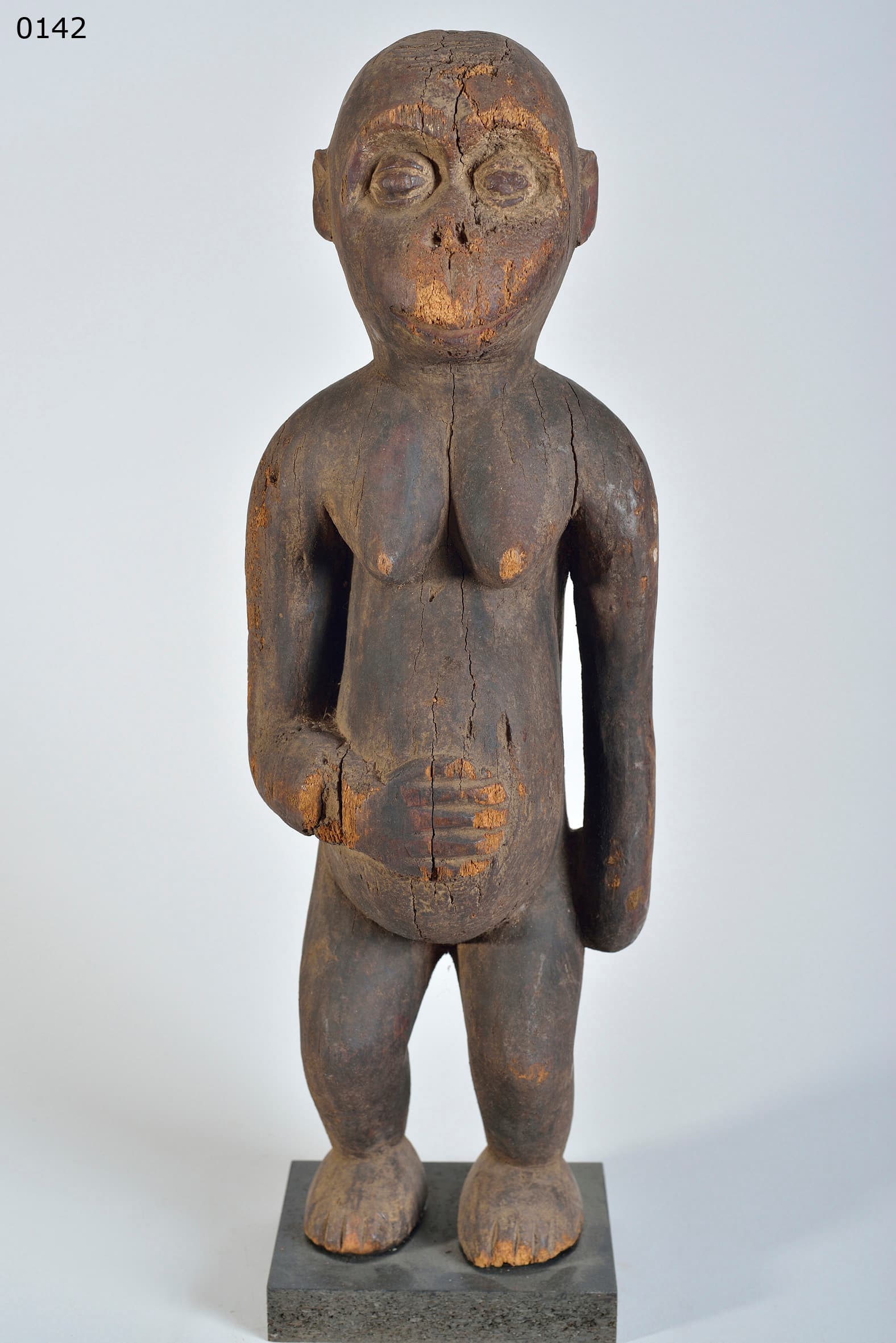
The Baule are an Ivory Coast people known for blolo spirit-spouse figures and goli, kpelie and mblo masks, carved with glossy patinas and refined coiffures.
Overview
The Baule (usually transcribed as Baoulé or Bawule in Francophone and Anglo-French literature) represent one of the most demographically, politically and art-historically significant ethnic groups within the modern Republic of Côte d'Ivoire (Ivory Coast). In order to contextualise the current relevance and geographical spread of this society, it is essential to look at the current demographic macro-data. Based on current projections by institutions such as the World Bank and Trading Economics, the total population of Côte d'Ivoire is estimated to be around 32.7 million people in 2025, which represents a massive demographic expansion compared to the 3.7 million inhabitants in 1960. Within this polyethnic nation state, which is characterised by a strongly multicultural social structure, the Baule are a dominant force with a population of almost four million individuals. Their key political role is emphasised by the fact that the first president of Côte d'Ivoire, Félix Houphouët-Boigny (term of office 1960-1993), was himself a Baule. In the course of the cocoa boom between 1960 and 1980, the Baule also expanded beyond their historical heartland into the southern forest regions, where today they often outnumber the indigenous ethnic groups as growers of cocoa, rubber and coffee - a demographic shift with significant political consequences. Their primary historical and current settlement area is concentrated in the central savannah and forest fringe regions of the country, an area defined by a dense network of urban and semi-urban centres such as Bouaké (the country's second largest city with over 724,000 inhabitants), the political capital Yamoussoukro, and towns such as Daloa and Tiébissou. In addition, there is a historically grown, significant urban diaspora in the economic metropolis of Abidjan, where Baule women played a central role in informal and formal urban trade early on.
The linguistic categorisation of the Baule language (Agni-Baoulé) places it within the large Niger-Congo language family, more specifically in the branch of the Atlantic-Congo and Volta-Congo languages, where it is assigned to the Kwa language family. The term "Kwa" was introduced into scientific nomenclature in 1895 by the linguist Gottlob Krause and is derived from the word for "people" in many of these languages. Within the Kwa family, which is spoken by around 20 to 25 million people in Côte d'Ivoire, Ghana, Togo and Benin, the Baule belong to the Nyo subgroup and, together with the Anyi (Agni), form the westernmost edge of the extensive Akan language cluster. However, the linguistic classification of the Kwa languages is by no means complete. The sources are ambiguous and there are significant academic controversies regarding the exact delimitation of the language family. While older taxonomic models postulated a very broad geographical and genetic inclusion, which also included languages in Liberia and Nigeria, the linguists Roger Blench and Kay Williamson explicitly excluded these marginalised groups from the Kwa cluster in their revised classification from 2000. These linguistic debates are of enormous importance for ethnographers, as they allow direct conclusions to be drawn about pre-colonial migration and assimilation processes. Structurally, the Baule language, like most Kwa languages, is characterised by a complex vowel harmony system in which the tongue root position (advanced/retracted) dictates the use of vowels, as well as by a two-stage tonal system in which high-pitched syllables are systematically lowered after low-pitched syllables (downstep). There is also a pronounced fortis/lenis distinction that regulates the articulation pressure of the consonants.
In terms of social structure, the Baule differ fundamentally from their linguistic relatives, the centralised Asante in Ghana. Baule society is primarily acephalous in structure and operates in decentralised, highly autonomous chiefdoms and village communities. The kinship system is often described in the literature as cognatic to matrilineal, with individuals strategically seeking to attract dependents and allies from all available lineages. A central focus of ethnographic research, particularly through the seminal work of Mona Etienne (1977, 1981), is on the exceptionally strong position of Baule women in this pre-colonial structure. Etienne deconstructs the formal anthropological model by showing that although the practice of virilocal residency (the woman's relocation to her husband's family) limited women's formal political advancement on paper, in practice they established extensive economic networks, patronage systems and agricultural partnerships that secured them massive influence. Women retained fundamental economic rights within their own descent groups and could even enter into quasi-marital, purely economic partnerships with male relatives in order to maximise resources.
Another fascinating research controversy in kinship ethnology concerns the treatment of levirate (the institutionalised widow inheritance to the deceased's brother). While strongly patrilineal neighbouring peoples or East African groups such as the Luo practice the levirate as an immutable legal and social institution, the formal norms of the Baule technically prohibit this practice. Etienne demonstrates, however, that in reality Baule families have developed complex and subtle mechanisms to strategically circumvent this formal prohibition when it seems economically opportune in order to keep wealthy widows in the family circle.
The traditional subsistence of the Baule was historically based on shifting cultivation, with the cultivation of yams forming the ritual and economic basis, supplemented by hunting and trade in kola nuts and gold. Their geographical position at the ecological and cultural interface between the western Sudanese savannah in the north and the tropical rainforest in the south forced and enabled the Baule to maintain a constant exchange with their neighbouring peoples, including the Mande-speaking Guro, the Wan and the Senufo. This relationship with the neighbouring peoples was characterised by a pragmatic ability to assimilate, which is most evident in the adoption and modification of foreign cult institutions and mask dances. Exemplary artefacts documenting this hybrid cultural structure can be found in the extensive Kwa collections of the British Museum in London and in the Fowler Museum at UCLA, where the material culture of the Baule is curated not as an isolated phenomenon, but as a hub of West African exchange processes.
Cultural context
The religious system and the cosmological order of the Baule elude simple animistic classifications and instead present themselves as a highly differentiated, ontological structure that sees the material and spiritual world in constant, often precarious interaction. At the absolute top of this cosmological hierarchy is the creator god Nyamien (often also understood in the triad Nyamien Alouroua). Nyamien is conceptualised as completely immaterial, transcendent and largely inaccessible to everyday human rituals; there are neither sculptures nor direct cults for this entity. Directly subordinate to him, but much more present in ritual life, is Asie, the deity of the earth, who exerts a direct influence on agriculture, human fertility and the animal world. The third and by far the most relevant entity for art production are the so-called amuen or asye usu. These nature and bush spirits represent the wild, untamed and potentially destructive power of nature beyond the civilised village boundaries. They are seen as extremely powerful, capricious and demanding.
The mediation between these often conflicting cosmological spheres is the responsibility of specialised ritual authorities, primarily the trance divinators (komien). Structurally, the Baule system differs fundamentally from the religion of their eastern Akan neighbours (such as the Asante or Fante). While the latter primarily centre their material culture around a highly formalised, hierarchical ancestor cult and royal court, the canonical wooden sculptures and masks of the Baule never represent direct ancestors or ancestors. Baule diviners do not inherit their position through formal lineages, but are individually "chosen" by the asye usu, often through somatic crises, persistent illness or psychological abnormalities. In order to gain healing and channel the wild energy of the spirit, the divinator is compelled to become the medium for that spirit and have specific wooden sculptures (waka sona, "people of wood") made to serve as physical vessels and civilising anchors for the spirit beings.
The role of women in the Baule cult is remarkably prominent. Contrary to the strict exclusion of women from the masquerade, which is widespread in West Africa (such as in the Poro confederations of the neighbouring Senufo or Dan), Baule women actively participate in certain ritual performances. In particular, dances performed with mblo masks (such as the gbagba dance) are explicitly considered "women's dances", as women are actively involved in the choreography and the dance style is coded as feminine and of the highest civilisational beauty.
In analysing this cultural and ritual context, academic research is dominated by two massive interdisciplinary controversies that fundamentally challenge the Western understanding of African art. The first and most far-reaching debate was postulated by the art historian Susan Mullin Vogel in her standard work Baule: African Art, Western Eyes (1997). Vogel's central thesis is that in the entire vocabulary of Baule there is no isolated term for what the West defines as "art" (art in the sense of an autonomous, purely aesthetic category). Western collectors, Vogel argues, commit an ontological category error by projecting onto Baule objects an aesthetic autonomy that they do not possess in their original context. For the Baule, these sculptures are "resonant" objects; they are tools, devices and physical manifestations of spiritual powers whose purpose of existence is to regulate relationships between humans and the spirit world. Vogel argues that for Baule, the process of ritual interaction with the object is far more important than the static, formal product. She therefore structures the reception of these objects not according to Western stylistic concepts, but according to local "Ways of Looking": 1. persistent watching (Watching) at public mask dances such as Mblo and Goli; 2. Avoidance of looking (Avoidance / Seen without looking) at highly sacred shrine objects; 3. glimpsing (Glimpsing) at private afterlife marriages; and 4. everyday availability (Everyday availability) at profane but decorated everyday objects.
The second profound research controversy centres on the interpretation of a specific object class: the spirit spouse (blolo bla for the man, blolo bian for the woman). The Baule believe that every person had an ideal spouse in the afterlife (blolo) before birth. If a person suffers from infertility, marital problems or psychological crises in this world, this is often attributed to the jealousy of this invisible partner in the afterlife. Philip L. Ravenhill published a decidedly psychoanalytical and existential interpretation of this phenomenon in 1996 in Dreams and Reverie. Ravenhill interprets the figures as therapeutic projection surfaces for real psychosexual inadequacies and as tools for coping with existential crises in young adults. Susan M. Vogel vehemently contradicts this Western-psychologising interpretation in her publications. She advocates a strictly socio-religious reading: the figures do not serve individual psychoanalysis, but rather manifest society's attempt to force threatening, wild otherworldly powers into a controllable, contractual relationship with the village community by imposing extreme civilising aesthetics (hairstyles, scarification). This ambivalence of interpretation is also reflected in the curation of renowned institutions; for example, the catalogues of the Musée du quai Branly in Paris regularly document both hermeneutic approaches in order to do justice to the complexity of Baule's cosmology.
Aesthetic features
Since the early 20th century, the formal canon of Baule sculpture has been regarded in Western art history as the absolute paradigm of classical African art. The aesthetic sophistication, extreme symmetry and mirror-smooth surfaces of many works led early collectors to assume that they were produced l'art pour l'art. In the context of Baule's ontology, however, this aesthetic is not a subjective hobby, but a strict functional necessity. Nature spirits (asye usu) and otherworldly partners (blolo) originate from the wilderness or the afterlife and are perceived as unpredictable. To appease them and persuade them to settle in the village and serve the Divinator, the wooden vessels created for them must embody the absolute, unsurpassable ideal of civilised human design. An image that does not conform to this aesthetic - and therefore inherently moral - ideal runs the risk of offending the spirit and having destructive consequences for the owner.
In order to systematise the diversity of Baule art, a canonical object typology can be created that correlates morphological form and iconographic meaning:
| object main type | subcategory | morphological and iconographic specifications |
|---|
| Figure sculpture | Blolo bla (female) / Blolo bian (male) | Otherworldly spouse. Iconography emphasises civilisation: extreme symmetry, elaborate scarification on the face, neck and torso (sign of socialisation), elaborate, detailed carved hairstyles, strong, slightly angled calves. Hands often rest on the abdomen. |
| Figure sculpture | Waka sona ("people made of wood") | Instruments of professional trance diviners. Similar morphology to blolo figures, often slightly larger. Distinctive distinguishing feature: often remnants of white kaolin around the eyes and mouth, symbolising the spiritual vision of the medium. |
| Portrait masks | Mblo (Gbagba) | Idealised image of a concrete, often female personality. Characterised by shiny patina, half-closed eyes (contemplative expression), fine perforations on the rim and often complex attachments (combs, birds, horns). |
| Helmet masks | Bonu amwin ("gods of the forest") | Zoomorphic bush creatures (often hybrid of bush cow and antelope). Aggressive iconography: box-shaped protruding, open maw with visible rows of teeth, flat, circular closed horns. Thick, encrusted sacrificial patina. |
| Sequence masks | Goli (mask theatre) | Four-part sequence: 1. Kple kple (disc-shaped, horns); 2. Goli glen (heavy helmet mask, antelope/crocodile); 3. Kpan pre (face with ram's horns); 4. Kpan (human face with high hairstyle). |
The canon of proportions of the Baule figures systematically emphasises the head, which is regarded as the seat of intellect, character and personal destiny, and often presents it on a slightly elongated, cylindrical neck. The torso is elegantly elongated, while the legs, as the "Master of Essankro" masterfully demonstrates, are muscular and carved in a slightly bent position. This posture expresses a controlled physical and spiritual tension. The closed or half-closed eyes convey an attitude of contemplative calm and self-control, in stark contrast to the ferocity of the spirits they are meant to harbour. The choice of material, specific hardwood species, is often ritually revealed to the carver in dreams.
A key differentiating feature in Baule aesthetics is the patina development, which marks the ontological boundary between the activated ritual object and the profane (or not yet activated) object. Bonu amwin masks and shrine sculptures for the do secret society acquire a thick, amorphous, grey-blackish encrusted patina through the repeated ritual application of animal blood, palm wine and broken eggs. This "sacrificial patina" is the physical evidence of the "feeding" and power of the spirit. In radical contrast, mblo masks and unplayed blolo figurines have a smooth, shiny patina created by constant friction, skin contact and vegetable oils to simulate flawless, healthy human skin. Monkey figurines (amuin ba) placed close to the ground often accumulate heavy crusts on the shell, while the body is partially abraded.
While early Western reception often assumed an anonymous "tribal artist", more recent forensic and art historical research, largely driven by analyses of collections such as the Metropolitan Museum of Art (The Met), has identified specific "master hands". The most prominent sculptor, who is not known by name but is stylistically recognisable, is the "Master of Essankro" (active ca. 1820-1900 in the Sakassou region). His works, including an iconic couple at The Met (Inv. 1979.206.113), are characterised by mask-like faces, precisely modelled, protruding rounded eyes and an unmistakable fluid symmetry. Bodily adornments such as fine strands of pearls around the neck, hips and ankles round off this repertoire and in turn serve the civilising process. In research today, however, the attribution to singular master hands is often regarded as a heuristic construct that describes workshop traditions rather than isolated geniuses.
The enormous market relevance of Baule art has led to the establishment of rigorous forgery criteria. Modern forgeries, often produced for the tourist or uninformed auction market, imitate the lustrous patina with artificial stains or smoke the fresh wood in earth fires to suggest age. An acrid smell of fire or smoke is therefore a primary criterion for ruling out authenticity. Instead, true ritual objects show complex signs of age: deep, natural heartwood cracks, asymmetrical abrasion on handling surfaces and, particularly in the case of shrine sculptures, documentable insect or termite damage to the bases (erosion) caused by years of contact with the altars' damp clay floors.
Ritual practice
The ritual operationalisation of Baule's objects completely eludes the categories of a museum approach to art. Sculptures and masks exist in a highly complex lifecycle that ranges from the initial dream vision, through ritual charging and years of use, to conscious deactivation and physical disposal. This process emphasises Vogel's argument that the art of Baule is to be understood as an ongoing interactive process and not as a finished product.
The construction of an altar and the use of divination figures (waka sona) or afterlife spouses (blolo bla/bian) usually take place in the owners' private bedchambers or separate shrines. According to Vogel's categorisation of the "ways of seeing", these objects fall into the category of art "that is only glimpsed" (glimpsing) or whose direct, profane sight is completely avoided out of reverence (avoidance). The activation of the newly carved object does not take place through the final cut by the carver, but through a sequence of rites. In divination sculptures, the trance priest (komien) ritually rubs white kaolin clay around the eyes and mouth of the figure and simultaneously on his own face. This act synchronises the spiritual vision of object and medium and opens the channel to call the spirits from the periphery into the civilised space of the altar. The care of these private altars involves regular, clean offerings such as yam purée or rubbing with vegetable oils.
The ritual practice is completely different for the amuen forces, the aggressive protective powers, which are often manifested in the form of bonu amwin masks or monkey-like bowl-bearing figures. These objects of authority, often controlled by secret societies such as the do covenant, serve to ward off witchcraft and maintain social order in the village. In order to bind these enormous, untamed powers, they must be regularly "fed". This requires blood sacrifices; chickens, dogs or, in major crises, sheep are slaughtered and their blood, often in combination with cracked raw eggs, is poured directly over the wood. This practice generates the thick, dreaded crusty patina. According to Baule's understanding, neglecting these offerings harbours the acute danger that the power of the amuin will become uncontrollable and turn destructively against its own human beneficiaries.
A dramatic contrast to these hidden shrine practices is the mask performance, which serves public entertainment, mourning and social cohesion (category: Watching / Prolonged Looking). The Goli mask theatre is the most dominant form here. Historically adapted from the neighbouring Wan, a goli performance is a large-scale choreographic event that often lasts a whole day and is primarily performed at funerals of important personalities or at major harvest festivals. The performance follows a compelling, escalating hierarchical sequence of four mask types, each performing in male/female pairs, although ironically the masks are danced exclusively by men:
The Kple kple masks kick things off. These lowest-ranking masks feature an extremely abstracted, flat, disc-shaped face with large, ring-shaped eyes, a rectangular mouth and protruding horns. They represent unbridled, youthful energy and are worn by boys clad in net costumes and animal skins. The colour coding here is strict: the masculine principle is expressed by red pigmentation, the feminine by black colour.
The second sequence belongs to the Goli glen masks. These are heavy, terrifying helmet masks whose design fuses elements of antelope horns and crocodile bites. Together with the Kple kple, they ironically form the "female" (or boisterous) half of the Goli dance.
This is followed by the Kpan pre masks, face masks characterised by distinctive ram's horns. The Kpan masks form the ceremonial and hierarchical climax. These have finely carved, idealised human faces with elaborate high hairstyles (combs) and represent the senior principle, order and highest civilisation.
The Mblo tradition (specifically the gbagba dance) shows a completely different performative practice. These dances are strongly associated with the village and the role of women. Mblo portrait masks depict idealised images of specific, often female, figures from the community. The ritual rule requires that the person portrayed - the so-called "double" - must be physically present during a performance and accompany the mask in the dance in order to validate the connection between the physical individual and their idealised spiritual form.
The lifecycle of a Baule ritual object inevitably ends with deactivation. When an owner dies, the intended healing fails to materialise or a divinator loses their spiritual connection, the associated sculptures also lose their function. In contrast to the Western concept of conservation, the Baule do not preserve such figures as "works of art" for posterity. They are henceforth regarded as empty, useless wooden shells. They are removed from the shrines, thrown into the bush, left to rot (abandoned) or in some cases physically destroyed. This institutional practice of ritual disposal explains the physical condition of many artefacts in Western archives. The fact that the majority of genuine artefacts preserved in Western museums, such as the Musée royal de l'Afrique centrale (RMCA) in Tervuren or the Rietberg Museum, show severe signs of erosion, moisture damage and significant insect damage is therefore not a defect, but material proof of their completed ritual life cycle.
Historical context
The genesis of the Baule as a distinct cultural and political entity in central Côte d'Ivoire is not autochthonous, but the result of a massive migration movement that has been passed down through history. Oral tradition places this ethnogenesis against the backdrop of bloody dynastic succession struggles within the rising, powerful Asante empire (in present-day Ghana). A defeated faction fled to the west under the leadership of the legendary Queen Aura Poku (Abla Pokou). The exact dating of this migration is the subject of ongoing controversy in West African historiography; the sources are ambiguous. Some historians date the exodus precisely to the 1720s in the immediate aftermath of the death of Asantehene Osei Tutu, while other revisionists place the consolidation of the Baule in their current settlement area deep into the second half of the 18th century. In the target area, the Akan migrants subjugated and assimilated local groups. This process gave birth to the hybrid character of Baule art: the courtly sophistication and goldworking techniques of the Akan merged with the wild, masculine helmet mask traditions (such as the bonu amwin) of the Poro societies of the Mande-Guro region.
The violent colonial encounter with the French administration in the late 19th and early 20th centuries marked a dramatic turning point. French "pacification" and the forced integration into a colonial cash crop economy (cocoa, coffee) radically transformed local production relations. As the research of Mona Etienne (1977, 1981) impressively demonstrates, this colonial intervention undermined the traditional economic balance of the Baule household and destroyed the formerly strong, autonomous economic position of Baule women. At the same time, the ritual sphere reacted to these traumatic disruptions with astonishing creative innovation. The mass adaptation of the complex Goli mask dance by the neighbouring Wan in the short decade between 1900 and 1910 is interpreted in modern research directly as a strategic and ritual response to the psychological and social stress caused by the Europeans, an attempt to create order in a collapsing world through new ritual mechanisms.
In the 1930s, a systematic ethnological survey of this changing culture began. From 1933, the Swiss anthropologist Hans Himmelheber carried out groundbreaking field research in the Baule region over several months. Himmelheber documented the production of art - from fairy tales and life stories to mask dances and the emerging art market - in an intact ritual context, before the commercial uprooting of the objects began on a massive scale. His detailed field notes, sound recordings and photographs now form an invaluable archive at the Museum Rietberg in Zurich and are used by researchers worldwide to reconstruct pre-colonial practices.
Parallel to the ethnological documentation, the rapid market history in the West took place. In the 1920s and 1930s, Baule sculpture became one of the most sought-after collectors' items of the Western avant-garde. Paris became the epicentre of this trade. Early, influential dealers and collectors such as Paul Guillaume and Charles Ratton acquired masses of Baule objects. However, they carried out a deliberate de-contextualisation: in order to adapt the objects to purist Western taste and market them as "pure art", they often removed the thick, ritualistic encrusted patinas and presented the objects on sterile pedestals. These works of art found their way into the collections of surrealists such as Tristan Tzara or avant-garde painters such as André Derain and Jacques Lipchitz.
The final institutional breakthrough, which has dictated the price development of Baule art on the Western market to this day, came in 1935 with the legendary exhibition African Negro Art curated by James Johnson Sweeney at the Museum of Modern Art (MoMA) in New York. In this epoch-making show, loans from Charles Ratton, Paul Guillaume and Félix Fénéon - including iconic works by the "Master of Essankro" - served as undisputed prime examples of African perfection of form and definitively elevated Baule woodcarving into the canon of global high art.
However, this massive financial appreciation brought with it a profound problem of forgery. As the world market for Baule antiques is now a finite and dwindling resource, while global demand is growing, a large proportion of the "tribal art" sold each year at smaller auctions and markets is fake. The authentication (forensics) of Baule objects is therefore of crucial importance to collectors and institutions and relies on a combination of provenance research and hard material criteria. As African forgery workshops routinely artificially age fresh wood in open fires or ovens to imitate a dark "patina", a pungent smell of fire or smoke (smoke smell) is considered by experts to be the primary criterion for ruling out authenticity. Instead, true ritual objects that have been in use for decades show specific signs of wear that can hardly be falsified perfectly: the deep, natural oxidation of the wood surface, unmanipulated heartwood cracks caused by decades of climatic fluctuations, asymmetrical abrasion in places that have been ritually touched, as well as documentable traces of insect or termite damage (erosion) on the standing surfaces. These forensic markers document the real life of the object in the moist earth of the shrines and separate the historically activated ritual object from the purely commercial imitation.
Sources & References
This dossier draws on standard scholarship in Baule studies. For deeper reading and image archives, see:
Inline citations in this dossier refer to canonical scholarly works on Baule art; full bibliographic resolution is pending a researcher pass.