An iconic Kple Kple mask (1st half 20th C., 94 cm) from the Baule of the Ivory Coast — a perfectly flat circular disc topped with two curving buffalo horns, with simple tubular eyes and a rectangular mouth. Used in the famous Goli dance.
1. The genius of the disc
The Kple Kple is arguably one of the most recognizable forms in African art, deeply influential to early 20th-century European modernists.
- Radical Geometry: The face is a perfect flat circle — the absolute distillation of the animal/human form into pure graphic geometry.
2. The sun and the buffalo
The iconography of the mask combines two vital elements of the Baule environment.
- The Disc as Sun: The flat often red-painted disc represents the scorching heat and life-giving power of the sun.
- The Horns as Buffalo: The sweeping horns at the top represent the raw untamed physical power of the bush buffalo.
3. The Goli hierarchy and youthful energy
In the day-long Goli festival (which culminates with the mature Kpan mask at collection Nr. 25), the Kple Kple appears first, in the morning.
- The Junior Males: It represents the junior males — energetic, wild, and unruly. The dance is fast, aggressive, and highly athletic, contrasting sharply with the slow dignified dances of the senior masks later in the day.
Summary
The Kple Kple is a triumph of minimalist design. It perfectly captures the youthful chaotic energy of the morning sun and the wild buffalo — kicking off the most important theatrical event in Baule culture with graphic perfection.
Written with AI assistance from the collection appraisal, object photography and our own research; editorially reviewed. Mistakes are possible — corrections are welcome. How we work →

mask (collected in Abidjan)
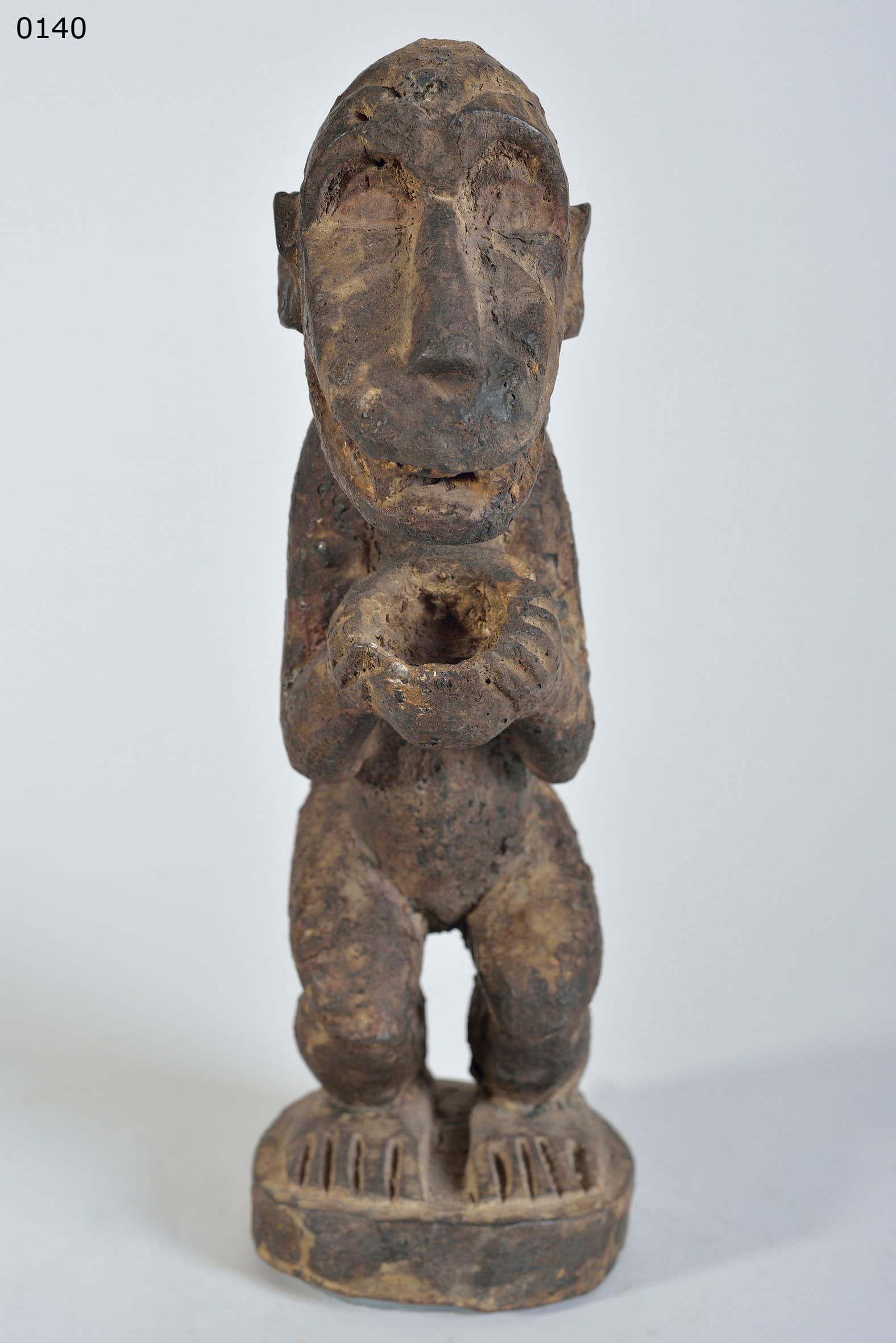
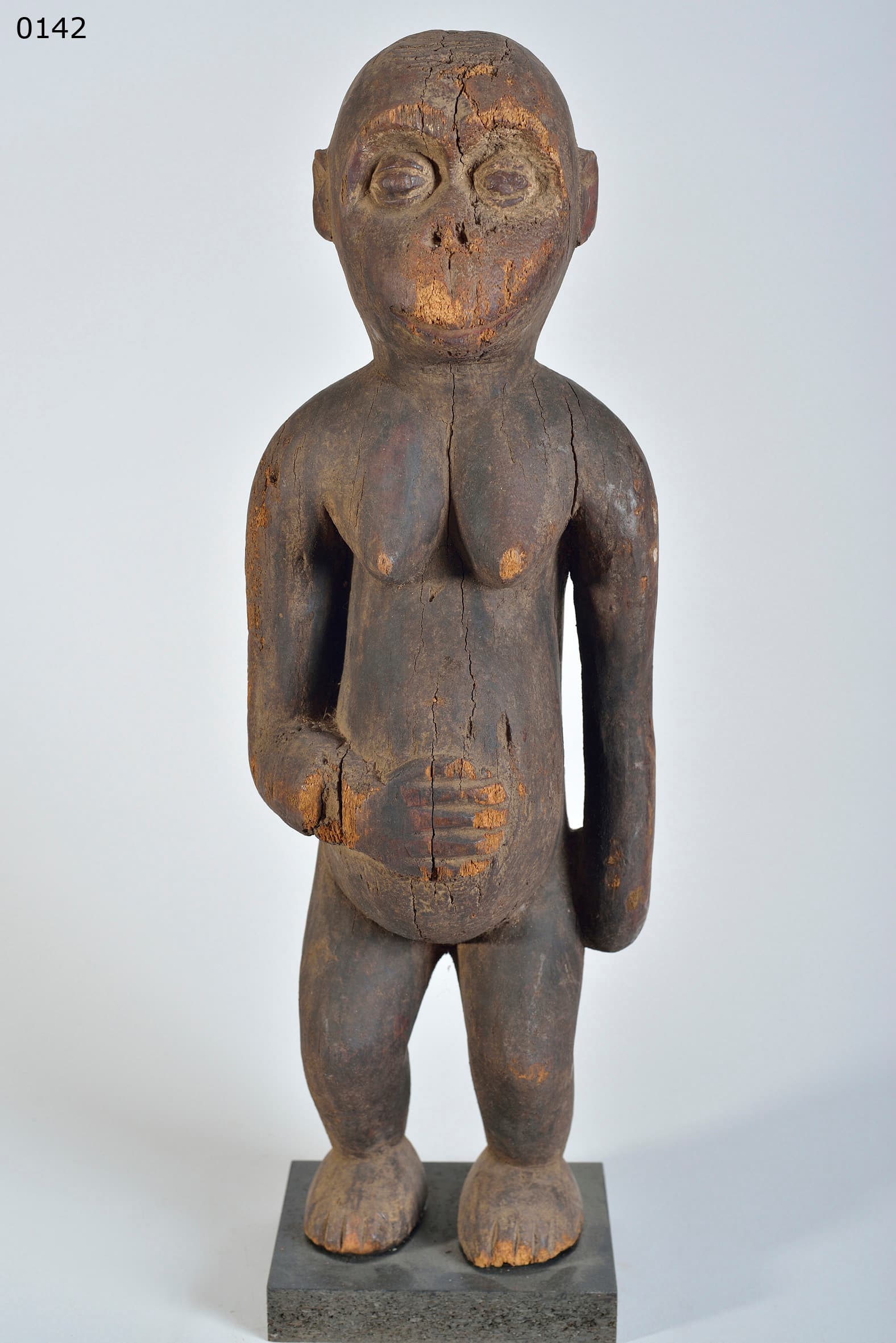
simian statue (called MBOTUMBO or GBEKRE)
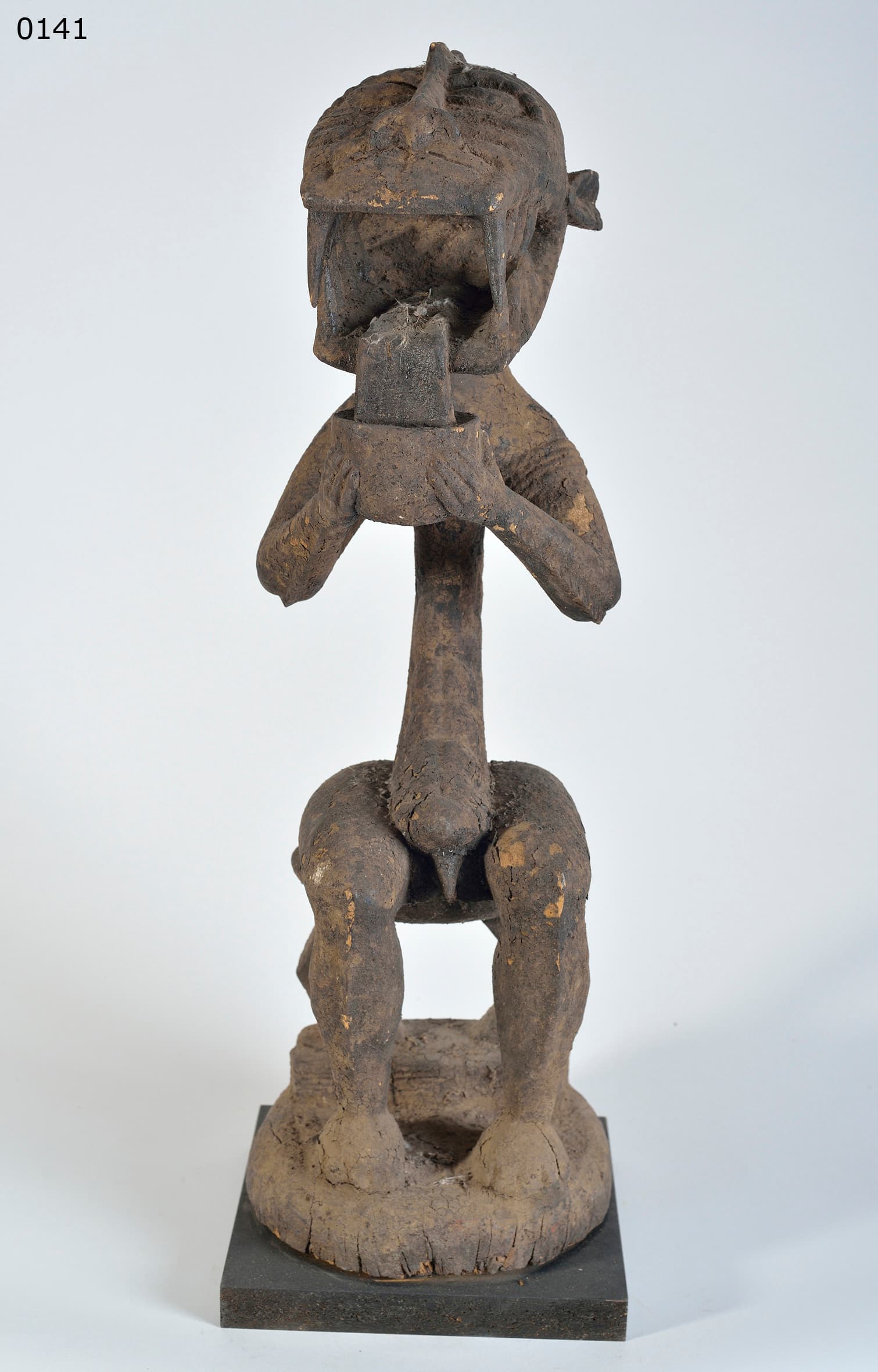
simian statue (called MBOTUMBO or GBEKRE)