Carved from heavy dark wood, this massive ceremonial vessel takes the form of an elephant with a long trunk and large, curling ears, carrying a human rider on its domed lid. The rider is depicted with a crest of real feathers, while small, high-relief figures cling to the elephant's flanks.
1. Aesthetic Style and Zoomorphic Royal Emblems
This vessel is a monumental expression of Bamum royal iconography, where the elephant stands as a metaphor for the Fon's strength, memory, and imposing presence. The carving style is robust and highly volumetric, prioritizing the massive, domed curve of the elephant's head and the sweeping geometry of its ears. The subsidiary figures clinging to the vessel may represent the courtly retinue, suggesting that the king (the rider) is supported by his people, yet elevated above them by his association with the great beast of the forest.
2. Function and Ritual Significance
According to the collection catalogue, this vessel was of great ritual importance in its chiefdom and was guarded in the treasury or ritual house by two fetishes. Superficially it served for offering kola nuts. The diviner, however, used it to convict those who had done evil in the community: whoever had done wrong and then ate from the vessel fell ill, and so revealed his guilt, recovering only once he had atoned. The lid, surmounted by a figure, closes the vessel and gives it its commanding silhouette.
3. Patina and Surface
The vessel exhibits a deep, encrusted patina. The exterior shows desiccation cracks and soft wear, consistent with extensive handling and use. The feather crest on the rider is likely a later addition.
Summary
This vessel is a commanding example of Grassfields courtly art, blending functional design with political symbolism. Its massive scale, relief carving, and weathered patina reflect its role as a significant prestige object.
Written with AI assistance from the collection appraisal, object photography and our own research; editorially reviewed. Mistakes are possible — corrections are welcome. How we work →
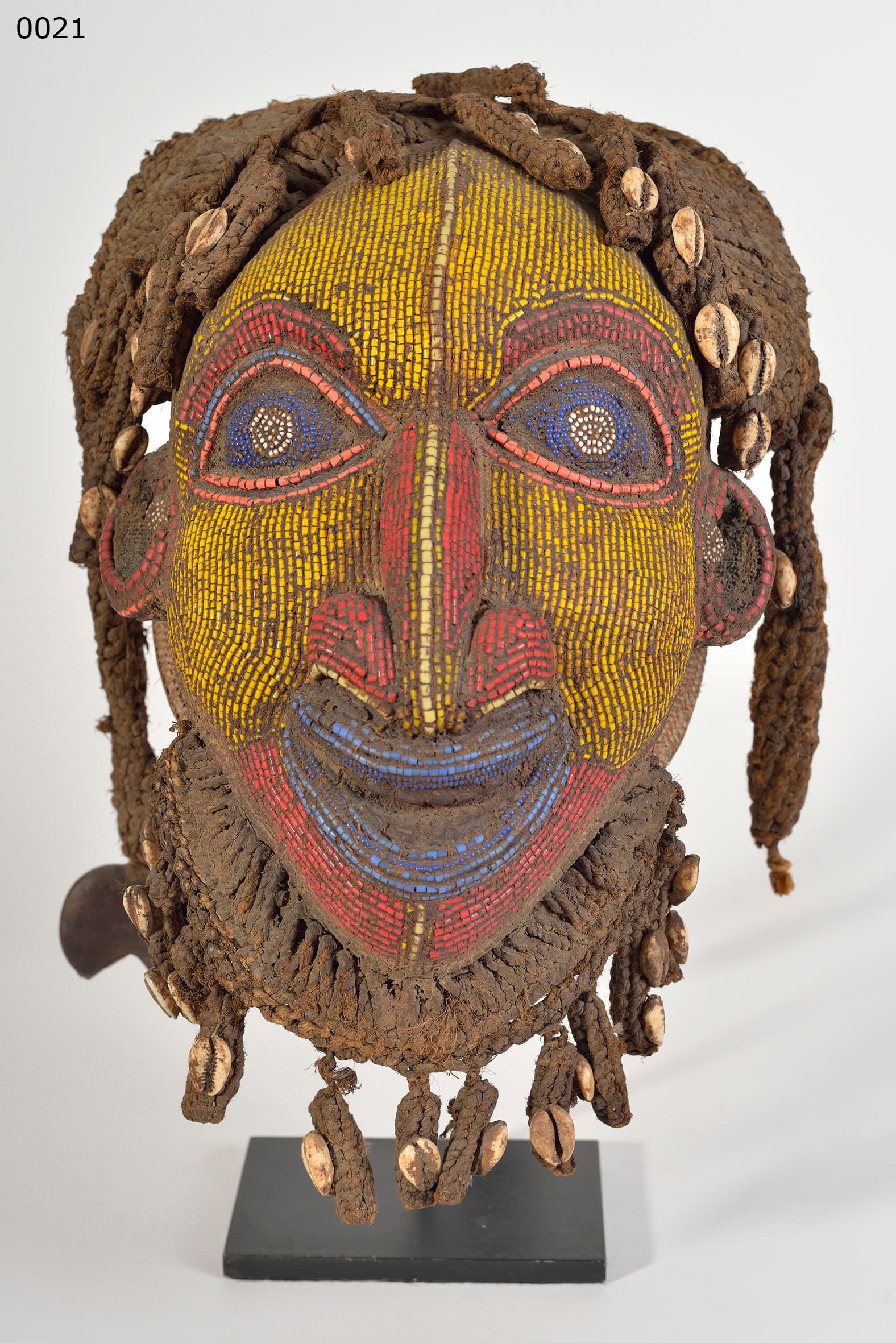
mask (covered with beads - shells on cloth)
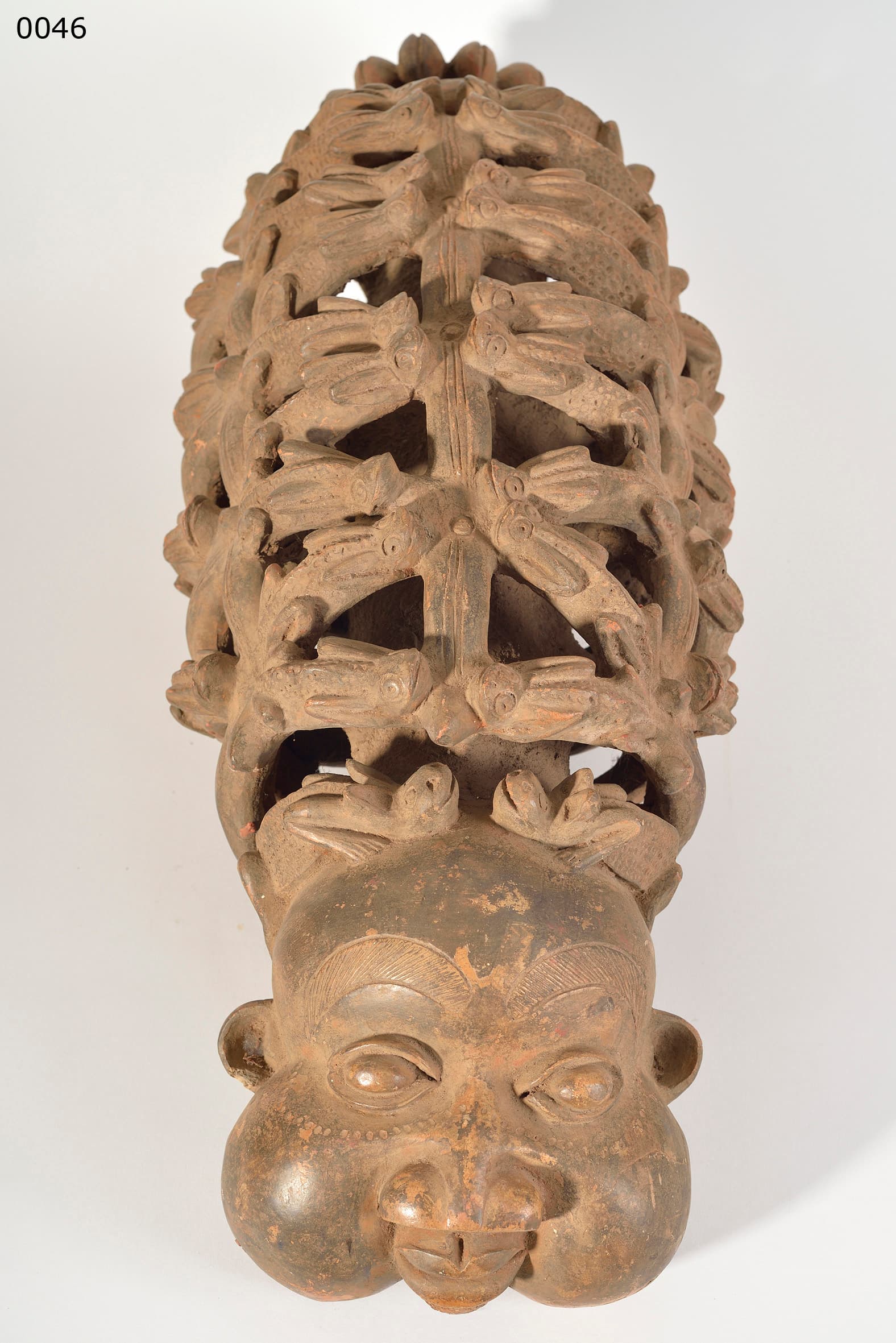
prestige pipe head
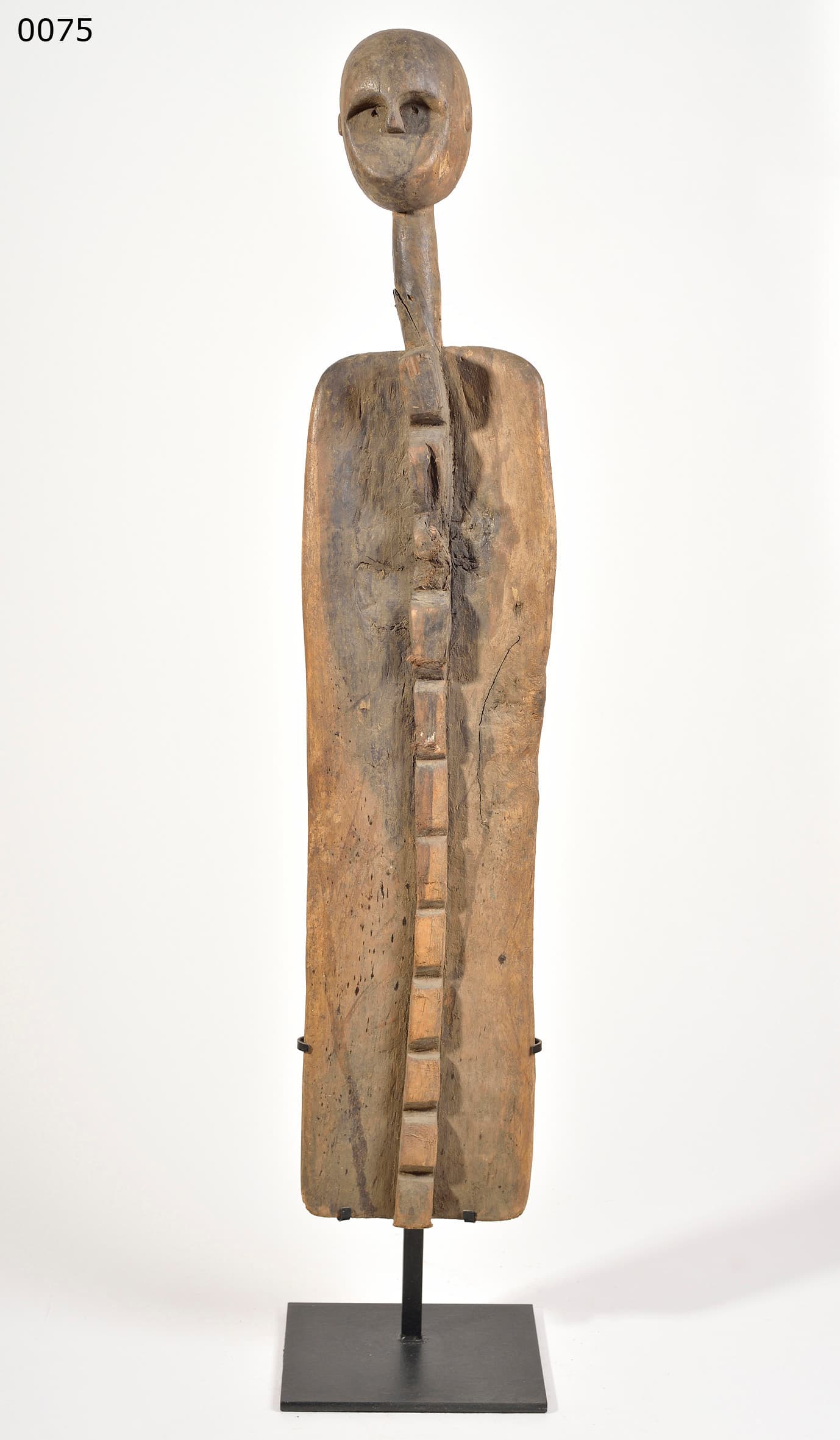
rare friction instrument