A seated figure about 100 cm high, a wooden body covered in brass sheet, from the Mambin chiefdom. It holds a ball-headed staff in one hand and a banded horn in the other.
1. Form and plating
The figure sits on a stool with a flaring base, its arms resting forward and its feet planted firmly apart. The brass sheet is laid over the carved wood in panels, with small pins visible along the seams and across the body. Engraved hatching covers the face and the pointed cap, and a bearded band frames the chin. Two crossed bands with a stamped pattern run over the chest, and ridged rings circle the ankles and one upper arm. Eyes, nose and lips are worked in a slightly different, redder metal, which gives the face its strong presence.
2. Insignia and dress
In the right hand the figure holds a horn bound with bands, in the left a staff ending in a round head with a hammered surface. A skirt of fibre with small nut-like pendants is tied at the waist. On either side of the cap, tufts of red wool studded with cowrie shells flank the head. The collection catalogue reads these insignia as a sign that the figure probably portrays an important ruler in the history of the chiefdom, and notes the hood as a garment typical of chiefs in the Anglophone region of Cameroon.
3. Provenance and significance
The catalogue attributes the figure to the Mambin chiefdom. It describes the skilful brass plating as lending the piece an extraordinary charm, and as showing the great significance of and honour due to this ancestor.
Summary
A brass-plated wooden ancestor figure from the Mambin chiefdom, probably a ruler, shown seated with horn, staff and cowrie-studded headdress.
Written with AI assistance from the collection appraisal, object photography and our own research; editorially reviewed. Mistakes are possible — corrections are welcome. How we work →
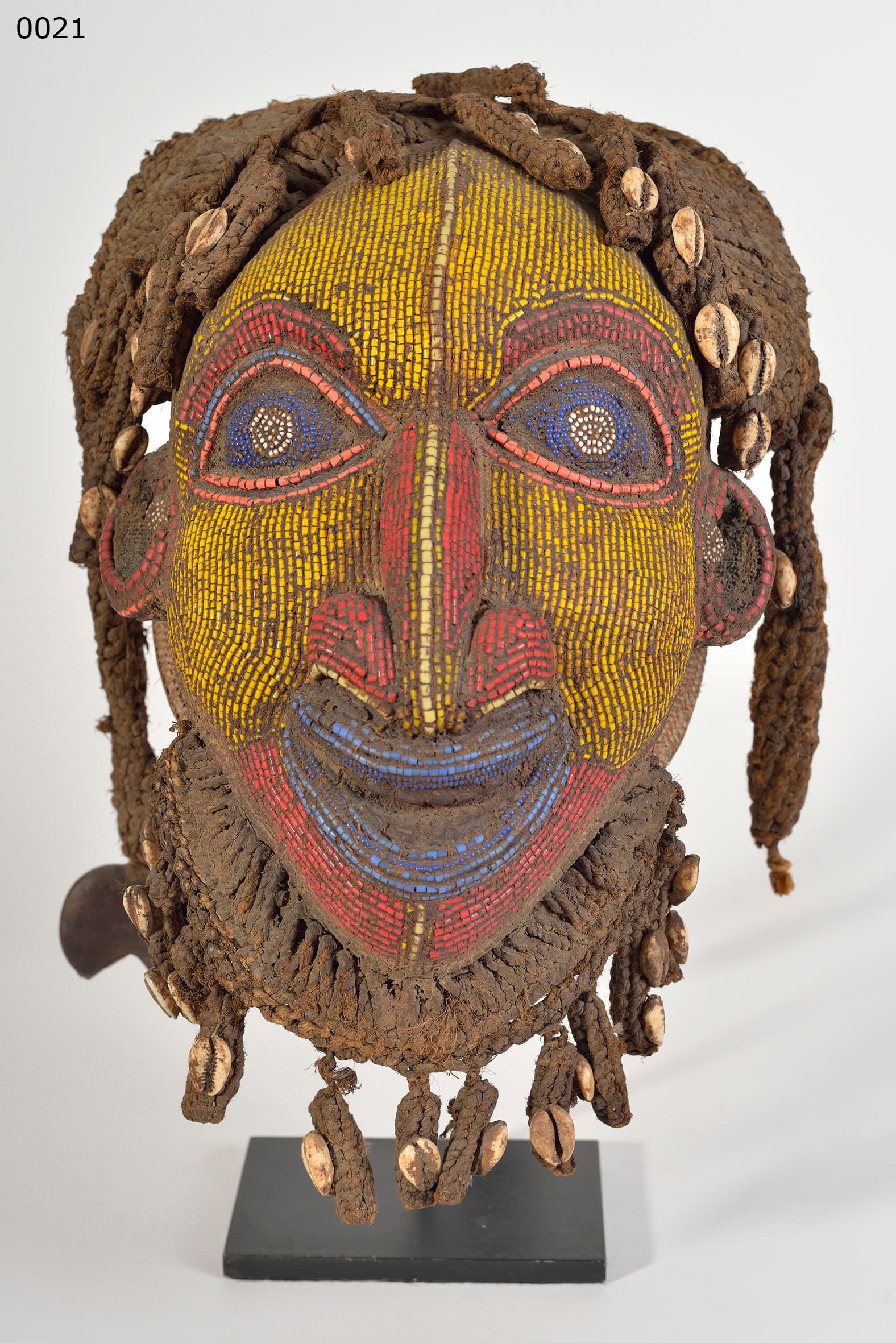
mask (covered with beads - shells on cloth)
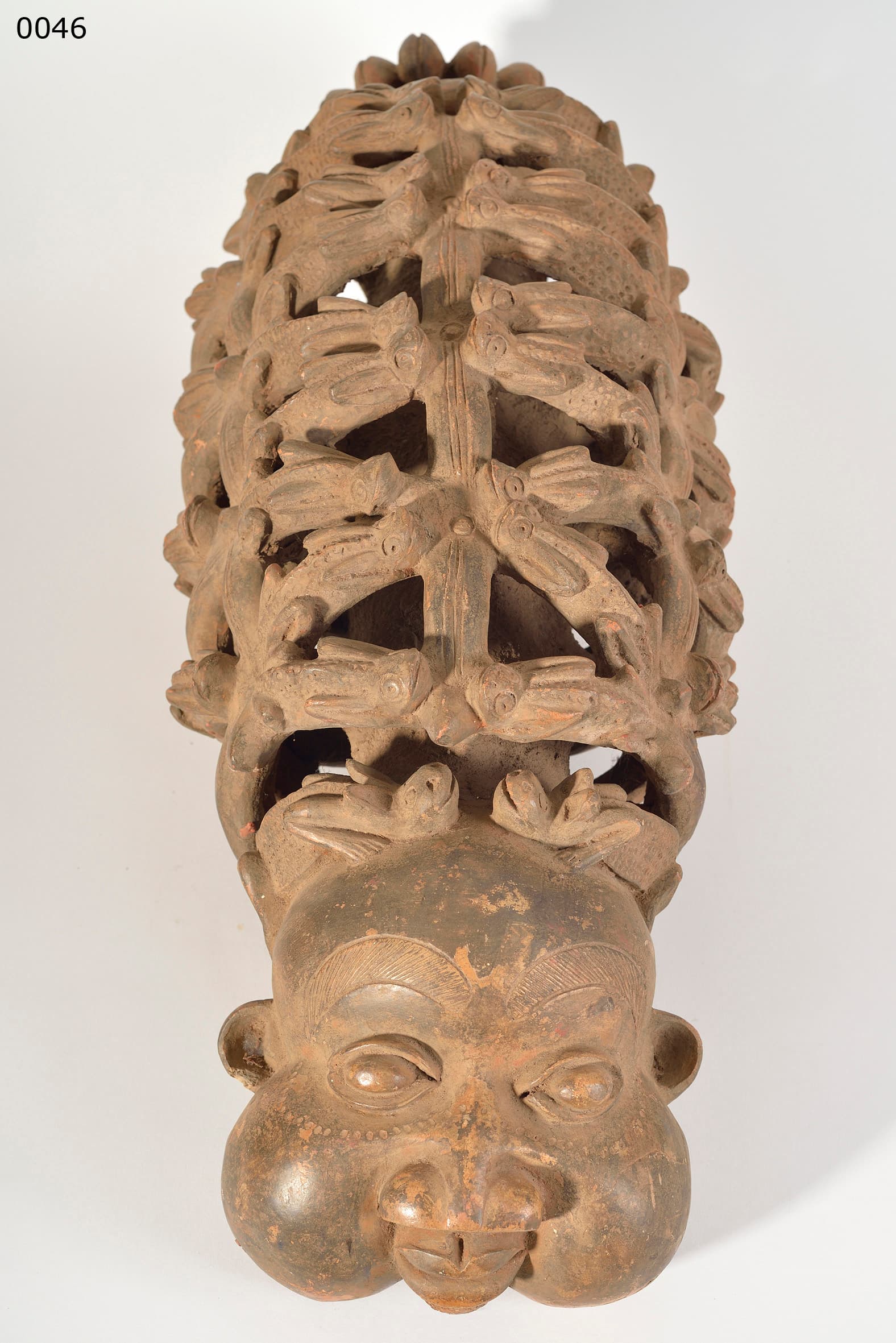
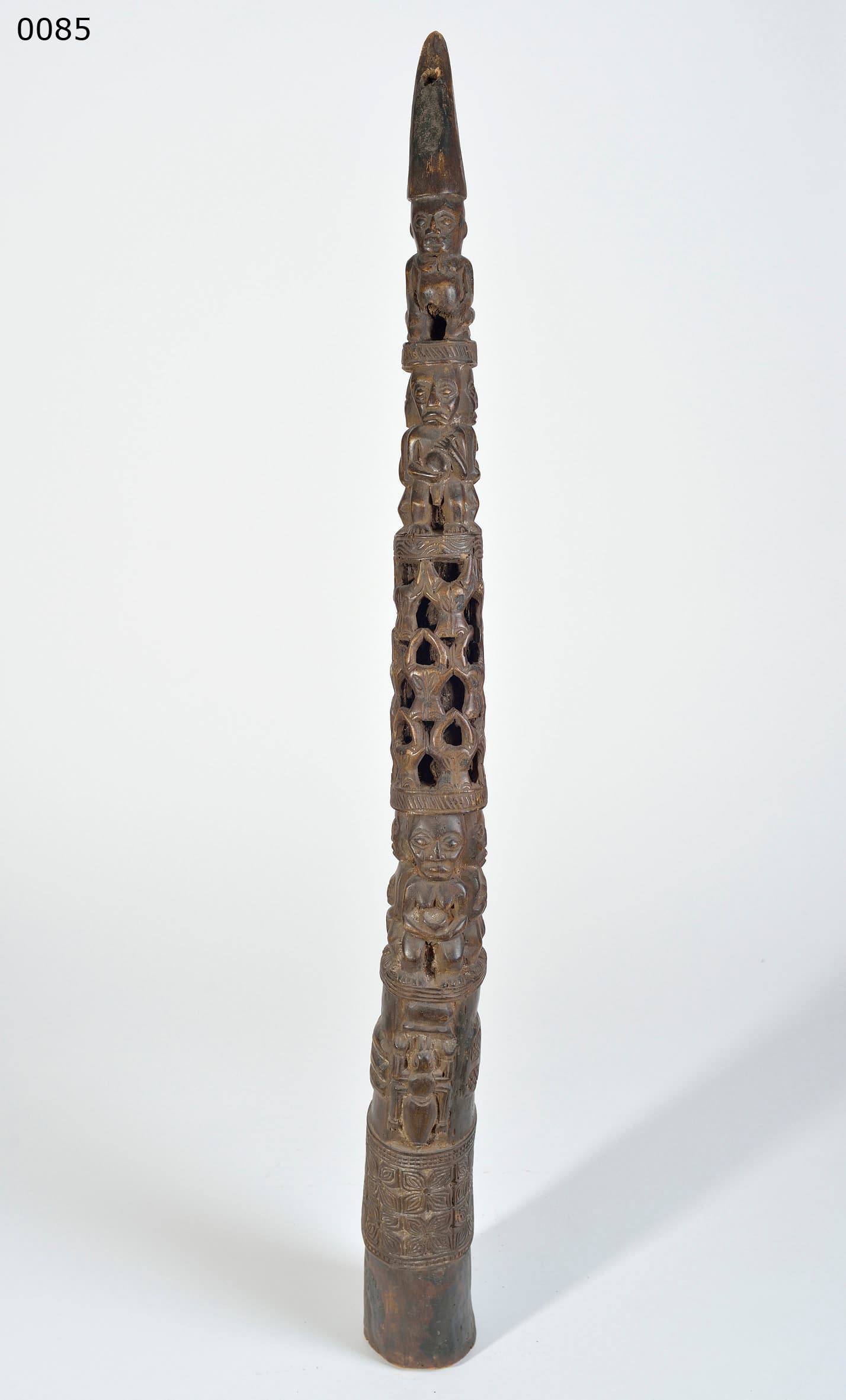
prestige pipe head
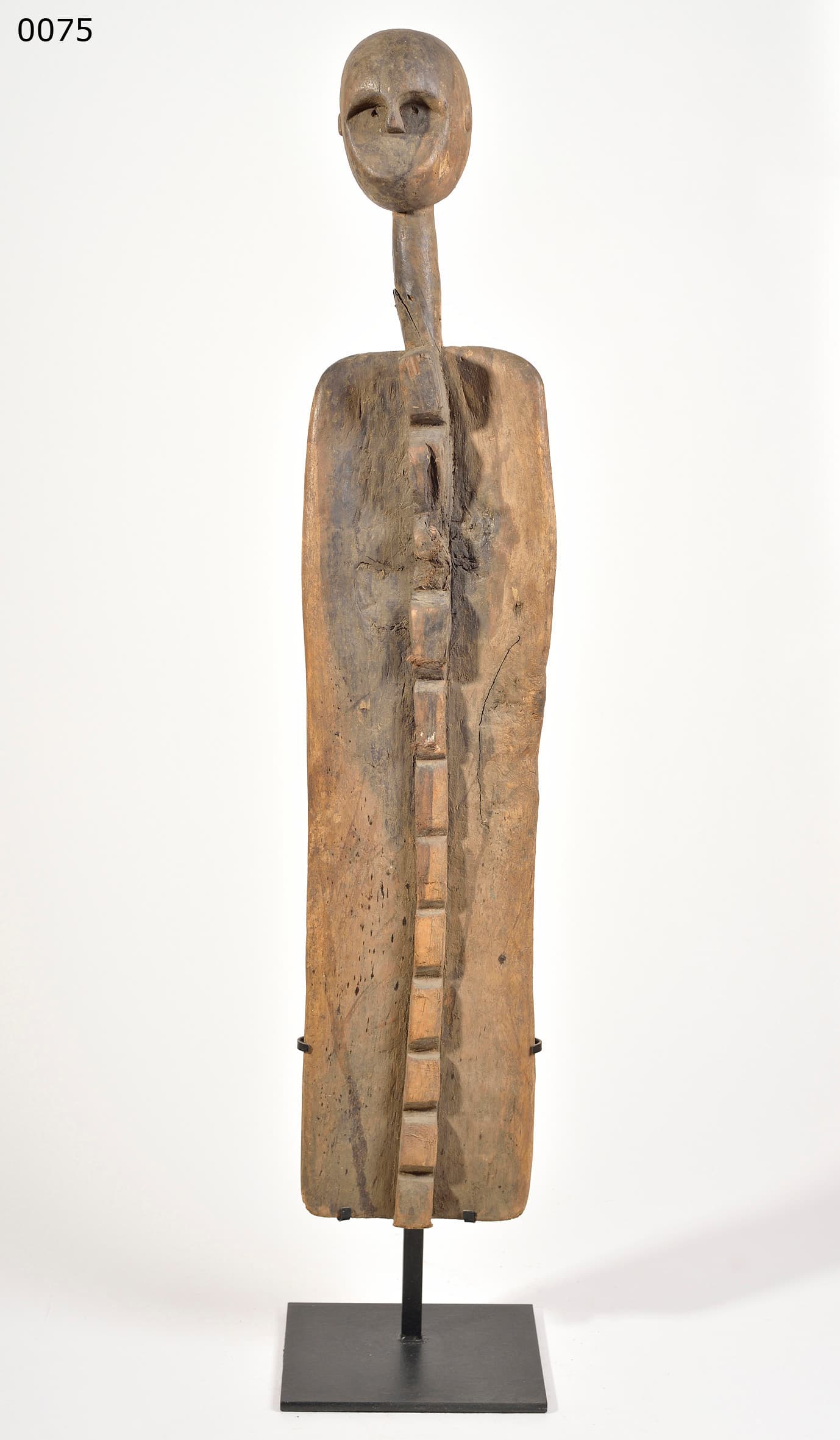
rare friction instrument