A dark wooden face mask from the Mambin chiefdom, about 60 cm high, catalogued as a dung beetle mask. It combines a heavy, bulging face with a crest of three small animal heads.
1. Form and carving
The face is built from large, rounded volumes. Heavy arched brows sweep over wide, open eyes, and the cheeks swell outward below them. A ridged, beak-like nose descends between the eyes. Below it, a small snout-like form sits above a mouth with bared teeth, and two curved tusks or horns turn outward at the corners. Across the top, three carved animal heads with pointed ears and large eyes face forward, set in a row on a raised band.
2. Context
According to the collection catalogue, the Mambin chiefdom lies in the part of the Cameroon grasslands formerly under British rule. Its people are ethnic Bamum, descended from ancestors who left to avoid submission to the sultan of Foumban. The catalogue sees their wish for autonomy reflected in the form of their ritual objects: the mask type is approximately the same as among the Bamum of Foumban, yet there are clear differences in expression and in the use of materials. The collection holds two masks of this type, and the one shown here is one of them.
3. Surface
The wood is a deep brown-black with a smooth, lustrous finish on the cheeks and brows. Lighter patches show on the nose and around the eyes, and fine scratches and small losses mark the edges of the crest and brow.
Summary
A Mambin mask of the dung beetle type, with bulging cheeks, curved tusks and a crest of three animal heads, showing how the chiefdom reshaped a Bamum form.
Written with AI assistance from the collection appraisal, object photography and our own research; editorially reviewed. Mistakes are possible — corrections are welcome. How we work →
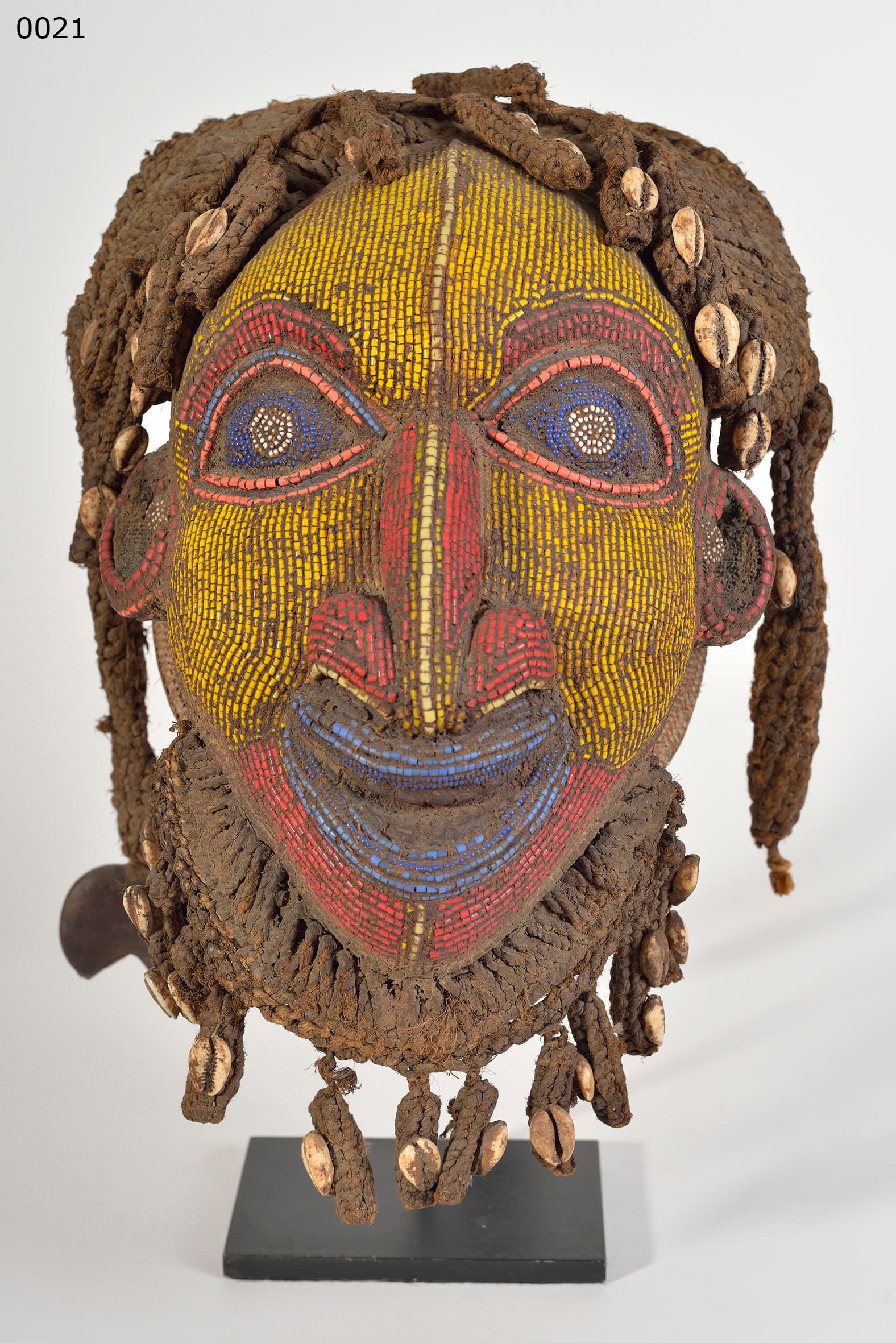
mask (covered with beads - shells on cloth)
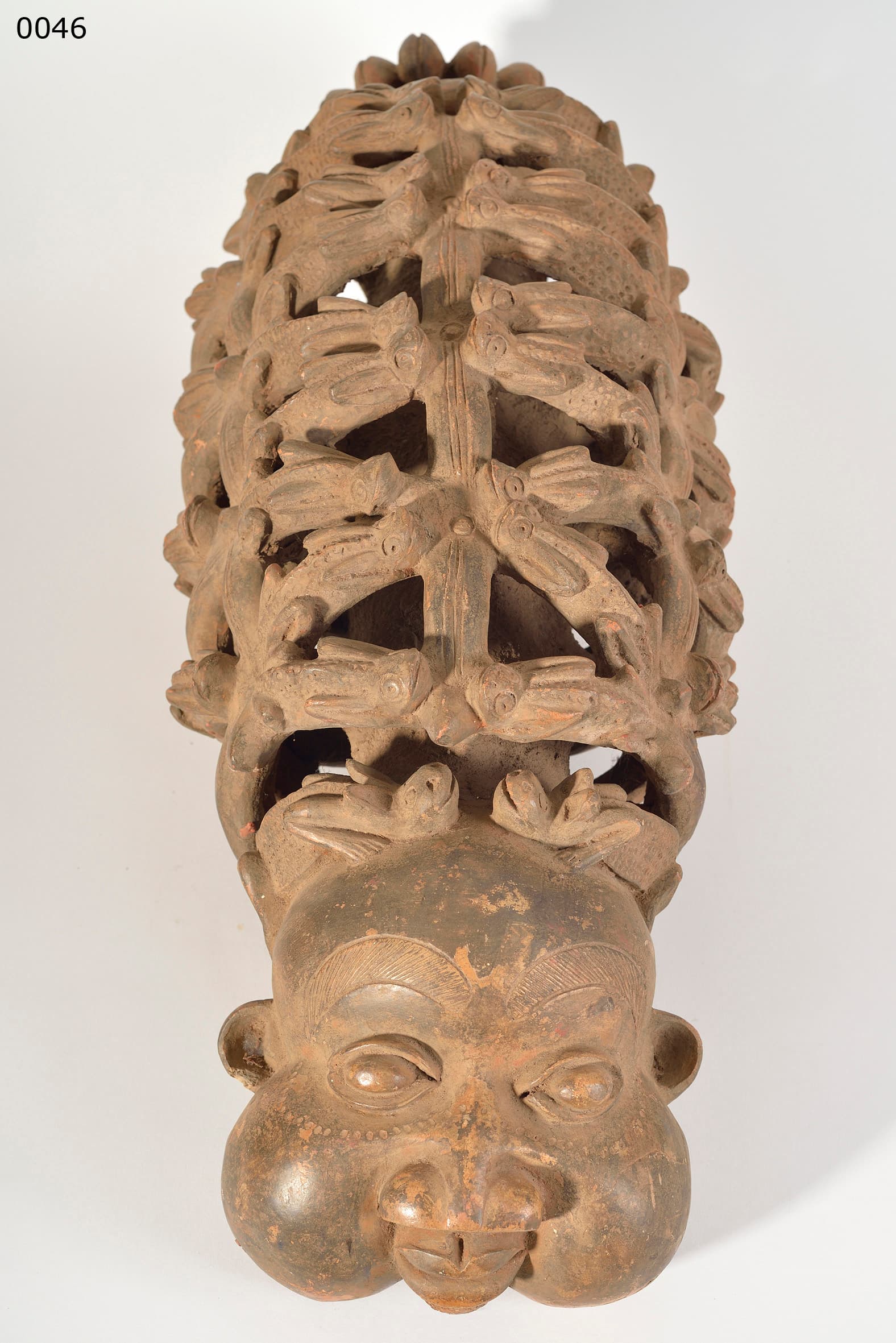
prestige pipe head
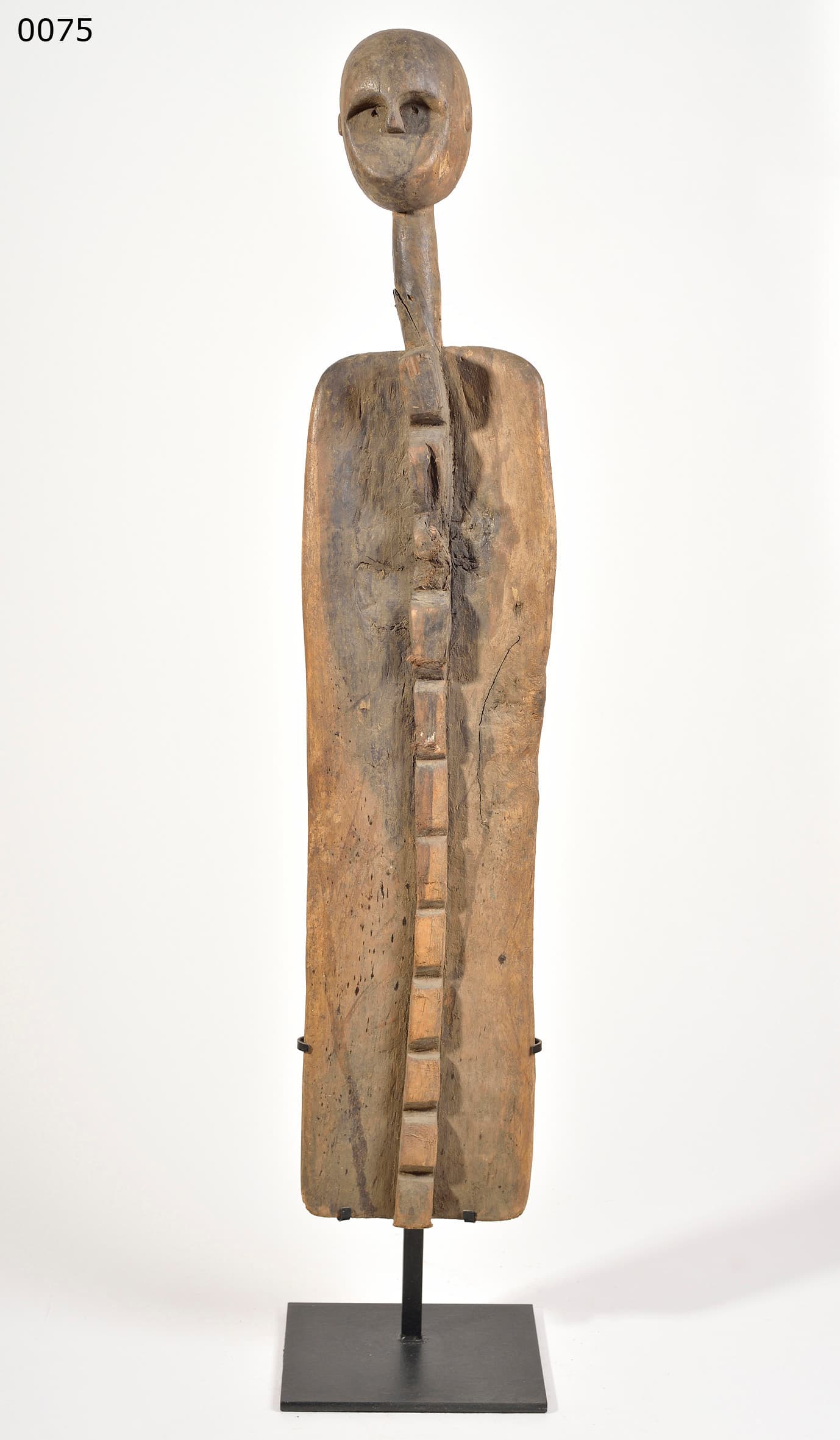
rare friction instrument