This tall, complex wooden sculpture combines a large, stylized head with inflated cheeks and a small toothed mouth, a cap covered in cowrie shells, and a seated figure with a feather headdress on the crown. The head rests on a covered box base fitted with horns. The surfaces show large, intense eyes and a varied, dark patina.
1. Aesthetic Style and Structural Complexity
This object showcases the structural ambition of Bamum woodcarvers. Originally used as a Meshango mask, its design is highly complex, integrating a colossal base head with a complete, three-dimensional figure perched on the crown. The figure raises both arms and wears cowries, small bells and feathers. This stacked verticality is a hallmark of Grassfields royal art, designed to make the wearer appear tall and imposing. The swollen cheeks and the intense, staring eyes are deeply carved and project an aura of authority.
2. Function and the Evolution of Use
According to the collection catalogue, such masks were usually reserved for the chieftain, who wore them at funerals, harvest festivals and other meaningful events, showing the people who the chieftain was and that his authority was to be obeyed. This ritual use has since lost some of its significance: the reigning chief of the Bamin chiefdom placed the masks on stands in his reception room, where they continue to display his power and importance to visitors.
3. Patina and Surface
The surfaces exhibit a dark, varied patina with smooth, polished areas on the cheeks. The box base is covered in a darker, dry skin-like material and carries horns and small bound bundles. The wood shows natural wear, consistent with long handling and display.
Summary
This Meshango object is a monumental example of Bamum carving. Its transition from dance mask to display piece in the chief's reception room reflects the changing ways in which chiefly power is shown.
Written with AI assistance from the collection appraisal, object photography and our own research; editorially reviewed. Mistakes are possible — corrections are welcome. How we work →
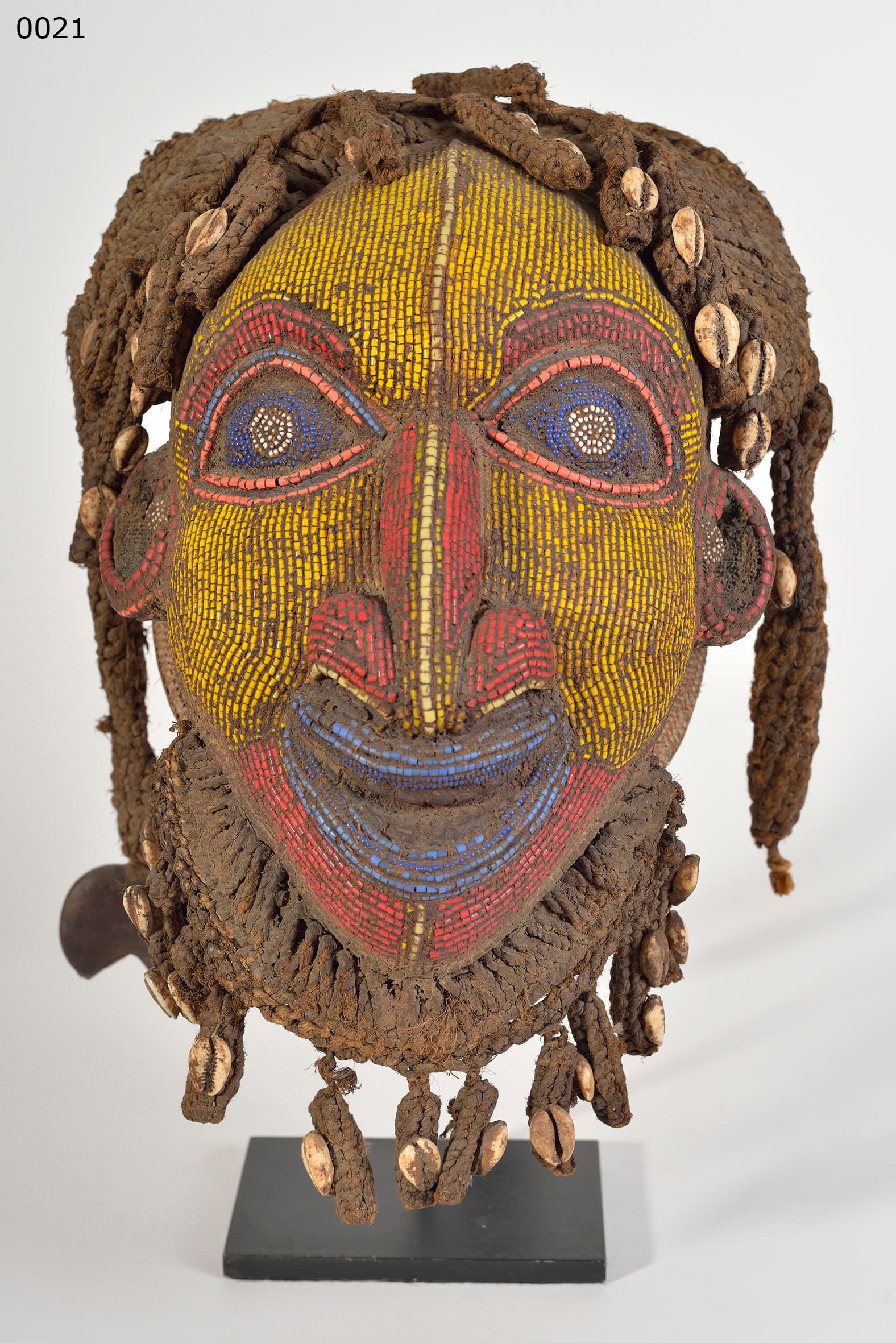
mask (covered with beads - shells on cloth)
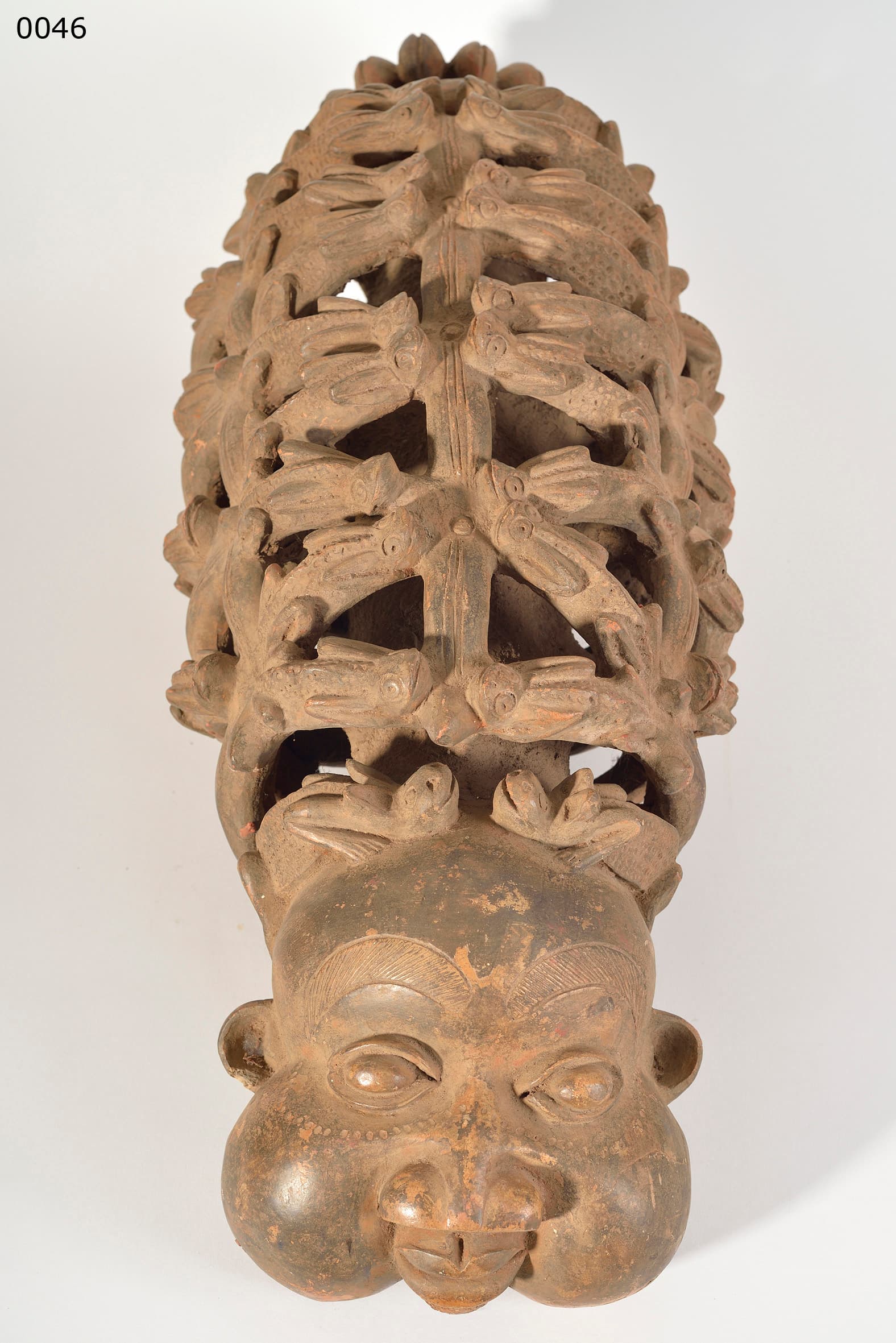
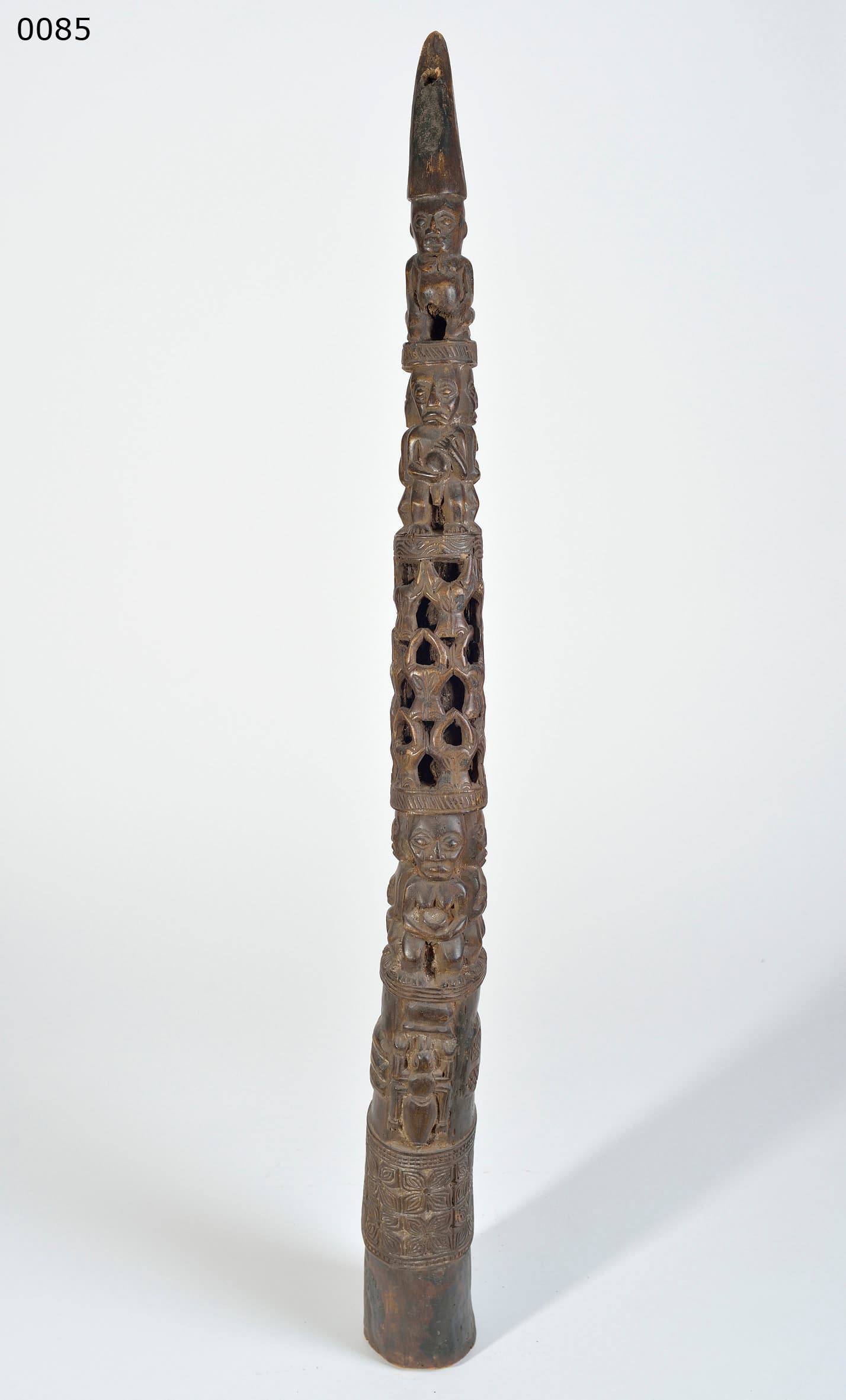
prestige pipe head
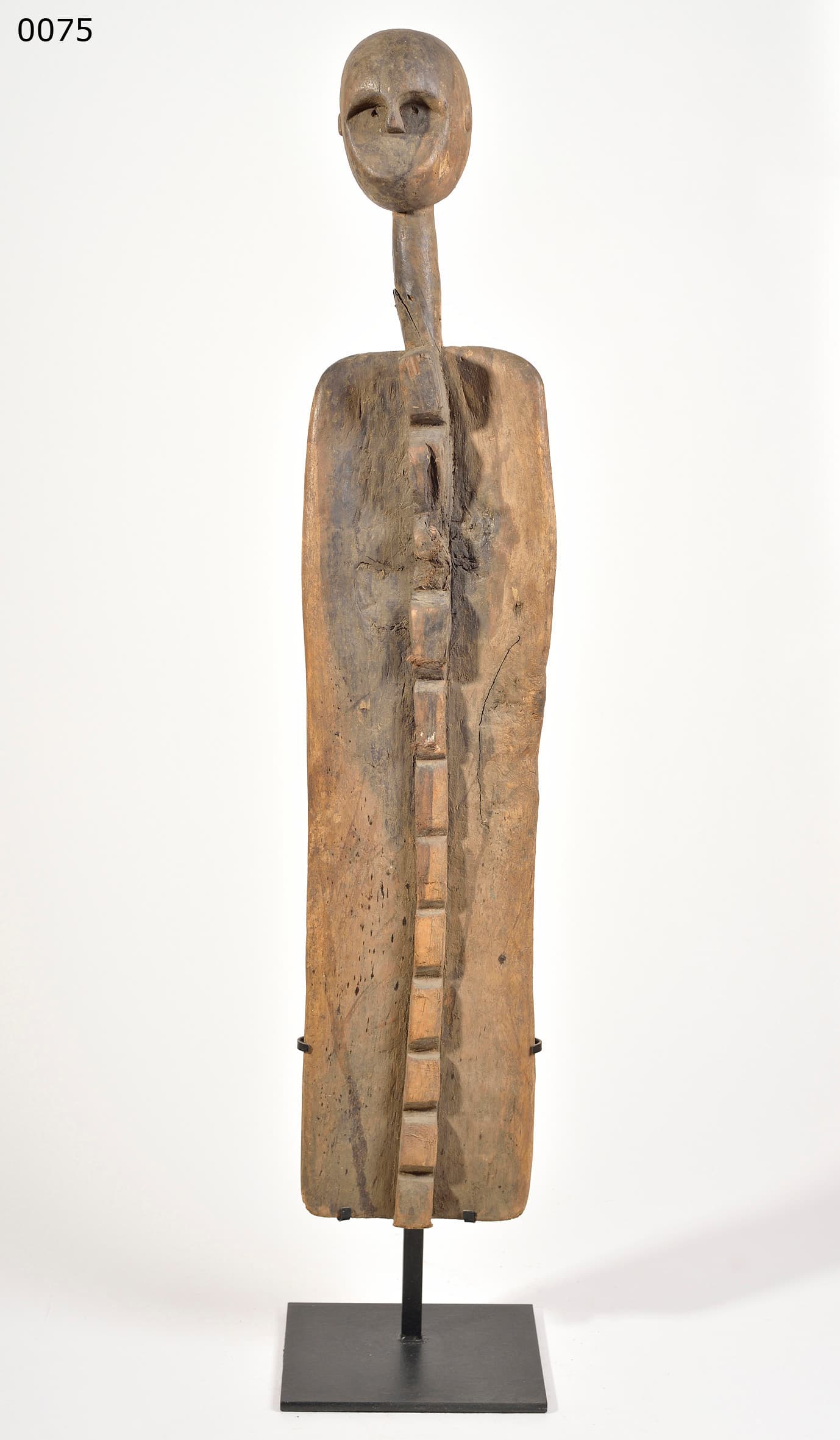
rare friction instrument