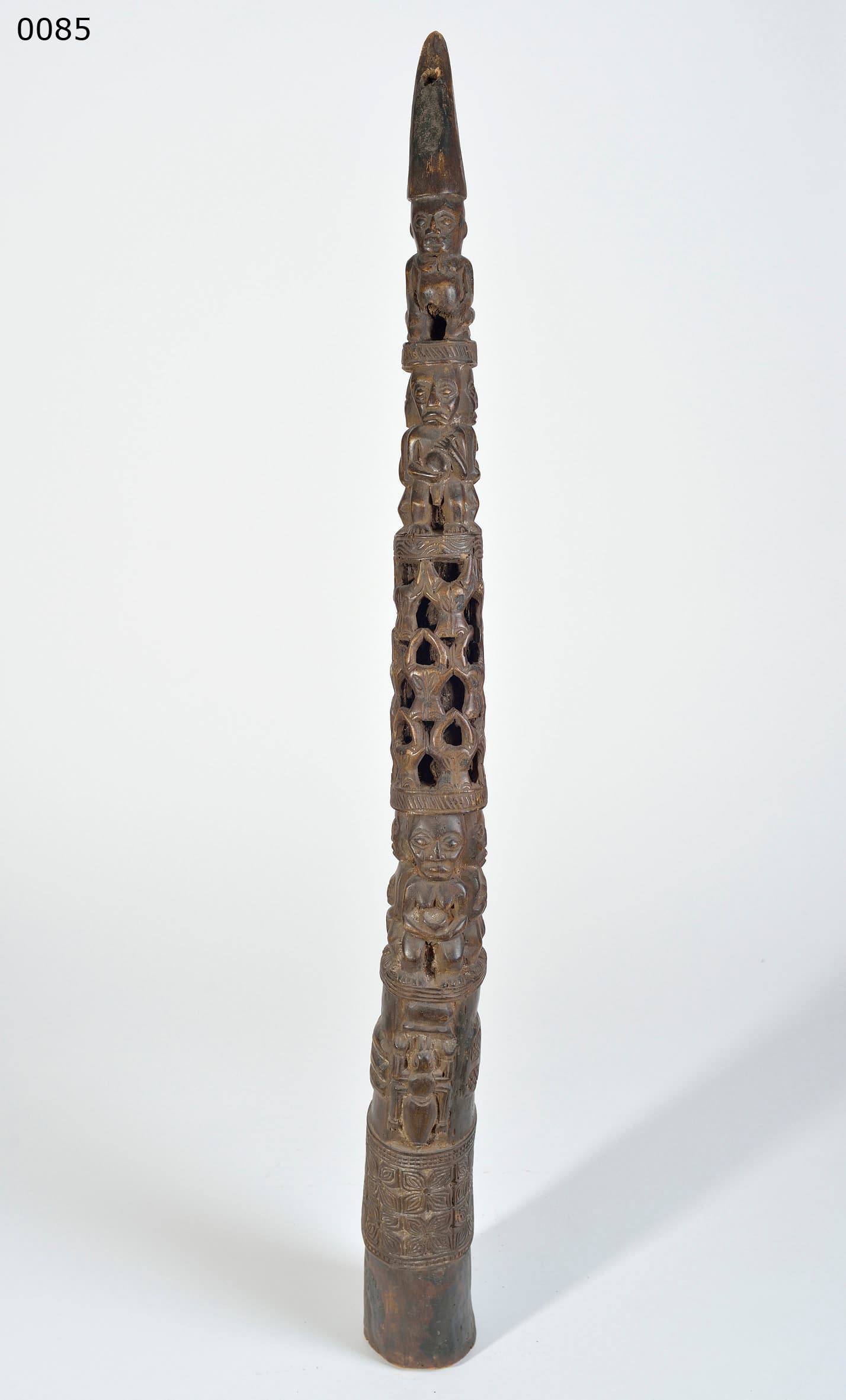
Measuring 220 cm tall, this pair of weathered architectural posts is carved as vertical columns of freestanding human figures stacked one above the other, a female figure below and a male figure above. Their raised arms form open frames around the heads and carry the figure above.
1. Aesthetic Style and Architectural Sculpture
In the Cameroon Grasslands, architecture and sculpture are closely linked. These house posts are not merely structural supports; they are carved from single, massive logs of hardwood. The style relies on rhythmic vertical repetition, utilizing stacked human figures to create a visual pillar of strength. The figures themselves, though weathered, show large, round eyes, open mouths, openwork arms and compact bodies, suggesting the collective strength of the ancestors upholding the boundaries of the community.
2. Function and Spatial Demarcation
According to the collection catalogue, house posts usually frame the entrance to houses or huts of special significance within a chiefdom: the house of the chieftain, the ritual house in which rituals such as communing with the ancestors are practised, and the treasury, in which valuable masks, ancestral figures and ritual objects are kept under the protection of a specially chosen guard. By flanking these doorways, the carved figures acted as sentinels, visually warning uninitiated individuals away from sacred or highly valuable spaces.
3. Patina and Surface
The wood is deeply weathered. The surfaces are grooved and softened by long exposure to sun, rain and wind, with open fissures running along the grain. The sharp carving lines have largely worn away, which suggests that the posts stood outdoors for a long time.
Summary
These monumental house posts are strong examples of functional African architecture, joining structural support with spiritual protection. Their weathering points to a long history at the entrance of an important building.
Written with AI assistance from the collection appraisal, object photography and our own research; editorially reviewed. Mistakes are possible — corrections are welcome. How we work →
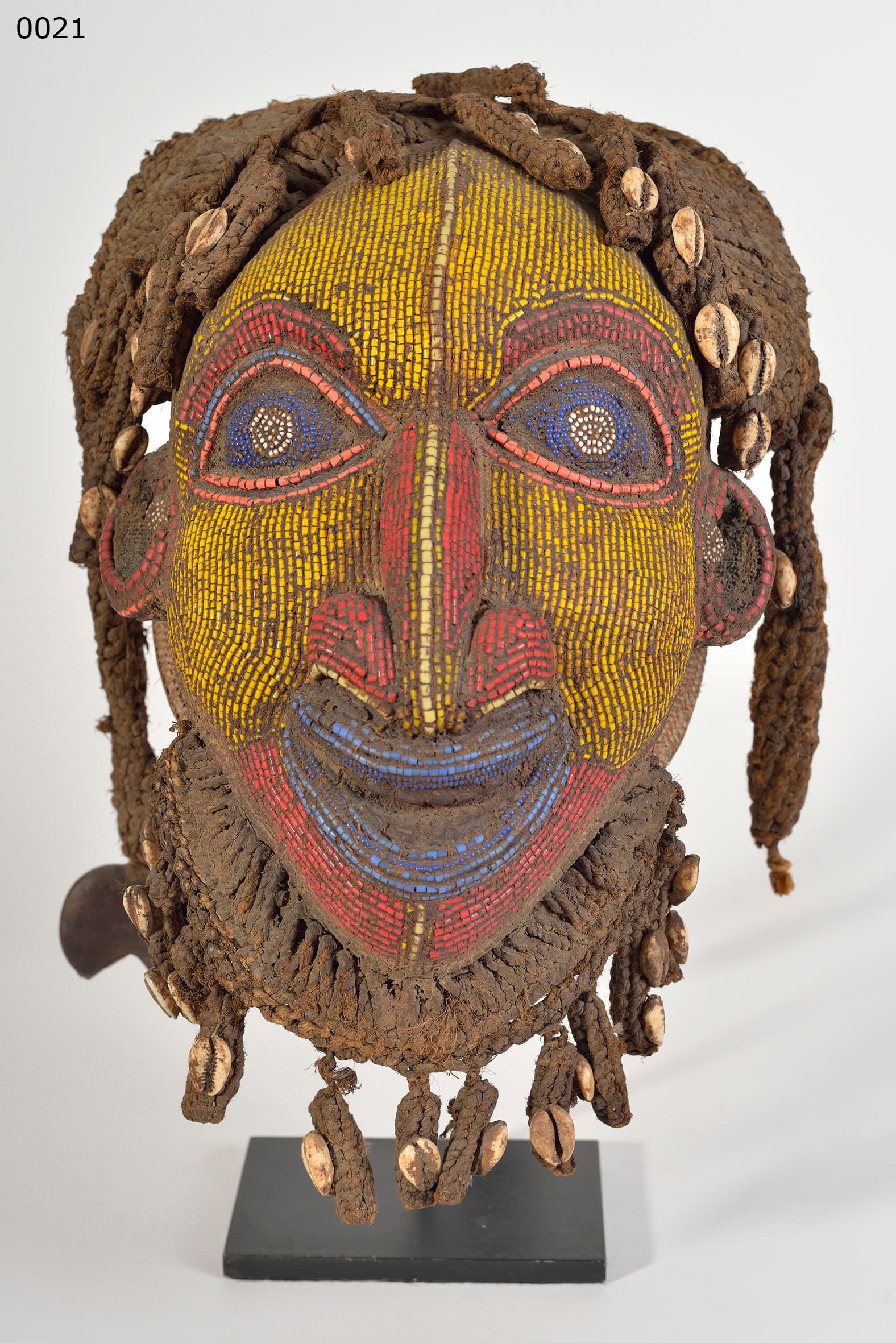
mask (covered with beads - shells on cloth)
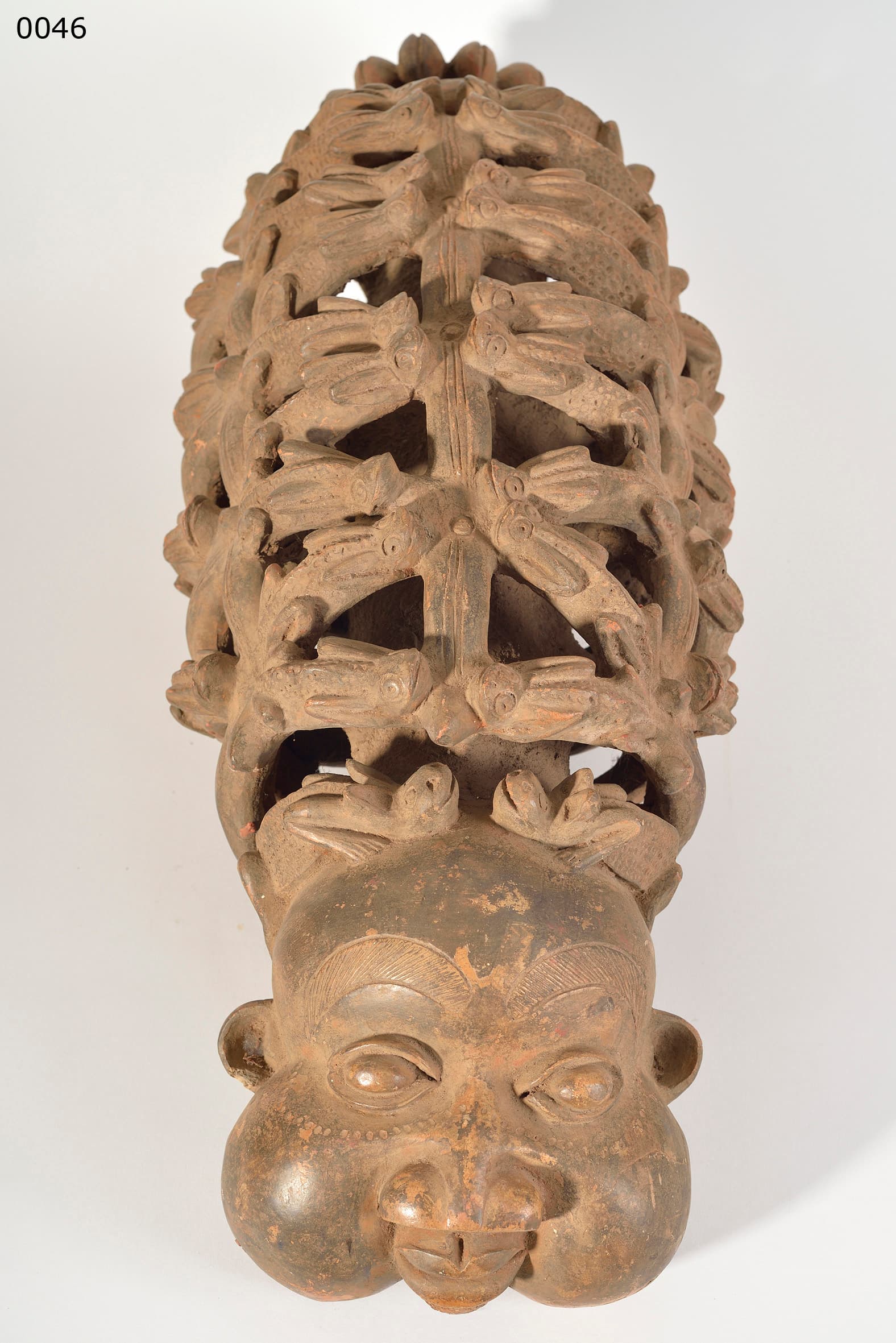
prestige pipe head
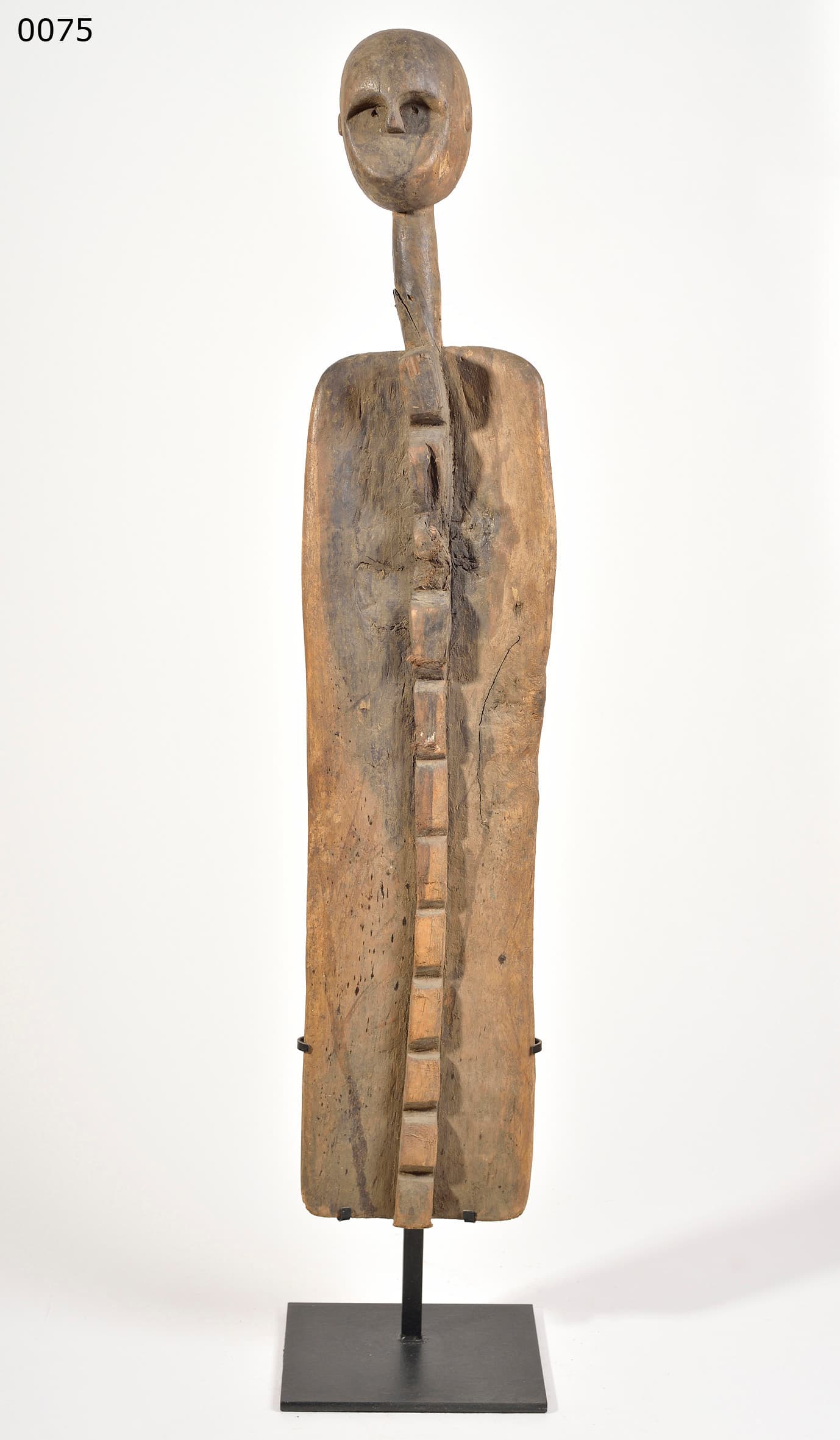
rare friction instrument