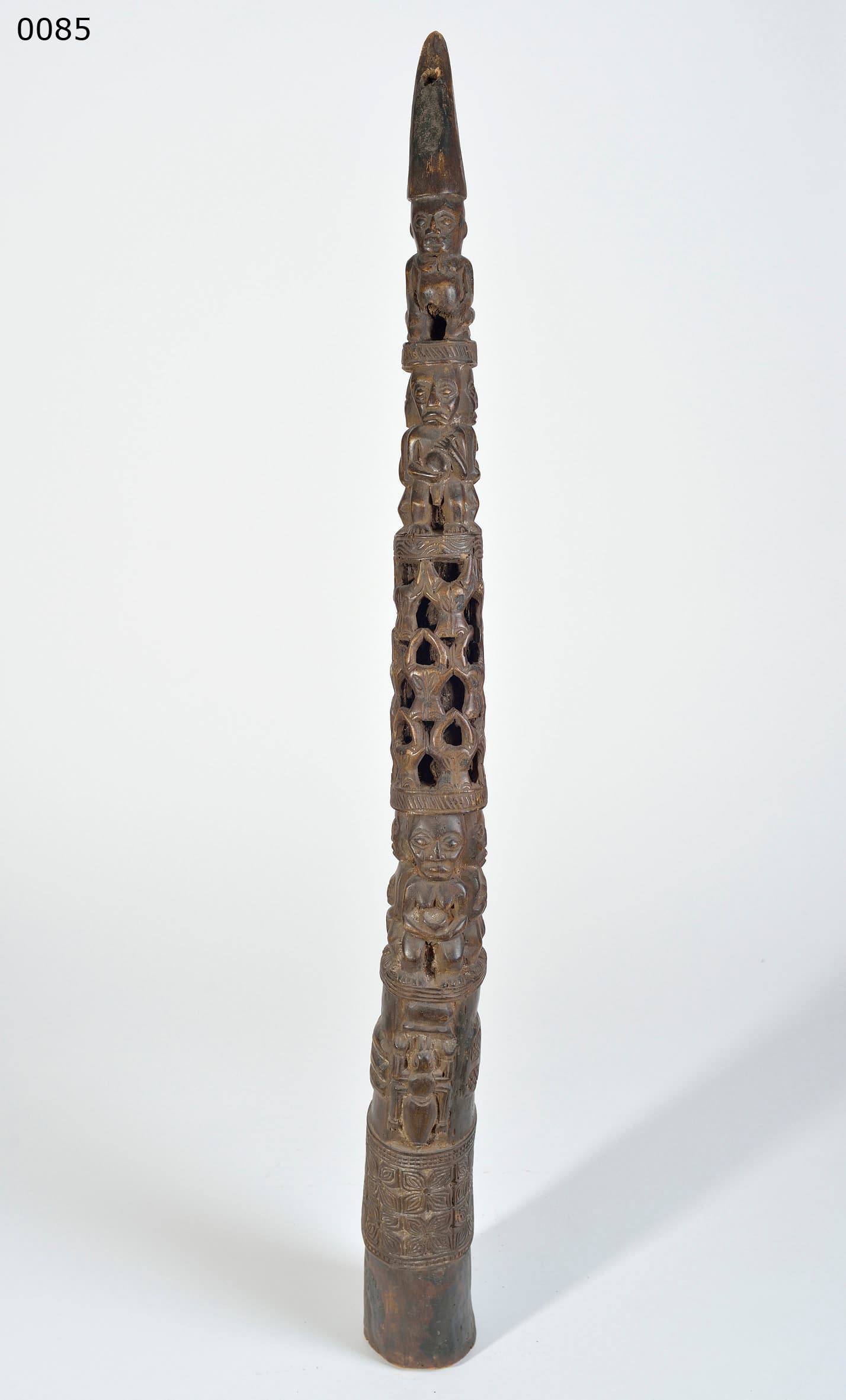
A cast brass staff from the Mabouo chiefdom in the Sultanate of Foumban, Cameroon. At its top, a bearded male figure sits on a small platform, a staff in each hand. The collection catalogue lists the piece as one of two prestige figures from this chiefdom.
1. Form and Casting
The figure's large, round head carries a tall crested headdress. Its ridge ends in a short horn at the front and opens at the top into a broad, flaring blade, and the cap is finely hatched. The face is calm, with almond-shaped eyes, a straight nose and full lips. Incised lines mark the cheeks and form a beard around the chin. The body is slender and naked, the knees bent as if seated. The left hand grips a long staff that rises to the shoulder, the right hand a shorter one that rests on the platform.
The platform is a flat square plate. Two small cast heads sit at its front corners, each on a strut that runs down to the shaft, so that the heads appear to carry the figure. Beside the figure stands a small animal with upright ears. Below, the plain round shaft ends in a flat disc foot.
2. Use and Context
According to the collection catalogue, Mabouo is a small chiefdom that can be reached only on foot, and it is comparatively poor. For that reason prestige figures mattered to its chief: they showed the outside world that he, too, owned objects worth displaying. Such figures served to demonstrate a chief's wealth and power and usually stood in his audience or reception room.
3. Surface
The brass has a deep brown patina with a soft sheen on the head, the shaft and other raised areas. Small green spots of corrosion appear on the headdress, the torso and the platform.
Summary
A cast brass prestige staff from a Bamun chiefdom, made to display the standing of its chief.
Written with AI assistance from the collection appraisal, object photography and our own research; editorially reviewed. Mistakes are possible — corrections are welcome. How we work →
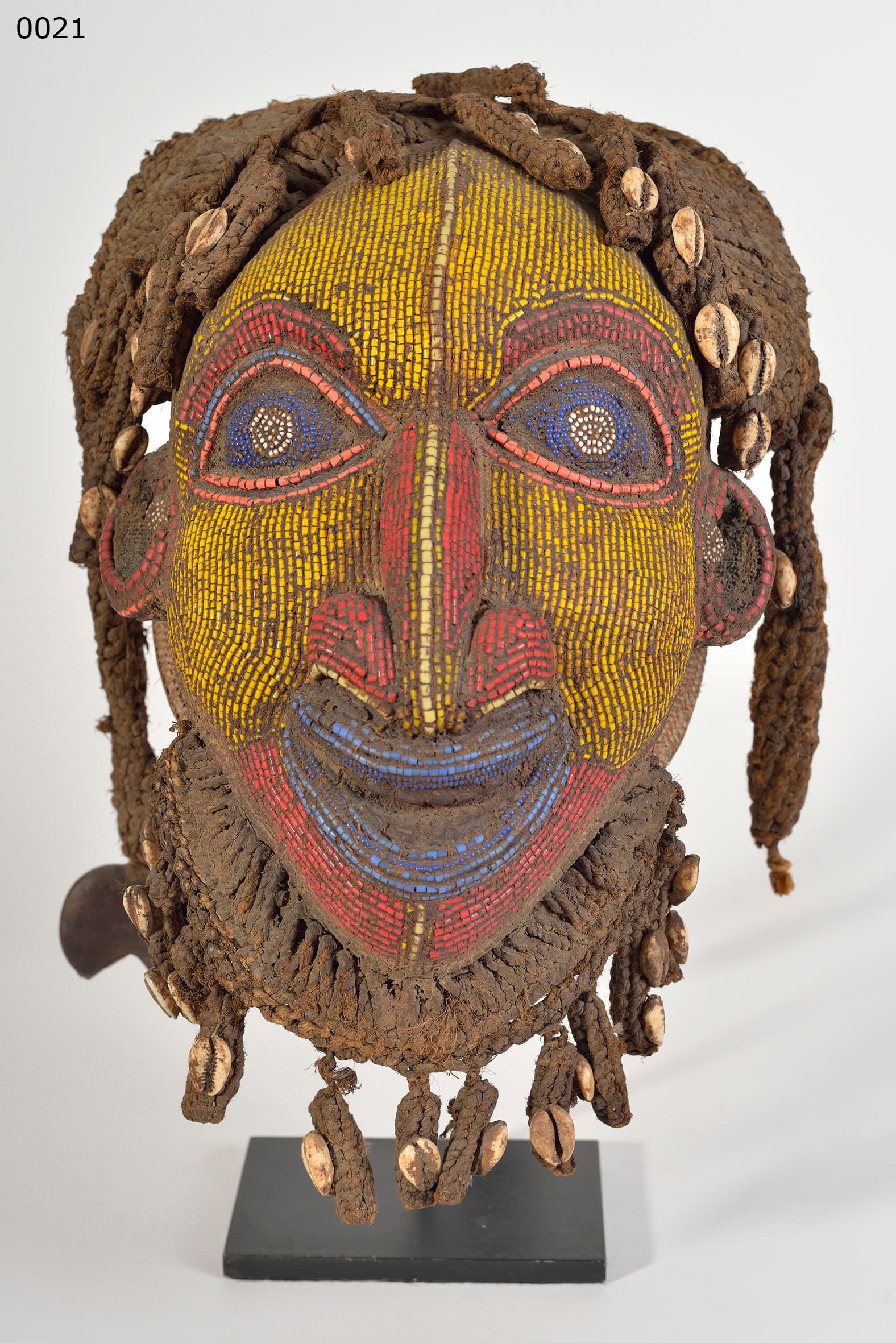
mask (covered with beads - shells on cloth)
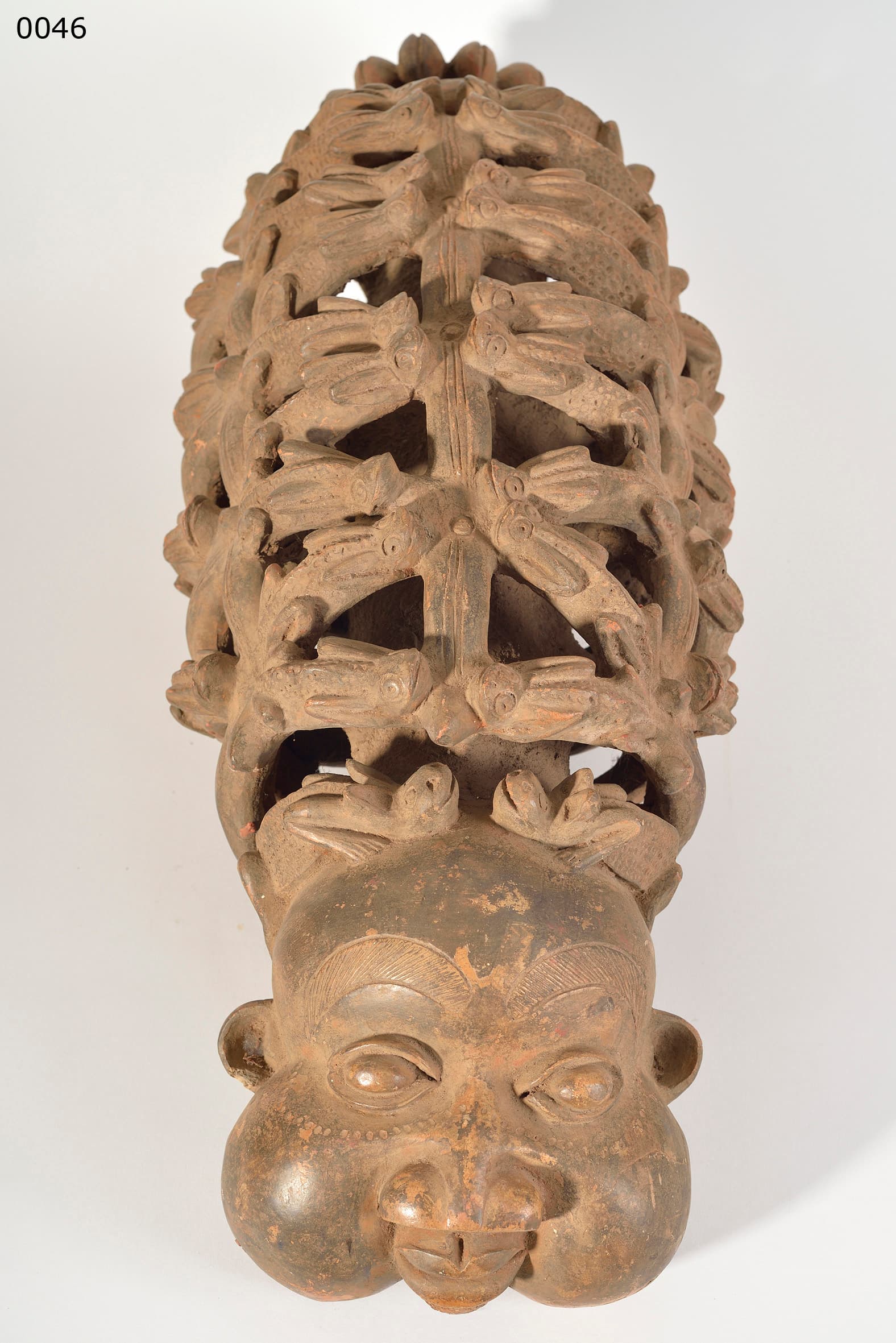
prestige pipe head
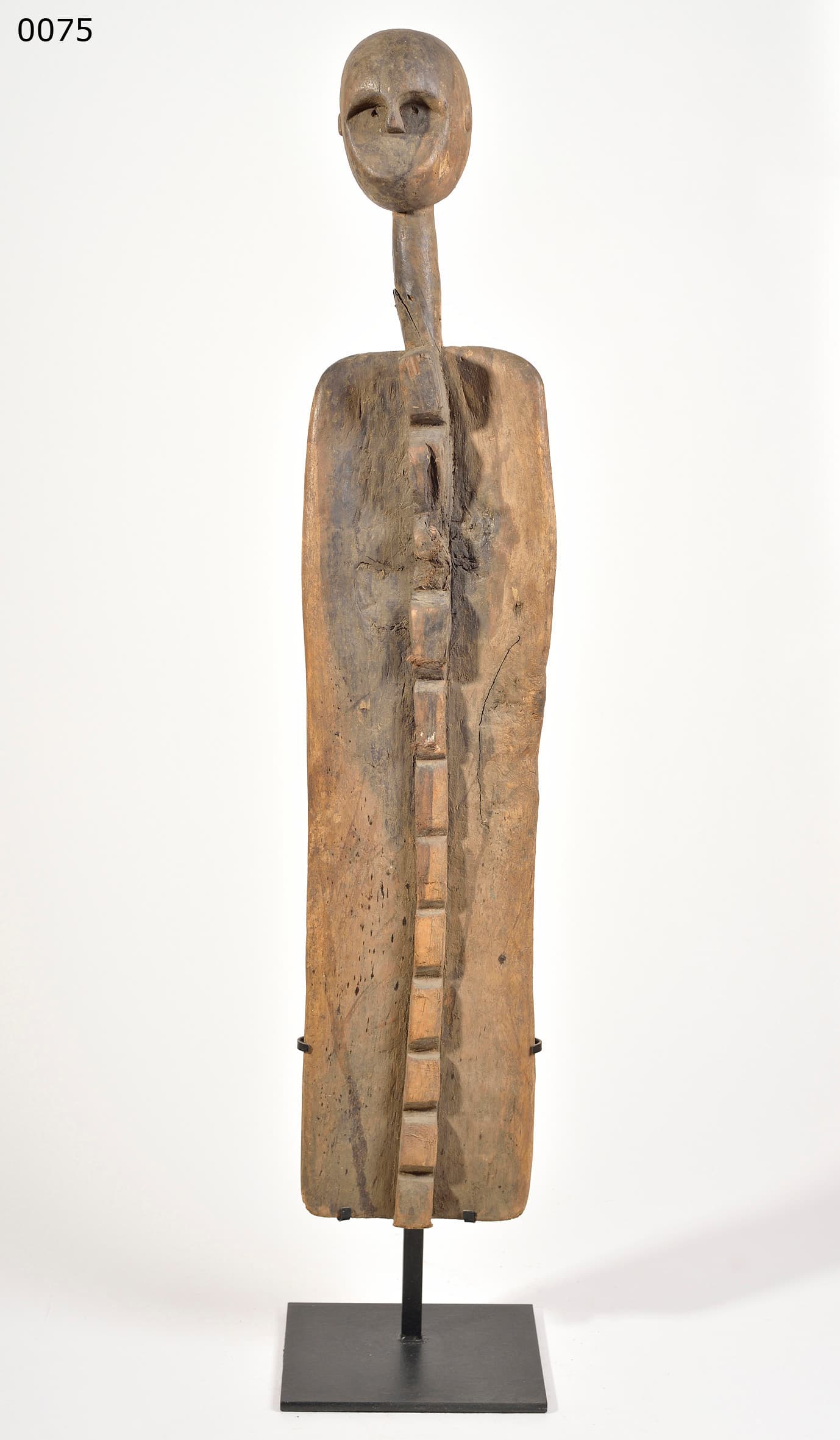
rare friction instrument