A carved wooden female figure seated on an openwork stool featuring a spider motif. She is smoking a pipe, wears a distinctive, fan-brimmed "colon-style" hat, and lacks the typical exaggerated, bulging cheeks seen in classical Grassfields art.
1. Aesthetic Style and Colon Influence
This figure represents a fascinating stylistic departure from standard Bamum conventions. While retaining traditional elements like the spider motif on the stool (symbolizing divine wisdom and divination), the face lacks the deep, aggressive adze marks and bulging cheeks usually expected. Instead, the facial features are softer, hinting at European influence. The most striking element is the fan-like brimmed hat, which mimics the headgear of colonial administrators. This blending of Grassfields iconography with European attributes places the object squarely within the realm of "Colon art" aesthetics, reflecting a society navigating foreign presence.
2. Ritual Function and Female Authority
Hailing from the personal collection of Chief Fon Homgoupayon of the Mayap Chiefdom, this is a commemorative portrait of a specific female ancestor. The figure is highly unusual because she is depicted smoking a pipe — an act and object normally reserved as a powerful symbol of male chiefly authority. By portraying this female ancestor with a pipe, a colon-style hat, and a wisdom stool, the carver may be signaling her extraordinary political power, intellect, and high social standing associated with the Mayap lineage.
3. Patina, Material Weathering, and Age
The wood bears a smooth, warm brown patina consistent with careful preservation within the chief's personal quarters. The edges of the hat, the bowl of the pipe, and the knees of the figure show the most handling wear.
Summary
This commemorative figure is a brilliant historical document showcasing the intersection of female political power and colonial-era aesthetics in the Cameroon Grasslands. Its unique iconography makes it a highly individualized portrait of a formidable Mayap ancestor.
Written with AI assistance from the collection appraisal, object photography and our own research; editorially reviewed. Mistakes are possible — corrections are welcome. How we work →
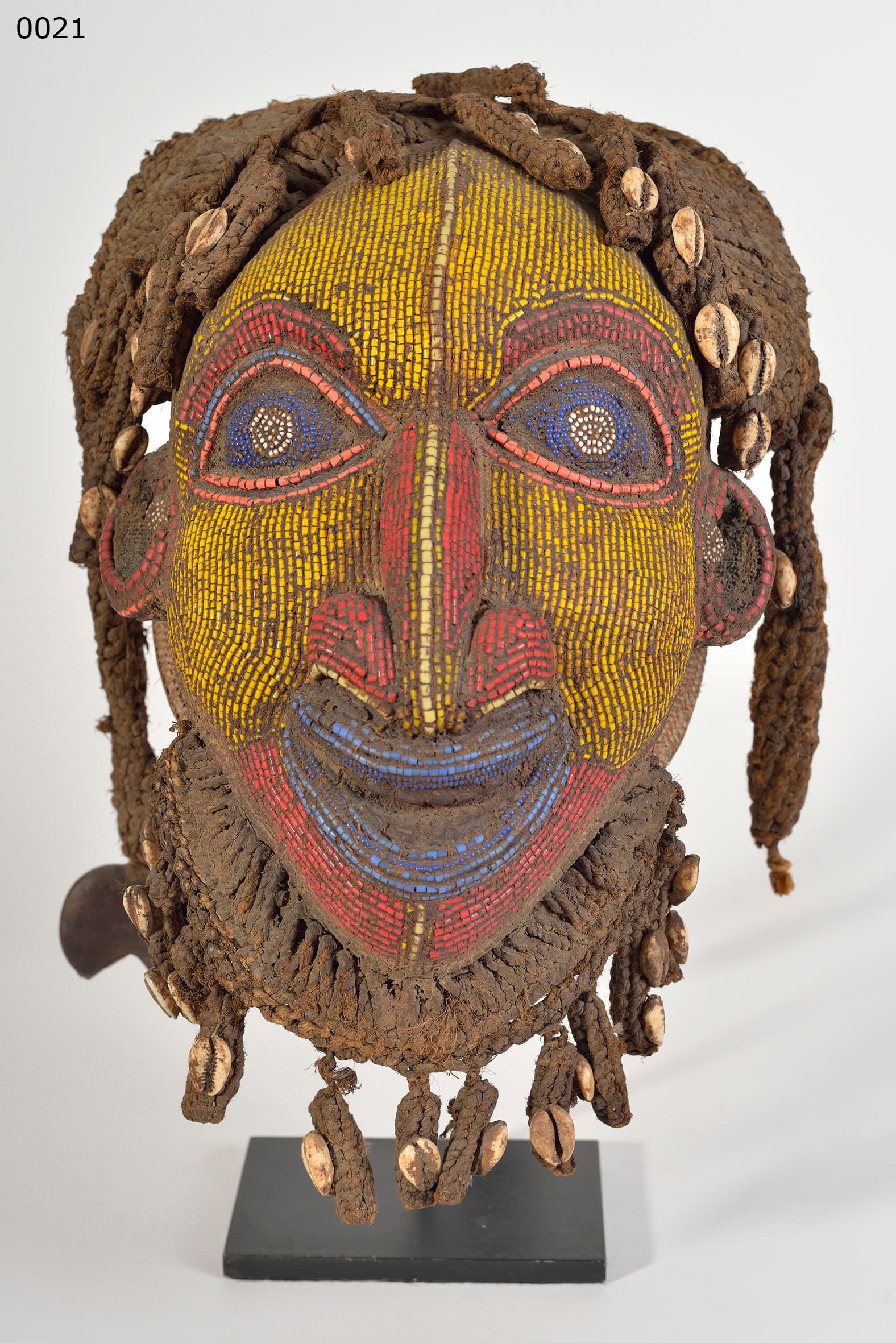
mask (covered with beads - shells on cloth)
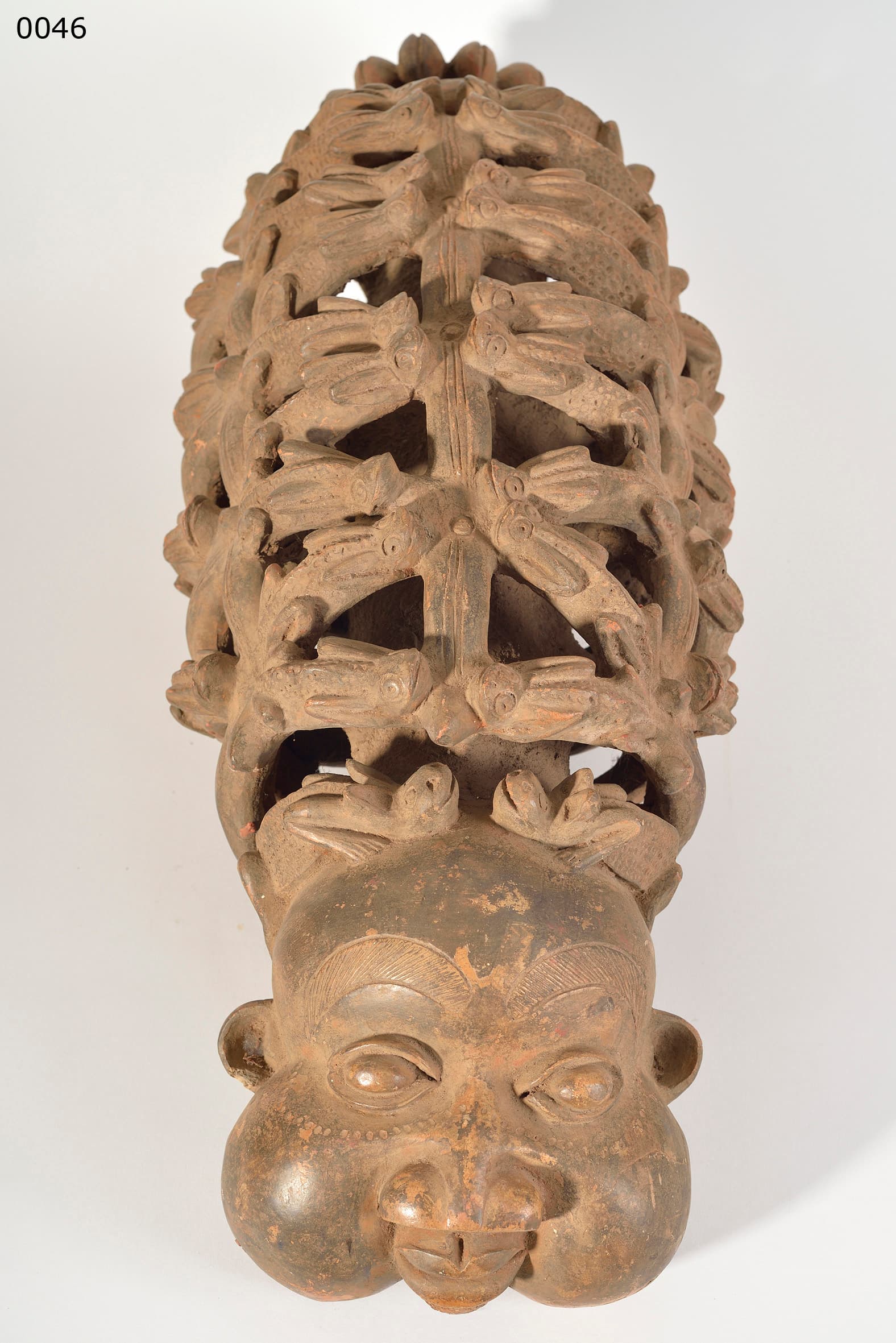
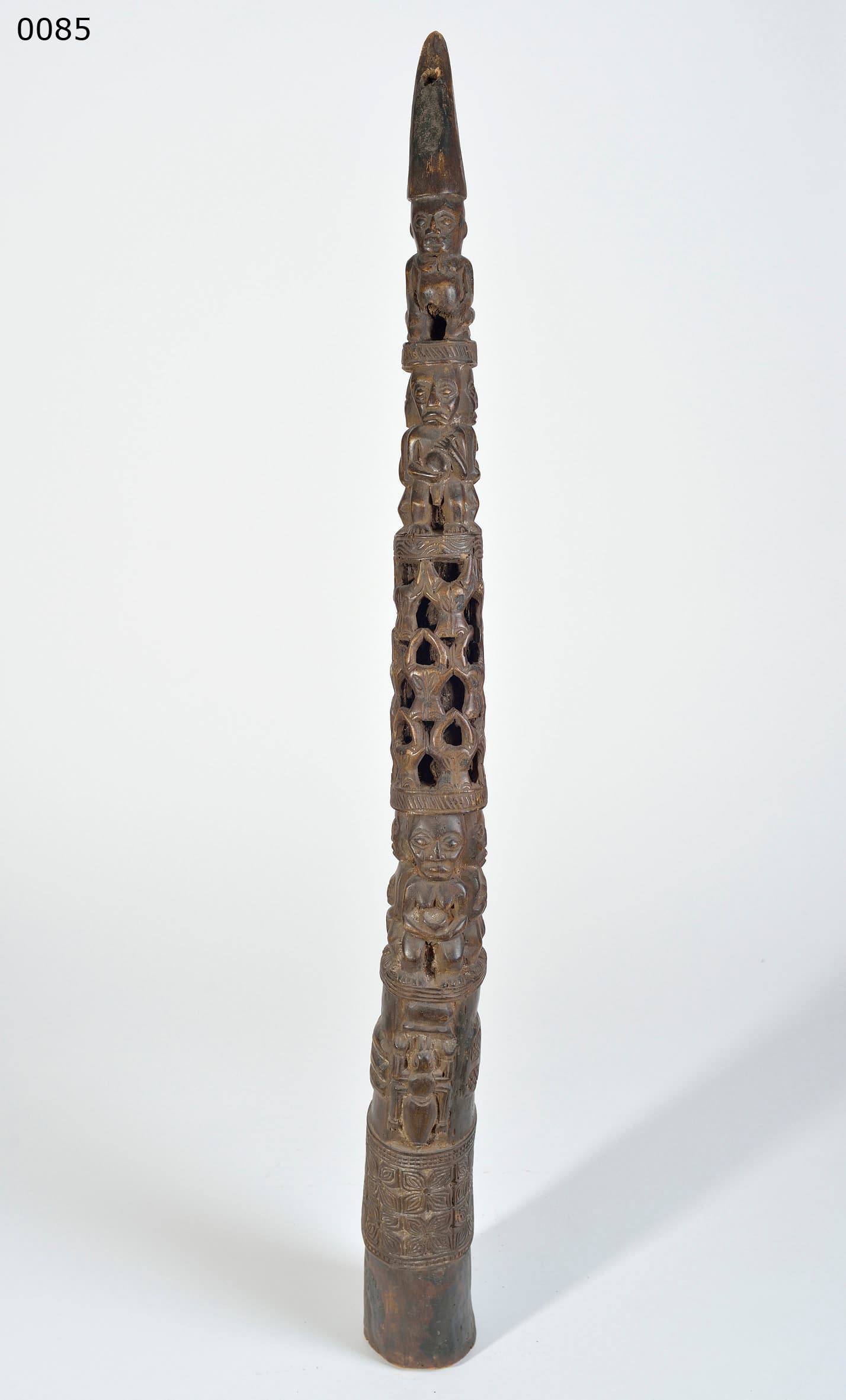
prestige pipe head
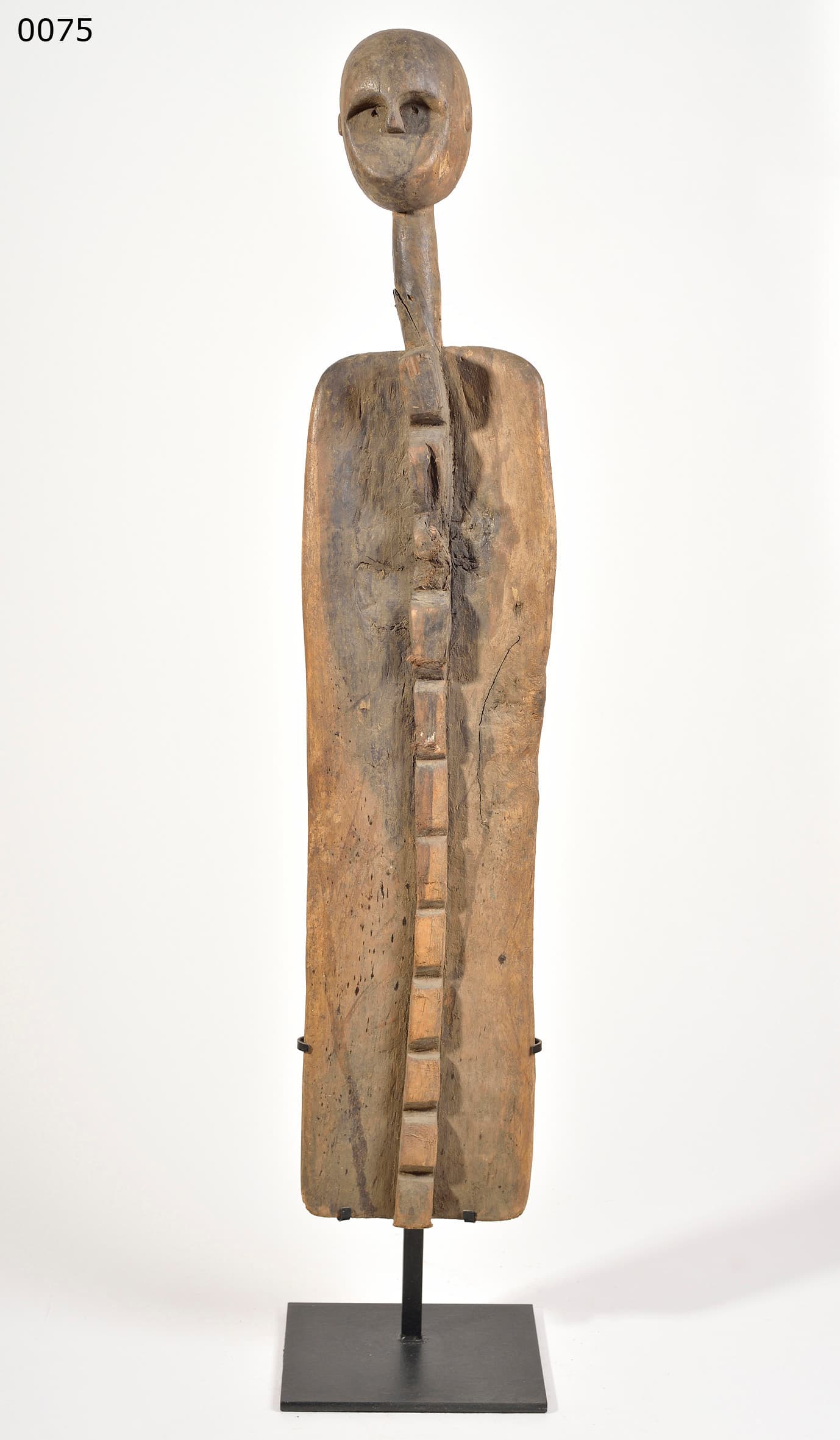
rare friction instrument