A monumental 150 cm tall standing wooden figure of a mother holding two small children at her sides, each reaching toward a breast. The wood is weathered and cracked, with a flaking surface layer, and shows prominent, bulging eyes, a headband and a layered necklace.
1. Aesthetic Style and the Iron-Plated Ancestor
This imposing maternity figure from the Machapa Chiefdom represents a kind of "first mother" of the community. Aesthetically, it conforms to the grand, volumetric style of Bamum carving, with a large, authoritative head and a sturdy, supportive body. According to the collection catalogue, the figure was originally largely covered with iron sheeting to ward off evil, a feature that is no longer clearly visible. The plating gave the wooden core a protective, imposing presence as a monument of female fertility.
2. Function and Amulet Distribution
Kept in the Machapa royal treasury, this figure is described in the collection catalogue as a symbol of female fertility, meant to embody the fertility and well-being of the entire community. Because the iron itself was not considered sufficient to keep out evil, the chiefdom's fetishist performed a ritual to provide the material with the necessary magical powers. Members of the chiefdom who had venerated the figure were permitted to break off small pieces of the unused plating and fashion them into amulets against evil influences.
3. Patina and Surface
The current state of the figure reflects its history. The wood is dry and weathered, with a cracked, flaking crust on the torso, head and legs, and darker, worn areas on the limbs. The deep cracks and softened features point to a long life of use and exposure.
Summary
This monumental "first mother" figure is an object of communal faith and ritual interaction. The catalogue's account of its iron plating and the amulets made from it tells of protection and lineage in the Machapa Chiefdom.
Written with AI assistance from the collection appraisal, object photography and our own research; editorially reviewed. Mistakes are possible — corrections are welcome. How we work →
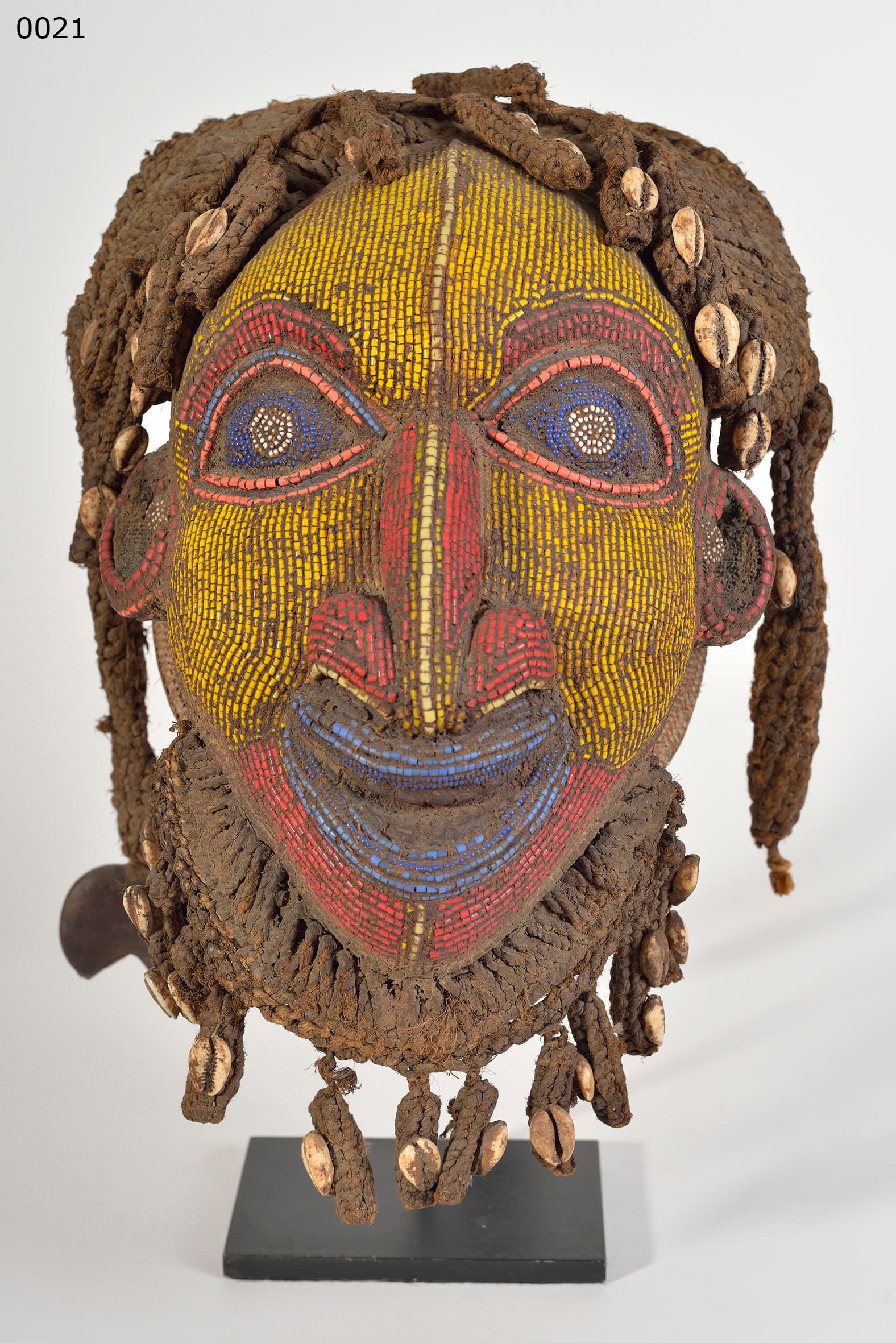
mask (covered with beads - shells on cloth)
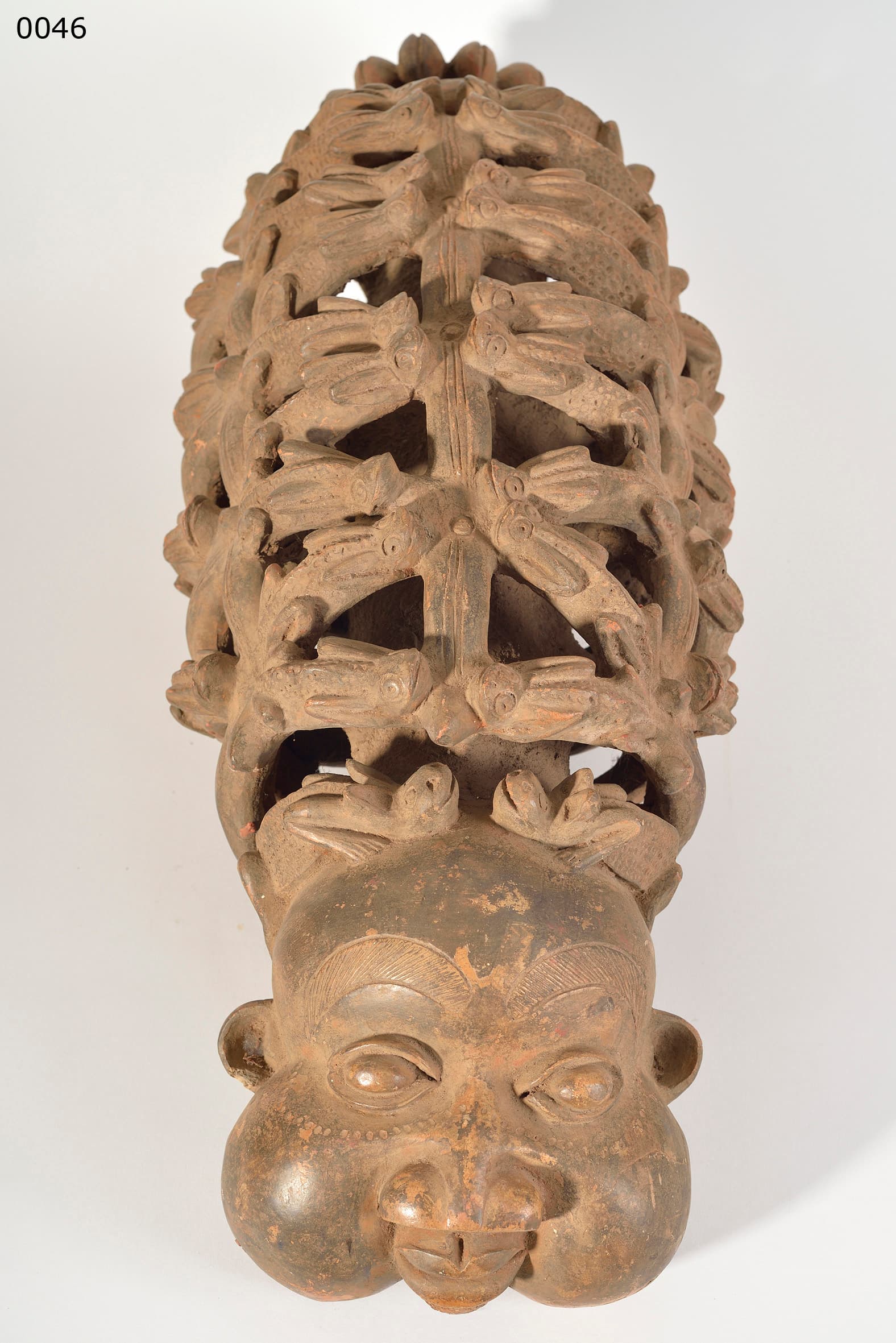
prestige pipe head
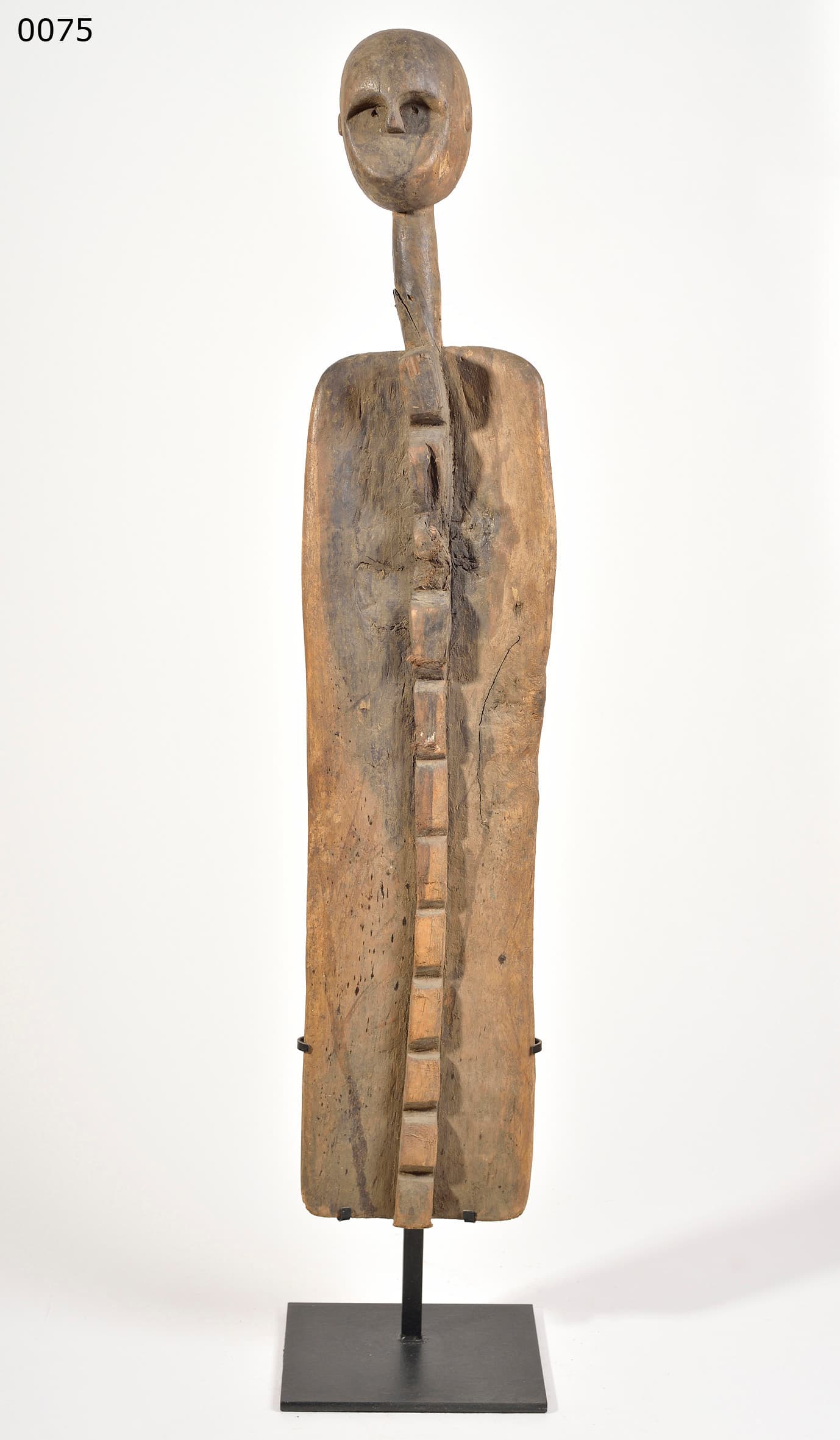
rare friction instrument