A heavily carved wooden stool with a round seat and a thick rim, supported by a ring of about eight standing human figures set at slightly different heights on a round base. The figures wear patterned caps and show signs of wear.
1. Aesthetic Style and Caryatid Support
This royal stool from the Malin Chiefdom utilizes the classic Grassfields caryatid structure. The aesthetic is driven by the dynamic arrangement of the supporting figures, which are carved in a staggered, height-offset composition around the central axis. These figures, with large round eyes and finely incised caps, may represent the loyal subjects and ancestors of the clan, symbolically bearing the weight of the chieftain and the kingdom. The openwork between the figures gives the stool a rhythmic, almost architectural quality, in contrast to the smooth, dark seat and base.
2. Function and the Currency of Power
According to the collection catalogue, the figures supporting the seat were partly plated with metal, intended to keep evil influences away from the seated chieftain. Tribal members who did the chieftain a service were rewarded with a small piece of the plating, which explains why much of it has been lost. The recipients wore these bits of metal in leather pouches as protection against evil. No plating is clearly visible on the figures today.
3. Patina and Surface
The stool bears a rich, dark patina on the seat and base, indicating heavy, prolonged use. The figures show a darker, drier surface with small scratches and losses, and the wood is smoothed on the raised edges of the caps, faces and shoulders from handling.
Summary
This stool is a fine example of Grassfields caryatid design and illustrates how royal power was shared with deserving subjects. Its ring of figures, once partly plated, carries the memory of the Malin chieftain's patronage.
Written with AI assistance from the collection appraisal, object photography and our own research; editorially reviewed. Mistakes are possible — corrections are welcome. How we work →
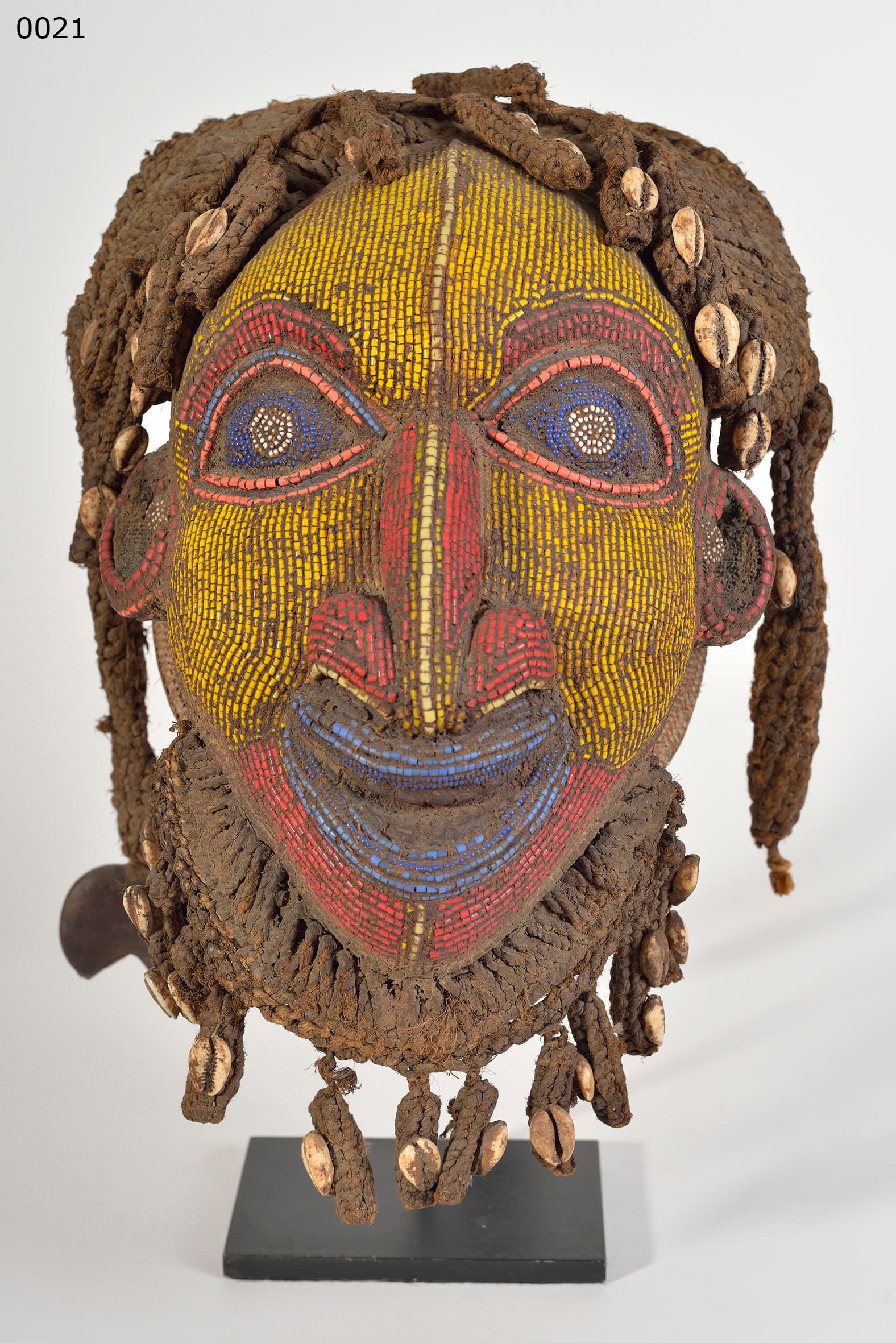
mask (covered with beads - shells on cloth)
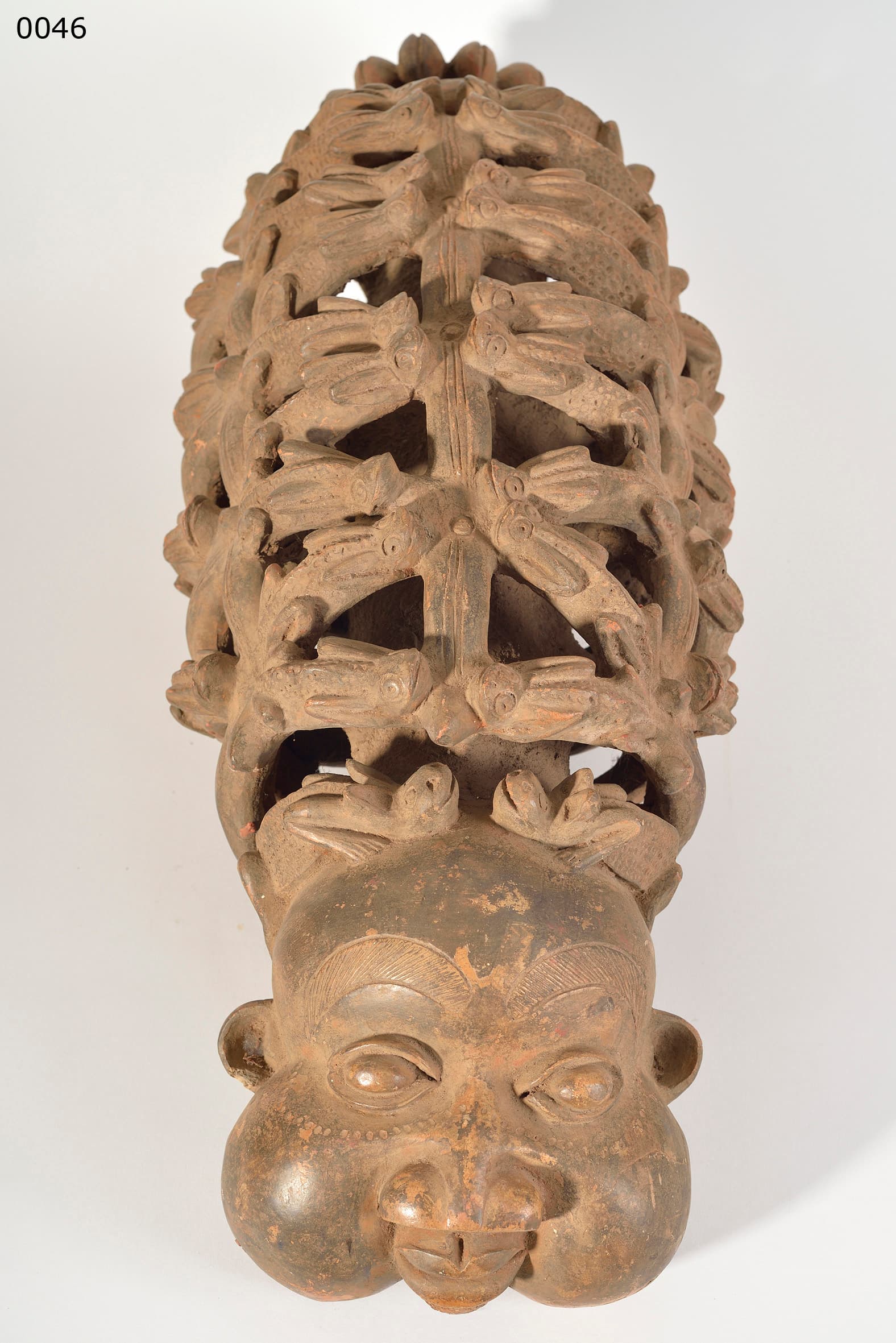
prestige pipe head
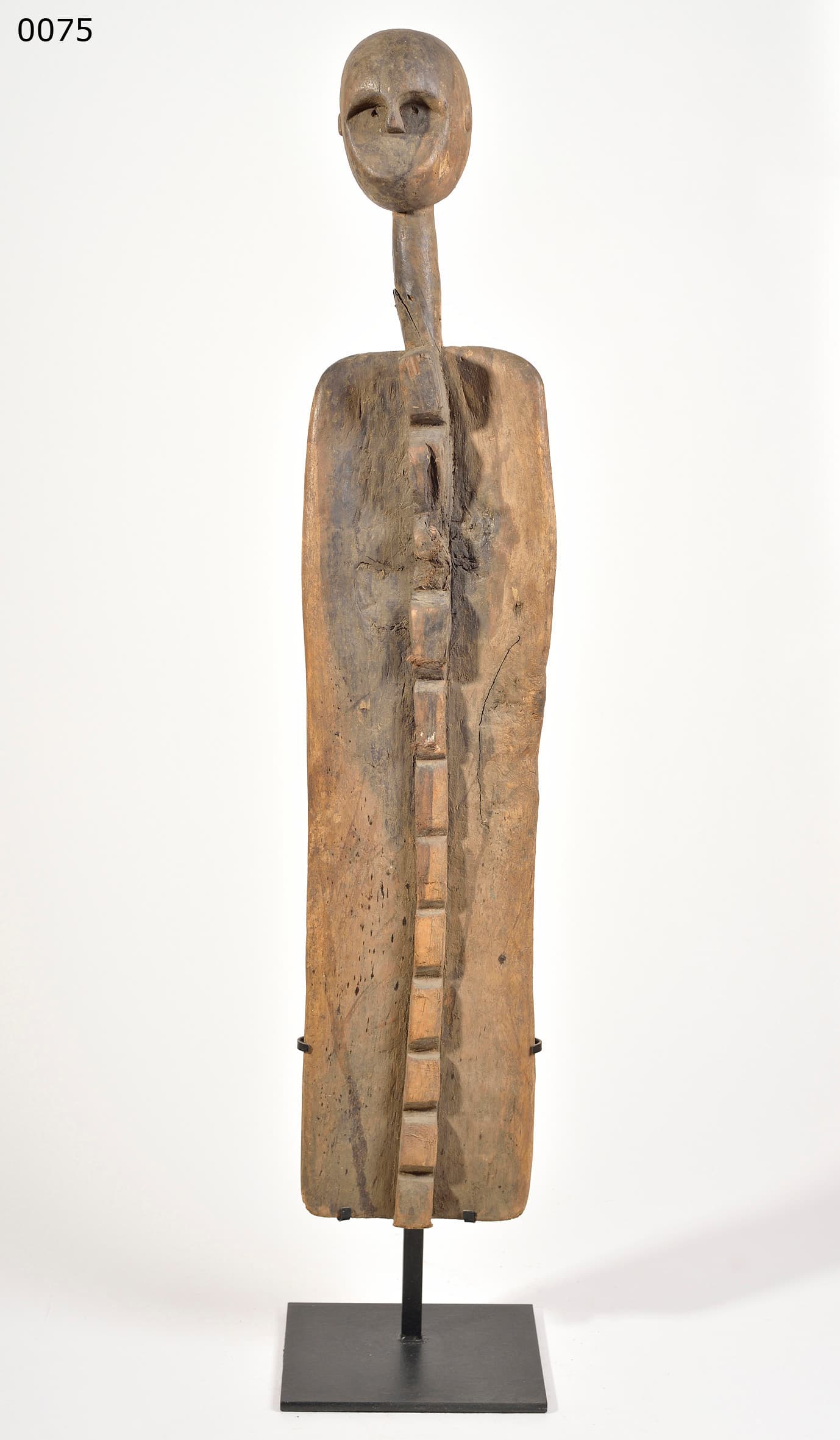
rare friction instrument