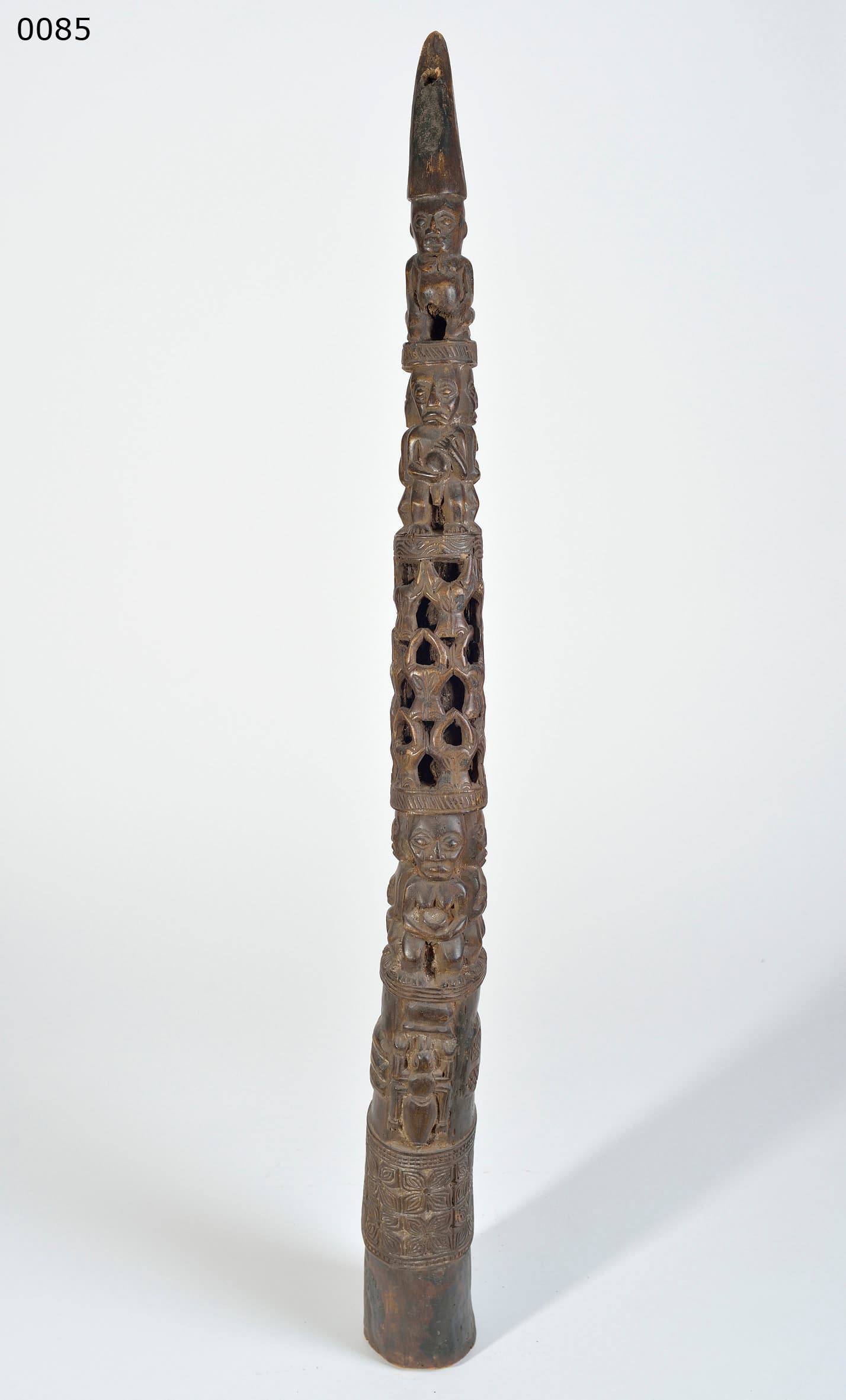
This complex copper-alloy bell features a flared, highly decorated lower body surrounded by high-relief subsidiary figures, surmounted by a prominent standing figure with wide, expressive eyes.
1. Aesthetic Style and Tikar Casting Influence
Although this bell belongs to the Mayap Chiefdom — an ethnic Bamum community — the aesthetic execution, particularly the expressive facial features of the figures, points directly to the stylistic influence of the neighboring Tikar people. The Tikar are celebrated throughout the Grassfields for having refined the lost-wax casting technique to a much higher degree of quality and expression than the Bamum. The intricate detailing on the bell's body and the dynamic presence of the figures suggest that a highly skilled Tikar caster may have been commissioned to create this piece for the Mayap elite.
2. Ritual Function and Royal Procession
This bell was not an everyday musical instrument, but a prestigious acoustic herald of royal presence. According to local records, it was utilized exclusively during highly significant ceremonial occasions. A servant — historically, a slave — would walk ahead of the chieftain, striking the body of the bell with a wooden stick. The sound cleared the path, both physically and spiritually, announcing the arrival of the chief and demanding absolute respect from the onlookers.
3. Patina, Material Weathering, and Age
The brass surface exhibits a deep patina with dark oxidation in the heavily textured recesses and a warmer, brassy sheen on the projecting elements like the figures' faces and the rim of the bell. The wear along the strike zone of the bell body, combined with the presence of casting core remnants in the deep crevices, can be observed on the bell.
Summary
This ceremonial bell is a magnificent example of inter-tribal artistic influence, combining Tikar metallurgical mastery with Bamum royal pageantry. It served as a powerful acoustic and visual instrument of the Mayap Chiefdom's political authority.
Written with AI assistance from the collection appraisal, object photography and our own research; editorially reviewed. Mistakes are possible — corrections are welcome. How we work →
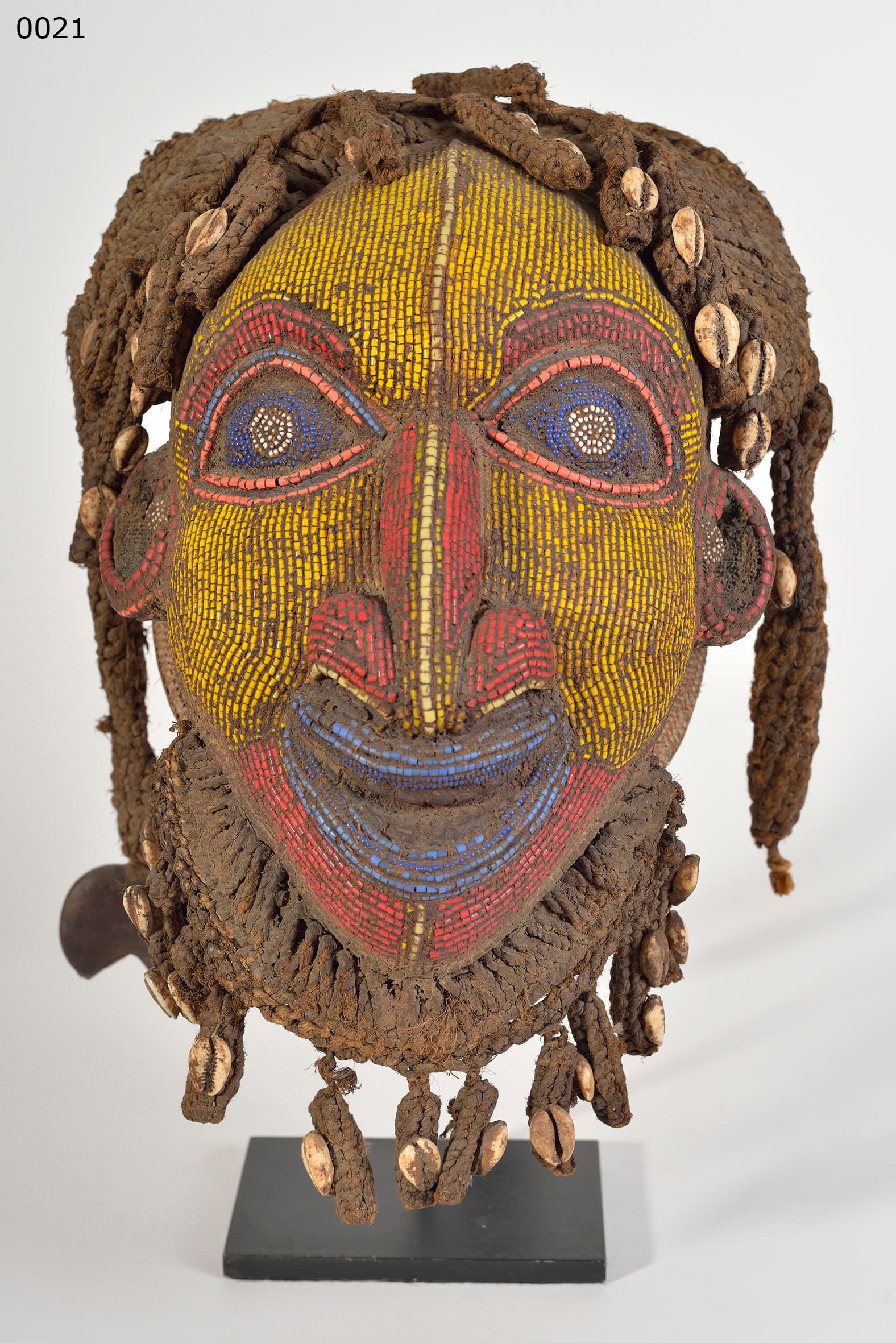
mask (covered with beads - shells on cloth)
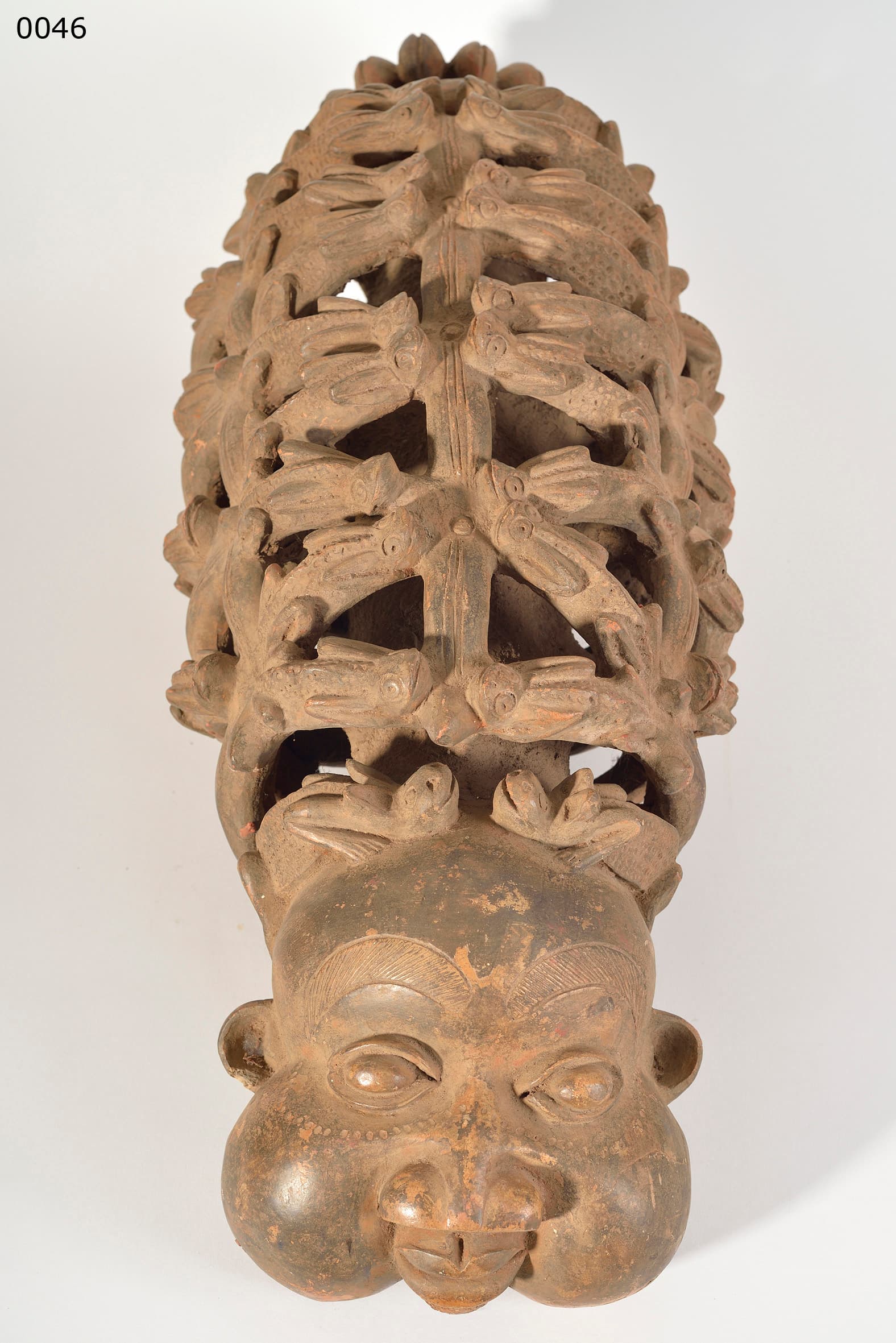
prestige pipe head
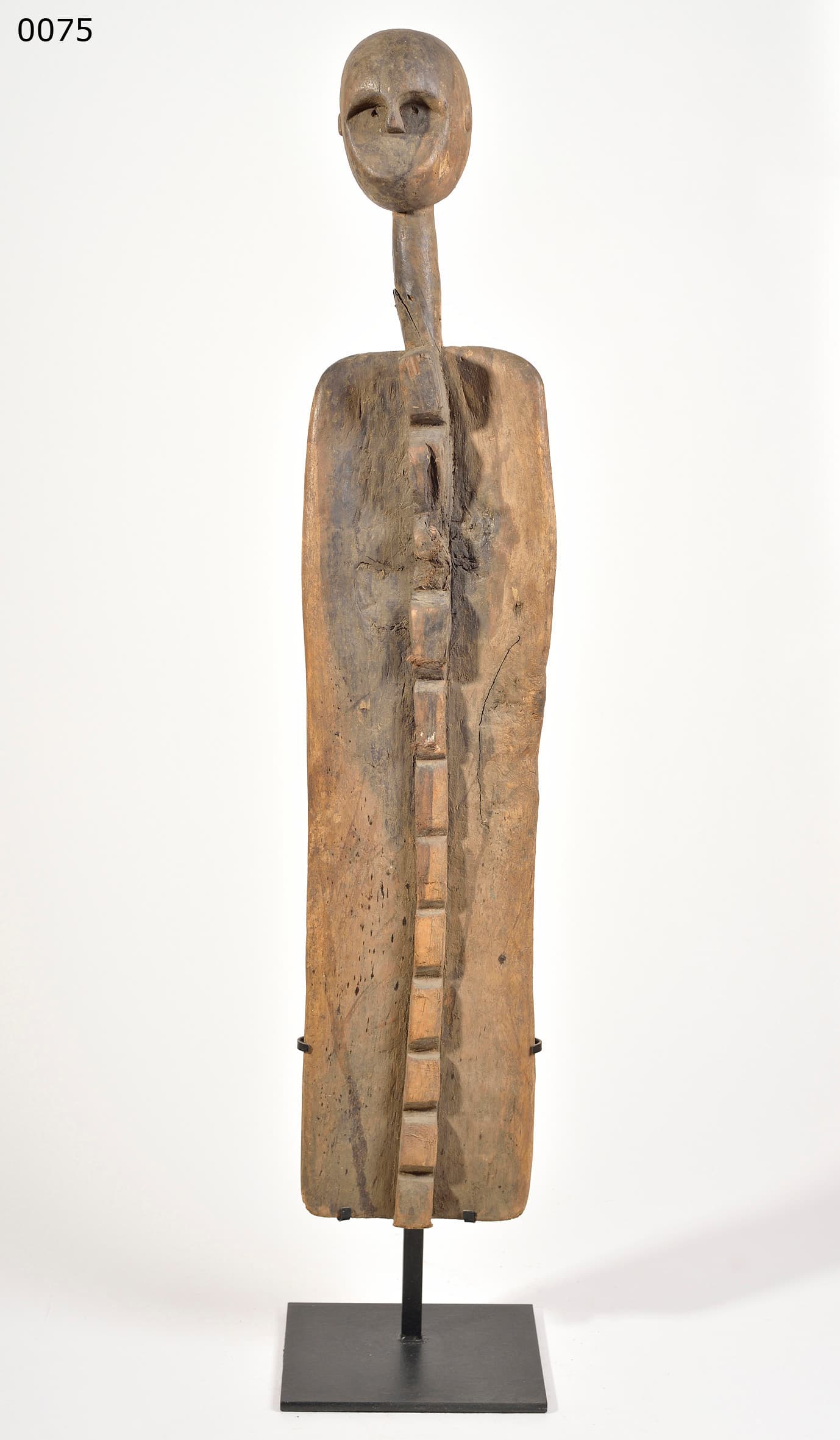
rare friction instrument