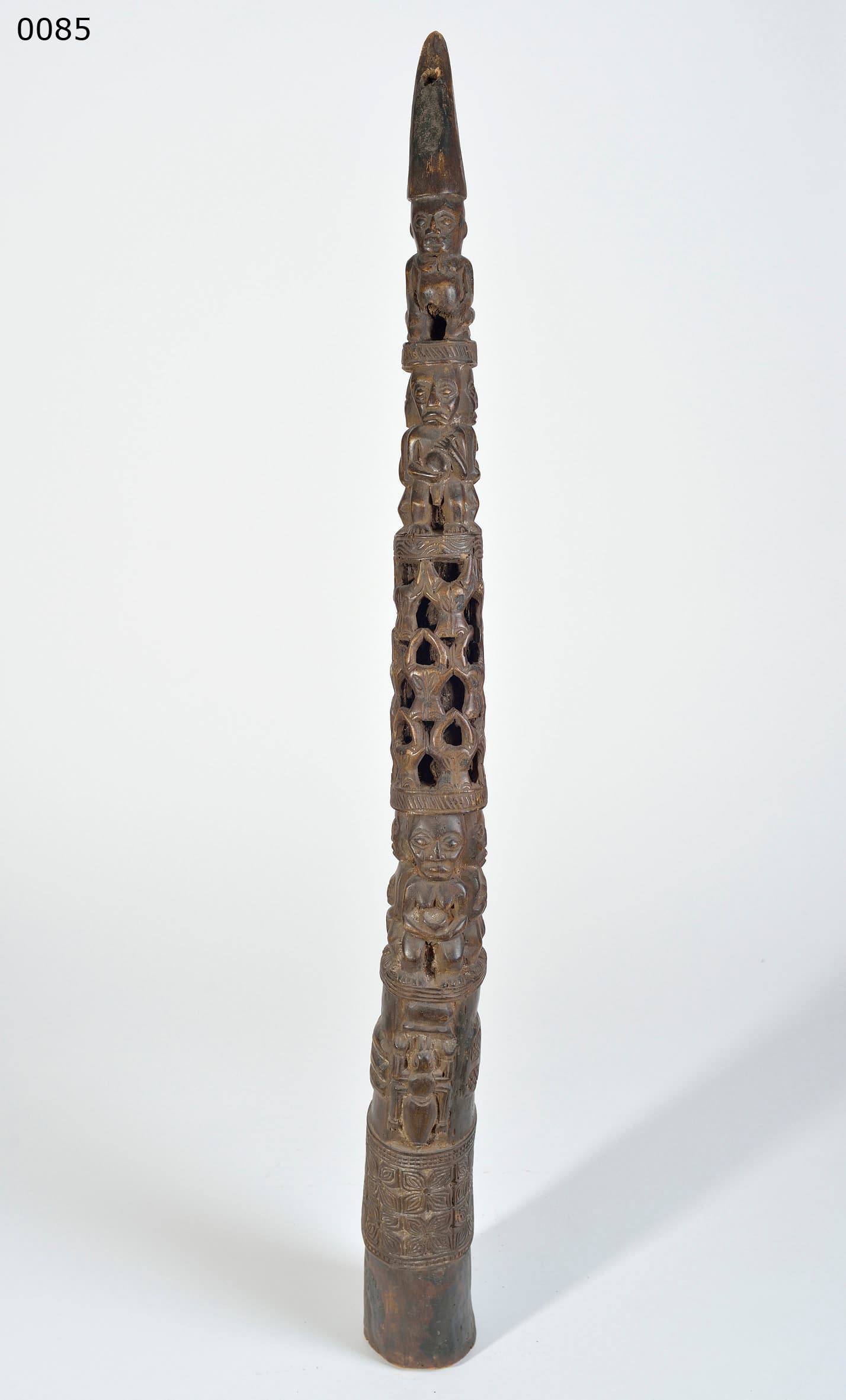
A standing male figure carved from wood, with calm, naturalistic facial features and a close-fitting conical cap. The figure holds a drinking horn in the right hand and a palm wine calabash in the left and stands on an oval base.
1. Aesthetic Style and Individualized Realism
This figure departs from the highly abstracted, expressionistic style often associated with the Cameroon Grasslands. Instead of exaggerated, aggressive facial proportions, the face is rendered with a serene, lifelike realism. The facial features, which are not necessarily typical for the Grasslands, suggest that the carving was intended to be an accurate, individualized replica of a specific ancestor rather than a generalized spirit representation.
2. Ritual Function and the Regalia of Rank
The objects held by the figure are central to understanding its original context and the status of the depicted individual. The drinking horn and the palm wine calabash are classic chief regalia within the hierarchical structure of the chiefdom. Palm wine represents a vital element of social and spiritual communion, and the right to dispense it is associated with high-ranking figures. By depicting the ancestor holding these specific items, the work records the individual's significant place within the hierarchy of the chiefdom.
3. Material, Patina, and Condition
Carved from wood, the figure has a weathered, earthy patina with a dry, matte surface and fine cracking across the shoulders and chest. The carving marks remain visible, particularly in the vertical grooves of the figure's garment. A crack in the oval base is a sign of the natural aging of the wood.
Summary
This wooden figure is a naturalistic portrait within the Bamun carving tradition, closely tied to the symbols of chiefly authority. Its serene expression and the chief regalia make it a dignified memorial to a specific, high-ranking ancestor.
Written with AI assistance from the collection appraisal, object photography and our own research; editorially reviewed. Mistakes are possible — corrections are welcome. How we work →
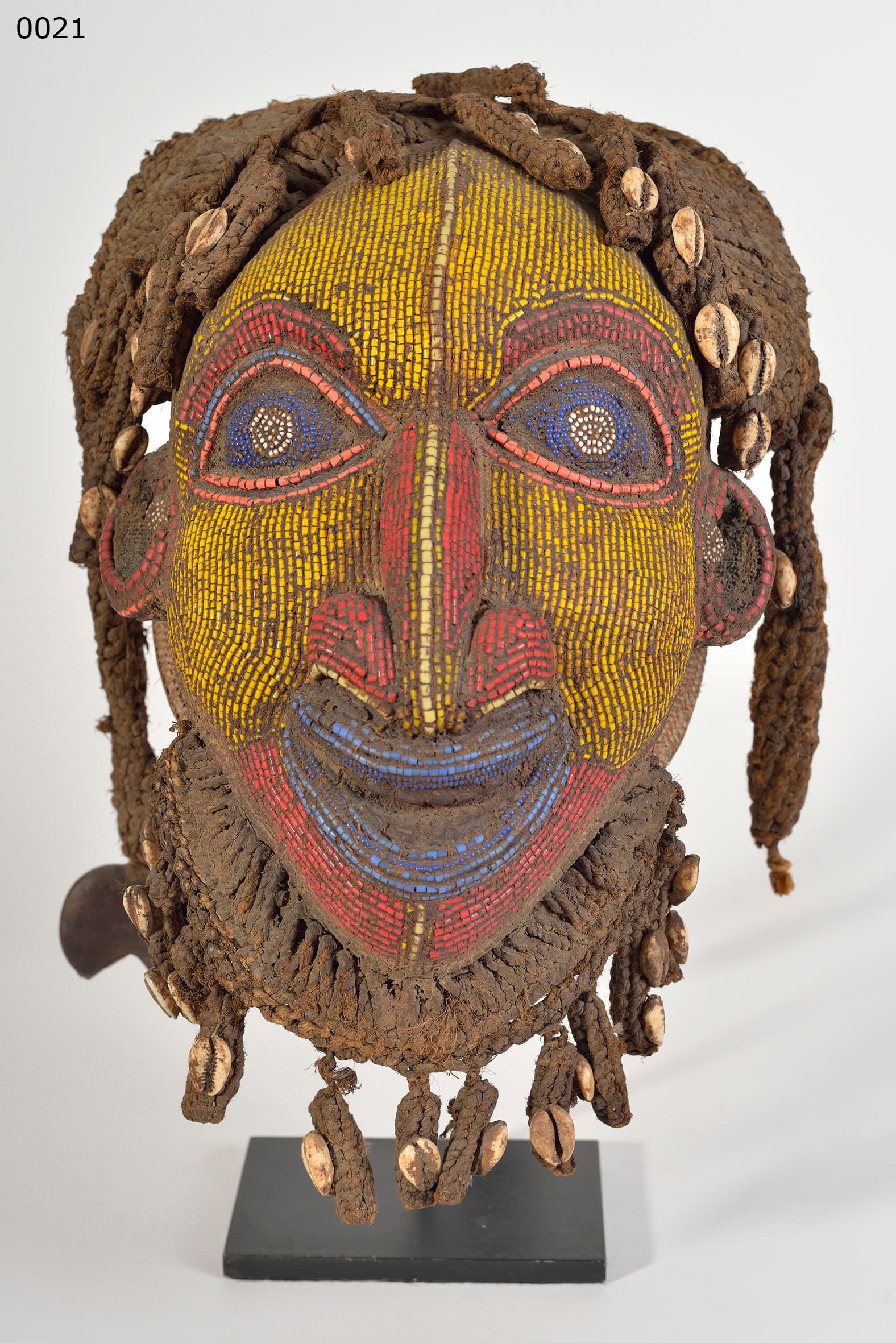
mask (covered with beads - shells on cloth)
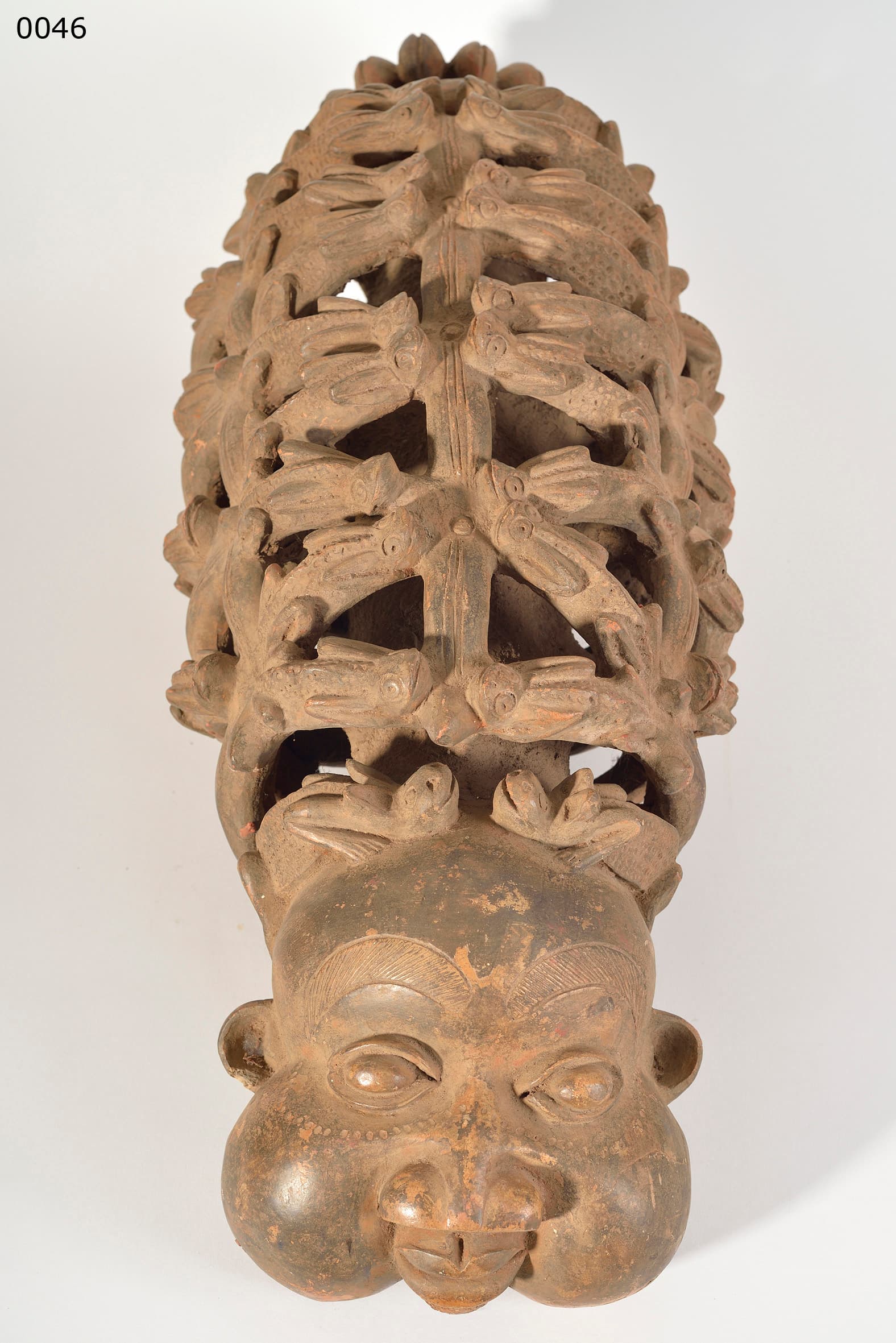
prestige pipe head
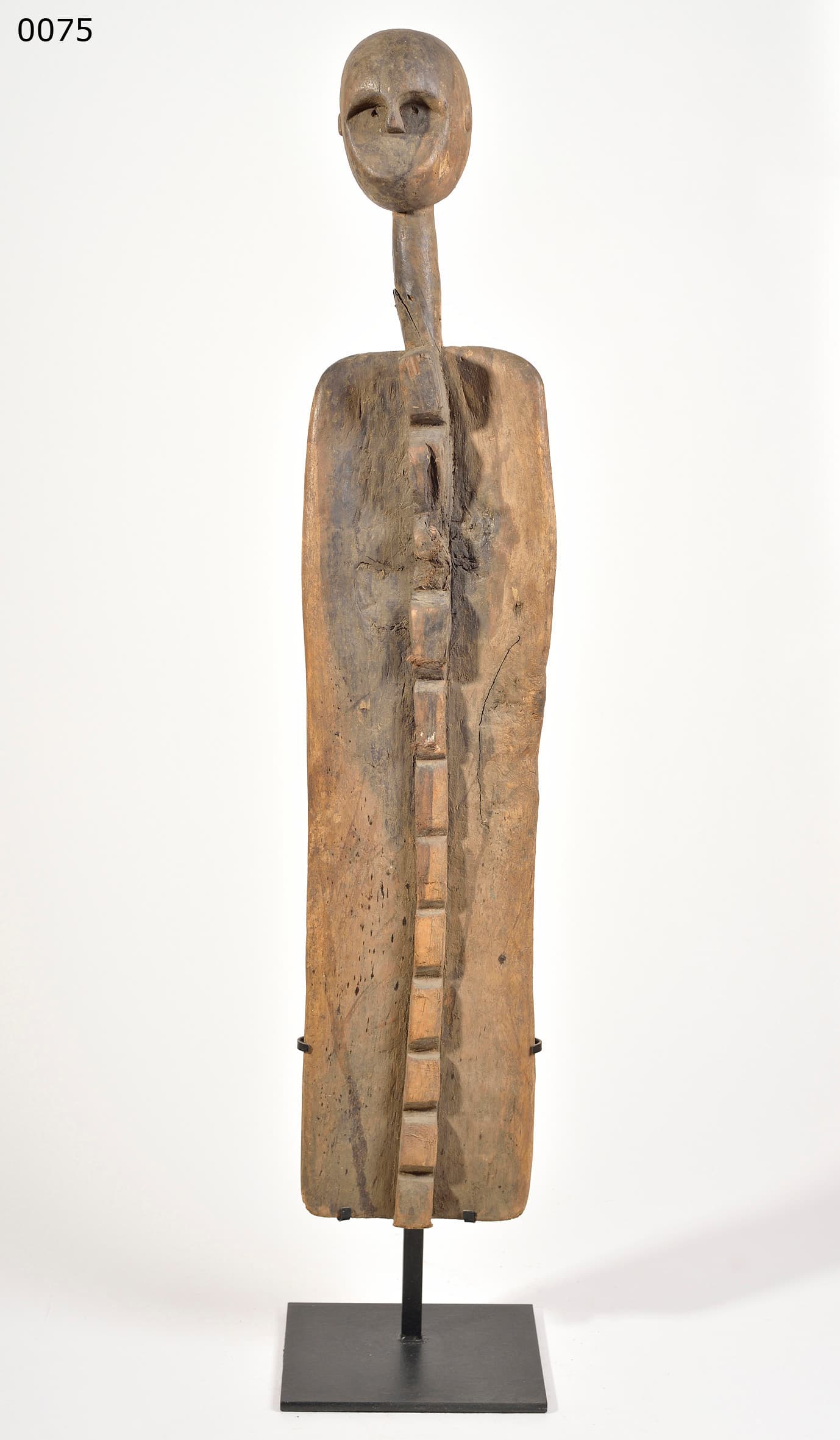
rare friction instrument